
TL;DR

Get home appliances delivered free with Prime
- Fast, free delivery on millions of items
- Prime Video, Amazon Music and more included
- Member-only deals all year
Design Milk published a Govee-backed guide to adjusting lighting in living rooms, bedrooms and home offices for fall. It recommends combining light sources at different heights and balancing warm ambient light with task lighting; the product and mood guidance comes from Govee, and no independent testing or performance evidence is provided.
Design Milk has published a fall lighting guide from smart-lighting brand Govee, recommending layered lighting in living rooms, bedrooms and home offices as shorter days increase reliance on indoor light. The guide pairs ambient, accent and task lighting to change how rooms feel and function without permanent renovations, while its product recommendations and claims about mood are attributed to Govee.
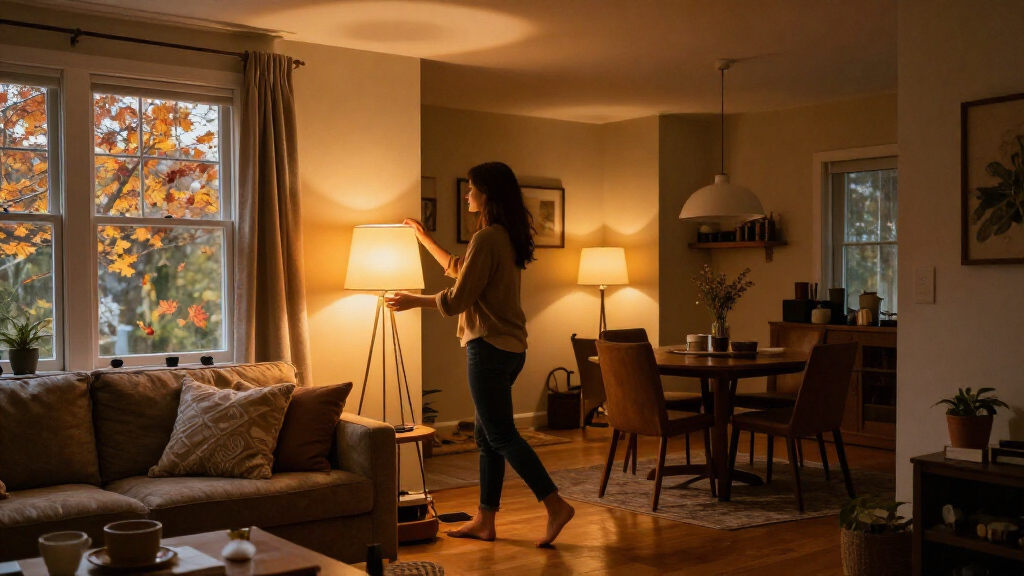
For the living room, the guide suggests placing light sources at different heights around seating to create a warm, social atmosphere. It names Govee’s Floor Lamp 3, Table Lamp and TV Backlight 3 as examples, with the backlight intended to soften the contrast between a bright television and a dark wall. The company says the three products can be dimmed and adjusted together through an app.
For bedrooms, the recommendations shift toward soft, indirect light. Govee proposes combining its Lantern Floor Lamp and Table Lamp Classic with a COB Strip Light 2 Pro placed on a headboard or another surface. The source lists warm light at 2500K–2700K and mentions desaturated blue and purple accents. These are examples from the company’s product range, not a general requirement for every bedroom.
In a home office, the guide pairs functional lighting with warmer accents. It recommends the Govee Sky Ceiling Light for clear white light in a 4000K–6000K range, alongside a Tree Floor Lamp and Table Lamp Classic. Govee says the contrast can keep a workspace from feeling clinical; the source does not cite independent research measuring eye fatigue or productivity.
Lighting Adjustments Without Renovation
The guide focuses on a relatively reversible way to respond to less daylight in fall: changing the position, brightness and color of indoor lights rather than buying furniture, painting or rewiring. That can be useful to readers seeking seasonal changes with limited disruption, although the source offers design suggestions rather than cost comparisons or evidence that the approach improves sleep, mood or work performance.
Its practical distinction is between a room’s purposes: warmer, lower-intensity light for winding down or gathering, and brighter task light for focused work. The suggestions also show how lamps, strips and backlights can serve different roles in one room. Readers should treat the product list as Govee’s recommendations, not as the only way to layer light or as an independent product review.
Products Worth Considering

Philips Hue Bridge Pro Smart Lighting Hub

TCL QM64L 85-Inch QD-Mini LED 4K Smart Fire TV

Philips Hue Festavia 130-Foot Indoor/Outdoor Smart String Lights, 500 LEDs
As an affiliate, we earn on qualifying purchases.
From Daylight to Indoor Layers
The article frames fall as a seasonal shift in which shorter days and longer evenings make artificial light more prominent at home. It argues that lighting can alter a room’s atmosphere without permanent design changes. The supplied material does not give a publication date, report a new product launch or describe a change in lighting standards; the development is the publication of a practical, brand-associated guide.
Govee chief marketing officer Sherry Ye provides the guide’s explanations of color temperature, placement and mood. The article says warm light can support a restful or welcoming atmosphere and cooler white light can suit focused tasks. Those statements represent Ye’s perspective in the source; the material does not include research citations or independent expert assessment.
“Layering warm light fills the visual void left by early dusk, softening cold architectural surfaces and mimicking the natural amber warmth of sunset.”
— Sherry Ye, Govee chief marketing officer
Evidence Behind the Mood Claims
The supplied article does not cite independent studies supporting claims that particular color temperatures affect biological rhythms, calm the mind, prevent eye fatigue or improve focus. Those effects are presented as Govee’s guidance and explanations, not as verified outcomes for all users. The article also does not compare the named products with alternatives or provide pricing, energy-use figures, or details about compatibility across devices.
It is not clear from the source when the guide was published, whether the recommendations have been tested in different room sizes or lighting conditions, or whether the linked product configurations are available in every market. The cited Kelvin ranges and product features are the details stated in the source, not independently confirmed specifications here.
How Readers Can Apply the Guide
The source describes no scheduled follow-up, research release or next company announcement. Its immediate advice is to experiment with placement, brightness and color using flexible lights, then adjust the setup to each room’s use. Readers can start with existing lamps and fixtures rather than assuming they need the named products.
Any further claims about product performance, availability or health and productivity effects would require additional information from the company or independent testing. Until then, the guide is best read as a set of seasonal design suggestions, not a tested prescription.
Key Questions
What is the main recommendation in the fall lighting guide?
It recommends combining several light sources at different heights and balancing ambient, accent and task lighting to suit each room.
How does the guide suggest lighting a living room?
Govee’s example layers a floor lamp, a table lamp and television backlighting to create a warm, social atmosphere. The products are examples rather than required choices.
What color temperature does the source suggest for a bedroom?
For one of its proposed bedroom setups, the source lists warm light in the 2500K–2700K range, with optional desaturated blue and purple accents from a light strip.
What lighting does it recommend for a home office?
The guide recommends bright, clear task lighting in a 4000K–6000K range, balanced with warmer lamps as accents. This is Govee’s recommendation, not an independently tested performance standard.
Does the article prove that layered lighting improves sleep or focus?
No. The source presents Govee’s explanations and design advice, but does not cite independent studies or report measured effects on sleep, mood, eye fatigue or productivity.
Source: design-milk.com