
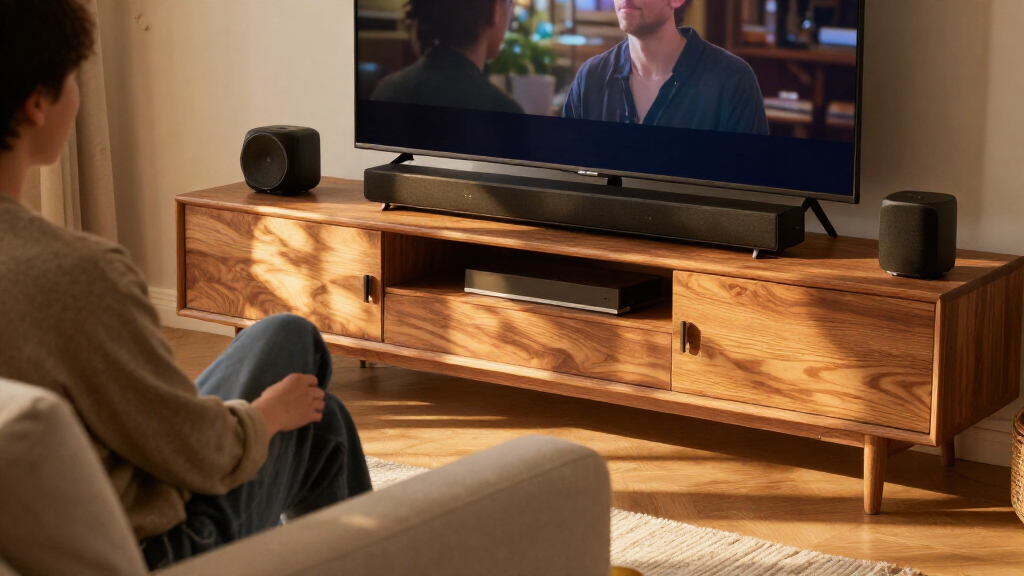
For clearer dialogue and more convincing bass, soundbars with wireless subwoofers range from simple 2.1-channel upgrades to room-filling systems with Dolby Atmos and surround speakers. My best overall pick is the Samsung HW-QS730D, which pairs a 3.1.2-channel layout with wireless Dolby Atmos for a stronger balance of dialogue and immersion. The JBL Bar 700MK2 stands out for its detachable surround speakers, while the TCL S55H offers room calibration and Atmos features in a simpler setup. The main tradeoffs are how much space and setup a system needs, how convincingly it handles dialogue and surround effects, and whether its extra features suit your TV and listening habits. Read on for the full breakdown and a guide to choosing the right system for your room.

Get home appliances delivered free with Prime
- Fast, free delivery on millions of items
- Prime Video, Amazon Music and more included
- Member-only deals all year
Complete the kit


Key Takeaways
- The Samsung HW-QS730D leads for balanced immersion: its 3.1.2-channel layout adds height channels and a dedicated center channel, addressing both Atmos effects and dialogue clarity.
- The JBL Bar 700MK2 offers the most flexible surround setup: detachable speakers can create a more enveloping presentation, though they add components to position and manage.
- Smaller 2.1 systems keep setup straightforward: options like the ULTIMEA Poseidon M30 and Sony HT-S350 suit buyers who mainly want fuller TV sound and bass without a more elaborate channel layout.
- Wireless subwoofers do not make every system equally room friendly: a large subwoofer can deliver weightier bass, while room calibration, placement options, and a compact footprint matter more in tighter spaces.
- Feature labels are not a substitute for fit: Atmos, virtual surround, and HDMI pass-through can be useful, but compatibility with your TV, room layout, and preferred sources determines their real value.
| ULTIMEA Poseidon M30 2.1-Channel Soundbar with Wireless Subwoofer |  | Best for Dialogue and EQ Control | Speaker configuration: 2.1-channel soundbar with wireless subwoofer | Peak output power: 240 W | Frequency response: 45 Hz–18 kHz | VIEW LATEST PRICE | See Our Full Breakdown |
| TCL S55H 2.1-Channel Soundbar with Wireless Subwoofer, Dolby Atmos, DTS Virtual:X, and AI Sonic Room Calibration |  | Best for Small-Room Surround | Audio configuration: 2.1 channel | Audio formats: Dolby Atmos, DTS Virtual:X | Maximum output power: 220 W | VIEW LATEST PRICE | See Our Full Breakdown |
| Yamaha True X Bar 50A Dolby Atmos Soundbar with Wireless Subwoofer, Wi-Fi, and Optional Wireless Surround Speakers |  | Best for Expandable Atmos | Audio formats: Dolby Digital, Dolby Digital Plus, Dolby Atmos, Dolby TrueHD | Connectivity: Wi-Fi, Bluetooth, HDMI eARC | Subwoofer: Wireless; 6.3-inch driver | VIEW LATEST PRICE | See Our Full Breakdown |
| Bose Lifestyle Ultra Soundbar and Ultra Subwoofer Bundle |  | Best for Whole-Home Streaming | Bundle includes: Bose Lifestyle Ultra Soundbar and Bose Lifestyle Ultra Subwoofer | Audio format: Dolby Atmos | Maximum output power: 180 W | VIEW LATEST PRICE | See Our Full Breakdown |
| Yamaha SR-B40A Dolby Atmos Sound Bar with Wireless Subwoofer, Black |  | Best for Straightforward TV and Gaming | Audio formats: Dolby Atmos, Dolby Digital, Dolby Digital Plus, Dolby TrueHD | Subwoofer: Wireless; 6.5-inch driver | Connectivity: Bluetooth, HDMI, optical | VIEW LATEST PRICE | See Our Full Breakdown |
| Samsung HW-QS730D 3.1.2-Channel Soundbar with Wireless Dolby Atmos and 8-Inch Subwoofer |  | Best for Samsung TV Owners | Channels: 3.1.2 | Audio technology: Dolby Atmos | Subwoofer: Included, wireless | VIEW LATEST PRICE | See Our Full Breakdown |
| JBL Bar 5.1 Surround Soundbar with 10-Inch Wireless Subwoofer, 4K Pass-Through, and Built-In Virtual Surround, Black |  | Best for Big Bass and Virtual Surround | Total system power: 550 W | Subwoofer: 10-inch wireless | Audio output mode: Surround | VIEW LATEST PRICE | See Our Full Breakdown |
| JBL Cinema SB580 3.1-Channel Soundbar with Wireless Subwoofer |  | Best for Clear Dialogue | Audio channels: 3.1 | Maximum output power: 440 watts | Audio encoding: Dolby Atmos | VIEW LATEST PRICE | See Our Full Breakdown |
| Sony BRAVIA Theater Bar 5 3.1-Channel Soundbar with Wireless Subwoofer |  | Best for Atmos and DTS:X Processing | Channels: 3.1 | Audio formats: Dolby Atmos, DTS:X | Subwoofer: Wireless | VIEW LATEST PRICE | See Our Full Breakdown |
| JBL Bar 2.1 Deep Bass (MK2) 2.1-Channel Soundbar with Wireless Subwoofer | 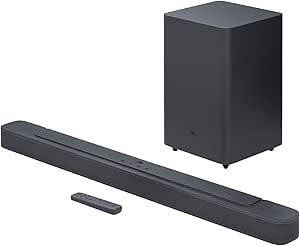 | Best for Simple TV and Music Setup | Audio channels: 2.1 | Maximum output power: 300 W | Subwoofer: 6.5-inch, wireless | VIEW LATEST PRICE | See Our Full Breakdown |
| JBL Bar 700MK2 7.1-Channel Soundbar with Wireless Subwoofer and Detachable Surround Speakers |  | Best for Detachable Surround Sound | Channels: 7.1 | Maximum output power: 780 watts | Subwoofer: Wireless, 10-inch | VIEW LATEST PRICE | See Our Full Breakdown |
| Sony HT-S350 2.1-Channel Soundbar with Wireless Subwoofer |  | Best for Straightforward TV Upgrades | Channels: 2.1 | Maximum output power: 320 watts | Subwoofer: Wireless, 6.3-inch | VIEW LATEST PRICE | See Our Full Breakdown |
| Samsung HW-B750D/ZA 5.1-Channel Soundbar with Dolby Audio, DTS Virtual:X, and Wireless Subwoofer |  | Best for Built-In Center and Side Speakers | Channels: 5.1 | Subwoofer: Wireless, included | Audio features: Dolby Audio, DTS Virtual:X, Adaptive Sound, Bass Boost | VIEW LATEST PRICE | See Our Full Breakdown |
| Yamaha YAS-209BL Sound Bar with Wireless Subwoofer, Bluetooth, and Built-In Alexa, Black |  | Best for Alexa and Wi-Fi Streaming | Channels: 2.1 | Maximum output power: 100 watts | Subwoofer: Wireless | VIEW LATEST PRICE | See Our Full Breakdown |
| soundbars with wireless subwoofer | Connectivity | Subwoofer | Maximum output power | Dimensions |
|---|---|---|---|---|
| ULTIMEA Poseidon M30 2.1-Chann | HDMI ARC, optical, Bluetooth 6.0 | — | — | — |
| TCL S55H 2.1-Channel Soundbar | HDMI eARC/ARC, optical, Bluetooth 5.2, AUX | — | 220 W | — |
| Yamaha True X Bar 50A Dolby At | Wi-Fi, Bluetooth, HDMI eARC | Wireless; 6.3-inch driver | — | 4.38 x 40 x 2.5 inches (D x W x H) |
| Bose Lifestyle Ultra Soundbar | Wi-Fi, Bluetooth | — | 180 W | 43.3 x 2.65 x 4.9 inches (D x W x H) |
| Yamaha SR-B40A Dolby Atmos Sou | Bluetooth, HDMI, optical | Wireless; 6.5-inch driver | — | — |
| Samsung HW-QS730D 3.1.2-Channe | — | Included, wireless | — | 4.7 x 43.7 x 2.3 inches (D x W x H) |
| JBL Bar 5.1 Surround Soundbar | HDMI, Bluetooth, Chromecast, AirPlay | 10-inch wireless | — | 3.9 x 40.1 x 2.3 inches (D x W x H) |
| JBL Cinema SB580 3.1-Channel S | Bluetooth, HDMI eARC, HDMI, optical | Wireless, 6.5 inches | 440 watts | 3.15 x 37.4 x 2.52 inches (D x W x H) |
| Sony BRAVIA Theater Bar 5 3.1- | Bluetooth | Wireless | — | — |
| JBL Bar 2.1 Deep Bass | Bluetooth, HDMI, optical | 6.5-inch, wireless | 300 W | — |
| JBL Bar 700MK2 7.1-Channel Sou | Bluetooth, HDMI, optical, USB, Wi-Fi | Wireless, 10-inch | 780 watts | — |
| Sony HT-S350 2.1-Channel Sound | Bluetooth, HDMI ARC, optical | Wireless, 6.3-inch | 320 watts | 3.5 x 35.5 x 2.62 inches (D x W x H) |
| Samsung HW-B750D/ZA 5.1-Channe | — | Wireless, included | — | 4.1 x 40.5 x 2.3 inches (D x W x H) |
| Yamaha YAS-209BL Sound Bar wit | Bluetooth, HDMI, optical, Wi-Fi | Wireless | 100 watts | — |
More Details on Our Top Picks
ULTIMEA Poseidon M30 2.1-Channel Soundbar with Wireless Subwoofer
The Poseidon M30 is a practical pick for buyers who want to tune a wireless-subwoofer 2.1 setup around TV dialogue and everyday listening. VoiceMX is designed to make speech clearer, while the app’s 10-band equalizer and 121 presets offer more adjustment than the Yamaha SR-B40A’s listed sound modes and app controls. That flexibility is useful if default sound leaves voices too quiet or bass too prominent. Its 5.25-inch subwoofer and 240 W peak output give it a straightforward bass-and-stereo role, but the 2.1-channel layout does not add the height formats or room calibration found on the TCL S55H. I’d choose it for customization and dialogue help; buyers seeking virtual surround processing or Atmos should compare those alternatives first.
Pros:- Wireless subwoofer can be positioned without an audio cable back to the soundbar
- VoiceMX processing is designed to improve dialogue clarity
- App offers a 10-band EQ and 121 preset EQ matrices
- HDMI ARC, optical, and Bluetooth 6.0 support several common connections
Cons:- 2.1-channel configuration does not provide dedicated surround or height channels
- Both the soundbar and subwoofer need access to power
Best for: TV watchers who want clearer dialogue and like adjusting sound with an app
Not ideal for: Buyers seeking Dolby Atmos, room calibration, or a multichannel surround layout
- Speaker configuration:2.1-channel soundbar with wireless subwoofer
- Peak output power:240 W
- Frequency response:45 Hz–18 kHz
- Maximum SPL:95 dB
- Subwoofer driver:5.25 inches; 6.5 L cabinet
- Connectivity:HDMI ARC, optical, Bluetooth 6.0
- App control:10-band equalizer, 121 preset EQ matrices, OTA updates
- Mounting:Tabletop or wall mount
Our verdict“Choose the Poseidon M30 if dialogue tuning and app-based sound adjustments matter more to you than Atmos or surround effects.”
TCL S55H 2.1-Channel Soundbar with Wireless Subwoofer, Dolby Atmos, DTS Virtual:X, and AI Sonic Room Calibration
The TCL S55H earns its place for buyers who want a wireless subwoofer alongside virtual surround processing without moving to a larger system. Dolby Atmos and DTS Virtual:X aim to give films and games a broader presentation than the ULTIMEA Poseidon M30’s conventional 2.1-channel feature set, while AI Sonic room calibration adjusts the sound to the room and listening position. The low-profile bar and included HDMI cable make it a tidy, ready-to-connect option for a small or medium TV room. Its 220 W maximum output and stated room fit make it less suited to filling a large space; the Yamaha True X Bar 50A offers up-firing Atmos drivers and Wi-Fi streaming for a more expansive setup, though it is a different class of system. I’d pick TCL for simpler compact-room setup, with scale as the tradeoff.
Pros:- Wireless subwoofer adds bass without an audio cable between it and the bar
- Dolby Atmos and DTS Virtual:X provide virtual surround processing
- AI Sonic calibration adapts audio to the room and listening position
- HDMI eARC/ARC, optical, Bluetooth, and AUX cover varied source devices
Cons:- Designed for small-to-medium rooms rather than larger spaces
- 2.1-channel configuration relies on virtual processing for surround effects
Best for: People setting up a compact TV room who want virtual surround and automatic room adjustment
Not ideal for: Owners of large open-plan rooms who need a system specified for bigger spaces
- Audio configuration:2.1 channel
- Audio formats:Dolby Atmos, DTS Virtual:X
- Maximum output power:220 W
- Room calibration:AI Sonic auto room calibration
- Connectivity:HDMI eARC/ARC, optical, Bluetooth 5.2, AUX
- Soundbar dimensions:31.89 x 2.36 x 3.86 inches (W x H x D)
- Subwoofer dimensions:7.68 x 12.60 x 7.68 inches (W x H x D)
- Included accessories:HDMI cable, remote with batteries, wall-mount kit
Our verdict“Pick the TCL S55H for a compact room where room calibration and virtual surround matter more than filling a large space.”
Yamaha True X Bar 50A Dolby Atmos Soundbar with Wireless Subwoofer, Wi-Fi, and Optional Wireless Surround Speakers
Among these picks, the Yamaha True X Bar 50A is the clearest choice for buyers who want Atmos with a path to wireless surrounds. Its up-firing drivers and separate wireless subwoofer offer a more layered home-theater design than the 2.1-channel TCL S55H, and two optional True X Speaker 1A units can extend the system later. Wi-Fi adds Spotify Connect, AirPlay 2, and TIDAL Connect, giving it a stronger music-streaming feature set than the Yamaha SR-B40A, which lists Bluetooth and HDMI/optical connections. That breadth comes with setup and space tradeoffs: the bar is 40 inches wide and weighs 29.2 pounds, and the optional rear speakers and eARC cable are sold separately. I’d favor it when streaming and expansion are priorities; a simpler one-box purchase may suit other buyers better.
Pros:- Up-firing drivers and Dolby Atmos add height effects
- Separate wireless subwoofer supports flexible bass placement
- Wi-Fi streaming includes Spotify Connect, AirPlay 2, and TIDAL Connect
- Optional wireless speakers provide an expansion path
Cons:- Optional surround speakers are sold separately
- An HDMI cable for eARC setup is sold separately
- At 40 inches wide and 29.2 pounds, it needs substantial placement space
Best for: Home-theater buyers who want Atmos, Wi-Fi music streaming, and the option to add wireless rear speakers
Not ideal for: Buyers who want all surround speakers included or need a short, lightweight bar
- Audio formats:Dolby Digital, Dolby Digital Plus, Dolby Atmos, Dolby TrueHD
- Connectivity:Wi-Fi, Bluetooth, HDMI eARC
- Subwoofer:Wireless; 6.3-inch driver
- Streaming services:Spotify Connect, AirPlay 2, TIDAL Connect
- Voice assistant:Amazon Alexa
- Dimensions:4.38 x 40 x 2.5 inches (D x W x H)
- Item weight:29.2 pounds
- Optional surround speakers:Two True X Speaker 1A wireless speakers, sold separately
Our verdict“Choose the True X Bar 50A if you want an Atmos system you can expand and use for Wi-Fi music streaming.”
Bose Lifestyle Ultra Soundbar and Ultra Subwoofer Bundle
The Bose bundle is aimed at buyers who want a wireless subwoofer paired with broad streaming and control options. Dolby Atmos and Bose spatial audio technologies give it a more immersive brief than the 2.1-channel ULTIMEA Poseidon M30, while Wi-Fi, Bluetooth, AirPlay, Spotify Connect, Google Cast, and Alexa compatibility make it a stronger fit for a connected listening setup. The app, touch, and voice controls also give households several ways to manage playback. Compared with the Yamaha True X Bar 50A, Bose lists generous mounting choices, including adjustable wall brackets and universal TV mounts, but the bundle does not include rear surround speakers. Its 180 W maximum output is specified, while comparable output figures are not provided for every option here, so I would weigh the listed streaming and installation features more heavily than a power-number comparison.
Pros:- Wireless Ultra Subwoofer adds bass without a soundbar audio cable
- Dolby Atmos and Bose spatial audio technologies support immersive playback
- Wi-Fi streaming includes AirPlay, Spotify Connect, and Google Cast
- Bundle includes adjustable wall brackets and universal TV mounts
Cons:- Rear surround speakers are not included in the bundle
- Listed bundle is available in black only
Best for: Households that stream from multiple services and want flexible app, touch, or voice control
Not ideal for: Buyers who want included rear speakers or a bundle in a color other than black
- Bundle includes:Bose Lifestyle Ultra Soundbar and Bose Lifestyle Ultra Subwoofer
- Audio format:Dolby Atmos
- Maximum output power:180 W
- Connectivity:Wi-Fi, Bluetooth
- Streaming support:Apple AirPlay, Spotify Connect, Google Cast
- Voice assistant:Alexa compatibility
- Control methods:App, touch, voice
- Dimensions:43.3 x 2.65 x 4.9 inches (D x W x H)
Our verdict“Pick the Bose bundle if multi-service streaming and flexible control matter more than having rear speakers included.”
Yamaha SR-B40A Dolby Atmos Sound Bar with Wireless Subwoofer, Black
The Yamaha SR-B40A suits buyers who want a wireless subwoofer and Atmos support with familiar controls and sound modes. Clear Voice targets dialogue, while Bass Extension and the 6.5-inch subwoofer address the low end; Movie, Stereo, Standard, and Game modes let you switch the presentation to match what is playing. Compared with the Yamaha True X Bar 50A, the SR-B40A lists a simpler connectivity set and no Wi-Fi streaming services or optional wireless surrounds, which makes it less expandable but easier to frame as a TV-focused system. Bluetooth multipoint is useful if more than one phone or tablet shares music duties. Tabletop and wall mounting offer placement flexibility, though both units still need power, and buyers seeking advanced streaming should look at Yamaha’s larger True X model.
Pros:- Dolby Atmos support adds spatial audio processing
- Wireless subwoofer has a 6.5-inch driver
- Clear Voice is designed to make dialogue easier to follow
- Bluetooth multipoint and tabletop or wall mounting add everyday flexibility
Cons:- Listed connections are limited to Bluetooth, HDMI, and optical
- No Wi-Fi streaming or expansion speakers are listed
Best for: TV and console users who want dialogue enhancement, a wireless bass unit, and simple sound modes
Not ideal for: Buyers who want Wi-Fi streaming, optional wireless rear speakers, or included surrounds
- Audio formats:Dolby Atmos, Dolby Digital, Dolby Digital Plus, Dolby TrueHD
- Subwoofer:Wireless; 6.5-inch driver
- Connectivity:Bluetooth, HDMI, optical
- Bluetooth range:10 meters
- Audio features:Clear Voice, Bass Boost
- Sound modes:Movie, Stereo, Standard, Game
- Mounting:Tabletop or wall mount
- Control methods:Remote control, app
Our verdict“Choose the SR-B40A for a TV-centered setup with dialogue help and a wireless subwoofer, without needing Wi-Fi streaming or expansion.”
Samsung HW-QS730D 3.1.2-Channel Soundbar with Wireless Dolby Atmos and 8-Inch Subwoofer
The Samsung HW-QS730D is the pick for buyers who want height effects and a wireless subwoofer in one system. Its 3.1.2-channel layout uses up-firing speakers for Dolby Atmos, while the 8-inch subwoofer supplies bass without a cable running back to the bar. Compared with the JBL Cinema SB580, it adds height channels and room calibration, which can make it a better fit for Atmos films in a compatible setup. SpaceFit Sound Pro adjusts sound to the room, and Alexa, Chromecast, and AirPlay 2 broaden streaming options. The tradeoff is that some features work best with compatible Samsung TVs or devices, so buyers with another TV brand may get less from its ecosystem. Its wide bar also needs room for a 43.7-inch unit.
Pros:- Up-firing speakers add height effects for Dolby Atmos content
- Included wireless 8-inch subwoofer adds bass without a wired connection to the bar
- SpaceFit Sound Pro adapts audio to the room
- Built-in Alexa, Chromecast, and AirPlay 2 support several ways to play audio
Cons:- Some features depend on compatible Samsung TVs or devices
- The 43.7-inch bar may be too wide for smaller TV stands
- The listed Game Mode Pro feature does not include a game console
Best for: Samsung TV owners who want Dolby Atmos height effects, room calibration, and a wireless subwoofer without adding separate surround speakers
Not ideal for: Buyers with non-Samsung devices who want every feature to work across brands, or those with limited space for a 43.7-inch bar
- Channels:3.1.2
- Audio technology:Dolby Atmos
- Subwoofer:Included, wireless
- Subwoofer diameter:8 inches
- Sound features:SpaceFit Sound Pro, Adaptive Sound, Game Mode Pro, Active Voice Analyzer
- Connectivity and features:Q-Symphony, built-in Alexa, Chromecast, AirPlay 2
- Dimensions:4.7 x 43.7 x 2.3 inches (D x W x H)
- Mounting type:Wall mount
Our verdict“Choose the HW-QS730D if you have a compatible Samsung setup and want up-firing Atmos speakers paired with an 8-inch wireless subwoofer.”
JBL Bar 5.1 Surround Soundbar with 10-Inch Wireless Subwoofer, 4K Pass-Through, and Built-In Virtual Surround, Black
The JBL Bar 5.1 pairs a 10-inch wireless subwoofer with 550 watts of system power, making it the bass-focused choice in this group. JBL MultiBeam creates a virtual surround effect without requiring separate rear speakers. Compared with the smaller 6.5-inch subwoofer in the JBL Cinema SB580, its larger driver is the stronger fit for buyers who want weightier low end for action films and music. It also passes through 4K video with HDR10 and Dolby Vision, so it can sit between a compatible source and TV. The tradeoff is its 29.7-pound system weight and 40.1-inch bar, which call for a sturdy, roomy setup. Its surround effect is virtual, so buyers seeking discrete rear speakers should look at a system with physical surrounds.
Pros:- 10-inch wireless subwoofer is the largest listed here
- 550 watts of total system power
- JBL MultiBeam provides virtual surround without extra speakers
- 4K pass-through supports HDR10 and Dolby Vision
Cons:- Virtual surround does not provide the same speaker placement as physical rear speakers
- At 29.7 pounds, the system is comparatively heavy
- The 40.1-inch bar needs a wide TV stand or wall space
Best for: Movie watchers with a roomy TV setup who prioritize powerful bass, virtual surround, and 4K HDR pass-through
Not ideal for: Buyers who need physical rear speakers or a lighter, more compact soundbar system
- Total system power:550 W
- Subwoofer:10-inch wireless
- Audio output mode:Surround
- Video pass-through:4K with HDR10 and Dolby Vision
- Connectivity:HDMI, Bluetooth, Chromecast, AirPlay
- Multi-room audio:Alexa Multi-Room Music
- Dimensions:3.9 x 40.1 x 2.3 inches (D x W x H)
- Included components:HDMI cable, remote, soundbar, subwoofer, wall bracket
Our verdict“Pick the JBL Bar 5.1 if you want the roundup’s largest wireless subwoofer and virtual surround in a system with 4K HDR pass-through.”
JBL Cinema SB580 3.1-Channel Soundbar with Wireless Subwoofer
The JBL Cinema SB580 puts a dedicated center channel at the heart of a straightforward 3.1 system. That channel is useful when dialogue gets buried in busy scenes, while the wireless 6.5-inch subwoofer adds bass without tying the bar to its position. Its 440-watt output and HDMI eARC, HDMI, optical, and Bluetooth connections give buyers several ways to connect a TV or stream from a phone. Compared with the JBL Bar 5.1, it gives up the larger 10-inch subwoofer and 4K pass-through, but its center channel and simpler tabletop format suit dialogue-first viewing. Dolby Atmos is listed, though the description specifies virtual Atmos rather than discrete height speakers. That makes it a less convincing choice for buyers who want pronounced overhead effects.
Pros:- Dedicated center channel is designed to keep dialogue clear
- Wireless 6.5-inch subwoofer adds bass without a cable to the soundbar
- HDMI eARC, HDMI, and optical support different TV setups
- Bluetooth supports music and podcast streaming
Cons:- Virtual Atmos does not use listed up-firing height speakers
- Its 6.5-inch subwoofer is smaller than the JBL Bar 5.1’s 10-inch unit
- The system requires corded electric power
Best for: TV viewers who often rely on dialogue clarity and want multiple wired connection options plus a wireless bass unit
Not ideal for: Buyers seeking a large subwoofer or physical up-firing speakers for more pronounced Atmos height effects
- Audio channels:3.1
- Maximum output power:440 watts
- Audio encoding:Dolby Atmos
- Subwoofer:Wireless, 6.5 inches
- Connectivity:Bluetooth, HDMI eARC, HDMI, optical
- Mounting type:Tabletop
- Dimensions:3.15 x 37.4 x 2.52 inches (D x W x H)
- Power source:Corded electric
Our verdict“Choose the SB580 if dialogue clarity and flexible TV connections matter more to you than a large subwoofer or physical Atmos height speakers.”
Sony BRAVIA Theater Bar 5 3.1-Channel Soundbar with Wireless Subwoofer
The Sony BRAVIA Theater Bar 5 is the format-focused pick for buyers who want both Dolby Atmos and DTS:X processing alongside a dedicated center channel. Vertical Surround Engine and S-Force Pro aim to widen the sound field from the bar, while the wireless 160 mm subwoofer handles lower frequencies without a cable between units. Compared with the Samsung HW-QS730D, Sony lists DTS:X support but does not specify up-firing speakers or room calibration, so the Samsung is the clearer choice for buyers prioritizing physical height channels and adaptation to the room. Sony offers Bluetooth streaming and app control through BRAVIA Connect. Its listed connectivity is limited to Bluetooth, though, so buyers should check that the TV connection options meet their needs before choosing it.
Pros:- Supports both Dolby Atmos and DTS:X processing
- Dedicated center channel is designed for clearer dialogue
- Wireless 160 mm subwoofer adds lower-frequency support
- BRAVIA Connect app and remote offer control options
Cons:- Only Bluetooth is listed under connectivity
- No up-firing speakers are specified
- Requires corded electric power and is not water resistant
Best for: Sony and home-cinema fans who want Dolby Atmos and DTS:X processing with a center channel and wireless bass
Not ideal for: Buyers who need a broad range of listed wired inputs, or who specifically want up-firing Atmos speakers
- Channels:3.1
- Audio formats:Dolby Atmos, DTS:X
- Subwoofer:Wireless
- Subwoofer speaker diameter:160 mm
- Connectivity:Bluetooth
- Control method:Remote; BRAVIA Connect app
- Mounting type:Tabletop
- Power source:Corded electric
Our verdict“The BRAVIA Theater Bar 5 suits buyers who value Atmos and DTS:X processing and dialogue clarity, provided its listed connections fit their setup.”
JBL Bar 2.1 Deep Bass (MK2) 2.1-Channel Soundbar with Wireless Subwoofer
The JBL Bar 2.1 Deep Bass (MK2) keeps the system simple: a 2.1-channel bar, Dolby Digital, JBL Surround Sound, and a wireless 6.5-inch subwoofer. HDMI and optical cover common TV connections, while Bluetooth lets a phone stream music without switching to another device. Compared with the JBL Cinema SB580, this model drops the dedicated center channel and 3.1 layout, so it is less suited to viewers who want dialogue singled out from the rest of the mix. In return, buyers who want straightforward TV audio and extra bass avoid the added channel complexity. Its 300-watt maximum output is lower than the SB580’s 440 watts, and the listed 2.1 configuration does not include Atmos processing. That makes it a sensible fit for everyday viewing rather than height-effect cinema.
Pros:- Wireless 6.5-inch subwoofer adds bass without a wired link to the bar
- HDMI and optical provide common TV connection options
- Bluetooth supports playback from mobile devices
- Dolby Digital and JBL Surround Sound are included
Cons:- 2.1-channel layout has no dedicated center channel
- No Dolby Atmos support is listed
- 300-watt maximum output is below the JBL Cinema SB580’s listed 440 watts
Best for: Buyers upgrading a TV’s built-in speakers who want a simple HDMI or optical connection, Bluetooth, and a separate wireless subwoofer
Not ideal for: Movie fans who prioritize a dedicated dialogue channel, Atmos processing, or a larger surround setup
- Audio channels:2.1
- Maximum output power:300 W
- Subwoofer:6.5-inch, wireless
- Audio features:Dolby Digital, JBL Surround Sound
- Connectivity:Bluetooth, HDMI, optical
- Bluetooth range:10 m
- Mounting type:Tabletop
- Enclosure material:Plastic
Our verdict“Choose the Bar 2.1 Deep Bass MK2 for a straightforward TV and music setup with wireless bass, and choose a 3.1 model if dialogue separation matters more.”
JBL Bar 700MK2 7.1-Channel Soundbar with Wireless Subwoofer and Detachable Surround Speakers
Detachable wireless surround speakers give the JBL Bar 700MK2 a flexibility the Samsung HW-B750D/ZA lacks without optional add-on speakers: place them behind the seating for movie night, then dock them on the bar when you are done. Its 10-inch wireless subwoofer and 7.1-channel setup are aimed at a more enveloping home-cinema presentation than simpler 2.1 systems such as the Sony HT-S350. Dolby Atmos, DTS Virtual:X, and MultiBeam 3.0 add ways to widen the soundstage, while PureVoice 2.0 is designed to keep dialogue clearer. The tradeoff is some routine: the detachable speakers need to return to the bar to charge, and this feature-rich system takes more setup and placement thought than a basic soundbar. I’d choose it for flexible surround, not for a minimal setup.
Pros:- Detachable wireless speakers provide flexible rear-channel placement
- 10-inch wireless subwoofer supports substantial low-frequency impact
- 7.1-channel audio with Dolby Atmos, DTS Virtual:X, and MultiBeam 3.0
- PureVoice 2.0 is designed to improve dialogue clarity
Cons:- Detachable speakers must be returned to the soundbar for charging
- The larger surround setup requires more placement and setup attention
- Not waterproof
Best for: Movie watchers who want rear surround speakers they can place for viewing and dock afterward
Not ideal for: Buyers seeking a simple set-and-forget bar, or those who do not want to manage charging detachable speakers
- Channels:7.1
- Maximum output power:780 watts
- Subwoofer:Wireless, 10-inch
- Audio technologies:Dolby Atmos, DTS Virtual:X, MultiBeam 3.0, PureVoice 2.0
- Connectivity:Bluetooth, HDMI, optical, USB, Wi-Fi
- Wireless streaming:AirPlay, Bluetooth, Wi-Fi
- Mounting:Wall mount
Our verdict“Choose the Bar 700MK2 if movable rear speakers and a large wireless subwoofer matter more than a simple, low-maintenance setup.”
Sony HT-S350 2.1-Channel Soundbar with Wireless Subwoofer
The Sony HT-S350 keeps the wireless-subwoofer idea straightforward: a 2.1-channel bar, a separate 6.3-inch subwoofer, and HDMI ARC for a one-cable TV connection. That makes it a simpler fit for everyday television than the JBL Bar 700MK2, whose detachable surround speakers offer more movie immersion but require extra placement and charging. Sony includes seven sound modes and Voice Enhancement, giving viewers practical ways to tune news, sports, or dialogue-heavy shows. S-Force PRO Front Surround adds a virtual surround effect, though this system does not offer the physical rear speakers of the JBL or the Samsung HW-B750D/ZA’s 5.1-channel design. The plastic enclosure and limited connection selection also keep the focus on basic TV listening rather than a more expandable system.
Pros:- Wireless 6.3-inch subwoofer adds bass without a cable running to the bar
- HDMI ARC supports a one-cable TV connection
- Voice Enhancement can help dialogue stand out
- Seven sound modes cover common viewing and listening types
Cons:- 2.1-channel layout has no physical rear surround speakers
- Plastic enclosure
- Connectivity is limited to Bluetooth, HDMI ARC, and optical
Best for: TV owners who want a simple HDMI ARC connection, fuller bass, and voice-focused sound modes
Not ideal for: Movie enthusiasts seeking physical rear speakers, advanced streaming options, or broad system expansion
- Channels:2.1
- Maximum output power:320 watts
- Subwoofer:Wireless, 6.3-inch
- Sound modes:Auto Sound, Cinema, Music, Game, News, Sports, Standard
- Audio features:S-Force PRO Front Surround, Bass Boost, Voice Enhancement
- Connectivity:Bluetooth, HDMI ARC, optical
- Dimensions:3.5 x 35.5 x 2.62 inches (D x W x H)
Our verdict“Pick the HT-S350 for a no-fuss TV upgrade with a wireless subwoofer, but look to the JBL Bar 700MK2 if rear surround is a priority.”
Samsung HW-B750D/ZA 5.1-Channel Soundbar with Dolby Audio, DTS Virtual:X, and Wireless Subwoofer
The Samsung HW-B750D/ZA fills a useful middle ground: its 5.1-channel layout includes built-in center and side speakers, while the included wireless subwoofer adds Bass Boost for a fuller presentation. Compared with the Sony HT-S350’s 2.1-channel design, the Samsung gives dialogue and side effects dedicated speaker support without relying on detachable rear units like the JBL Bar 700MK2. Adaptive Sound adjusts audio to the content, and Voice Enhance and Night Mode offer practical options for different rooms and listening times. Its main limitation is expansion: wireless surround requires optional Samsung speakers, so the bar alone does not provide the JBL’s movable rear channels. One-remote control is also limited to select Samsung TVs. I’d favor it for a more involved built-in layout with fewer separate pieces.
Pros:- Built-in center and side speakers support a 5.1-channel presentation
- Included wireless subwoofer has Bass Boost
- Adaptive Sound responds to the type of content
- Voice Enhance and Night Mode offer useful listening adjustments
Cons:- Wireless surround expansion requires optional Samsung speakers
- One-remote control works only with select Samsung TVs
- Not water resistant
Best for: Viewers who want center and side speakers built into the bar, plus a wireless subwoofer and dialogue controls
Not ideal for: Buyers who want rear speakers included or plan to expand surround without purchasing compatible optional Samsung speakers
- Channels:5.1
- Subwoofer:Wireless, included
- Audio features:Dolby Audio, DTS Virtual:X, Adaptive Sound, Bass Boost
- Speakers:Built-in center and side speakers
- Bluetooth:Connects to two devices simultaneously
- Optional surround expansion:Compatible with optional Samsung speakers
- Dimensions:4.1 x 40.5 x 2.3 inches (D x W x H)
- Weight:18.1 lb
Our verdict“Choose the HW-B750D/ZA for built-in center and side speakers; choose the JBL Bar 700MK2 if included, movable rear speakers matter more.”
Yamaha YAS-209BL Sound Bar with Wireless Subwoofer, Bluetooth, and Built-In Alexa, Black
The Yamaha YAS-209BL suits buyers who want their soundbar to do more than handle TV audio. Alongside a wireless subwoofer and 2.1-channel sound, it has built-in Alexa, Wi-Fi, Bluetooth, and Spotify Connect, giving it a broader streaming and voice-control role than the Sony HT-S350, which focuses on Bluetooth and TV connections. DTS Virtual:X creates a virtual surround effect, and Clear Voice is designed to make dialogue easier to follow. The tradeoff is that its listed output is 100 watts, and it has no physical rear speakers like the JBL Bar 700MK2. That makes it a better match for a streamlined living room with smart-home use than for buyers chasing the most theater-like speaker layout. HDMI and optical connections keep TV setup flexible.
Pros:- Built-in Alexa supports voice control and smart-home commands
- Wi-Fi, Spotify Connect, and Bluetooth offer multiple music-streaming options
- Wireless subwoofer allows flexible placement
- DTS Virtual:X and Clear Voice target surround effect and dialogue clarity
Cons:- 2.1-channel system does not include physical rear speakers
- Listed maximum output power is 100 watts
- Requires corded electric power and is not water resistant
Best for: Alexa users who want Wi-Fi music streaming, voice commands, and a wireless-subwoofer TV system in one setup
Not ideal for: Buyers prioritizing physical rear surround speakers or a higher listed maximum output than this 2.1-channel system provides
- Channels:2.1
- Maximum output power:100 watts
- Subwoofer:Wireless
- Voice assistant:Amazon Alexa built-in
- Sound features:DTS Virtual:X, Clear Voice
- Connectivity:Bluetooth, HDMI, optical, Wi-Fi
- Center unit dimensions:36-5/8 × 2-1/2 × 4-1/4 inches
- Warranty:2-year manufacturer warranty
Our verdict“Pick the YAS-209BL if Alexa and Wi-Fi streaming are central to your setup; choose the JBL Bar 700MK2 for included physical surround speakers.”
How We Picked
I ranked these systems by how well their wireless subwoofer setup serves a real TV room, then weighed dialogue handling, channel configuration, surround and height effects, connection options, and setup complexity. A dedicated center channel can help keep speech distinct; additional channels or detachable speakers can make films feel more enveloping, but only when a buyer can accommodate the setup. I also considered whether features such as room calibration, Wi-Fi, and HDMI pass-through address practical needs rather than simply adding to a spec sheet.
The order reflects the balance of performance, usability, and flexibility for the intended buyer. Systems with a useful mix of clear dialogue, convincing immersion, and manageable setup rank ahead of models that specialize in one strength or offer a simpler 2.1 upgrade. Within each role, I call out the tradeoffs that could make another pick a better match; the best choice depends on room size, TV connections, and how much surround sound a buyer wants.
Factors to Consider When Choosing Soundbars With Wireless Subwoofers
A wireless subwoofer makes placement more flexible, but the soundbar still needs a suitable spot near the TV, and the subwoofer still needs power and room to perform. I would start with the listening problem you want to solve, then check the room and TV before deciding which features justify a more involved system.
Match the channel layout to what you watch
A 2.1 system pairs left and right soundbar channels with a subwoofer, which can be a sensible fix for thin TV audio and weak bass. If dialogue often gets lost in music and effects, a system with a dedicated center channel may help keep voices anchored. More channels can add a sense of height or surround movement, but the effect depends on the system design and the room. Do not assume a larger channel count automatically means clearer speech or convincing surround sound. Think about whether you mostly watch news and shows, or films and games where spatial effects matter more. Choose the simplest layout that fixes the problem you actually have.
Check how the subwoofer will fit your room
Wireless describes how audio reaches the subwoofer; it does not mean the subwoofer is cordless, so plan for a nearby power outlet. Before buying, measure the space beside your seating area and the path from the TV to possible subwoofer locations. A large driver may produce more substantial bass, but it can be awkward in a small room or apartment. Room shape, walls, and furniture can make bass sound uneven, even when the subwoofer connects reliably. Some distance from a wall may make placement easier to adjust, though each room responds differently. Prioritize a location that works day to day over a spec that assumes a large open room.
Treat Atmos and virtual surround as room-dependent features
Dolby Atmos can add a sense of height, but soundbar systems create that effect differently, and a room’s ceiling and layout can influence what you hear. Virtual surround processing can widen a presentation without rear speakers, while detachable or separate speakers can provide more direct effects around the seating area. That extra hardware needs somewhere to sit and may involve more setup and charging or power management. A buyer who sits close to a wall or in an open-plan room may not get the same surround effect as someone with a more defined listening area. Compare the physical speaker arrangement as well as the format names. Pay for immersive features when your room and viewing habits give them room to work.
Check TV connections before comparing extras
Make sure the soundbar supports an input your TV can use for the audio formats and features you want. HDMI eARC or ARC can simplify TV audio connections, while optical connections may limit some advanced formats. If you connect a console or streaming device directly to the soundbar, check whether its inputs support the video pass-through needs of that source. A feature such as wireless Dolby Atmos can still depend on compatible devices and settings. Look up your TV model’s audio output options rather than assuming that a matching brand guarantees every feature. Connection compatibility can matter more than a small difference in headline channel count.
Decide how much setup and control you want
Room calibration can help adapt sound to a space, but it does not replace thoughtful placement or resolve every acoustic problem. A basic soundbar and subwoofer may be easier to install and operate, especially if the goal is clearer, fuller sound with minimal adjustment. Wi-Fi, voice assistants, app controls, and optional surround speakers can add flexibility for some households, but they also add decisions and setup steps. Think about who will use the system and whether they want to manage input switching, app settings, or extra speakers. For shared living rooms, straightforward TV control can be more useful than a long feature list. Pay for convenience features that fit your routines.
Choose upgrades that solve a specific limitation
Spending more makes sense when an upgrade addresses a need, such as adding a center channel for dialogue, height channels for compatible films, or rear speakers for more direct surround effects. A larger or more capable subwoofer is a better fit when you want stronger low-frequency impact and have space for it. If you mainly watch everyday TV at moderate volume, a simpler system may cover the gap without adding equipment you rarely use. Compare the connections, included speakers, and expansion options rather than using price as a proxy for sound quality. Avoid paying extra for features your TV cannot pass through or your room cannot accommodate. Name the limitation you want to fix before selecting an upgrade.
Frequently Asked Questions
Does a wireless subwoofer need to be plugged into a wall?
Yes. “Wireless” generally means the soundbar sends audio to the subwoofer without a cable between them; the subwoofer still needs power. Check that a suitable outlet is available near a practical placement spot. If the only outlet is far away, you may need to rethink the layout or plan for a safe cable route. Also check the recommended connection and setup steps for the specific system you choose.
Should I choose a 2.1 soundbar or one with a center channel?
A 2.1 system can be a good fit if you want a straightforward upgrade with stronger bass and fuller sound than your TV speakers. A center channel can be useful when voices are hard to follow, since it gives dialogue a dedicated channel in many setups. That does not guarantee every room or program will sound clearer, so consider your listening position and typical viewing volume. If dialogue is your main frustration, prioritize the system’s channel layout and dialogue controls over bass output alone.
Will Dolby Atmos work with my current TV?
It depends on your TV’s audio connections, the soundbar’s supported formats, and the source you are watching. Check whether your TV can send the relevant audio format through its HDMI ARC or eARC connection, and confirm how the soundbar handles Atmos. Streaming devices, consoles, and apps may also differ in format support. If your setup cannot pass Atmos audio, the soundbar may still play other surround or stereo formats, but the Atmos feature may not be available as intended.
Can I put the wireless subwoofer anywhere in the room?
You can try different locations, but the subwoofer needs power and its position can affect how bass sounds at the seats. Start with a spot near the TV, then listen for bass that feels clear and even rather than boomy or weak. Keep the unit accessible and avoid blocking its driver or ventilation. A wireless connection gives you more placement freedom than a long audio cable, but room acoustics still set limits.
Are detachable surround speakers worth the extra setup?
They can be worthwhile if you want more direct sound around your seating area than a soundbar alone can provide. The tradeoff is that additional speakers need suitable positions and may require separate charging or power, depending on the design. If your seating area is close to the TV or your room cannot accommodate rear speakers, a simpler virtual surround system may be easier to live with. Consider how often you watch films or play games that benefit from surround effects before choosing the extra hardware.
Conclusion
For the best overall balance of dialogue and immersion, I recommend the Samsung HW-QS730D. The ULTIMEA Poseidon M30 is my value-minded pick for buyers who want a simpler 2.1 upgrade, while the Bose Lifestyle Ultra Soundbar and Ultra Subwoofer Bundle is the premium choice for those seeking a higher-end system. Beginners who want a less involved setup can start with the Sony HT-S350. For specific needs, choose the JBL Bar 700MK2 for detachable surround speakers or the Yamaha True X Bar 50A if Wi-Fi and optional wireless surround expansion suit your setup. Match the system to your room, TV connections, and listening priorities, and the right pick should be clear.