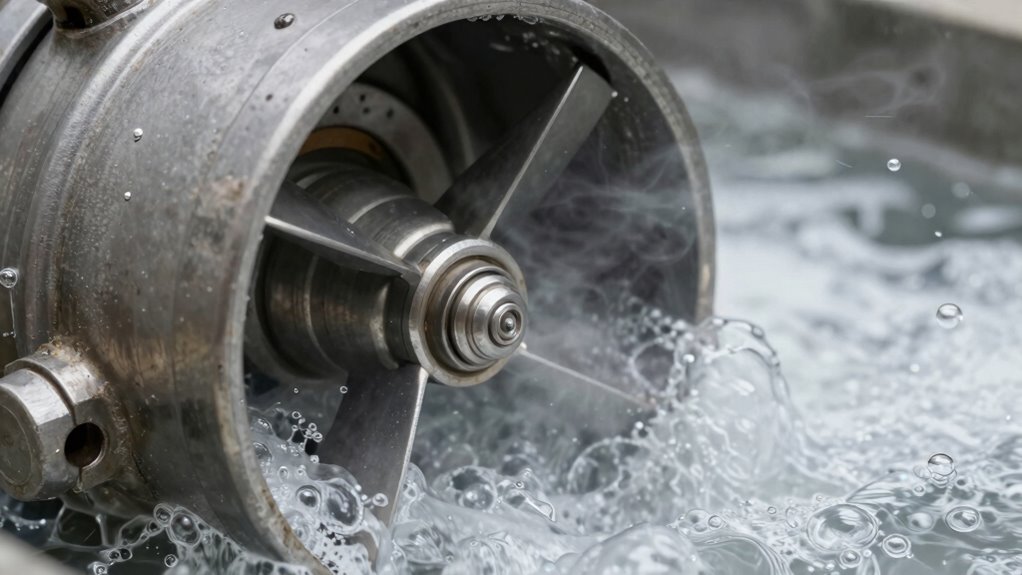

If your pump makes strange squealing or banging noises, it’s a sign of cavitation, which can damage your pump quickly. This happens when internal pressure drops below vapor pressure, forming bubbles that collapse and cause internal erosion. To fix it, you need to check for low inlet pressure, obstructions, or flow issues. Taking action early can prevent costly damage. Keep going to discover how to spot, prevent, and address cavitation before it worsens.

Get home appliances delivered free with Prime
- Fast, free delivery on millions of items
- Prime Video, Amazon Music and more included
- Member-only deals all year
Key Takeaways
- Whining, squealing, or banging noises often indicate vapor bubble collapse from cavitation.
- Persistent strange noises should prompt immediate shutdown and system inspection to prevent damage.
- Cavitation sounds are caused by vapor bubbles forming and collapsing inside the pump.
- Regularly monitor pressure and flow to catch early signs of cavitation-related noise.
- Ignoring these noises can lead to internal erosion, cracks, and pump failure if not promptly fixed.
What Is Pump Cavitation and How Does It Happen?
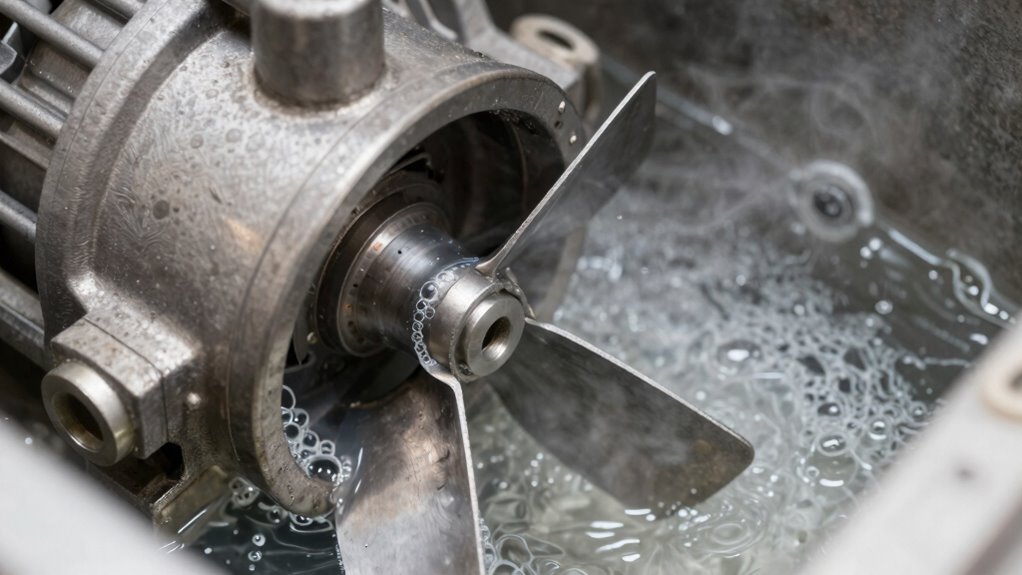
Pump cavitation occurs when the pressure inside a pump drops below the vapor pressure of the fluid, causing bubbles to form. When these vapor bubbles collapse, they can damage the pump’s internal parts and disrupt smooth operation. This phenomenon directly impacts pump fluidity, making the flow irregular and turbulent. As cavitation progresses, your pump’s efficiency declines because it struggles to move fluid effectively. You might notice strange noises or vibrations, signaling that cavitation is happening. To avoid this, it’s essential to maintain proper pressure and ensure the pump operates within its designed parameters. Addressing cavitation early helps preserve pump fluidity, keeps efficiency high, and prevents costly repairs down the line. Recognizing the signs is key to maintaining excellent pump performance. Additionally, understanding the mechanics of fluid flow can help in diagnosing and preventing cavitation issues before they become severe. Monitoring pressure and flow rates regularly can also assist in early detection and prevention of cavitation problems, especially when combined with proper pump maintenance.
What Causes Pump Cavitation?
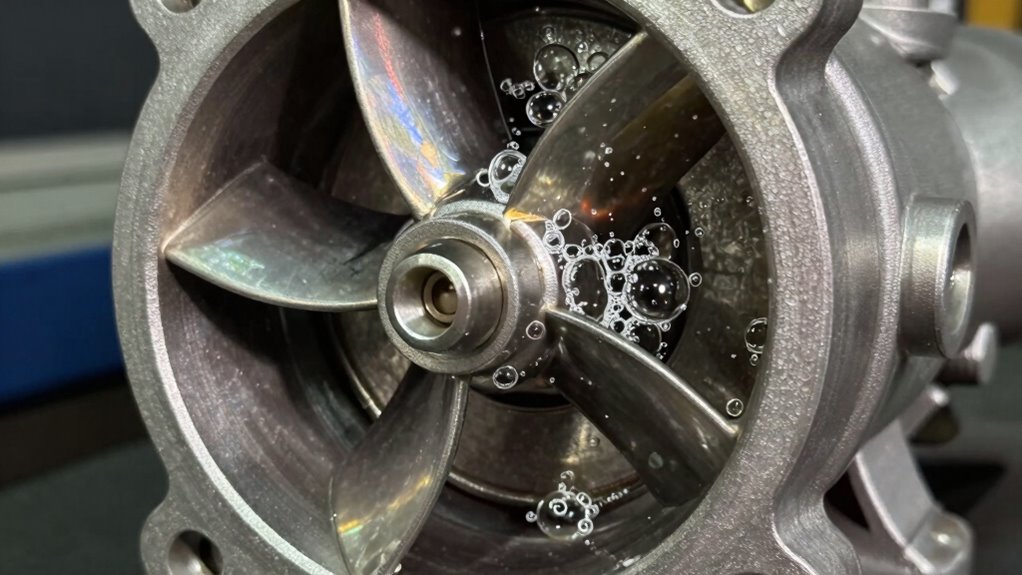
Have you ever wondered what triggers cavitation inside a pump? It all comes down to fluid dynamics. When the pump moves fluid too quickly or if the inlet pressure drops below vapor pressure, vapor bubbles form. These bubbles occur because the fluid can’t hold all its dissolved gases, and as pressure decreases, vaporization happens. Poor pump efficiency can worsen this issue, as inadequate design or improper operation causes low pressure zones that encourage cavitation. Additionally, factors like high flow rates, excessive suction lift, or restricted inlet conditions create pressure drops that lead to vapor bubble formation. Understanding these causes helps you identify how fluid flow and pressure changes within the system set the stage for cavitation to occur inside your pump. Recognizing the role of system design in managing flow and pressure is crucial for preventing cavitation and ensuring optimal pump performance. Proper hydraulic considerations can help maintain stable pressure levels and reduce cavitation risk. Furthermore, implementing pressure monitoring techniques can provide early detection of developing cavitation conditions, allowing for timely corrective actions. Paying attention to pressure fluctuations can also help operators identify early signs of cavitation before it causes significant damage.
Signs of Cavitation: How to Recognize the Noise
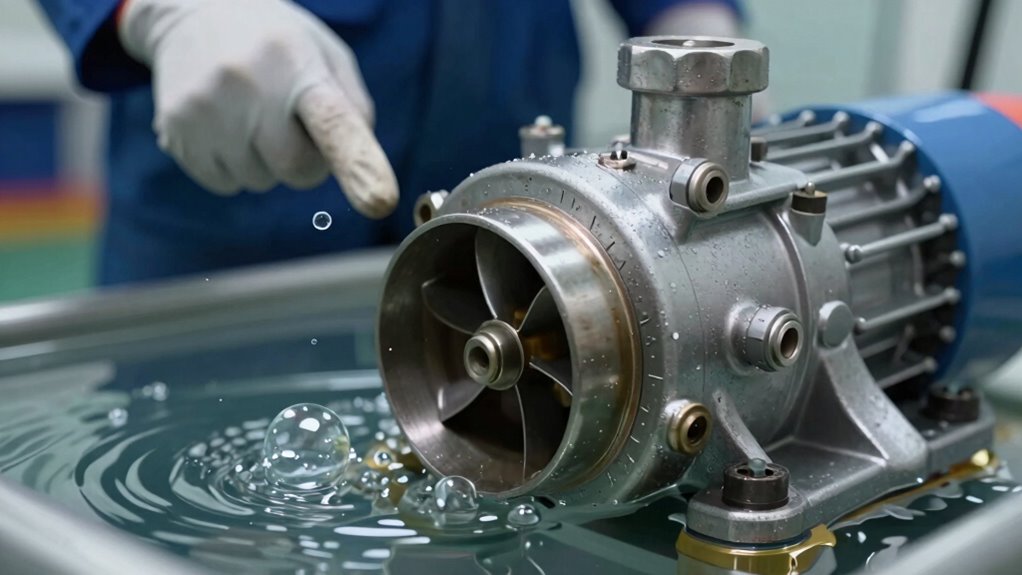
You’ll notice unusual noises coming from your pump, like banging or high-pitched squeals. These sounds often indicate cavitation is occurring. Additionally, vibrations, shaking, or a sudden drop in performance are clear signs you should investigate further. Understanding pump operation can help you identify and address cavitation before it causes significant damage. Recognizing cavitation signs early can prevent costly repairs and prolong the lifespan of your pump. Being aware of pump efficiency issues can also alert you to potential cavitation problems before noises become noticeable. Monitoring fluid flow and pressure levels is crucial, as fluctuations can often signal developing cavitation issues. Staying attentive to these symptoms allows for timely intervention, which is essential for maintaining optimal pump performance.
Unusual Pump Noises
Unusual noises from a pump often signal cavitation developing within the system. These sounds can indicate the pump isn’t operating efficiently and may need immediate attention to prevent damage. Recognizing specific noises helps you identify cavitation early:
- Rumbling or banging sounds that fluctuate with pump speed.
- High-pitched squealing indicating air or vapor bubbles.
- Vibrations accompanied by noise, suggesting flow disruptions.
- Sudden loud noises that persist even after noise reduction efforts.
These noises typically point to decreasing pump efficiency and the presence of cavitation. Addressing the noise promptly can improve performance and prevent costly repairs. Regular maintenance and monitoring help you catch these signs early, ensuring noise levels stay manageable and pump operation remains ideal.
Vibration or Shaking
Vibration or shaking in a pump often signals cavitation taking hold within the system. When cavitation occurs, the rapid formation and collapse of vapor bubbles cause irregular forces that lead to noticeable vibrations. These vibration issues are often accompanied by unusual pump noise, which can be a key indicator of cavitation. If you feel your pump shaking more than usual or notice it producing inconsistent noise, it’s a sign that cavitation might be developing. This vibration can strain components, lead to early wear, and ultimately cause failure if not addressed promptly. Regularly monitoring for abnormal vibrations and associated pump noise helps you catch cavitation early, preventing costly repairs and ensuring your system runs smoothly.
Decreased Pump Performance
When cavitation occurs in a pump, it often leads to a noticeable decline in performance, primarily due to the disruptive effects of vapor bubble formation. This reduces pump efficiency because vapor bubbles impair fluid dynamics, causing inconsistent flow and pressure drops. You’ll notice decreased flow rates and longer startup times, indicating the pump isn’t operating *ideal*. Specifically:
- Reduced flow capacity impacts overall system productivity.
- Increased energy consumption as the pump works harder.
- Fluctuations in pressure disrupt fluid dynamics.
- Higher risk of mechanical damage over time.
These signs show cavitation’s interference with normal pump function, making it clear that the performance decline isn’t normal. Recognizing these symptoms early helps prevent further damage and restores *best* operation.
How to Diagnose Cavitation Quickly
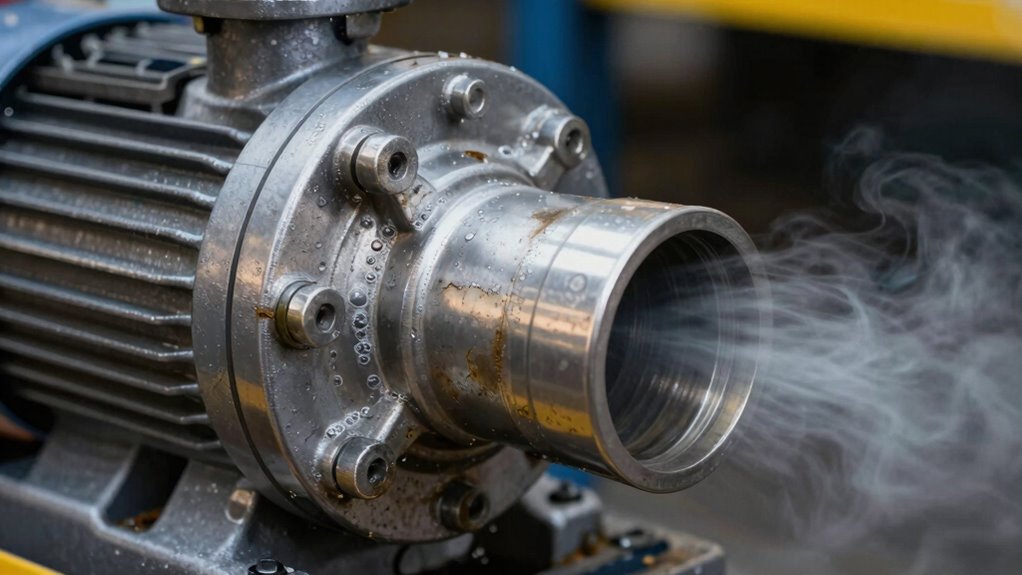
To diagnose cavitation quickly, start by listening for distinctive noises such as loud, high-pitched squeals or rumbling sounds coming from the pump. These sounds indicate abnormal fluid flow caused by vapor bubbles collapsing. Next, check sensor calibration—improper calibration can mislead you about pressure drops or flow issues, delaying diagnosis. Also, consider the fluid viscosity; low viscosity fluids vaporize more easily, increasing cavitation risk. Confirm that your sensors are functioning correctly and providing accurate readings. If you notice unusual noises alongside inconsistent pressure or flow measurements, cavitation is likely present. Quick detection relies on auditory clues and accurate sensor data, so ensure your measurement tools are calibrated and your fluid viscosity is appropriate for the pump’s operation. Additionally, understanding the causes of cavitation can help in preventing future issues before they escalate, especially considering the significant market shifts observed in crypto investments. Being aware of cavitation prevention techniques can further aid in maintaining pump integrity and performance. Recognizing the role of fluid dynamics can also improve your troubleshooting effectiveness. Moreover, monitoring operating conditions and adjusting parameters accordingly can help minimize cavitation risks and extend the lifespan of your pump.
How Cavitation Damages Your Pump and Its Performance
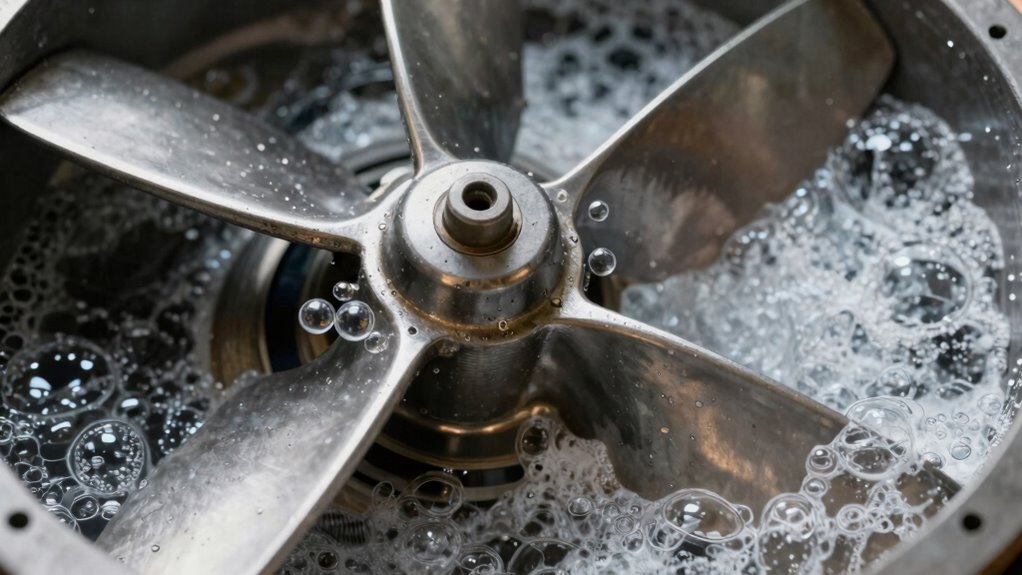
Cavitation causes significant damage to your pump by creating high-energy vapor bubbles that collapse violently, eroding internal components. Over time, this erosion weakens the pump material, leading to cracks, pitting, and eventual failure. It also impacts performance by:
- Reducing flow efficiency
- Increasing vibration and noise
- Causing misalignment or imbalance
- Accelerating wear and tear
You might notice decreased pressure or strange sounds indicating cavitation damage. To prevent this, stick to a proper maintenance schedule focused on inspecting pump components for signs of erosion. Using durable pump materials can also help resist cavitation effects. Additionally, connected equipment such as sensors and monitoring tools can help detect early signs of cavitation before serious damage occurs. Regularly monitoring system parameters like pressure and flow rates can provide early warnings of cavitation issues. Implementing monitoring technology can significantly improve the ability to catch cavitation early and mitigate its effects. Conducting performance tests periodically helps ensure your pump operates within safe parameters. Understanding cavitation dynamics can help you better anticipate and address potential issues. Ignoring these signs risks costly repairs and prolonged downtime, so address cavitation issues promptly to protect your pump’s longevity and performance.
Simple Strategies to Prevent Pump Cavitation
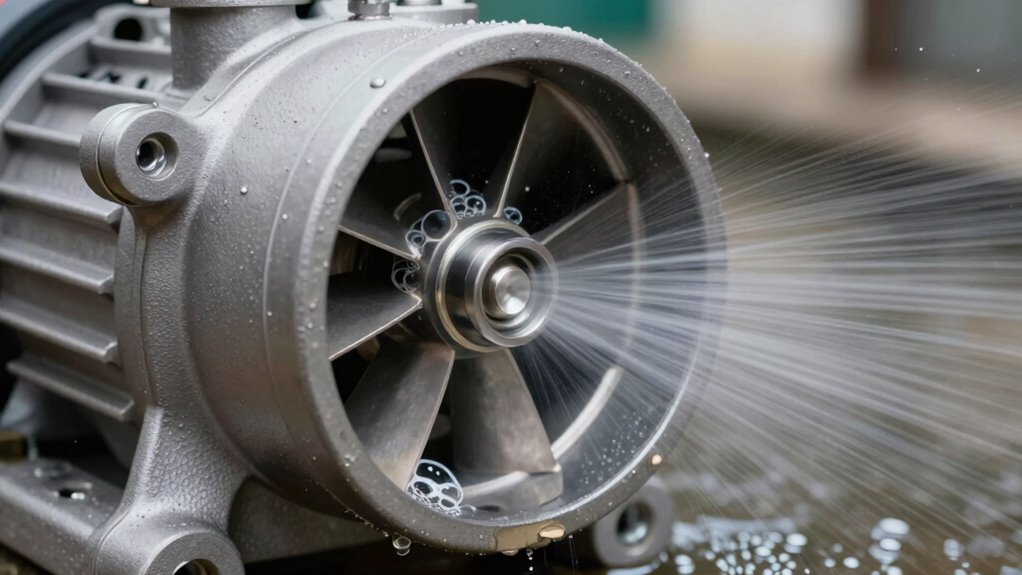
Preventing cavitation starts with implementing straightforward strategies that keep pump operation within safe limits. First, ensure your fluid levels are adequate; low fluid levels cause a drop in pressure, increasing cavitation risk. Regularly check and maintain proper fluid levels to prevent dry running. Additionally, inspect the pump seal to ensure it’s intact and functioning correctly—damaged seals can lead to air leaks, which promote cavitation. Use properly sized pumps for your application, as an undersized pump can create excessive suction, while an oversized pump may cause unnecessary stress. Also, avoid sudden startup or shutdowns, which can cause pressure fluctuations. By monitoring fluid levels and maintaining your pump seal, you reduce cavitation risk and extend the life of your pump.
Immediate Troubleshooting Steps for Cavitation
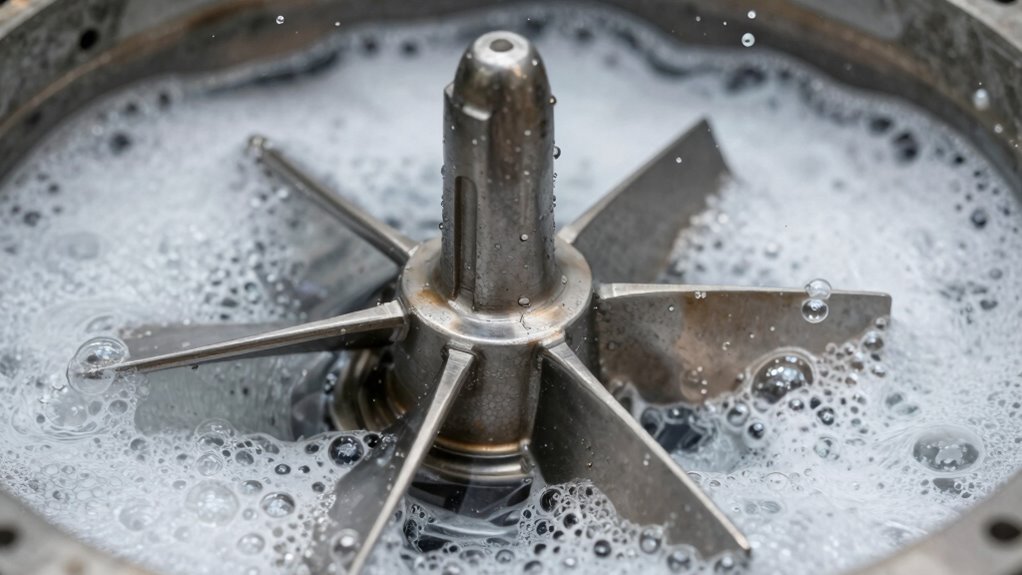
When you notice signs of cavitation, acting quickly is essential to minimize damage and restore proper pump function. First, turn off the pump and follow safety precautions to prevent injury. Then, perform these immediate troubleshooting steps:
- Check the inlet pressure—ensure it’s above the vapor pressure to prevent boiling.
- Inspect for obstructions or debris blocking the inlet.
- Verify the pump’s operating point matches manufacturer specifications.
- Adjust the system’s flow rate or reduce demand if needed.
Implementing these maintenance tips helps prevent further damage. Always prioritize safety by wearing protective gear and working in a safe environment. Quick action can reduce repairs and extend your pump’s lifespan, but don’t hesitate to consult professional help if cavitation persists.
When to Call a Professional for Pump Repair or Replacement
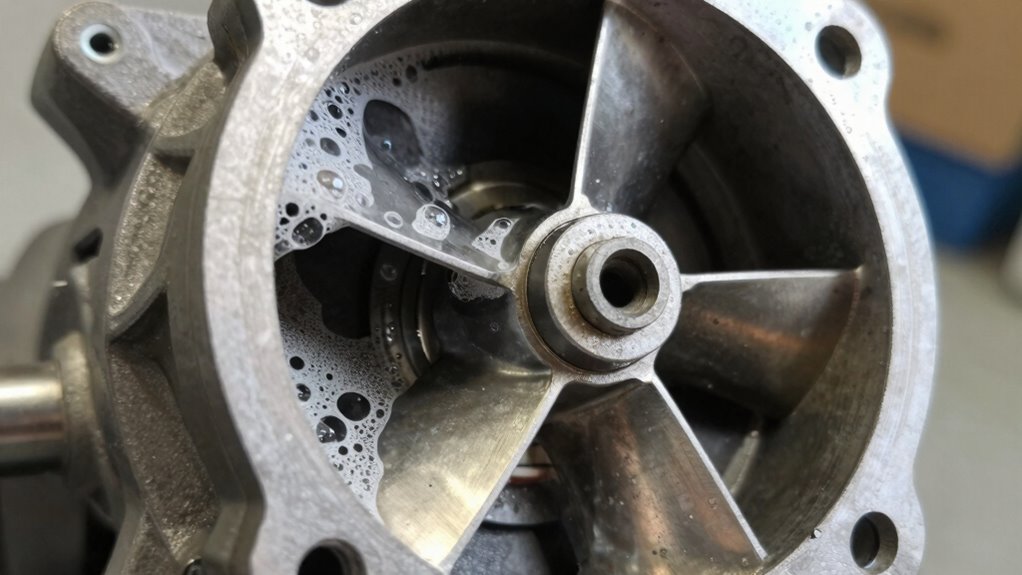
Knowing when to call a professional for pump repair or replacement is essential to avoid further damage and costly downtime. If you notice persistent cavitation sounds, reduced flow, or frequent pump shutdowns despite routine pump maintenance, it’s time to seek expert help. Ignoring signs can decrease system efficiency and cause irreversible damage.
Consider this quick guide:
| Symptom | Action Needed | Urgency |
|---|---|---|
| Loud cavitation noise | Call a professional immediately | High |
| Decreased system efficiency | Schedule a maintenance check | Moderate |
| Frequent breakdowns | Replace pump if needed | Urgent if ongoing |
Timely professional intervention preserves system performance and prevents costly repairs.
Frequently Asked Questions
Can Pump Cavitation Occur in All Types of Pumps?
Yes, cavitation can occur in all types of pumps, affecting their efficiency and longevity. You need to monitor your pumps closely because cavitation causes noise and damage over time. Regular maintenance scheduling helps detect early signs of cavitation, preventing costly repairs. By addressing cavitation promptly, you maintain peak pump efficiency and extend the lifespan of your equipment. Don’t ignore the signs—act quickly to keep your pumps running smoothly.
Is There a Safe Level of Cavitation for Operations?
There’s no safe level of cavitation in your pump. Even slight cavitation disrupts pump efficiency and creates noise that’s hard to ignore. As cavitation worsens, it can cause irreversible damage, risking costly repairs. To protect your system, you must prioritize noise mitigation and monitor for early signs of cavitation. Maintaining ideal operating conditions ensures your pump runs smoothly, avoiding the hidden dangers lurking beneath seemingly minor noises.
How Long Does It Take to Repair Cavitation Damage?
Repairing cavitation damage can take anywhere from a few days to several weeks, depending on the extent of the damage. When you notice abnormal pump noise, it’s vital to assess and address the issue promptly. The repair timeline involves inspecting the impeller, casing, and other components, then replacing or repairing damaged parts. Acting quickly helps minimize downtime and prevents further damage, ensuring your pump operates smoothly again as soon as possible.
Can Low-Quality Pump Parts Cause Cavitation?
Did you know that using low-quality pump parts can increase cavitation risk by up to 60%? Yes, poor-quality components often lead to decreased pump efficiency and poor maintenance practices, which create the perfect environment for cavitation to develop. When you opt for better parts, you improve performance and reduce cavitation chances. Regular maintenance and high-quality parts are essential to keep your pump running smoothly and avoiding costly damage.
What Are Best Practices for Ongoing Cavitation Prevention?
To prevent cavitation, you should regularly perform vibration monitoring to catch early signs of imbalance or wear. Maintain proper pressure regulation within the pump system, ensuring it stays within manufacturer specifications. Keep an eye on flow rates and avoid operating the pump at too low a pressure. Consistent inspections and timely adjustments help you minimize cavitation risks and extend your pump’s lifespan effectively.
Conclusion
Ignoring pump cavitation is like ignoring a ticking time bomb—you never know when it’ll blow. Catch the signs early, listen to the weird noises, and take action before damage spreads. Regular checks and quick troubleshooting keep your pump running smoothly, preventing costly repairs. Think of cavitation as a warning light on your dashboard—heed it now, or face the chaos later. Stay vigilant, and your pump will serve you faithfully for years to come.
NFL season / tailgating Picks
team gear
As an affiliate, we earn on qualifying purchases.