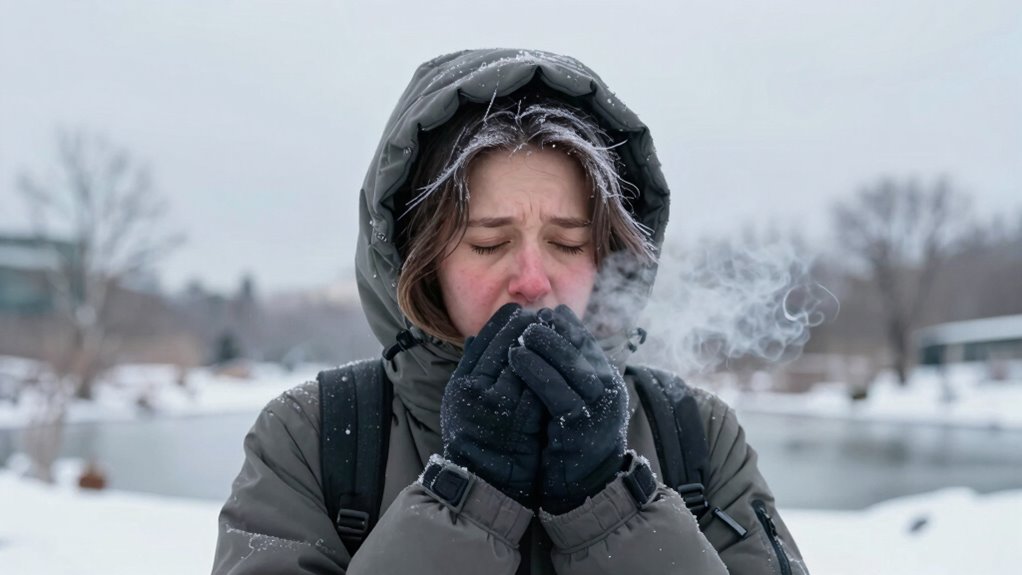

Cold exposure causes dizziness by narrowing your blood vessels, which reduces blood flow to your brain and affects your balance. As your body endeavors to stay warm, it redirects blood to crucial organs, leading to numbness in extremities and less oxygen-rich blood reaching your brain. This can make you feel faint or disoriented. To prevent this, it’s important to warm up, cover yourself, and stay alert. Keep going for more tips on staying safe in cold conditions.

Get home appliances delivered free — and shop member deals
- Fast, free delivery on millions of items
- Access to Prime Big Deal Days deals on October 6–7
- Prime Video, Amazon Music and more included
Key Takeaways
- Cold exposure causes vasoconstriction, reducing blood flow to the brain and leading to dizziness or lightheadedness.
- Shivering and peripheral vessel constriction divert blood to vital organs, impairing brain circulation.
- Reduced oxygen-rich blood reaching the brain impairs balance and can cause disorientation.
- To counteract dizziness, move to a warmer environment, cover with insulating clothing, and stay seated or lying down.
- Prevent cold-related dizziness by maintaining warmth, especially in extremities and critical areas like the head and neck.

Cold exposure can often lead to dizziness, a common but unsettling response your body has to sudden temperature drops. When you step into a chilly environment or get exposed to cold water, your body reacts quickly to protect itself. One key response is the shivering response, where your muscles contract involuntarily to generate heat. While shivering helps maintain core temperature, it also diverts energy and blood flow away from other parts of your body, which can contribute to feelings of dizziness.
Your body’s primary goal during cold exposure is to preserve warmth in your essential organs. To do this, it constricts peripheral circulation — the process where blood vessels in your extremities narrow to reduce heat loss. This constriction means less blood flows to your hands, feet, and skin, making these areas feel numb or cold. Simultaneously, blood is shunted toward your core to keep your vital organs warm, but this shift can reduce overall blood volume reaching your brain. When less blood reaches your brain, you may experience dizziness, lightheadedness, or even fainting in extreme cases.
Cold exposure redirects blood to vital organs, reducing brain flow and causing dizziness or fainting risk.
The dizziness you feel isn’t just because of the cold itself but also because of how your body prioritizes blood flow and heat. The reduced peripheral circulation means your brain gets less oxygen-rich blood temporarily, which can impair your balance and cause that spinning or disorienting sensation. If you continue to stay exposed without taking steps to warm up, your body’s response can intensify, making dizziness more severe.
So, what can you do if you start feeling dizzy during cold exposure? First, it’s essential to get to a warmer environment as soon as possible. Moving to a place with controlled temperature allows your body to relax its constricted blood vessels and restore normal circulation. Covering up with dry, insulating clothing helps reduce heat loss and encourages your blood vessels to dilate, improving peripheral circulation. Drinking warm fluids can also help promote better blood flow and stabilize your core temperature.
If you’re outdoors and can’t find immediate shelter, try to keep your head and neck warm, as heat loss from these areas can worsen dizziness. Avoid sudden movements; instead, sit or lie down to prevent falls. Restoring warmth and blood flow is essential to stop the dizziness and prevent further complications. Remember, cold exposure triggers complex responses, but understanding how your body reacts can help you act quickly and safely, reducing the risks associated with dizziness and cold stress.
insulated thermal gloves for cold weather
As an affiliate, we earn on qualifying purchases.
As an affiliate, we earn on qualifying purchases.
Frequently Asked Questions
Can Cold Exposure Cause Long-Term Dizziness Issues?
Cold exposure can cause long-term dizziness issues if it disrupts your body’s cold adaptation process or damages your circulation. Repeated exposure may alter dizziness mechanisms, making you more prone to imbalance or vertigo over time. To prevent this, gradually adapt to cold, stay warm, and consult a healthcare professional if dizziness persists. Proper management helps your body adjust safely and minimizes long-term effects on your equilibrium.
Are There Specific Populations More Prone to Cold-Induced Dizziness?
Certain populations are more prone to cold-induced dizziness due to cold sensitivity and population risks. People with circulatory issues, such as those with Raynaud’s phenomenon or cardiovascular problems, often experience heightened sensitivity. Elderly individuals and those with lower body fat may also be at increased risk, as their bodies struggle to maintain core temperature. If you belong to these groups, you should take extra precautions during cold exposure.
How Quickly Does Dizziness Typically Resolve After Warming Up?
Dizziness from cold exposure is like a fog lifting—once you start warming up, it often clears within a few minutes. Your body’s warming techniques, such as moving to a warmer environment or sipping warm fluids, help restore balance quickly. The dizziness duration varies, but most people notice improvement in about 5 to 15 minutes. Staying proactive with warming techniques guarantees a faster recovery and prevents prolonged discomfort.
Is Cold Exposure Linked to Other Neurological Symptoms?
Cold exposure can be linked to other neurological symptoms due to its neurological connection. You might experience symptoms like tingling, numbness, or weakness, which often correlate with how your body reacts to cold. These symptoms are connected to nerve responses and blood flow changes, so if you notice additional neurological issues during cold exposure, it’s important to seek medical advice. Recognizing these symptom correlations helps you manage your exposure more safely.
What Preventive Measures Can Reduce Dizziness During Cold Exposure?
To reduce dizziness during cold exposure, you should wear clothing with proper insulation to maintain your body heat and prevent rapid temperature drops. Additionally, stay well-hydrated with adequate hydration strategies, as dehydration can worsen dizziness. Moving slowly when you’re exposed to cold helps your body adjust gradually. Taking these steps keeps your circulation stable and minimizes your risk of dizziness, ensuring you stay safer and more comfortable outdoors.
As an affiliate, we earn on qualifying purchases.
Conclusion
So, next time you decide to brave the icy outdoors, remember: dizziness isn’t just your body’s way of saying “chill out.” It’s warning you that cold exposure might be turning your head into a spinning top. Keep moving, stay warm, and listen to your body—because fainting in a snowstorm isn’t exactly a winter wonderland. Embrace the heat, or embrace the dizziness—either way, stay safe and avoid becoming a human ice cube.
As an affiliate, we earn on qualifying purchases.
As an affiliate, we earn on qualifying purchases.
NFL season / tailgating Picks
team gear
As an affiliate, we earn on qualifying purchases.