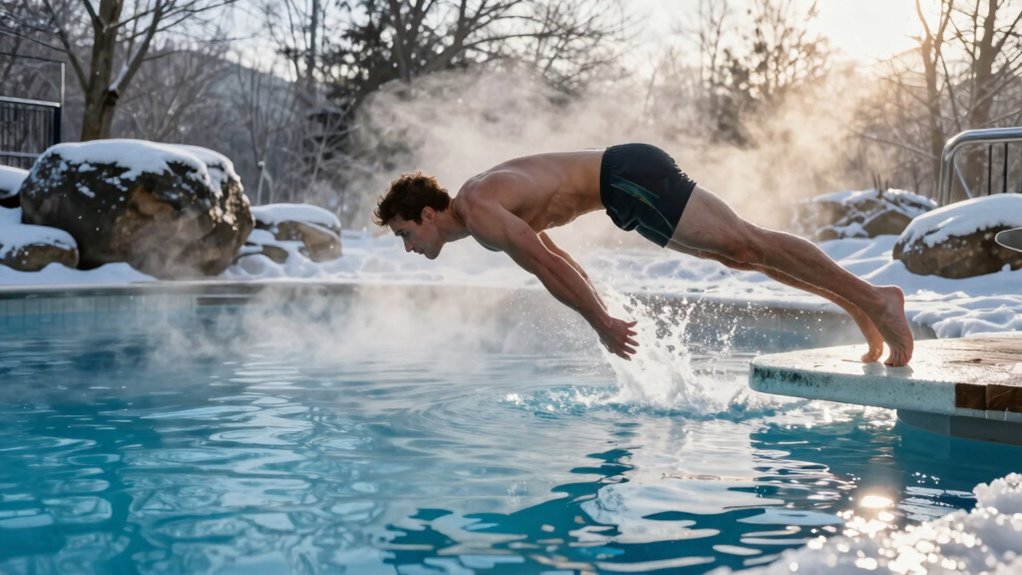

A cold plunge before your workout can boost your mental alertness and sharpen focus, giving you an invigorating edge. However, it may also tighten muscles temporarily, reducing flexibility and impairing your performance if done right before activity. Cold water can hinder muscle warmth and natural readiness, especially for intense training. To get the most benefit without risking injury, consider using cold plunges for recovery rather than pre-exercise. Keep exploring to learn how timing impacts its effects.
Key Takeaways
- Cold plunges before exercise can boost alertness and mental clarity but may temporarily tighten muscles, reducing flexibility.
- Timing matters: pre-workout cold exposure might impair performance, while post-exercise cold helps recovery and reduces inflammation.
- Cold water immersion can decrease muscle pliability, increasing injury risk if done right before physical activity.
- For optimal results, avoid cold plunges immediately before workouts; instead, use them after exercise to aid recovery.
- Individual responses vary; some find cold plunges enhance focus, while others experience performance hindrance—listen to your body.
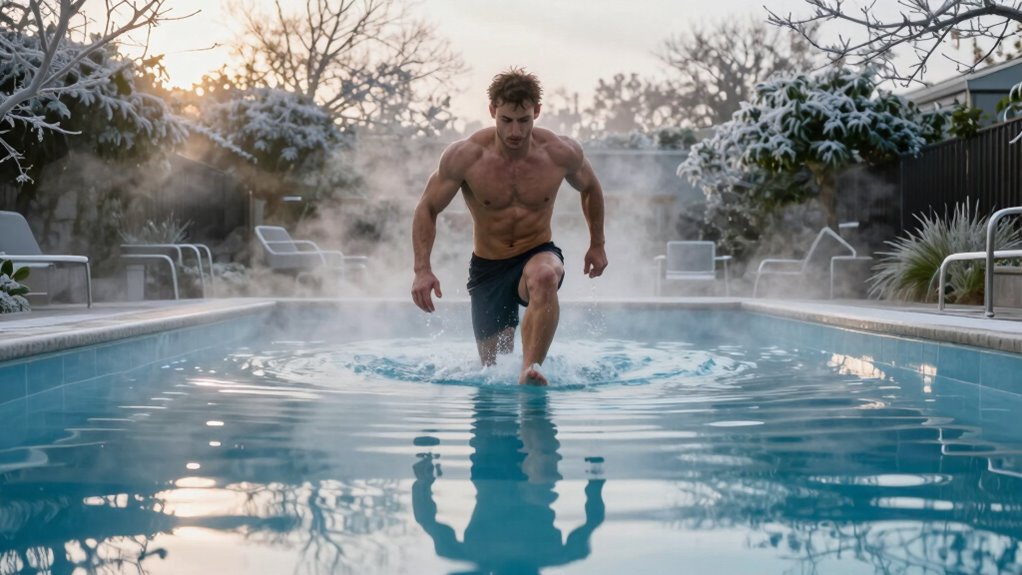
Have you ever considered taking a cold plunge before your workout? If you’re curious about how cold exposure might influence your performance, it’s worth exploring how it affects muscle recovery and mental clarity. Cold plunges, often involving immersing yourself in icy water for a few minutes, are popular for their ability to reduce inflammation and soothe sore muscles after intense activity. But can doing it before exercise offer the same benefits? The answer depends on your goals and how your body responds.
Considering a cold plunge before exercise? Discover how it impacts your focus, muscles, and recovery.
When you dip into cold water before working out, you might experience an immediate boost in mental clarity. The shock of the cold stimulates your nervous system, waking you up and sharpening your focus. This mental jolt can help clear away fatigue and increase your alertness, setting a more energized tone for your session. Plus, the invigorating sensation helps reduce stress and anxiety, which could translate into better concentration and motivation during your workout. However, keep in mind that the cold’s effects on muscle recovery are more nuanced. While cold plunges are known to decrease inflammation and aid muscle repair after exercise, taking one beforehand might temporarily tighten your muscles, making them less pliable. This can lead to decreased flexibility and potentially increase your risk of strains or injuries during your workout.
Timing matters when it comes to cold plunges. Using cold water right before you hit the gym could blunt your muscles’ natural warmth and flexibility, impairing performance. Conversely, if you’re coming off an intense session, a cold plunge can help speed up recovery by reducing swelling and soreness. But if your goal is to maximize muscle warm-up and prepare your tissues for movement, a cold plunge beforehand might backfire. Instead, a dynamic warm-up or light cardio may serve you better, increasing blood flow and preparing your muscles more effectively.
Ultimately, whether a cold plunge before exercise helps or hinders depends on your individual response and the type of workout you’re doing. If you find that cold exposure sharpens your mental focus and makes you feel energized, it might be worth incorporating, provided you’re mindful of how your body reacts. On the other hand, if you notice stiffness or decreased performance, it’s best to save cold plunges for post-workout recovery. Experiment with timing and listen to your body—what works for one person might not work for another.

Bubplay Ice Bath Cold Plunge Tub with Cover for Indoor Outdoor for Recovery, Cold Water Therapy, Athletes & Adults -105 Gallons, Black, XL
- Full-Body Cold Plunge: Roomy for most adults up to 6'7"
- Enhanced Insulation: 6-layer insulation with durable outer fabric
- Easy to Clean: Smooth inner liner for quick wiping
As an affiliate, we earn on qualifying purchases.
As an affiliate, we earn on qualifying purchases.
Frequently Asked Questions
Can Cold Plunges Improve Athletic Performance Long-Term?
Cold plunges can improve your long-term athletic performance by aiding muscle recovery and reducing inflammation. Regular cold immersion may help decrease soreness and speed up recovery after intense workouts, allowing you to train more consistently. However, overdoing it might blunt muscle gains or hinder adaptation. Use cold plunges strategically, especially after heavy sessions, to benefit from inflammation reduction without compromising your progress.
How Does Cold Exposure Affect Mental Focus During Workouts?
Imagine stepping into icy water, sharpening your mental clarity like a blade. Cold exposure can boost your focus by triggering adrenaline and reducing mental fog, making you feel sharper and more alert during workouts. Many find that cold mental clarity helps them stay present and motivated. So, if you want focus enhancement, a cold plunge might just be the invigorating boost you need to elevate your performance.
Are There Specific Sports That Benefit Most From Cold Plunges?
You’ll find recovery sports and endurance training benefit most from cold plunges. If you participate in activities like running, cycling, or swimming, cold immersion helps reduce inflammation and speeds up recovery. It also boosts mental clarity, allowing you to push harder in endurance sports. However, avoid cold plunges before high-intensity or strength workouts, as they may hinder muscle activation and performance. Use cold therapy strategically for ideal results.
What Are the Risks of Combining Cold Plunges With High-Intensity Training?
Like a tightrope walker over a chasm, combining cold plunges with high-intensity training can risk muscle fatigue and heart stress. Cold water constricts blood vessels, reducing muscle warmth and flexibility, which might lead to injury. It also puts extra strain on your heart, especially during intense effort. If you’re pushing hard, avoid cold plunges beforehand to prevent these dangers and keep your workout safe and effective.
How Quickly Should I Warm up After a Cold Plunge Before Exercising?
You should warm up for about 10 to 15 minutes after a cold plunge before exercising. This allows your blood circulation to return to normal and helps muscle recovery, reducing stiffness and injury risk. Gentle dynamic stretches or light activity can speed up the process. Rushing straight into high-intensity workouts might hinder blood flow and delay muscle recovery, so listen to your body and gradually increase intensity.
As an affiliate, we earn on qualifying purchases.
Conclusion
Knowing when to take a cold plunge before your workout is like holding a key to unleashing your best performance. When used wisely, it sharpens your focus and boosts recovery; when overdone, it can freeze your progress in its tracks. Listen to your body’s signals and experiment to find your perfect balance. Remember, a cold plunge is a powerful tool—use it wisely, or it might turn your workout into a frosty misadventure.
As an affiliate, we earn on qualifying purchases.
pre-workout cold plunge equipment
As an affiliate, we earn on qualifying purchases.
As an affiliate, we earn on qualifying purchases.