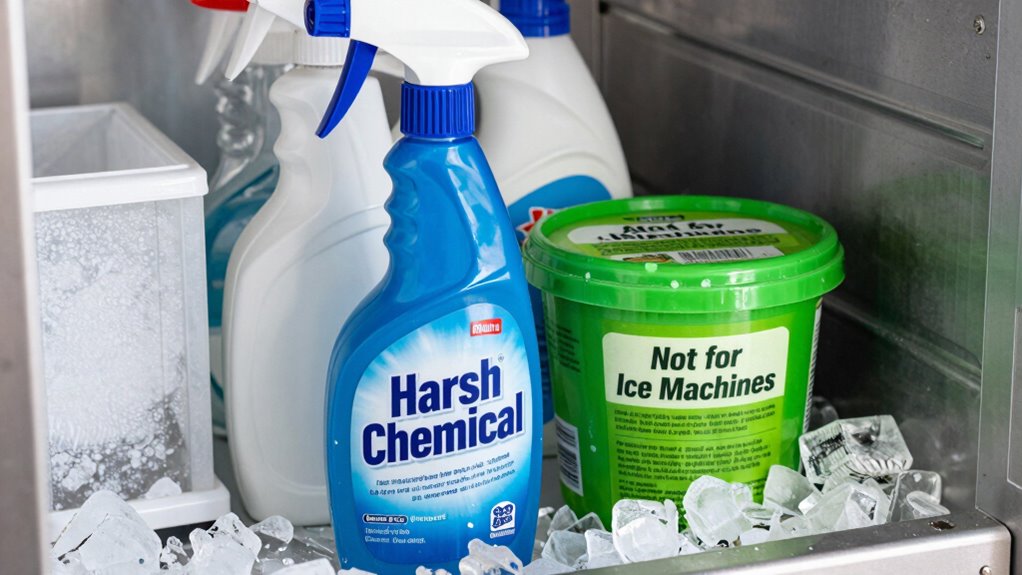

Avoid using harsh chemicals like strong acids, alkalis, or abrasive cleaners not approved for ice machines. These can damage gaskets, seals, and internal components, causing leaks and contamination. Using unverified or generic cleaning agents also risks chemical reactions that weaken parts and harm your ice quality. Stick to manufacturer-approved, certified products designed for food-contact surfaces. To guarantee safe, effective cleaning and protect your equipment, explore essential tips that follow.

Get home appliances delivered free with Prime
- Fast, free delivery on millions of items
- Prime Video, Amazon Music and more included
- Member-only deals all year
Key Takeaways
- Avoid using strong acids, alkalis, or abrasive cleaners not approved for ice machine maintenance.
- Do not use generic or unverified cleaning agents lacking proper certifications and safety data.
- Refrain from using harsh chemical solutions that can corrode gaskets, seals, or metal components.
- Do not employ cleaning products containing reactive ingredients that may damage internal parts.
- Avoid chemical cleaners not recommended by the manufacturer or without proper food contact approval.
As an affiliate, we earn on qualifying purchases.
Why Using the Wrong Cleaning Chemicals Can Damage Your Ice Machine
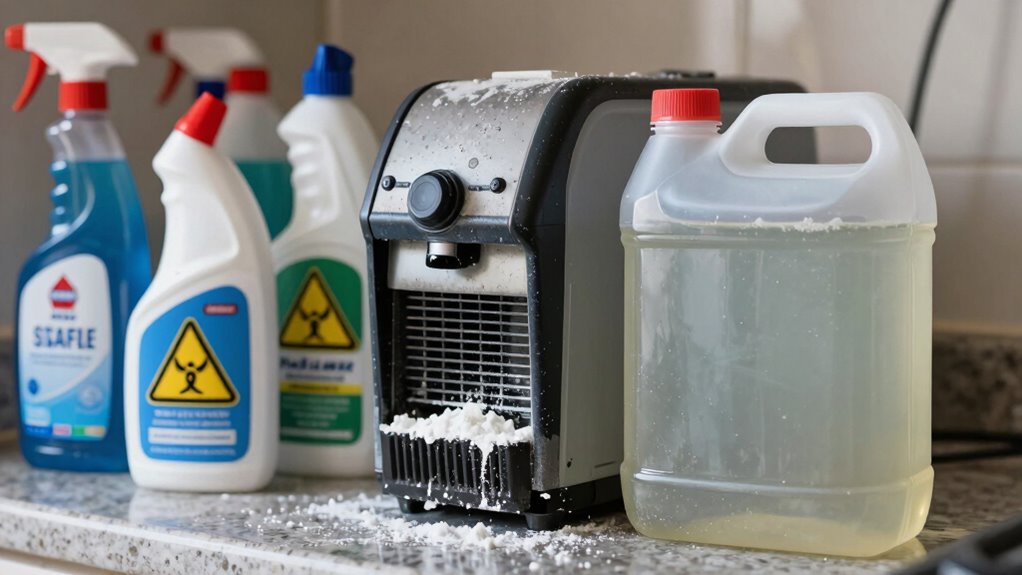
Using the wrong cleaning chemicals can cause serious damage to your ice machine. When you neglect proper ice machine maintenance and ignore cleaning chemical safety, you risk corroding parts or damaging sensitive components. Harsh chemicals can erode gaskets, seals, and metal surfaces, leading to leaks and malfunctions. Even seemingly safe cleaners may leave residues that affect ice quality or promote bacteria growth. Always choose cleaning products specifically designed for ice machines and follow manufacturer guidelines. Proper cleaning chemical safety guarantees you don’t compromise the machine’s integrity or safety. If you use incompatible chemicals, you might void warranties or require costly repairs. Understanding chemical compatibility is crucial to prevent damage and ensure effective cleaning. Choosing the right cleaning agents based on product specifications helps protect your equipment and maintain optimal performance. It’s also important to consider manufacturer recommendations to ensure compatibility and safety when selecting cleaning chemicals. Protect your investment by understanding the importance of using the right cleaning agents and adhering to maintenance best practices. Proper cleaning protocols are essential for maintaining equipment longevity and ensuring safe, high-quality ice production. Maintaining compliance with affiliate disclosure and privacy policies also ensures transparency and trust in your maintenance routines.
As an affiliate, we earn on qualifying purchases.
Which Cleaning Chemicals Are Unsafe for Ice Machines?
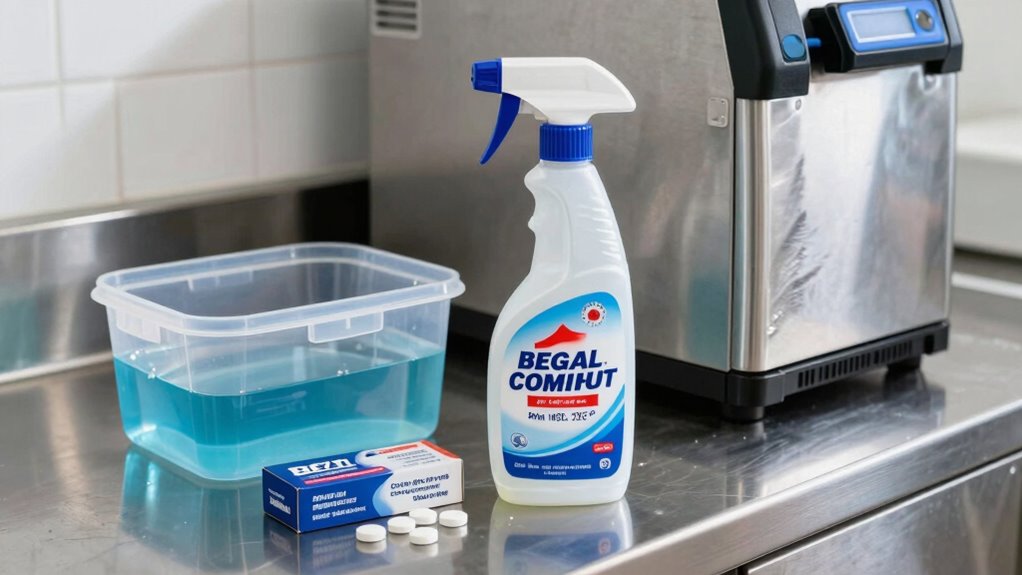
Certain cleaning chemicals can be highly unsafe for ice machines because they may cause corrosion, damage sensitive parts, or leave harmful residues. Chemicals that react strongly with metal components, such as bleach or acidic cleaners, can trigger damaging chemical reactions, compromising the machine’s integrity. Additionally, products incompatible with the materials used in ice machines—like certain plastics or rubber seals—can lead to deterioration or leaks. Always check material compatibility before using any cleaner. Avoid harsh acids, strong alkalis, or abrasive agents that aren’t specifically approved for ice machine maintenance. Using unsafe chemicals risks damaging internal parts, creating safety hazards, and contaminating your ice. Stick to approved, manufacturer-recommended cleaning agents to guarantee your machine stays in excellent condition. Proper maintenance also involves understanding the air purifier maintenance dos and don’ts, which helps ensure your equipment remains safe and effective. Being aware of safe cleaning practices can further prevent accidental damage and prolong the lifespan of your ice machine. Additionally, choosing appropriate cleaning chemicals is essential for maintaining optimal hygiene and equipment longevity. Regularly consulting manufacturer guidelines can prevent the use of unsafe cleaning agents that might void warranties or cause costly repairs. Moreover, understanding material compatibility can help you select the right cleaning products and avoid unintended damage to your equipment.
commercial ice machine sanitizer
As an affiliate, we earn on qualifying purchases.
As an affiliate, we earn on qualifying purchases.
What Risks Come With Using Improper Cleaning Agents?
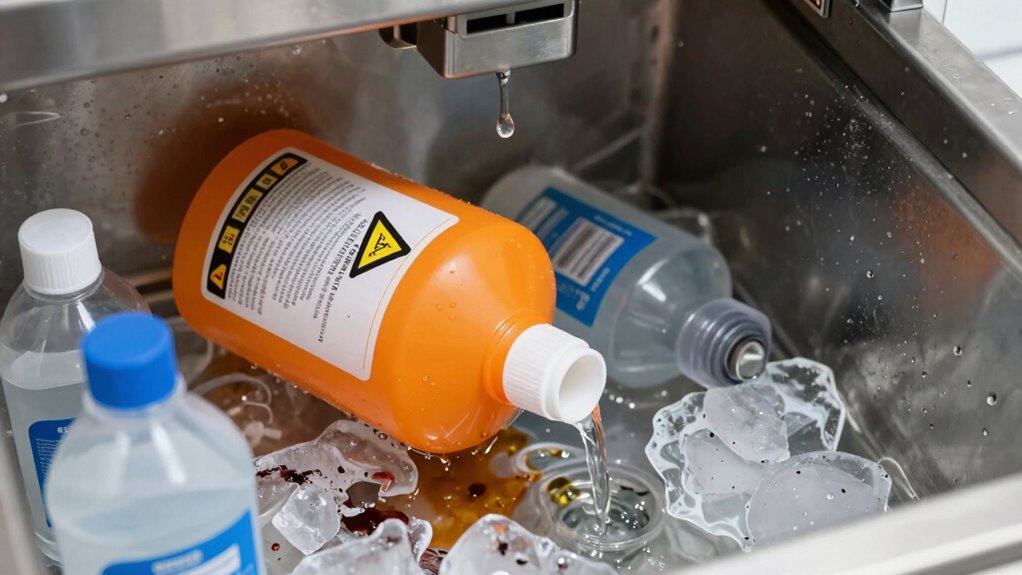
Applying improper cleaning agents to your ice machine can lead to serious safety and operational issues. Using the wrong chemicals may trigger harmful chemical reactions that produce toxic fumes or residues, risking health hazards for users. These reactions can also weaken the machine’s components, leading to equipment corrosion over time. Corrosion damages crucial parts like the evaporator and water lines, resulting in costly repairs or replacements. Additionally, improper cleaners might not fully sanitize surfaces, increasing the risk of bacterial growth and ice contamination. This can undermine the safety standards of your equipment and compromise the quality of your ice. Proper cleaning protocols are essential to maintain the machine’s performance and longevity. Using incompatible or overly harsh chemicals can also lead to damage to internal sensors, further complicating maintenance. Regularly inspecting cleaning agents for chemical compatibility helps prevent inadvertent damage. This not only compromises ice quality but also poses health risks to consumers. Overall, selecting the wrong cleaning agents jeopardizes your machine’s integrity, safety standards, and operational efficiency, making it essential to use only approved, compatible cleaning products.
manufacturer approved ice machine cleaner
As an affiliate, we earn on qualifying purchases.
As an affiliate, we earn on qualifying purchases.
How to Find Approved and Safe Cleaning Products for Ice Machines
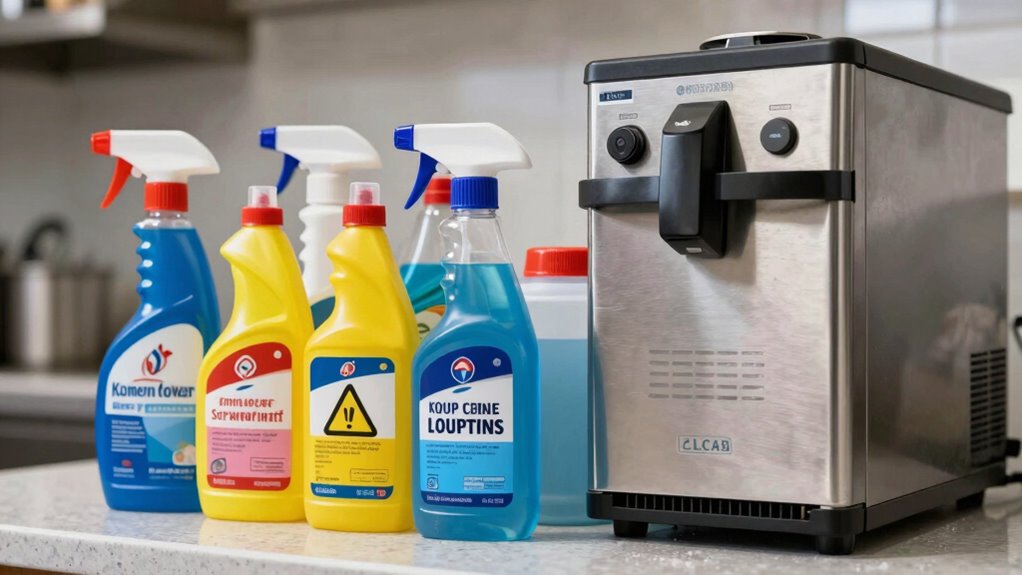
Wondering how to guarantee you’re choosing the right cleaning products for your ice machine? Start by checking for cleaning product certifications from reputable organizations, which verify the product meets safety and effectiveness standards. Look for labels indicating the product is approved for use in food contact surfaces, highlighting its suitability for ice machines. Always review product labels and safety data sheets to verify they are designed specifically for ice machine cleaning and are non-corrosive. Avoid generic or unverified cleaners that lack proper certifications, as they can compromise ice machine safety. When in doubt, consult your ice machine manufacturer’s recommendations or seek advice from certified cleaning professionals. Using approved, certified cleaning products helps protect your equipment, ensures safe ice production, and maintains compliance with health standards. Additionally, understanding safety standards related to food contact surfaces can further guide you in selecting appropriate cleaning agents. Being aware of regulatory compliance ensures that your cleaning practices meet industry requirements and protect consumer health. To further ensure safety, always stay updated on industry guidelines and any changes in cleaning regulations. Regularly consulting with industry experts can also help you stay informed about emerging best practices for safe and effective cleaning.
Expert Tips for Properly Cleaning Your Ice Machine Safely

To guarantee you clean your ice machine safely and effectively, it’s essential to follow a structured process and adhere to best practices. Regular ice machine maintenance is key to preventing bacteria buildup and ensuring quality ice. Establish and stick to consistent cleaning schedules—ideally weekly or as recommended by the manufacturer. Before cleaning, disconnect the power and drain the machine. Use approved cleaning solutions, avoiding harsh chemicals. Carefully scrub all surfaces, including bins and ice molds, to remove residue and scale. Rinse thoroughly to eliminate any cleaning product traces. Dry all parts completely before reassembling and restarting the machine. Proper cleaning not only extends your ice machine’s lifespan but also guarantees safe, clean ice for your customers or household. Additionally, understanding the differences between cleaning agents such as MERV filters versus HEPA filters can help in selecting the safest and most effective solutions for your appliance maintenance. Incorporating smart cleaning technology can also streamline the process and ensure your equipment remains in optimal condition. Regularly inspecting and replacing filters can further enhance the cleanliness and efficiency of your ice machine, contributing to overall equipment longevity. Moreover, choosing the right cleaning procedures can help prevent chemical mishandling and ensure safety during maintenance.
Frequently Asked Questions
Can Vinegar Be Used as a Safe Cleaning Chemical for Ice Machines?
Vinegar isn’t recommended for cleaning ice machines because of vinegar safety concerns and acidity concerns. Its acidity can damage rubber seals and internal components, potentially causing leaks or malfunctions. Plus, vinegar may leave behind residues that affect ice quality. Instead, use approved commercial cleaning agents designed for ice machines, which ensure safety and proper cleaning without risking damage. Always follow manufacturer guidelines for cleaning to keep your machine in top condition.
Are There Natural or Eco-Friendly Cleaning Options for Ice Machines?
Imagine a sparkling, crystal-clear ice machine that’s safe and eco-friendly. You can choose natural alternatives like baking soda, lemon juice, or vinegar diluted properly, which effectively clean without harsh chemicals. Eco-friendly solutions like plant-based cleaning agents also work well. These options not only protect your environment but also assure your ice remains pure and safe, giving you peace of mind with every cool, revitalizing cube.
How Often Should Ice Machines Be Cleaned With Chemicals?
You should clean your ice machine with chemicals at least every 3 to 6 months, depending on usage and manufacturer recommendations. Regular cleaning frequency helps prevent buildup and bacteria growth. Follow your chemical schedule closely, ensuring thorough scrubbing and sanitizing. If your machine sees heavy use or if you notice any odors or cloudy ice, consider cleaning more often. Consistent maintenance keeps your ice safe and machine running efficiently.
What Are the Signs That a Cleaning Chemical Is Damaging My Ice Machine?
You’ll notice damage if your ice machine shows corrosion signs or if you see chemical residue left behind after cleaning. These issues indicate that the cleaning chemical might be too harsh or incompatible with your machine’s materials. Keep an eye out for discoloration, pitting, or a slimy buildup. If you observe these signs, stop using that chemical immediately and switch to a safer, machine-approved cleaner.
Can I Use Household Bleach to Clean My Ice Machine Safely?
Think of household bleach as a double-edged sword—effective but risky if misused. You shouldn’t use household bleach to clean your ice machine because it can damage parts and compromise cleaning safety. Instead, opt for food-safe, manufacturer-recommended cleaning solutions that guarantee your ice remains pure and safe. Using the wrong chemicals can turn your clean machine into a source of contamination, so play it safe and follow proper cleaning protocols.
Conclusion
Using the wrong cleaning chemicals is like putting the wrong fuel in your car—you risk damaging your ice machine and risking safety. When I first ignored this advice, I ended up with costly repairs that could’ve been avoided. Always choose approved, safe cleaning products to keep your ice machine running smoothly. Think of proper cleaning as giving your machine a health boost—protect it, and it’ll serve you perfectly, ice after ice.
Fall Picks
fall essentials
As an affiliate, we earn on qualifying purchases.