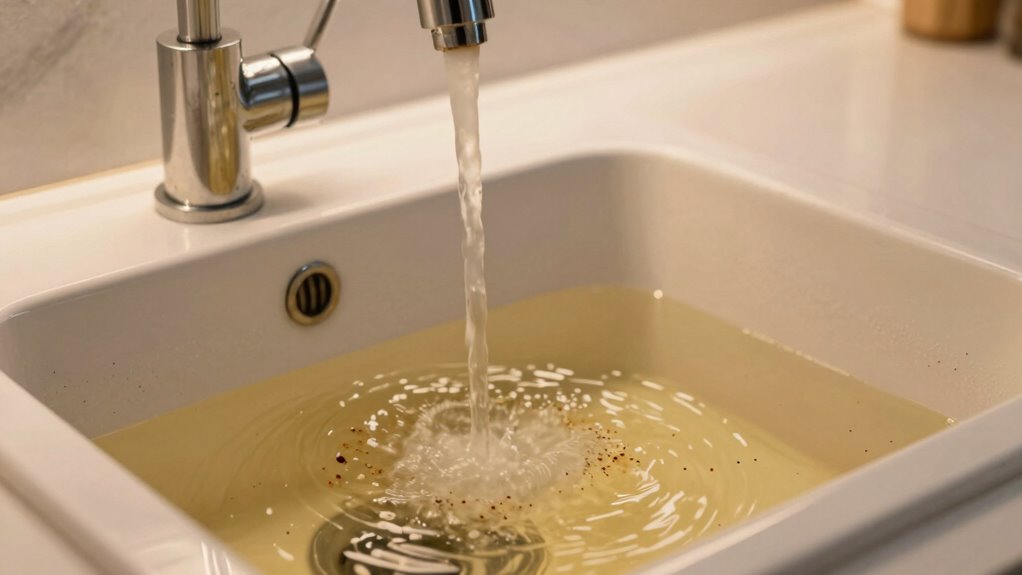

Yellow water often stems from mineral buildup, such as iron or manganese, which get disturbed or settle in pipes. Corroded or aging pipes can release rust particles into your water. Plumbing work, repairs, or municipal flushing may also dislodge debris, causing temporary discoloration. Poor water chemistry can speed up corrosion and mineral deposits. If you want to uncover more details about these common culprits and how to address them, keep exploring what causes yellow water.

Get home appliances delivered free with Prime
- Fast, free delivery on millions of items
- Prime Video, Amazon Music and more included
- Member-only deals all year
Key Takeaways
- Minerals like iron and manganese oxidize in water, causing it to turn yellow or rust-colored.
- Dislodged rust or mineral buildup from plumbing work can temporarily discolor water.
- Corrosion of aging pipes releases rust particles, leading to persistent yellow water issues.
- Fluctuations or maintenance by municipal water providers can stir up debris, causing temporary discoloration.
- Lack of regular plumbing maintenance and water treatment increases the risk of mineral buildup and pipe corrosion.
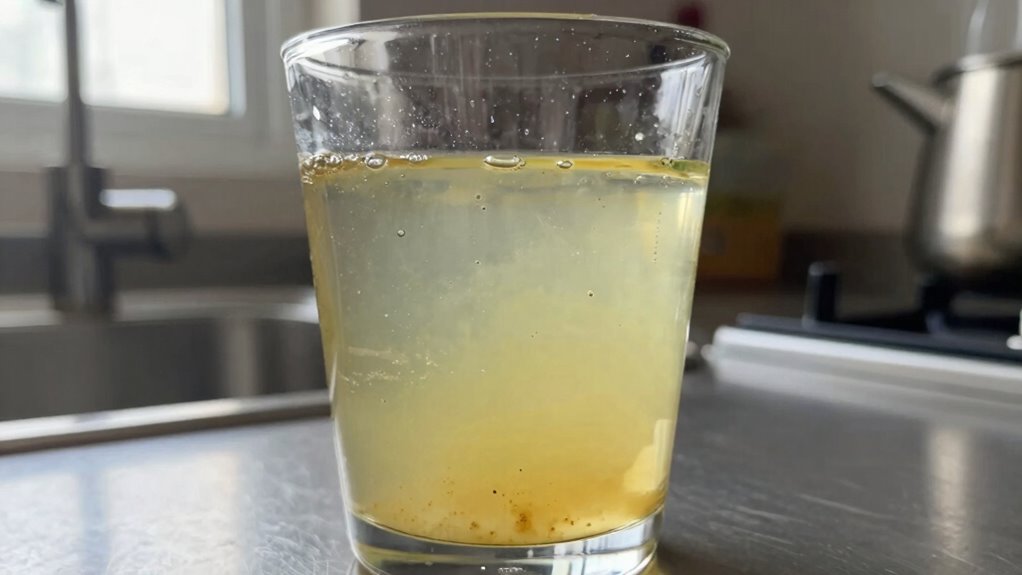
If your tap water suddenly turns yellow, it can be concerning, but understanding the common causes can help you identify the problem quickly. One of the primary reasons for discolored water is issues related to water quality. Over time, minerals like iron and manganese naturally present in your water source can accumulate in your pipes, especially if your water supply has high mineral content. When these minerals oxidize, they turn the water a yellow, brown, or rust color. This discoloration often appears suddenly, especially after plumbing maintenance or during periods of high water usage, indicating that mineral deposits are disturbed or released from the pipes. Water chemistry also plays a significant role in mineral oxidation and discoloration processes.
Discolored yellow water often results from mineral buildup or oxidation in your pipes.
Another significant factor is plumbing maintenance or repairs. When plumbers work on your pipes—whether replacing old sections, fixing leaks, or installing new fixtures—they may inadvertently dislodge rust or mineral buildup inside the pipes. This debris then flows into your tap water, causing a temporary change in water color. After maintenance, it’s common for water to appear yellowish for a short period; running the taps for a few minutes usually clears it up. However, if the discoloration persists, it could point to corrosion or deterioration within the plumbing system itself. Old pipes, especially those made from galvanized steel, are more prone to rusting, which can lead to persistent yellow water issues.
Corrosion is another culprit that directly impacts water quality. Over time, corrosion can develop inside aging pipes, especially if the protective lining has worn away. As the pipes corrode, rust particles are released into the water, giving it that yellowish hue. Normally, corrosion happens gradually, but certain water conditions—like low pH (acidic water) or high mineral content—can accelerate the process. If you notice this issue consistently, it’s a sign that your plumbing system is deteriorating, and you might need to consider replacing sections of your pipes or installing a water treatment system to improve water quality.
Lastly, municipal water supply fluctuations or maintenance activities can cause temporary discoloration. When water authorities perform routine maintenance or flush the system, dislodged debris can flow into your home’s plumbing, resulting in yellow water. Usually, this clears up after a few hours, but if it persists, it’s wise to contact your water provider or a plumber for an inspection. Proper plumbing maintenance not only ensures your pipes are in good shape but also helps prevent issues that compromise water quality. Regular inspections, cleaning, and timely repairs reduce the chances of mineral buildup or corrosion, keeping your water clear and safe to use.
As an affiliate, we earn on qualifying purchases.
Frequently Asked Questions
Can Yellow Water Be Harmful to My Health?
Yellow water can be harmful to your health if it’s caused by water contamination or excessive mineral buildup. Contaminants like rust, bacteria, or chemicals pose health risks, so you should avoid drinking it until you identify the source. Mineral buildup, while usually less dangerous, can affect water taste and clarity. It’s best to get your water tested and consult a professional to verify it’s safe for consumption.
How Often Should I Test My Water for Discoloration?
Think of water testing as your own personal Pandora’s box—regular checks reveal hidden issues before they worsen. You should test your water for discoloration at least once every six months, or more often if you notice changes. Discoloration frequency depends on your water source and plumbing. Staying vigilant guarantees you catch problems early, keeping your water safe and clear, much like Pandora’s hope shining through darkness.
Are There Specific Household Items That Cause Yellow Water?
Certain household items can cause yellow water, especially if your household plumbing or water storage tanks contain rust or mineral deposits. Items like old pipes, corroded fixtures, or water heaters contribute to discoloration. Additionally, using metal appliances or containers for storing water can introduce rust. Regular maintenance, flushing your plumbing, and avoiding metal storage containers help prevent yellow water caused by these household items.
Does Bottled Water Also Turn Yellow?
Think of bottled water as a clear mirror, reflecting purity. It can turn yellow due to bottled water discoloration, often caused by exposure to sunlight or aging bottles. While generally safe, yellow-tinted bottled water might raise concerns about bottled water safety. Always check the bottle’s seal and expiration date. If the water looks off, it’s best to avoid drinking it, ensuring your health stays protected.
What Are the Long-Term Effects of Drinking Yellow Water?
Long-term drinking of yellow water can lead to health issues due to water discoloration caused by corrosion issues in pipes. You might experience stomach upset, kidney problems, or metal poisoning if harmful metals like iron or copper leach into your water. Continued exposure to discolored water increases health risks, so it’s vital to address corrosion issues promptly and consider water testing to guarantee safety.
water test kit for mineral content
As an affiliate, we earn on qualifying purchases.
As an affiliate, we earn on qualifying purchases.
Conclusion
So, next time your water turns yellow, consider the unexpected clues—like a nearby pipe repair or recent plumbing work—that might be coincidental signs of a deeper issue. Sometimes, it’s not just the water’s color but the timing and circumstances that reveal the true culprit. By paying attention to these subtle coincidences, you can catch problems early and guarantee your water stays clear and safe, proving that even small details can tell a bigger story.
As an affiliate, we earn on qualifying purchases.
whole house water filtration system
As an affiliate, we earn on qualifying purchases.
As an affiliate, we earn on qualifying purchases.
Halloween Picks
halloween
As an affiliate, we earn on qualifying purchases.