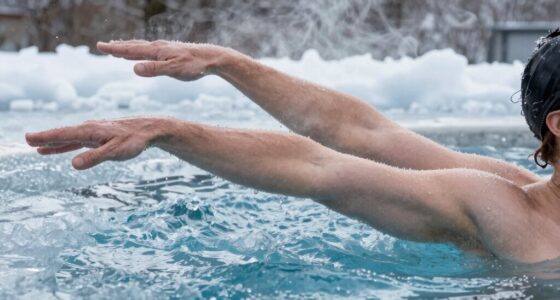
To feel in control during a cold plunge, focus on deliberate, deep breathing to calm your nerves and slow your heart rate. Accept the discomfort as temporary and shift your attention to the present moment through mindfulness. Start with shorter immersions and gradually extend your time, using mental strategies like visualization and resilience-building. Steady breath and a calm mindset help you manage automatic reactions, turning cold exposure into a powerful confidence booster as you learn more about mastering control.

Get home appliances delivered free — and shop member deals
- Fast, free delivery on millions of items
- Access to Prime Big Deal Days deals on October 6–7
- Prime Video, Amazon Music and more included
Key Takeaways
- Focus on deep, deliberate breathing to calm the nervous system and maintain composure.
- Accept the cold as a temporary challenge, shifting your mindset from resistance to presence.
- Gradually increase immersion time to build confidence and mental resilience.
- Use mindfulness to stay present and redirect thoughts away from discomfort.
- Reinforce control through consistent practice and connecting with nature for added grounding.

Taking a cold plunge might seem intimidating at first, but it’s a powerful way to regain a sense of control over your body and mind. When you step into icy water, your natural reaction is to panic or tense up, but you can counter this with deliberate breathing techniques. Focusing on your breath helps you stay calm and centered, transforming what feels overwhelming into a manageable challenge. Deep, slow inhales through your nose, followed by controlled exhales through your mouth, can slow your heart rate and reduce the instinct to resist the cold. This conscious breathing acts as an anchor, giving you a tool to regain composure amid the shock of the cold. Incorporating mindful awareness of your environment can further enhance your ability to stay present and in control during the experience.
Developing mental resilience is key to staying in control during a cold plunge. You’ll find that the more you practice, the easier it becomes to face the discomfort head-on. Instead of fighting the cold, accept it as part of the experience. Visualize yourself successfully enduring the initial shock, and remind yourself that the discomfort is temporary. As your mind adapts, you’ll notice a shift—you’re no longer overwhelmed but are instead learning to sit with the sensation. This mental shift enhances your resilience, making it easier to stay present and composed. Recognizing the importance of mindfulness and present-moment awareness can further support this process.
It’s important to prepare yourself before stepping into the water. Start with shorter immersions, gradually increasing your time as your body and mind adapt. During each session, focus on your breathing and keep your mind anchored on the present moment. If your thoughts drift to discomfort or fear, gently bring your attention back to your breath. Over time, this practice strengthens your mental resilience, helping you manage not just cold plunges but other stressful situations in daily life. Recognizing the importance of biodiversity and environmental awareness can also deepen your connection to nature, making cold plunges a more enriching and mindful practice. Developing this connection can foster a greater sense of respect and responsibility toward the environment, which in turn enhances your overall well-being.
Remember that feeling in control doesn’t mean eliminating all discomfort—it’s about managing your response to it. When you approach the cold with a calm mind and steady breath, you reassert control over your body’s automatic reactions. The more you practice, the more natural it becomes to stay centered, even in extreme conditions. This sense of mastery can translate into increased confidence and emotional strength outside of the water, empowering you to face challenges with a resilient mindset. Ultimately, by harnessing breathing techniques and cultivating mental resilience, you turn the cold plunge from a formidable experience into an opportunity to reinforce your sense of control and inner strength.
As an affiliate, we earn on qualifying purchases.
Frequently Asked Questions
How Long Should I Stay in the Cold Plunge for Optimal Benefits?
You should stay in the cold plunge for about 1 to 3 minutes to build cold tolerance safely. Start with shorter durations and gradually increase as your body adapts. Keep the water temperature between 50-59°F (10-15°C) for maximum benefits. Listening to your body is key; if you feel numb or uncomfortable, get out immediately. Consistent practice will improve your tolerance and maximize the health benefits.
Can Cold Plunges Help With Mental Health Issues?
Cold plunges can positively impact your mental health by boosting mental resilience and reducing stress. The cold shock from immersing yourself in cold water triggers a surge of endorphins, helping you feel more alert and resilient. Regular cold plunges can improve your ability to handle anxiety and emotional challenges, fostering a healthier mindset. Embracing this practice pushes your mental boundaries, ultimately strengthening your overall mental well-being.
What Are the Signs of Overexposure During a Cold Plunge?
You’ll know you’re overexposed if cold shock hits hard and skin numbness takes over, making it feel like you’re touching a block of ice instead of water. Signs include uncontrollable shivering, dizziness, and a racing heart. If you start to feel disoriented or experience intense discomfort, it’s time to get out. Overdoing it can lead to hypothermia, so listen to your body and don’t push past your limits.
Should I Warm up Immediately After the Cold Plunge?
Yes, you should warm up immediately after a cold plunge to promote post plunge relaxation and prevent hypothermia. Use warm-up techniques like briskly drying off, putting on warm clothes, or sipping a warm beverage. Gentle movement, like walking or stretching, also helps your body recover and restores circulation. Prioritize warming up quickly to feel more in control and enhance the benefits of your cold plunge experience.
Is Cold Plunging Safe for Beginners With Heart Conditions?
Cold plunging isn’t generally safe for beginners with heart conditions, as it can cause sudden blood pressure changes and strain your heart. You should prioritize your heart health and consult your doctor before trying. For plunge safety, start slowly, monitor how your body reacts, and avoid extreme cold or prolonged sessions. Always listen to your body and stop if you experience discomfort, dizziness, or chest pain.
As an affiliate, we earn on qualifying purchases.
Conclusion
Feeling in control during a cold plunge is all about trusting your body and breathing through the chill. Remember, studies show that even a brief dip can boost your mood and reduce stress—by up to 30%. So, next time you plunge in, focus on your breath and stay present. With practice, you’ll find yourself embracing the cold with confidence, turning that icy shock into a revitalizing reset for your mind and body.
breathing exercise for cold exposure
As an affiliate, we earn on qualifying purchases.
As an affiliate, we earn on qualifying purchases.
mindfulness meditation for cold plunges
As an affiliate, we earn on qualifying purchases.
As an affiliate, we earn on qualifying purchases.
Fall yard work Picks
leaf blowers
As an affiliate, we earn on qualifying purchases.