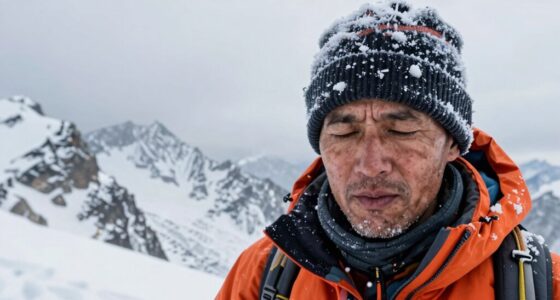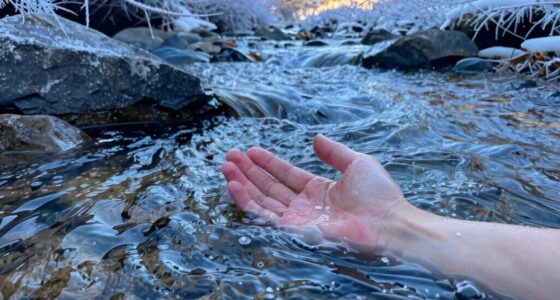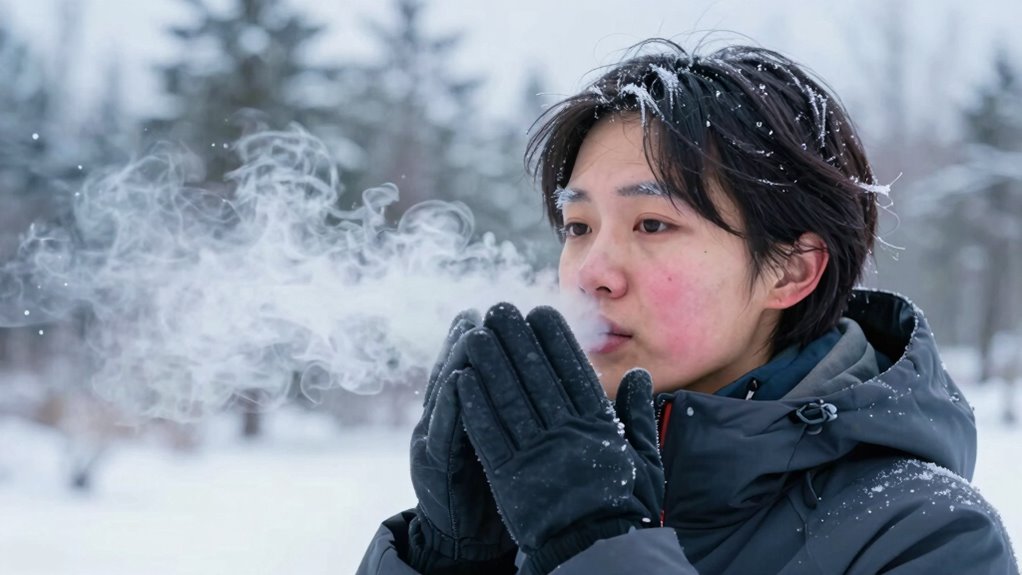

You’ll notice you’re improving at cold exposure as your body gets better at regulating temperature, with less shivering and quicker stabilization. Your mental resilience strengthens, helping you stay calm and focused in cold sessions. Recovery times from cold stress also shorten, and numbness or tingling feelings become less severe. Tracking these bodily responses and sensations over time shows your progress. Keep going, and you’ll uncover even more signs of your body’s adaptation and resilience.
Key Takeaways
- You notice a reduction in shivering duration and severity during cold sessions.
- Your heart rate stabilizes more quickly and recovery time shortens over time.
- You experience increased mental clarity and calmness during cold exposure.
- Physiological assessments show improved body temperature regulation and less numbness.
- Your perceived bodily sensations indicate better heat conservation and decreased cold discomfort.
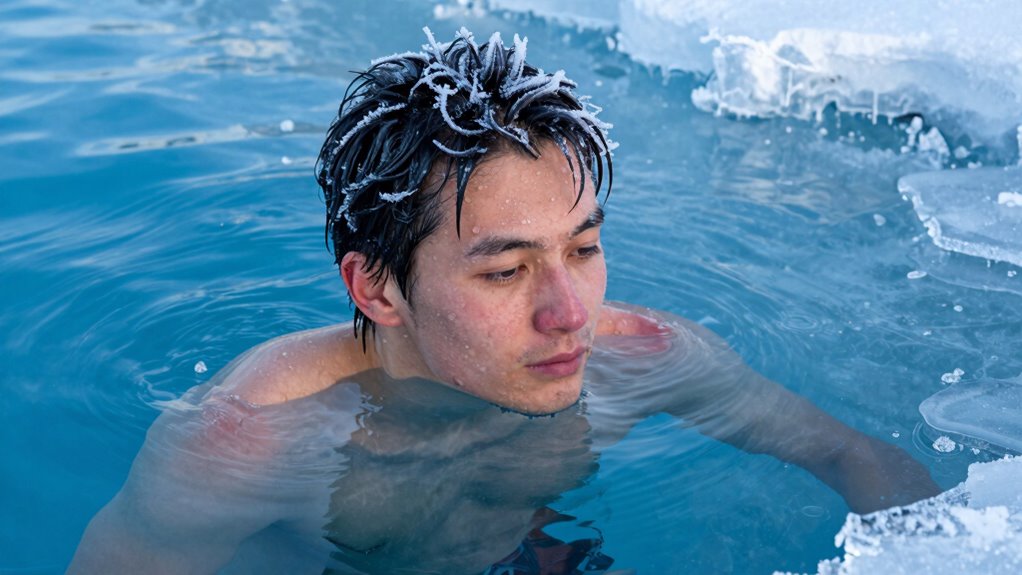
Tracking your progress in cold exposure can be tricky, but there are clear signs that show you’re improving. One of the most important indicators is how your body responds to the cold over time. As you continue practicing, you’ll notice a boost in psychological resilience—you’ll find it easier to stay calm and focused during cold sessions. Instead of feeling overwhelmed or panicked, you begin to approach the experience with a sense of control and mental clarity. This mental shift is a strong sign that your mind is adapting to the stress of cold exposure, making it less intimidating with each session.
Physiological markers also serve as reliable signs of progress. For example, your body’s ability to regulate temperature improves. When you first start, you might notice rapid shivering or a quick drop in core temperature. Over time, however, you’ll see reduced shivering and a more stable core temperature during and after exposure. Your blood flow adjusts, and your body becomes more efficient at conserving heat, which indicates that your physiology is adapting to colder environments. You may also notice a decrease in the severity and duration of post-exposure cold sensations, such as numbness or tingling, as your nervous system becomes better conditioned. Monitoring your physiological responses can help you gauge your progress more accurately. Additionally, paying attention to your bodily sensations can help you identify subtle improvements in how your body handles cold stress. Recognizing changes in body temperature regulation can further enhance your understanding of your adaptation process. Incorporating regular assessments can also provide a clearer picture of your development over time.
Another physiological marker worth observing is your heart rate. Initially, cold exposure can cause a spike in heart rate as your body reacts to the stress. As you improve, you’ll find your heart rate remains more stable, showing that your cardiovascular system is becoming more resilient. Additionally, your recovery time from cold stress shortens. When you’re more experienced, you’ll bounce back faster, feeling warm and alert sooner after ending a session. These changes in your physiological responses reflect your body’s increasing capacity to handle cold stress without excessive strain. Monitoring these physiological changes can offer valuable insights into your progress.

TempPro TempAir Wireless Pool Thermometer Floating with IPX8 Waterproof
- Designed for Water Temperature Measurement: Ideal for pools, hot tubs, and spas
- Durable Waterproof Construction: IPX8 waterproof and high-quality ABS materials
- Accurate Temperature Readings: Precision to ±0.9℉ in range 32°F-140°F
As an affiliate, we earn on qualifying purchases.
As an affiliate, we earn on qualifying purchases.
Frequently Asked Questions
How Long Does It Typically Take to See Progress With Cold Exposure?
You can typically notice progress with cold exposure within a few weeks, especially if you’re consistent. As you practice, you’ll experience cold adaptation, which reduces discomfort and enhances physiological benefits like improved circulation and immunity. Keep track of how your body responds over time; signs of adaptation include feeling less cold and more resilient during exposure. Regular practice accelerates these benefits, making cold exposure more manageable and effective.
Are There Any Signs of Overdoing Cold Exposure?
If you notice persistent physical discomfort, fatigue, or a decline in your performance, you might be overdoing it with cold exposure. These are subtle signs of overtraining risks, signaling you need to prevent to scale back. Listen to your body’s signals and avoid pushing through discomfort, as it can lead to setbacks or injury. Moderation ensures you enjoy cold exposure’s benefits without risking exhaustion or adverse effects.
Can Cold Exposure Improve Mental Resilience?
Yes, cold exposure can boost your mental resilience by strengthening mental toughness and reducing stress. When you intentionally face cold environments, you train your mind to stay calm and focused under discomfort, which translates to improved emotional control in daily life. Over time, this practice helps you develop a tougher mindset, making stress feel more manageable and enhancing your overall mental strength.
Is Cold Exposure Safe for Everyone?
He who dares wins, but cold exposure risks can vary widely for you. It’s not safe for everyone, especially those with certain health conditions or cardiovascular issues. Individual differences play a big role—what’s safe for one person might be risky for another. Always consult a healthcare professional before trying cold exposure, start slowly, and listen to your body. If you experience discomfort, stop immediately to avoid adverse effects.
How Often Should I Practice Cold Exposure Sessions?
You should practice cold exposure sessions 2-3 times a week to build resilience without overdoing it. Incorporate breathing techniques during your cold bath routines to stay calm and control your response. Gradually increase your exposure time as you become more comfortable. Consistency is key, so listen to your body and avoid pushing too hard, ensuring safe and sustainable progress in your cold exposure journey.

ROZKITCH Dog Post-Op Recovery Suit with Hot & Cold Therapy Pockets, Supportive Neoprene Fabric, Waterproof & Breathable, for Extra Large Dogs, Black 2XL
- Material: Waterproof perforated neoprene fabric
- Therapy Pockets: Four built-in hot & cold therapy pockets
- Support: Hind leg support for stability
As an affiliate, we earn on qualifying purchases.
As an affiliate, we earn on qualifying purchases.
Conclusion
As you keep practicing cold exposure, you might notice unexpected signs—like feeling calmer during colder days or noticing how your skin reacts differently. Sometimes, it’s these small coincidences that show you’re genuinely adapting. Remember, improvement often sneaks up when you least expect it. So stay consistent, stay observant, and trust that even the tiniest changes are part of your journey. Before you know it, cold exposure will feel less like a challenge and more like second nature.

SUJAYU Touch Screen Winter Gloves Men Women for Running Cycling Driving, Warm Gloves in Cold Weather for Bike Hiking Skiing (Black, Medium)
- Sensitive Touchscreen Compatibility: Touchscreen fingers for all devices
- Anti-slip Grip: Silicone particles for secure hold
- Warm and Breathable: Multilayer softshell with lining
As an affiliate, we earn on qualifying purchases.
As an affiliate, we earn on qualifying purchases.

Elitech Bluetooth Temperature Humidity Data Logger FDA Standards
- FDA 21 Data Protection: Ensures data integrity and compliance
- Bluetooth Wireless Connectivity: Real-time monitoring via smartphone
- Auto PDF/CSV Report: Stores 32,000 readings with automatic reports
As an affiliate, we earn on qualifying purchases.
As an affiliate, we earn on qualifying purchases.