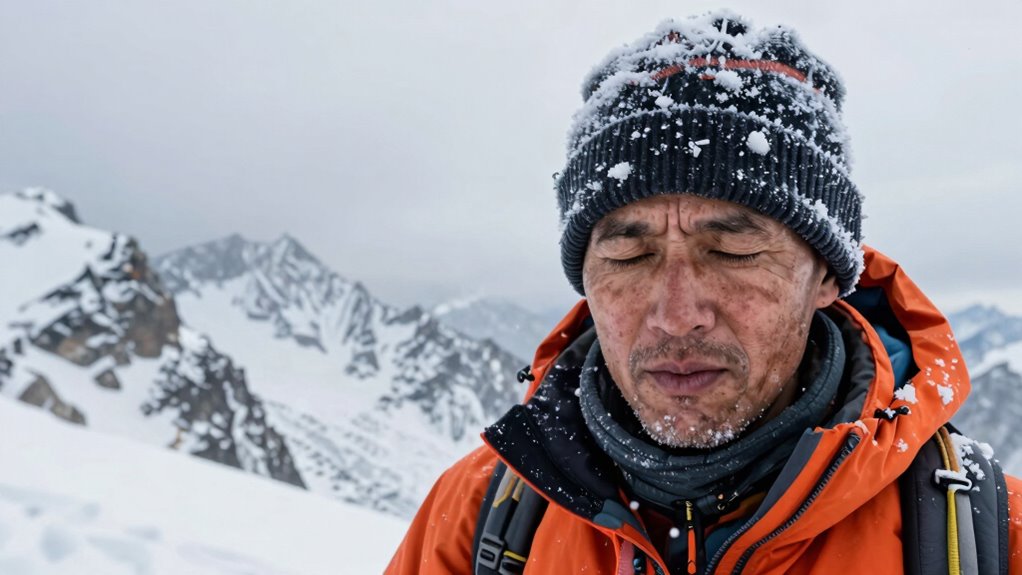

Acclimation is the quick, reversible process where your body adjusts to changing environmental conditions like temperature, humidity, or altitude to help you survive and function better. It involves physiological tweaks—such as sweating, blood vessel changes, or shivering—without altering your genes. Unlike long-term adaptation, acclimation happens within your lifetime and can be reversed. Understanding these responses reveals how your body can handle environmental stressors—if you look closer, you’ll discover even more.
Play games included with Prime
Start a Prime free trial and play with Amazon Luna on your devices.
As an affiliate, we earn on qualifying purchases.
Key Takeaways
- Acclimation is a temporary, reversible physiological adjustment to environmental changes within an organism’s lifetime.
- It differs from adaptation, which involves permanent genetic changes over generations.
- Acclimation helps organisms cope with immediate conditions like temperature, humidity, or altitude shifts.
- These adjustments include processes like sweating, blood vessel changes, and shivering.
- There are limits to acclimation, beyond which physiological responses cannot fully compensate.
Acclimation is the process by which an organism adjusts to changes in its environment, allowing it to maintain ideal functioning. When you think about climate adaptation, you might imagine long-term evolutionary changes, but acclimation happens much faster. It’s a form of physiological adjustment that enables you, or other living beings, to cope with immediate environmental shifts. For example, if you move from a cooler climate to a hotter one, your body can adjust in ways that help you stay comfortable and safe. This isn’t about genetic changes but rather temporary, often reversible, modifications within your physiology.
Acclimation allows quick, reversible adjustments to environmental changes, helping organisms maintain optimal functioning.
Your body responds to environmental changes through various mechanisms. When temperatures rise, your blood vessels may dilate to improve heat dissipation, and you might start sweating more to cool down. Conversely, in colder conditions, your blood vessels constrict to conserve heat, and your body may generate more heat through shivering. These responses are classic examples of physiological adjustment that occur during acclimation. They allow you to preserve core functions like maintaining a stable internal temperature, which is critical for your survival.
It’s important to understand that acclimation is different from adaptation in a genetic sense. Climate adaptation involves long-term evolutionary changes across generations, whereas acclimation happens within your lifetime. You can think of acclimation as your body’s quick-response system, a way to optimize your functioning when faced with environmental stressors. This process can be triggered by a variety of factors such as humidity, altitude, or temperature fluctuations. For instance, if you travel to high altitudes, your body gradually increases red blood cell production to better oxygenate your tissues, a clear example of physiological adjustment through acclimation. Additionally, environmental flexibility enables organisms to survive diverse and changing conditions, highlighting the importance of acclimation in resilience.
While acclimation helps you survive and function efficiently in changing conditions, it has its limits. There’s only so much your body can adjust before it reaches a threshold where additional changes are insufficient. This is especially relevant as climate change causes more frequent and extreme environmental shifts. Understanding the distinction between acclimation and adaptation can help you appreciate the resilience of living organisms and recognize the importance of protecting environments that support this flexibility.
As an affiliate, we earn on qualifying purchases.
Frequently Asked Questions
How Quickly Can an Animal Acclimate to a New Environment?
You can expect an animal to acclimate to a new environment within days to weeks, depending on factors like temperature adjustment and habitat familiarity. Rapid changes might cause stress, but gradual exposure helps them adapt more efficiently. During this period, they learn to handle temperature fluctuations and become more comfortable with their new surroundings. Your patience and understanding support their successful acclimation process, ensuring they settle in smoothly over time.
Does Acclimation Require Physical or Behavioral Changes?
You might be surprised, but acclimation involves both behavioral adjustments and physiological responses. As you adapt to a new environment, your body and actions change to cope better—like adjusting your activity levels or hormonal responses. These changes happen naturally, often without you noticing. By making behavioral adjustments and experiencing physiological responses, you effectively acclimate, allowing you to thrive and feel more comfortable in unfamiliar surroundings.
Can Acclimation Occur in Humans as Well as Animals?
Yes, acclimation can occur in humans as well as animals. You make physiological adjustments, like improving your lung capacity or sweating more efficiently, to adapt to new environments. Additionally, you develop psychological resilience, helping you stay calm and focused under stress. These changes happen gradually and help you cope better with unfamiliar conditions, showing that acclimation benefits both your body and mind in challenging situations.
Is Acclimation the Same as Adaptation?
Acclimation isn’t the same as adaptation. While acclimation allows you to temporarily adjust to environmental stress, it doesn’t involve genetic evolution. Adaptation, on the other hand, happens over generations through genetic changes that improve survival in specific environments. So, when you experience short-term adjustments, like getting used to high altitude, that’s acclimation, not true adaptation, which takes longer and involves passing beneficial traits through evolution.
What Are Common Signs That Acclimation Has Occurred?
Ever notice how your body adjusts to new environments? That’s a sign acclimation has occurred. You might experience seasonal adjustments like better temperature tolerance, or physiological responses such as improved breathing or energy levels. These signs show your body’s natural adaptation process in action, helping you function comfortably despite changing conditions. If you feel less affected by weather shifts, you’re likely experiencing the benefits of true acclimation.
As an affiliate, we earn on qualifying purchases.
Conclusion
Think of acclimation like adjusting the sails on a boat—you fine-tune your body to better handle new conditions. It’s not about permanent change or evolution, but about short-term adaptation that helps you function better in your environment. Just as a tree bends with the wind without breaking, your body adapts to stay resilient. So, remember, acclimation is your body’s way of riding out temporary weather, helping you stay steady amid the shifting currents of your surroundings.
As an affiliate, we earn on qualifying purchases.
As an affiliate, we earn on qualifying purchases.
Fall yard work Picks
leaf blowers
As an affiliate, we earn on qualifying purchases.