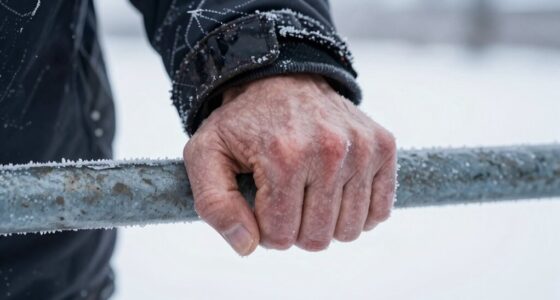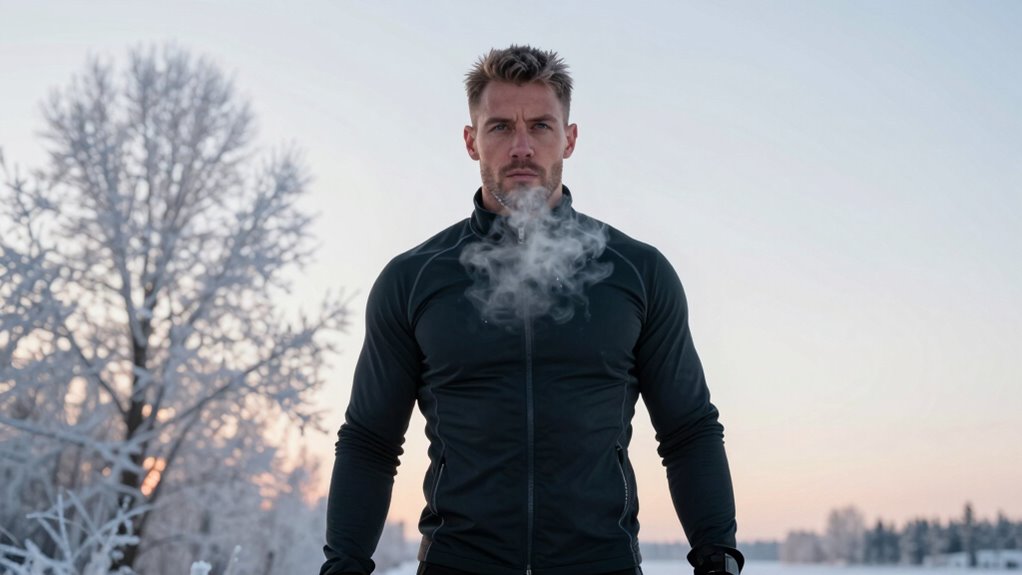

Start with daily cold showers lasting 30 seconds to 1 minute, focusing on controlled breathing to build mental resilience. Gradually increase your time by 15-30 seconds each week, aiming for 2-3 minutes comfortably. Once adapted, try cold plunges or ice baths for 3-5 minutes at around 50-55°F. Always listen to your body to avoid overdoing it. Keep progressing patiently, and you’ll soon maximize recovery and performance—more tips await to help you succeed.
Key Takeaways
- Start with short, manageable cold showers (30 seconds to 1 minute) and gradually increase duration weekly.
- Focus on controlled breathing to build mental resilience during cold exposure.
- Progress to cold plunges or ice baths when comfortable with shower routine, extending duration and lowering temperature.
- Prioritize safety by listening to your body and avoiding overexposure or extreme cold too quickly.
- Consistently incorporate cold exposure post-workout to enhance recovery and reduce inflammation.

Cold exposure can be be a powerful tool for lifters aiming to boost recovery, reduce inflammation, and enhance mental resilience. When you incorporate cold exposure into your routine, you’re not just helping your muscles recover faster—you’re also building mental resilience that can carry over into your training and daily life. The key to reaping these benefits lies in a smart cold exposure progression that allows your body to adapt gradually. Cold adaptation, in particular, is essential because it helps you withstand colder temperatures over time without shock or undue stress.
Cold exposure boosts recovery, reduces inflammation, and builds mental resilience through gradual, adaptive cold training.
Start with simple, manageable exposures, like cold showers lasting 30 seconds to a minute. This initial step helps your body get used to the sensation of cold without overwhelming your system. Focus on breath control during these showers, as deep breathing can help you stay calm and foster mental resilience. As your comfort with cold increases, extend the duration gradually—adding 15 to 30 seconds each week—until you can comfortably tolerate two to three minutes of cold water. This slow progression encourages cold adaptation, allowing your body to develop a more efficient response to cold stress, which can translate into improved recovery and inflammation reduction.
Once you’re comfortable with cold showers, you might explore ice baths or cold plunges. Start with shorter durations, around 3 to 5 minutes, and keep the water temperature around 50-55°F (10-13°C). Over time, you can lower the temperature slightly or extend your time as your tolerance grows. During these sessions, focus on maintaining controlled, deep breaths. This practice not only helps your body adapt physically but also trains your mind to stay calm under discomfort, strengthening mental resilience. Additionally, understanding the importance of cold exposure progression can help you optimize your routine safely and effectively. Incorporating gradual adaptation techniques ensures your body can handle colder environments without unnecessary stress or injury.
As you progress, listen to your body and avoid pushing beyond your limits. The goal isn’t to endure extreme cold immediately but to build resilience gradually. Over time, your body will become more efficient at managing cold stress, which can reduce inflammation, speed up recovery, and improve your mental sharpness. Embracing a structured cold exposure progression allows you to harness the full benefits without risking injury or burnout. With patience and persistence, you’ll find that cold exposure becomes a valuable part of your training regimen, helping you recover faster, perform better, and develop a stronger, more resilient mindset.
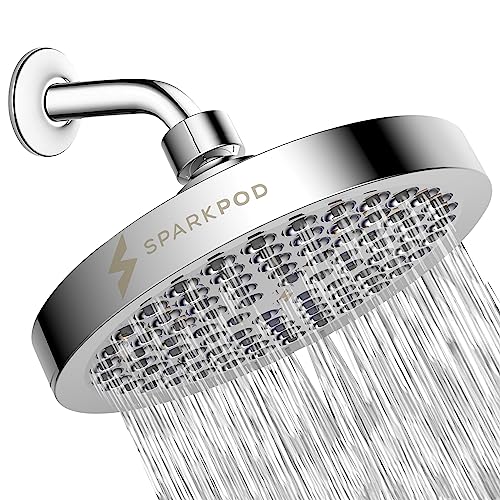
SparkPod Rain Shower Head, 6 Inch Round, Luxury Polished Chrome Finish
HIGH PRESSURE RAINFALL SHOWER HEAD: Our luxury bathroom rainhead is the perfect replacement that will jet out high-pressure…
As an affiliate, we earn on qualifying purchases.
As an affiliate, we earn on qualifying purchases.
Frequently Asked Questions
How Long Should I Stay in Cold Exposure Sessions Initially?
Start with short cold exposure sessions of about 1 to 3 minutes to build your cold tolerance gradually. Focus on maintaining proper breathing and staying relaxed during each session. As your cold tolerance improves, you can slowly increase the session duration by 30-second increments. The key is to listen to your body and avoid pushing too hard initially, ensuring safe and effective progress in your cold exposure journey.
Can Cold Exposure Negatively Affect Muscle Recovery?
Cold exposure can negatively affect muscle recovery if done excessively, as it may increase muscle soreness and hinder inflammation reduction. While brief cold sessions might help reduce inflammation and promote recovery, overdoing it can impair muscle repair processes. You should listen to your body, limit cold exposure durations, and avoid cold baths immediately after intense workouts to prevent potential setbacks in muscle recovery.
What’s the Optimal Temperature Range for Cold Exposure?
You should aim for a temperature range of about 50-59°F (10-15°C) for cold exposure. This range gently encourages your body’s thermal regulation and promotes cold adaptation without overwhelming your system. As you embrace this chill, your body learns to adapt gradually, boosting recovery and resilience. Maintain consistency, and you’ll find your cold tolerance steadily improves, enhancing your overall performance and recovery in a safe, sustainable way.
Should I Take Supplements Before or After Cold Exposure?
You should take supplements after cold exposure to maximize benefits. Supplement timing matters because cold exposure benefits, like reduced inflammation and improved recovery, can be enhanced by nutrients taken afterward. For example, protein or amino acids post-exposure help muscle repair, while antioxidants support recovery. Taking supplements before cold exposure might blunt some benefits, so waiting until after guarantees you get the most out of both your cold therapy and your nutrients.
How Often Should I Incorporate Cold Exposure Into My Routine?
You should incorporate cold exposure into your routine 3-4 times a week to build mental resilience and boost your immune response. Think of it as charging your mental batteries and supercharging your immune system—like turning your body into an unstoppable fortress! Consistency is key; skipping days weakens the benefits. So, commit to regular cold dips and watch your mental toughness and immunity skyrocket!

Tomaje Upgrade 129 Gal XL Large Oval Ice Bath Tub for Athletes, Collapsible Cold Plunge Tub-Multiple Layered for Post-Exercise Recovery, Portable Bathtub for Home, Gyms, Indoor, Outdoor use
【Enhance Recovery Effect】: Our cold plunge tubis beneficial to relieving muscle soreness and lactic acid buildup after exercise….
As an affiliate, we earn on qualifying purchases.
As an affiliate, we earn on qualifying purchases.
Conclusion
By gradually increasing your cold exposure, you build resilience, enhance recovery, and sharpen your focus. You challenge your body, push your limits, and strengthen your mind. You embrace the cold, embrace the challenge, and embrace the growth. Progress patiently, stay consistent, and listen to your body. With each step, you become stronger, more adaptable, and better prepared. Keep moving forward, keep pushing boundaries, and let cold exposure transform your lifting journey into a resilient, thriving lifestyle.

The Pod Company Standard Ice Bath Tub, 84 Gallon Cold Plunge Tub with Cover Lid, Portable Inflatable Ice Plunge Tub for Adults, Side Drain, Chiller Compatible (Requires Conversion Kit)
84 GALLON COLD PLUNGE TUB FOR ADULTS – Spacious portable ice bath tub designed for full-body cold plunge…
As an affiliate, we earn on qualifying purchases.
As an affiliate, we earn on qualifying purchases.

Adjustable Resistance Portable Lung Breathing Trainer | Premium Food-Grade Silicone Breath Exercise Device for Athletes, Runners & Home Fitness | Improve Respiratory Endurance & Core Strength
🏆Safe, Gentle & Durable: Food-Grade Silicone for Every User Crafted with ultra-soft, medical-grade silicone, this breathing trainer is…
As an affiliate, we earn on qualifying purchases.
As an affiliate, we earn on qualifying purchases.