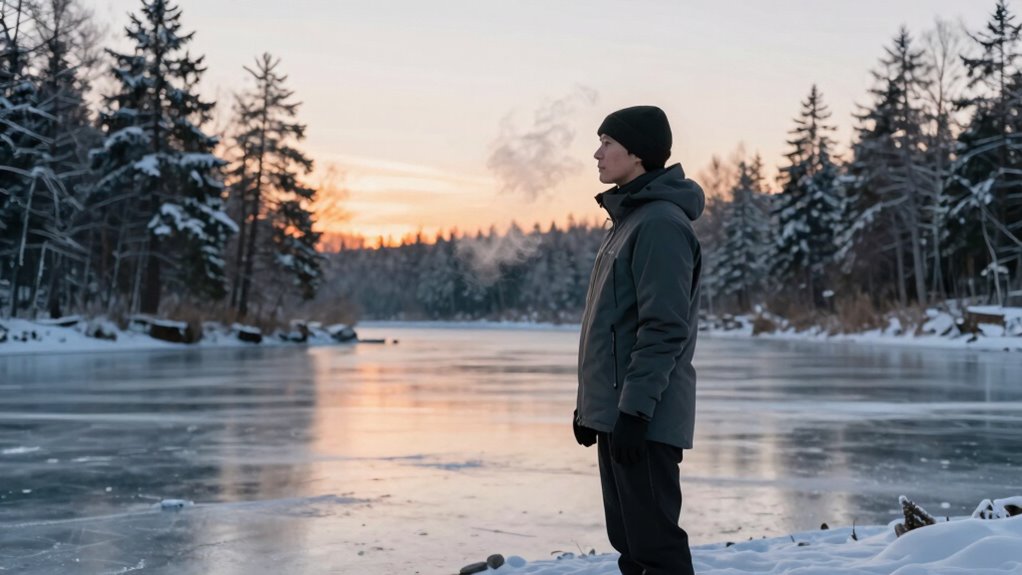

To progress with cold exposure consistently, start small with brief dips or cold face splashes, and don’t push too hard early on. Gradually extend your time or lower the temperature as your comfort increases, focusing on listening to your body. Reframe discomfort as a challenge, building resilience and mental toughness over time. Patience and steady progress help your body adapt physiologically, boosting long-term benefits. Keep exploring these strategies to deepen your control and resilience.

Get home appliances delivered free with Prime
- Fast, free delivery on millions of items
- Prime Video, Amazon Music and more included
- Member-only deals all year
Key Takeaways
- Start with brief, manageable cold exposures and gradually increase duration or intensity to build tolerance over time.
- Focus on consistent, daily practice to reinforce physiological and mental adaptations.
- Listen to your body to avoid overexertion and setbacks, prioritizing comfort and gradual progression.
- Reframe discomfort as a challenge to develop mental resilience and maintain motivation.
- Track progress through small milestones to stay motivated and recognize long-term physiological and mental benefits.

Starting cold exposure can be intimidating, but the key to making it a sustainable part of your routine is to progress gradually. When you begin, your body and mind will naturally resist the discomfort, but with patience, you’ll notice your mental resilience strengthening. This mental toughness isn’t just about enduring the cold; it’s about rewiring your mindset to see discomfort as a challenge rather than a threat. As you persist, your body will undergo physiological adaptation, becoming more efficient at handling cold temperatures. This process involves improved circulation, increased brown fat activity, and better thermoregulation, making each session slightly easier over time.
Gradually embracing cold exposure builds resilience, rewires your mindset, and enhances physical adaptation over time.
To build consistency, start small. Maybe you dip your toes in or splash cold water on your face for a few seconds. The goal is to avoid overwhelming yourself early on, which can lead to frustration or quitting. As your comfort grows, gradually extend the duration or lower the temperature. This incremental approach allows your body to adapt without shock, reinforcing the physiological adaptation necessary for long-term benefits. Remember, your brain also adapts—what once felt unbearable begins to seem manageable, fueling your mental resilience and confidence.
It’s essential to listen to your body during this process. Pushing too hard too soon can cause setbacks, both physically and mentally. Consistency beats intensity in the beginning. When you notice yourself becoming more comfortable with cold exposure, you’ll find it easier to stick with the practice. Over time, the discomfort becomes less intimidating, and your mental resilience grows stronger. This mental shift is crucial because it helps you approach other challenges with a calm, focused mindset, translating into better stress management and emotional stability. Additionally, understanding the body’s response to cold can help you tailor your progression more effectively.
As you continue, track your progress. Small wins, like extending your cold exposure or improving your comfort level, reinforce positive habits. Recognizing that physiological adaptation takes time—the body’s response to cold—is key to maintaining patience and motivation. Your body needs repeated exposure to develop a more efficient response to cold. This patience pays off by making future cold sessions feel less daunting. Over weeks and months, you’ll notice not just physical benefits but a greater sense of control and resilience—attributes that spill over into everyday life. By progressing gradually, you ensure that cold exposure remains a sustainable, rewarding part of your wellness routine, helping you build long-term resilience both physically and mentally.
As an affiliate, we earn on qualifying purchases.
Frequently Asked Questions
Can Cold Exposure Help Improve Mental Health Long-Term?
Cold exposure can boost your mental health long-term by enhancing emotional resilience and reducing stress. As you embrace the cold regularly, you may find it easier to stay mindful meditation, managing your emotions better. This practice triggers endorphin release, improving your mood and mental clarity. Over time, cold exposure helps you build mental strength, making you more adaptable to life’s challenges and supporting sustained emotional stability.
What Are the Risks of Excessive Cold Exposure?
Exposing yourself to cold is like walking a tightrope—you need balance. Excessive cold exposure can increase overtraining risks, leading to fatigue and injury. It may also cause skin damage, like frostbite or skin irritation, especially if you ignore your body’s signals. Pushing too hard without proper recovery can harm your health, so always listen to your body, and don’t push beyond safe limits.
How Does Cold Exposure Affect Sleep Quality?
Cold exposure can improve your sleep quality by promoting better sleep hygiene and reinforcing your circadian rhythm. When you expose yourself to cold, your body temperature drops, signaling that it’s time to sleep, which helps you fall asleep faster and enjoy deeper rest. Regular cold exposure, when done safely, can support a consistent sleep schedule, making it easier to wake up refreshed and energized each day.
Is Cold Exposure Suitable for Everyone?
Think of cold exposure as a journey through a winter forest—you might encounter obstacles or surprises along the way. It’s not suitable for everyone, especially if you have certain health conditions. With proper cold adaptation, your immune response can strengthen, but always consult a healthcare professional first. If you proceed mindfully, cold exposure can boost resilience and health, but always listen to your body’s signals.
What’s the Best Time of Day for Cold Exposure?
The best time of day for cold exposure depends on your goals. Morning benefits from cold exposure can boost your alertness and mood, setting a positive tone for the day. Alternatively, doing it in the evening helps with adaptation and recovery, promoting relaxation before sleep. Choose a time that fits your schedule and aligns with your goals, and stay consistent to build long-term benefits.
As an affiliate, we earn on qualifying purchases.
Conclusion
Think of cold exposure as a gentle river carving its way through stone—you’ll shape your resilience one chilly plunge at a time. Stay steady, listen to your body’s whispers, and let consistency be your guiding current. Over time, you’ll find yourself swimming effortlessly through the icy waters, emerging stronger and more resilient with each wave. Embrace the journey, knowing that with patience and persistence, you’ll transform the cold into your greatest ally on the path to lasting growth.
As an affiliate, we earn on qualifying purchases.
As an affiliate, we earn on qualifying purchases.
Fall yard work Picks
leaf blowers
As an affiliate, we earn on qualifying purchases.