
Warm weather makes it harder to keep your cold plunge hygienic because higher temperatures boost bacteria, algae, and other microbes that thrive in warm water. You’ll notice more algae blooms, slimy residues, and cloudy water, which require frequent cleaning and chemical treatments. Reduced water levels due to evaporation also concentrate contaminants. If you want to stay ahead of these issues and keep your plunge safe, keep going to discover effective tips to manage hygiene during hot weather.
Key Takeaways
- Higher temperatures accelerate bacterial and algae growth, making water quicker to become contaminated.
- Warm weather causes increased evaporation, reducing water levels and concentrating contaminants.
- Elevated temperatures require more frequent cleaning and chemical treatments to maintain hygiene.
- Heat-sensitive skin is more prone to irritation and infections from contaminated water.
- The need for regular maintenance and monitoring is intensified to prevent microbial buildup.
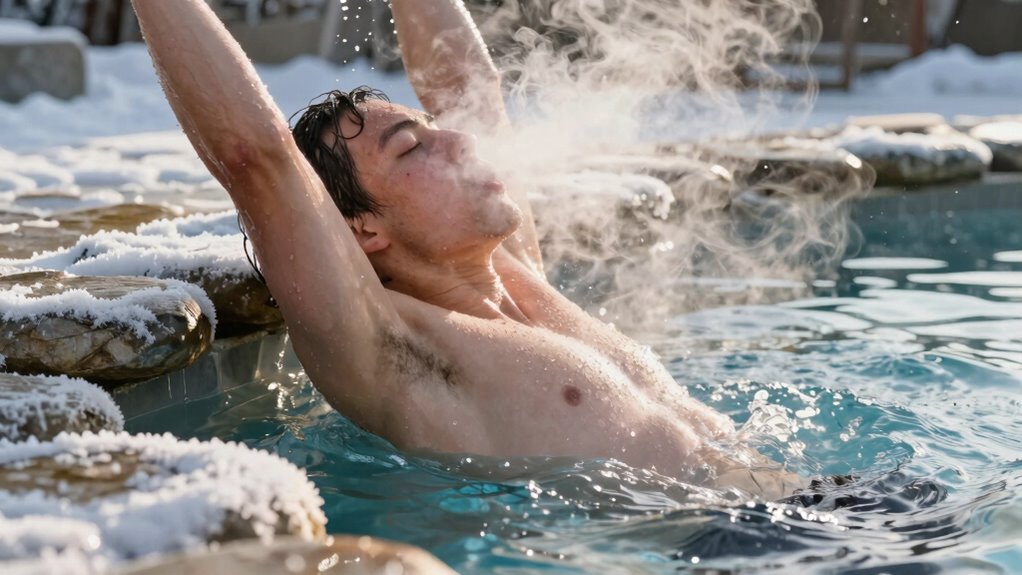
When the weather turns warm, maintaining cold plunge hygiene becomes more challenging because higher temperatures create a perfect environment for bacteria and algae to thrive. As the water heats up, germs multiply faster, and algae bloom more readily, making it harder to keep your plunge clean and safe. This increases your risk of skin irritation, especially if you have sensitive skin, since warm water can exacerbate skin sensitivity and lead to rashes or itching. The combination of heat and bacteria growth demands more diligent maintenance to prevent contamination and ensure a healthy experience.
Warm weather promotes bacteria and algae growth, making cold plunge maintenance more crucial for safety and hygiene.
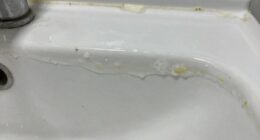
In warmer weather, bacteria grow at an accelerated rate, filling your cold plunge with potential pathogens. If you don’t clean and disinfect regularly, these microorganisms can build up quickly, making the water unsafe for use. Bacterial growth isn’t always visible, so you might not notice the contamination until it causes issues like skin irritation or infections. This means you need to be extra vigilant about testing water quality and using appropriate sanitizers, especially during hot months. Failing to do so can lead to slimy residues on the surface and cloudy water, which are signs of bacterial buildup.
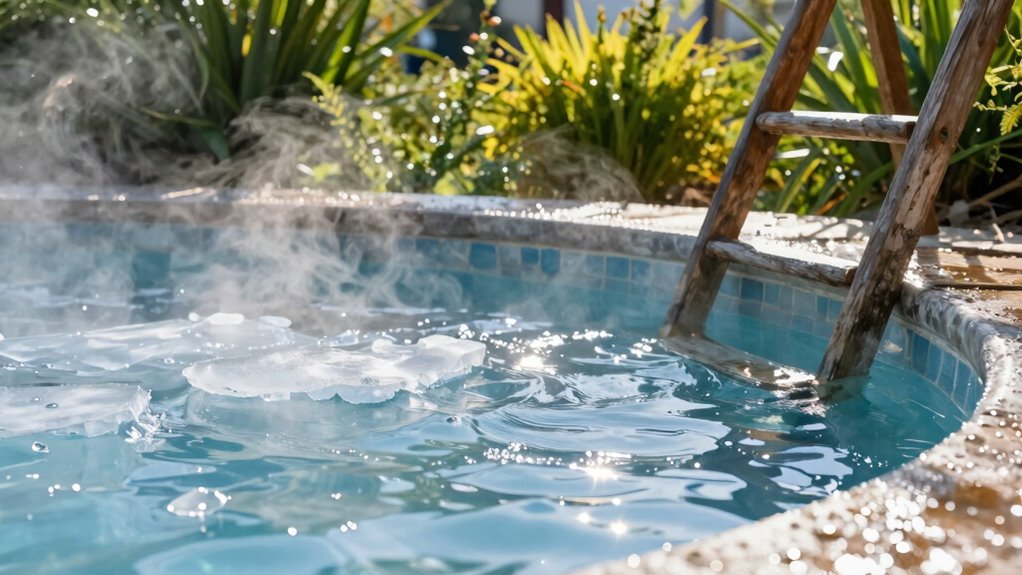
Furthermore, heat increases evaporation, which reduces water levels and concentrates contaminants. You may find yourself topping off the plunge more often to compensate for water loss, but adding water alone isn’t enough. You need to balance this with proper chemical treatments to prevent the proliferation of bacteria and algae. Without proper maintenance, the water becomes a breeding ground for microorganisms that can cause skin sensitivities or infections, especially if you have abrasions or cuts. For those with sensitive skin, exposure to contaminated water can lead to irritation, rashes, or worse. Additionally, water quality testing is crucial to detect potential issues early before they become health hazards.
Keeping your cold plunge hygienic in warm weather requires more frequent cleaning cycles and careful monitoring of chemical levels. Regularly brushing the sides, filtering the water, and shocking the water with appropriate sanitizers help control bacterial growth. Using a good test kit to check pH and sanitizer levels becomes essential to ensure the water remains safe and comfortable. Additionally, covering the plunge when not in use helps prevent debris, dust, and insects from contaminating the water, which can introduce additional bacteria and algae.

Cold Plunge Test Strips, 4-in-1 Water Quality Testing Kit, pH, Alkalinity, Hardness, Hydrogen Peroxide. Evaluate Your Cold Plunge Water Quality with A Single Strip. Smart QR Calculator to Help You
- 4-in-1 Water Testing: Measures pH, alkalinity, hardness, peroxide
- Fast and Accurate Results: Provides quick, easy-to-read measurements
- All-in-One Monitoring: Tracks essential water quality parameters with one strip
As an affiliate, we earn on qualifying purchases.
As an affiliate, we earn on qualifying purchases.
Frequently Asked Questions
Does Warmer Weather Affect the Temperature of the Cold Plunge Itself?
Yes, warmer weather can cause the temperature of your cold plunge to fluctuate. When the outside temperature rises, maintaining temperature stability becomes more challenging, as heat enters the tank more easily. You’ll need to pay closer attention to equipment maintenance, like cooling systems, to keep the water cold. Without proper upkeep, the plunge’s temperature may rise, reducing its effectiveness and making hygiene harder to sustain.
How Does Increased Sweating Impact Cold Plunge Hygiene?
Sweat contamination turns your cold plunge into a bubbling cauldron of bacteria. When you sweat more, skin bacteria and oils wash off, mixing with sweat and contaminating the water. This increases the risk of infections and makes hygiene harder to maintain. You need to shower thoroughly before plunging, removing sweat and bacteria. Regular water changes and proper filtration become essential, helping you enjoy a safe, invigorating dip even in warm weather.
Are There Specific Cleaning Challenges Unique to Hot Weather?
In hot weather, you face unique cleaning challenges like increased surface buildup and skin irritation. Sweating more causes grime and oils to accumulate on surfaces faster, making regular cleaning essential. Additionally, sweat and bacteria can irritate your skin when using the cold plunge, so you need to thoroughly rinse and sanitize the equipment more often. Staying vigilant with cleaning helps prevent discomfort and maintains a hygienic environment during warmer months.
Can Warm Weather Cause Bacteria Growth in Cold Plunge Water?
Yes, warm weather can turn your cold plunge into a bacteria proliferation hotspot in no time. The increased temperatures accelerate water contamination, creating the perfect environment for bacteria to grow wildly. This rapid bacteria growth not only makes your water unsafe but also dramatically worsens hygiene, risking infections. You’ll need to be extra vigilant, frequently sanitize, and monitor water quality to prevent bacteria buildup and keep your plunge safe and clean.
How Often Should Cold Plunges Be Sanitized During Summer Months?
You should sanitize your cold plunge at least 2-3 times a week during summer. Regular pool maintenance is essential to prevent bacteria growth caused by warm weather. Prioritize water filtration to keep the water clean and clear. After each use, consider shocking the water with a suitable sanitizer. Consistent cleaning and proper filtration guarantee your cold plunge stays hygienic and safe, even during hot months.

HTH Spa 86134R, Clear Chlorinating Sanitizer, 2.25 lbs
- Easy-to-Use Sanitizer: Controls algae, bacteria, and contaminants
- Suitable for Spas and Hot Tubs: Sanitizes and shock treats effectively
- Enhances Water Comfort: Prevents chlorine loss for clearer water
As an affiliate, we earn on qualifying purchases.
As an affiliate, we earn on qualifying purchases.
Conclusion
As temperatures rise, maintaining your cold plunge hygiene gets tougher, but it’s essential for your health. Imagine a dedicated athlete who skipped cleaning during a heatwave and ended up with skin infections. Don’t let warm weather sabotage your routine. Regular cleaning and proper drying keep bacteria at bay, ensuring your cold plunge remains a revitalizing, safe oasis. Stay vigilant—your well-being depends on it, especially when the heat turns up.

coospider-repta 55W UV Light for Above Groud Pool Cold Plunge Aquarium Algae Control with UVC Bulb Stainless Steel Ultraviolet Green Water Machine Algae Remover for Pond
- High UV Efficiency: Reflective stainless-steel chamber enhances UV exposure
- In-Line UV Purification: Independent water purification for various setups
- Multiple Hose Connectors: Includes 5 types for versatile use
As an affiliate, we earn on qualifying purchases.
As an affiliate, we earn on qualifying purchases.
Cold Plunge Test Strips, 4-in-1 Water Quality Testing Kit, pH, Alkalinity, Hardness, Hydrogen Peroxide. Evaluate Your Cold Plunge Water Quality with A Single Strip. Smart QR Calculator to Help You
- 4-in-1 Water Testing: Measures pH, alkalinity, hardness, peroxide
- Fast and Accurate Results: Provides quick, easy-to-read measurements
- All-in-One Monitoring: Tracks essential water quality parameters with one strip
As an affiliate, we earn on qualifying purchases.
As an affiliate, we earn on qualifying purchases.