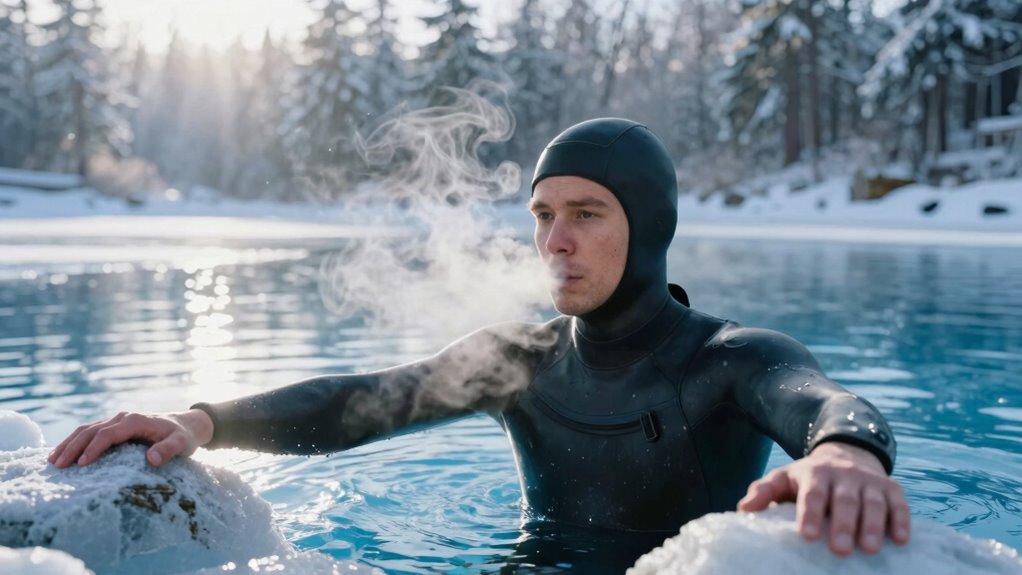

To make cold water immersion easier, start with a focused pre-plunge routine that combines deep, controlled breathing and mental visualization. Begin by inhaling slowly through your nose for four counts, hold briefly, then exhale fully through your mouth for four counts. Visualize staying calm and confident as you step in. Repeating these steps helps reduce shock, steady your heart rate, and build mental resilience. Keep practicing, and you’ll discover even more effective ways to approach your cold plunge.

Get home appliances delivered free with Prime
- Fast, free delivery on millions of items
- Prime Video, Amazon Music and more included
- Member-only deals all year
Key Takeaways
- Practice deep, diaphragmatic breathing to calm the nervous system and reduce shock upon immersion.
- Visualize a successful, calm cold plunge to build mental resilience and set positive expectations.
- Establish a mental routine with mantras or focus cues to stay grounded and manage fear.
- Gradually acclimate your body with pre-cold exposure or warm-up exercises to ease the transition.
- Set clear intentions (e.g., resilience, circulation) to boost confidence and purpose during the plunge.

Preparing your body before a cold plunge can markedly enhance your comfort and safety. One effective way to do this is by focusing on your breathing techniques and mental preparation. When you take the time to regulate your breath and clear your mind beforehand, you set the stage for a smoother, less shocking experience once you step into the cold water. Breathing techniques, in particular, are powerful tools that can help you stay calm and control your physiological response to the cold. Instead of panting or gasping when you first enter, you’ll have practiced deliberate, deep breaths that slow your heart rate and reduce panic. Try inhaling slowly through your nose for a count of four, holding briefly, then exhaling fully through your mouth for a count of four. Repeat this cycle a few times to create a sense of calm and stability. This controlled breathing helps prevent hyperventilation and minimizes the initial shock, making the experience much more manageable. Additionally, establishing a mindful routine can help reinforce your mental resilience over time. Mental preparation is equally vital. Before you immerse yourself, take a moment to set a clear intention—whether it’s building resilience, improving circulation, or simply challenging yourself. Visualize the process of stepping into the water and staying composed. This mental rehearsal primes your mind to stay focused and positive, reducing the likelihood of fear or hesitation taking over when the cold hits. You might also remind yourself that the discomfort is temporary and that your body is capable of adapting. Developing a mental routine—such as repeating a mantra or focusing on your breath—can help you detach from the impulse to withdraw and instead embrace the experience. The more you practice mental preparation, the more you’ll find yourself able to stay present and grounded, even when faced with the initial shock of the cold.
cold water immersion breathing mask
As an affiliate, we earn on qualifying purchases.
As an affiliate, we earn on qualifying purchases.
Frequently Asked Questions
Can This Routine Be Customized for Individual Preferences?
Yes, you can definitely personalize this routine to suit your preferences. You have plenty of personalization options, allowing you to adjust breathing techniques, timing, and mental focus. This routine offers routine flexibility, so you can modify elements based on how your body responds or what makes you feel most comfortable. Experiment with different steps to find the combination that helps you handle cold temperatures with ease and confidence.
How Long Does the Pre-Plunge Routine Typically Take?
Your pre-plunge routine usually takes about 5 to 10 minutes. You’ll start with breathing techniques to calm your mind and regulate your body’s response to the cold. Then, focus on mental preparation by visualizing a positive experience. This quick, focused routine helps ease your nerves and improves your overall cold plunge experience, making the cold less intimidating and more manageable.
Is There an Age Limit for Practicing This Routine?
There are no strict age restrictions for practicing this pre-plunge routine, making it suitable for youth participation as well. However, it’s crucial to take into account individual health and consult with a healthcare professional if you or young participants have any medical conditions. Kids and teens can benefit from this routine, but adult supervision is recommended to ensure safety. Always tailor the routine to fit each person’s comfort level and experience.
Are There Any Risks Associated With Cold Plunges?
Yes, cold plunges can pose risks like thermal shock and increased cardiovascular risk, especially if you have heart issues or blood pressure concerns. Sudden exposure to cold water causes your body to react sharply, which can strain your heart and blood vessels. To stay safe, start slowly, monitor how you feel, and consult a healthcare professional if you have any health conditions before trying cold plunges.
How Often Should I Perform This Routine for Best Results?
You should perform your pre-plunge routine daily or several times a week for the best results. Coincidentally, consistency enhances mental preparation and sharpens your breathing techniques, making cold exposure easier over time. By sticking to a regular schedule, you train your mind and body to adapt faster, reducing shock and increasing benefits like improved circulation and resilience. Keep practicing, and you’ll notice your cold tolerance steadily improving.
As an affiliate, we earn on qualifying purchases.
Conclusion
By sticking to this pre-plunge routine, you’ll notice cold water feels less like an icy storm and more like an invigorating wake-up call. I once hesitated before a chilly dip, but after following these steps, I felt like I was stepping into a warm embrace instead of a shivering nightmare. Think of it as your mental armor—each breath and mindset shift builds resilience, turning that challenging plunge into a refreshing adventure rather than a daunting challenge.
As an affiliate, we earn on qualifying purchases.
As an affiliate, we earn on qualifying purchases.
NFL season / tailgating Picks
team gear
As an affiliate, we earn on qualifying purchases.