
Your body position during a cold plunge can markedly change your experience. Standing upright or floating smoothly helps you breathe better, relax muscles, and manage shock more effectively. Moving slowly into the water and avoiding sudden jumps reduces muscle stiffening and discomfort. Mindful adjustments to how you position your body can turn a stressful shock into a more controlled, empowering experience. There’s more to discover about mastering your response—keep exploring for even better techniques.
Key Takeaways
- Proper body positioning reduces cold shock intensity by promoting relaxed muscles and controlled breathing.
- Upright, open postures help stabilize heart rate and prevent panic during cold immersion.
- Adjusting body position can minimize muscle stiffening and discomfort in cold water.
- Mindful positioning enhances body awareness, improving resilience and response over multiple plunges.
- Small posture changes optimize safety, comfort, and mental focus during cold plunges.
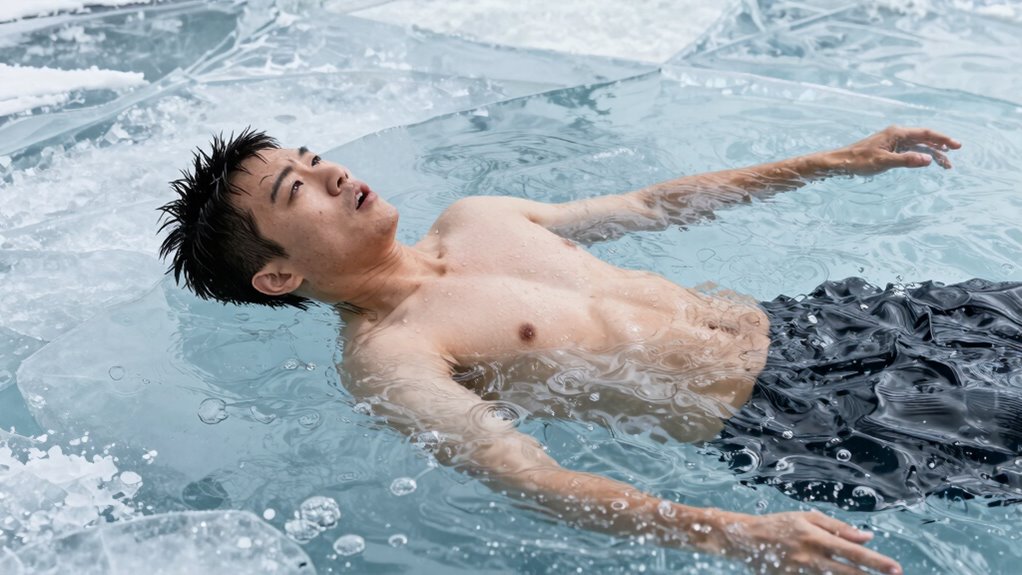
When you take a cold plunge, the position of your body can substantially influence how your body responds to the shock. The way you position yourself in the water affects your muscle activation, breathing, and overall tolerance to the cold. If you dive in headfirst, you might experience a sudden, intense shock, prompting your muscles to tense up immediately. This reaction isn’t just a reflex; it’s your body’s way of protecting itself. By adjusting your body position, you can manage this response more effectively.
Proper body positioning during a cold plunge helps manage shock, improves breathing, and enhances overall safety.
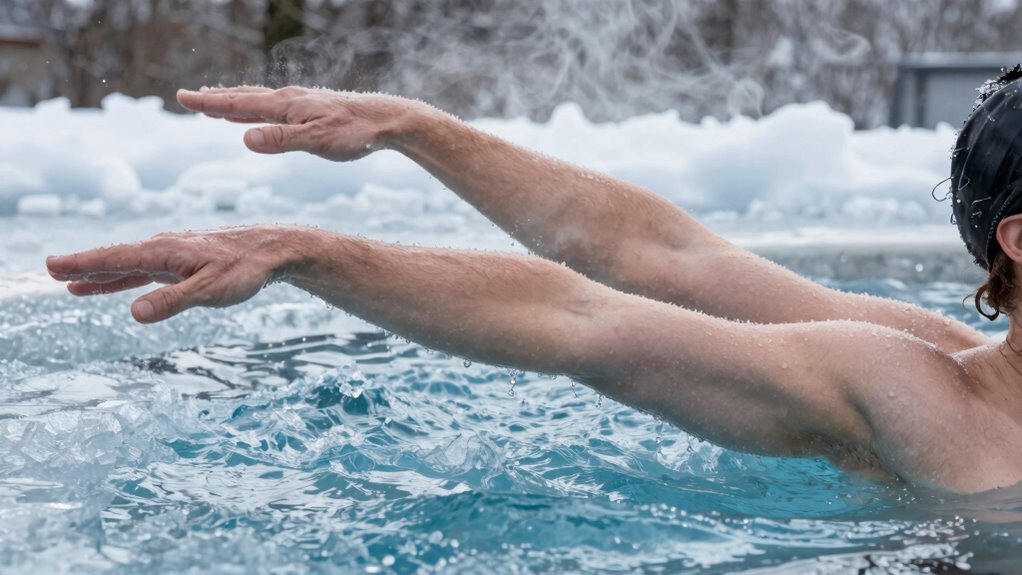
For example, entering the water gradually and staying upright with your limbs relaxed can help you control muscle activation better. When your muscles remain loose, you reduce the risk of cold-induced spasms, which can make the experience more comfortable and safer. Conversely, if you adopt a rigid posture, your muscles stiffen faster, making it harder to breathe and increasing discomfort. Proper positioning also influences your breathing techniques. When you’re upright and relaxed, you tend to breathe more steadily, which is crucial in cold immersion. Controlled, deep breathing helps regulate your heart rate, preventing hyperventilation and reducing panic.
Your body’s response to cold immersion hinges on your ability to maintain calm and control your breathing. The position of your body can make a difference here. If you’re too tense or hunched over, your breathing becomes shallow and erratic, heightening the shock response. On the other hand, if you float or lean back slightly, you can focus on slow, deep breaths that activate your parasympathetic nervous system, promoting relaxation. This not only eases the physical shock but also enhances muscle activation in a way that supports your resilience. You might notice that engaging your core muscles gently—without tensing—helps stabilize your body and makes it easier to breathe deeply. Additionally, adopting a mindful approach to body positioning can help you better connect with your physical and mental responses during the cold plunge. Developing awareness of your body’s positioning can also help you develop a more consistent cold immersion technique, leading to improved results over time. Incorporating intentional adjustments to your posture can also help you better manage your cold shock response, making each experience more effective and empowering.
Ultimately, body position isn’t just about comfort; it’s about control. By choosing how you enter and position yourself during your cold plunge, you optimize muscle activation and breathing techniques. This allows you to better manage the cold shock response, improving your overall experience and safety. Small adjustments, like floating smoothly or adopting an open posture, can have a significant impact on how you handle the cold. It’s about syncing your body’s reactions with your mind’s focus, turning a potentially overwhelming experience into an empowering one.
cold plunge body position guide
As an affiliate, we earn on qualifying purchases.
As an affiliate, we earn on qualifying purchases.
Frequently Asked Questions
Can Body Position Affect Cold Plunge Recovery Time?
Yes, your body position can affect cold plunge recovery time. When you adopt a relaxed posture, it promotes muscle relaxation, helping your body cool down more efficiently. Additionally, proper positioning can improve breathing efficiency, which supports better oxygen flow and quicker recovery. By consciously adjusting your body during a cold plunge, you can enhance relaxation and speed up the recovery process, making the experience more beneficial overall.
Is There an Optimal Body Position for Beginners?
Ever wondered if there’s a best way to start cold plunging? For beginners, maintaining good posture alignment and focusing on breathing techniques is key. Keep your body relaxed and upright, avoiding tension that can make the cold feel more intense. Slow, deep breaths help manage shock and discomfort. Does it make sense to ease into it? Yes, starting with a comfortable, upright position promotes better adaptation and recovery.
How Does Body Position Influence Cold Shock Response?
Your body position directly influences your cold shock response by affecting muscle relaxation and breathing techniques. When you keep your body upright and relaxed, you reduce muscle tension, making it easier to breathe steadily and control your response. Conversely, slouching or tense muscles can intensify shock symptoms. Focus on maintaining a relaxed posture and deep, controlled breathing to help your body adapt better and minimize discomfort during cold plunges.
Does Body Position Impact Mental Clarity After Plunging?
Ever wonder if your body position affects your mental clarity after a cold plunge? It definitely does. When you position yourself mindfully, focusing on relaxation techniques and maintaining good posture, your mindfulness focus improves, helping clear your mind faster. Proper body positioning can reduce stress and promote calmness, making it easier to enjoy mental clarity post-plunge. So, pay attention to how you sit or stand—you’ll notice a difference in your mental state.
Can Changing Body Position Improve Circulation During a Cold Plunge?
Changing your body position can definitely improve circulation during a cold plunge. By engaging your muscles, you’ll promote better blood flow, helping your body warm up faster and recover quicker. Incorporate breathing techniques to enhance this effect—deep, controlled breaths stimulate circulation and reduce discomfort. Adjusting your posture, like sitting upright or stretching your limbs, encourages blood movement and maximizes the benefits of your cold plunge experience.

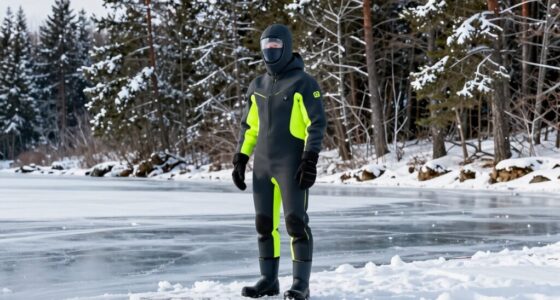
Mustang Cold Water Immersion Suit with Harness
Approval: USCG – UL1197 – Immersion Suits 160.171 – USCG/MED SOLAS 2010
As an affiliate, we earn on qualifying purchases.
As an affiliate, we earn on qualifying purchases.
Conclusion
Remember, how you position yourself in the cold plunge isn’t just about comfort—it’s about revealing new depths of resilience and renewal. Small adjustments can gently steer your experience toward greater clarity and calm. Embrace the subtle shifts, and you might find yourself reaping benefits you hadn’t expected. It’s a quiet dance with the chill, where your body’s posture guides the journey, turning a simple plunge into a profound moment of self-discovery.

Bath Thermometer – Digital Ice Plunge Gauge, Cold Water Timer, Floating Waterproof Alarm | Electronic Temperature Monitor for Recovery Tubs, Ideal Tool for Sports and Home Wellness
Intelligent Monitoring Tool: Featuring a smart timer function and convenient immersion mode, it provides precise cold timing with…
As an affiliate, we earn on qualifying purchases.
As an affiliate, we earn on qualifying purchases.

Breathe Right Nasal Strips, Extra Strength Clear Nose Strips, Drug-Free Nasal Congestion Relief for Better Breathing, Help Relieve Snoring, Caused by Colds & Allergies, Deviated Septum, 44ct
Instant Nasal Congestion Relief – Breathe Right nose strips for sleeping open your nose to relieve nasal congestion…
As an affiliate, we earn on qualifying purchases.
As an affiliate, we earn on qualifying purchases.