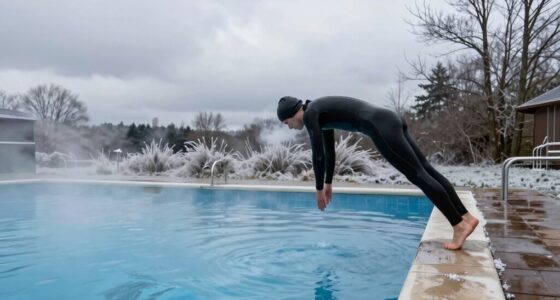
Before starting cold exposure, ask yourself five key questions: Are you aware of your body’s reactions and have you prepared mentally with breathing techniques? Do you understand the body’s initial cold response and how to progress gradually? Have you checked with a healthcare professional if you have health issues? Are you supporting your well-being with proper breathing and aromatherapy? And finally, are you aware of safety precautions? Answering these helps you start safely and confidently; keep exploring to learn more.
Key Takeaways
- Understand the body’s initial cold response and set realistic expectations to prevent panic or discomfort.
- Start with brief exposures like cold showers or outdoor walks to build tolerance safely.
- Use controlled breathing techniques to stay calm and regulate your nervous system during cold exposure.
- Ensure medical clearance if you have underlying health issues, especially cardiovascular or respiratory conditions.
- Gradually increase exposure duration and frequency to allow your body to adapt safely over time.
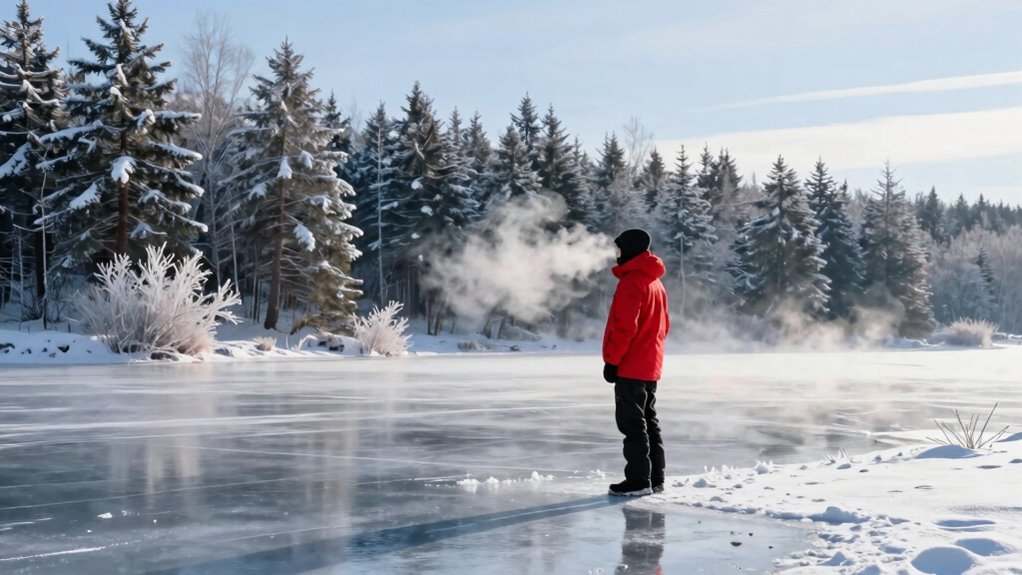
If you’re new to cold exposure, it’s normal to feel a bit apprehensive about stepping into chilly environments. Your mind might race with questions about safety, benefits, and how to handle the discomfort. Before you embark on it, it’s important to prepare your body and mind. One of the best ways to do this is by practicing breathing techniques. Controlled, mindful breathing helps regulate your nervous system, reducing the shock response that cold can trigger. Focused breathing not only keeps you calm but also increases your mental resilience, making it easier to stay composed during cold exposure. When you get into the habit of deep, steady breaths—inhale slowly through your nose, hold briefly, then exhale fully through your mouth—you create a sense of control that diminishes fear and anxiety. This mental preparedness is key because it shifts your mindset from avoidance to curiosity and confidence.
Understanding how your body reacts to cold is another essential step. Cold exposure causes blood vessels to constrict, conserving heat, which can lead to feelings of numbness or discomfort initially. Knowing this response helps you set realistic expectations and avoid panic if you experience sensations that seem alarming at first. It’s also smart to start with brief exposures, such as cold showers or short outdoor walks in cool weather, gradually increasing duration as your comfort and resilience build. Consistency is vital—regular, controlled exposure trains your nervous system to adapt more efficiently, reducing the shock over time. Remember, it’s not about pushing yourself to extremes on day one but about creating a sustainable, safe routine. Additionally, understanding essential oils for respiratory health can support your breathing during cold exposure by promoting easier airflow and reducing congestion, helping you stay comfortable and focused.
You should also address any underlying health concerns before starting cold exposure. If you have cardiovascular issues, respiratory conditions, or other health problems, consult a healthcare professional to make sure it’s safe for you. This step safeguards your well-being and gives you peace of mind as you progress. As you practice, pay close attention to your body’s signals. If you start feeling dizzy, excessively cold, or unwell, it’s important to stop and warm up. Developing mental resilience goes hand in hand with physical adaptation, and cultivating a calm, focused mindset will help you handle the discomfort with greater ease. Ultimately, embracing cold exposure is a journey of gradual acclimatization, confidence-building, and self-awareness. By mastering breathing techniques and understanding your body’s responses, you’ll lay a solid foundation for safe, effective cold exposure that benefits both your mind and body.
Frequently Asked Questions
How Long Should I Stay in Cold Exposure Sessions?
You should start with cold exposure sessions lasting 2 to 5 minutes, focusing on gradual adaptation. As you become more comfortable, increase the cold duration gradually, but avoid exceeding 15-20 minutes per session. Maintain a consistent session frequency, such as 3-4 times a week, to build tolerance safely. Always listen to your body and stop if you experience discomfort or signs of hypothermia.
Can Cold Exposure Be Harmful to My Health?
While cold exposure offers benefits, it can pose risks if not approached carefully. You might experience a cold shock that temporarily strains your immune response or causes discomfort. To stay safe, start gradually and listen to your body. Avoid prolonged sessions, especially if you have underlying health issues. With proper precautions, cold exposure can boost your resilience without harming your health. Always consult a healthcare professional before starting.
What Are the Signs of Hypothermia to Watch For?
You should watch for signs of hypothermia, which include shivering, slow or slurred speech, and confusion. Cold exposure symptoms also often involve numbness, pale or blue skin, and fatigue. If you notice these signs, it’s vital to get out of the cold, warm up gradually, and seek medical help. Recognizing these signs early can prevent serious health consequences from cold exposure.
Is Cold Exposure Safe for Everyone Regardless of Age?
Like a knight in shining armor facing a dragon, you should know cold exposure isn’t safe for everyone. Age considerations and individual health matter greatly. Young children and the elderly are more vulnerable, especially if they have health issues. Always consult with a healthcare professional before starting cold exposure routines. Recognizing your personal limits ensures safety, so don’t be brave to the point of risking hypothermia or other health complications.
How Often Should I Practice Cold Exposure for Benefits?
You should practice cold exposure 2 to 4 times a week to support cold adaptation and boost mental resilience. Consistency helps your body gradually adapt, enhancing benefits like improved circulation and stress management. Start with brief sessions and increase gradually. Remember, listening to your body is key; don’t push beyond comfort. Regular exposure trains your mind and body, making cold adaptation easier and fostering greater mental resilience over time.
Conclusion
Before jumping into cold exposure, ask yourself these questions and do your research. Many believe cold exposure boosts immunity and mental clarity, but evidence remains mixed. It’s tempting to follow popular trends, yet safety and moderation matter most. Remember, understanding the science behind these practices helps you make informed choices. Sometimes, the theory is true—other times, it’s not. Trust your instincts, stay cautious, and listen to your body as you explore this powerful tool for wellness.