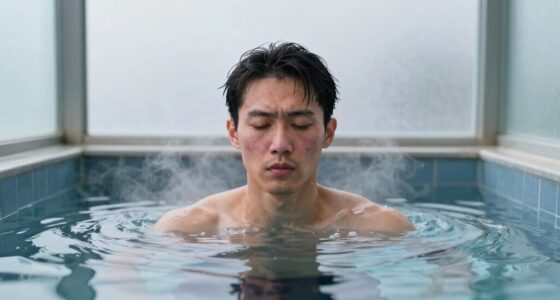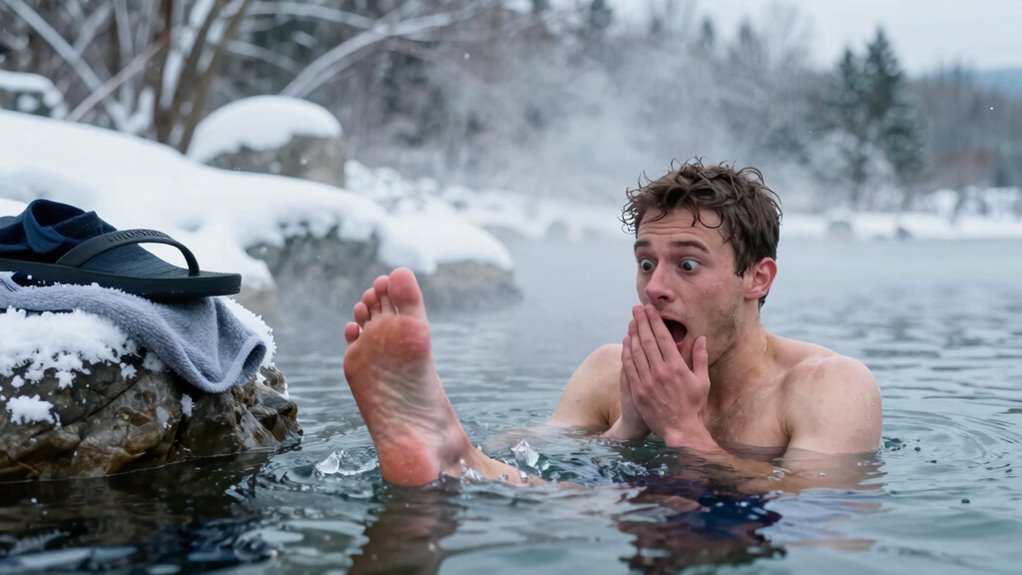

As a beginner, you might expect instant muscle relief and mental clarity after cold plunges, but in reality, these benefits develop gradually. Your body needs time to adapt, and initial cold shock can cause discomfort or dizziness. Consistency is key, and patience helps you notice long-term improvements like reduced soreness and better thermoregulation. If you stay committed, you’ll discover how your body slowly responds and transforms, making the journey more rewarding than you might initially think.
Key Takeaways
- Immediate muscle relief and mental clarity are rare; benefits develop gradually with consistent cold plunge practice.
- Initial cold shock causes discomfort and panic, but these responses diminish over time with adaptation.
- Significant improvements in recovery and mental focus require patience and long-term commitment.
- Cold exposure’s effects on the nervous system and thermoregulation build gradually, not instantly.
- Setting realistic goals and understanding the body’s adaptation process helps maintain motivation and safety.
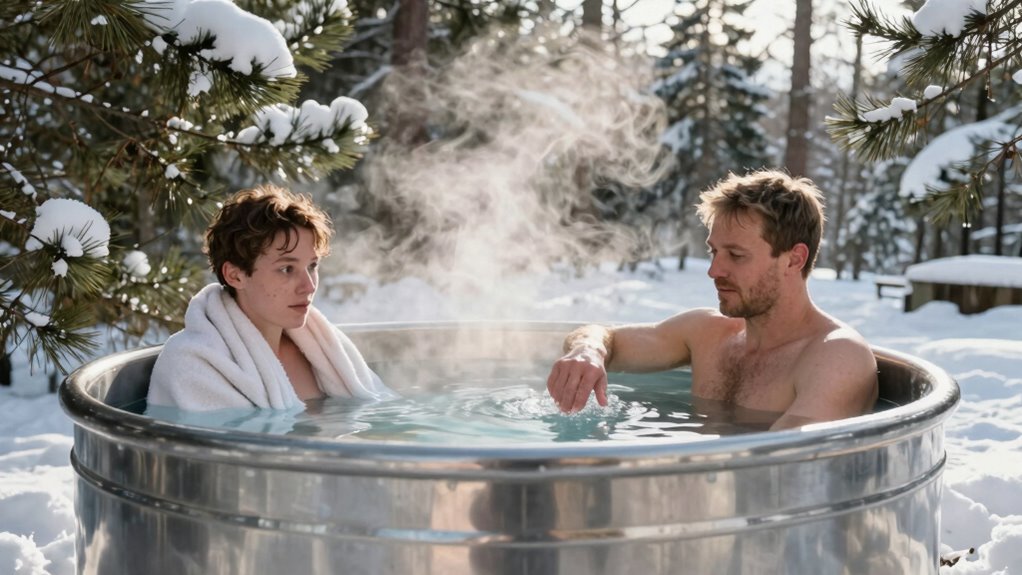
Many people immerse themselves in cold plunges expecting immediate benefits and a seamless experience, but the reality often proves more complex. When you first dip into icy water, you might anticipate quick muscle recovery and a sharp boost in mental clarity. While cold plunges can indeed support muscle recovery by reducing inflammation and soreness, you often find that the process isn’t as instant as you hoped. Instead, it takes consistent practice to notice significant improvements. Your muscles may feel less achy after a few sessions, but the relief isn’t always immediate. The cold constricts blood vessels, which helps flush out metabolic waste and reduce swelling, yet this effect builds gradually over time. You might feel a tingling sensation or a brief sense of relief right after, but don’t expect your soreness to vanish overnight. Recognizing the importance of body adaptation can help you develop patience and set realistic goals for your cold plunge routine. Additionally, understanding how cold exposure influences the nervous system can clarify why these sensations and benefits evolve gradually. Moreover, being mindful of thermoregulation can aid in managing your expectations as your body learns to cope with the cold more effectively. A deeper understanding of cold shock response can also prepare you for the initial discomfort and help you approach cold plunges safely.
Similarly, your expectations about mental clarity can be high. Many believe that plunging into cold water will give you a clear, focused mind instantaneously. While cold exposure does stimulate the nervous system and can promote alertness, the initial shock can also cause a jarring mental response. You might experience a rush of adrenaline or even a moment of panic as your body reacts to the cold. It’s not uncommon to feel dizzy or disoriented during your first few sessions. Over time, however, your body adapts, and the mental benefits become more pronounced. You may find that regular cold plunges help you focus better and feel more centered, but these effects are often subtle at first and require patience. Recognizing that mental clarity from cold exposure develops gradually, rather than instantly, can help set appropriate expectations.
As an affiliate, we earn on qualifying purchases.
Frequently Asked Questions
How Long Should I Stay in a Cold Plunge for Optimal Benefits?
You should stay in a cold plunge for about 1 to 3 minutes to gain maximum benefits. Staying too long can increase cold shock and discomfort, while too short may not boost mental resilience effectively. Focus on your breathing and listen to your body. Beginners often find that this duration helps improve circulation, reduce inflammation, and build mental resilience without risking overexposure. Always monitor your response and exit if you feel uncomfortable.
Can Cold Plunges Help With Specific Medical Conditions?
Did you know that cold plunge benefits are increasingly recognized in alternative therapies? Cold plunges can help manage inflammation and improve circulation, which may benefit those with conditions like arthritis or nerve pain. While they shouldn’t replace medical treatments, many find relief and enhanced recovery through regular exposure. Always consult your healthcare provider first, but cold plunges could be a valuable addition to your wellness routine if you’re seeking natural ways to support your health.
Is There an Ideal Time of Day to Take a Cold Plunge?
You should consider taking your cold plunge in the morning for ideal benefits. Timing considerations suggest early dips can boost your alertness and mood for the day ahead. Morning benefits include increased circulation and a natural energy boost that lasts longer. However, some prefer evening plunges to relax muscles. Ultimately, listen to your body’s cues and choose a time that fits your routine and helps you feel refreshed.
How Do I Safely Warm up After a Cold Plunge?
After a cold plunge, gently warm up by gradually increasing your body temperature, avoiding sudden heat. Wrap yourself in a cozy towel or blanket to soothe cold shock effects and promote muscle relaxation. Opt for a warm (not hot) shower or sip warm beverages, which help ease your muscles without shocking your system. This gentle approach guarantees safe recovery, reducing risks and enhancing the overall cold plunge experience.
Are Cold Plunges Suitable for Beginners With Health Issues?
Cold plunge safety isn’t always suitable for beginners with health issues. You should prioritize beginner precautions, especially if you have cardiovascular problems or low blood pressure, as cold exposure can trigger adverse reactions. Always consult your doctor before starting, and listen to your body. If you experience dizziness, chest pain, or discomfort, exit immediately. Being cautious guarantees you enjoy the benefits safely while minimizing risks associated with cold plunges.
As an affiliate, we earn on qualifying purchases.
Conclusion
Remember, “the proof of the pudding is in the eating.” Cold plunges might seem intimidating at first, and your expectations could be far from reality. But with patience and persistence, you’ll discover the true benefits—boosted circulation, mental clarity, and resilience. Don’t let initial surprises discourage you; every dip is a step toward better health. Embrace the unexpected, and soon, the cold will become your ally rather than your adversary.
As an affiliate, we earn on qualifying purchases.
As an affiliate, we earn on qualifying purchases.