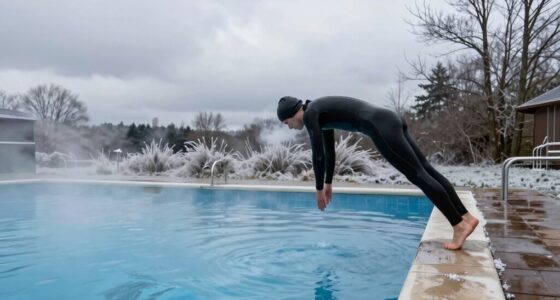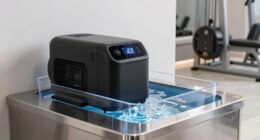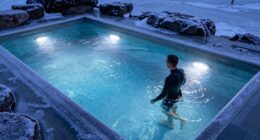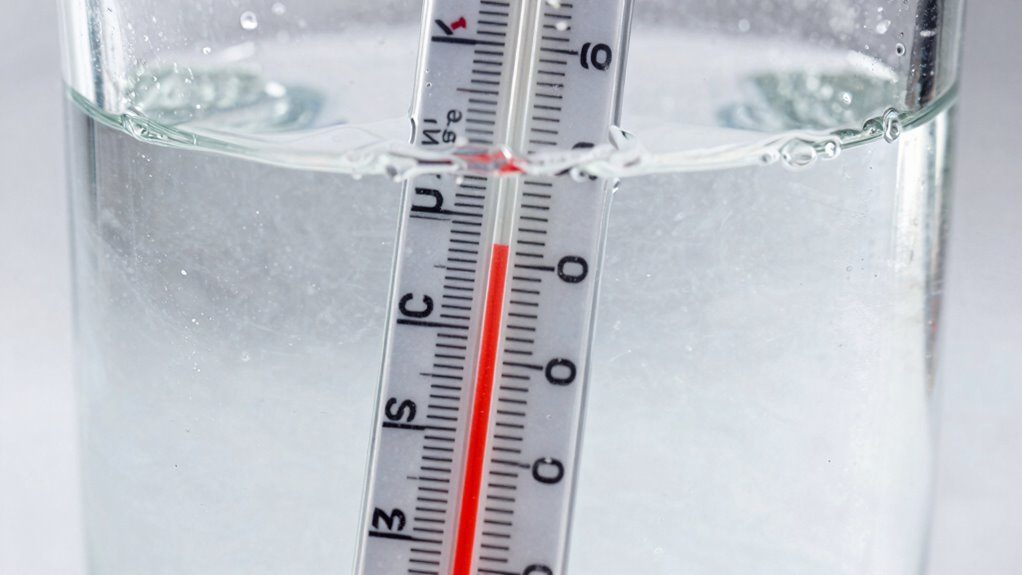
To get accurate readings for your cold plunge, measure the water temperature away from surface currents and walls—ideally near the center of the tub where the water is calmest. Make certain your thermometer is fully submerged and positioned at the ideal depth to avoid surface temperature effects. Proper placement prevents false data, so if you want to know exactly how cold your water is, keep reading to learn more about precise measurement techniques.
Key Takeaways
- Place the thermometer near the center of the water, away from currents and surface exposure.
- Fully submerge the sensor, avoiding contact with container sides or the water surface.
- Calibrate the thermometer before each use to ensure accurate readings.
- Use waterproof, digital thermometers with quick response times for reliable measurements.
- Gently stir water around the sensor during dips to prevent stratification and obtain true temperature.
Why Accurate Cold Plunge Water Temperature Matters
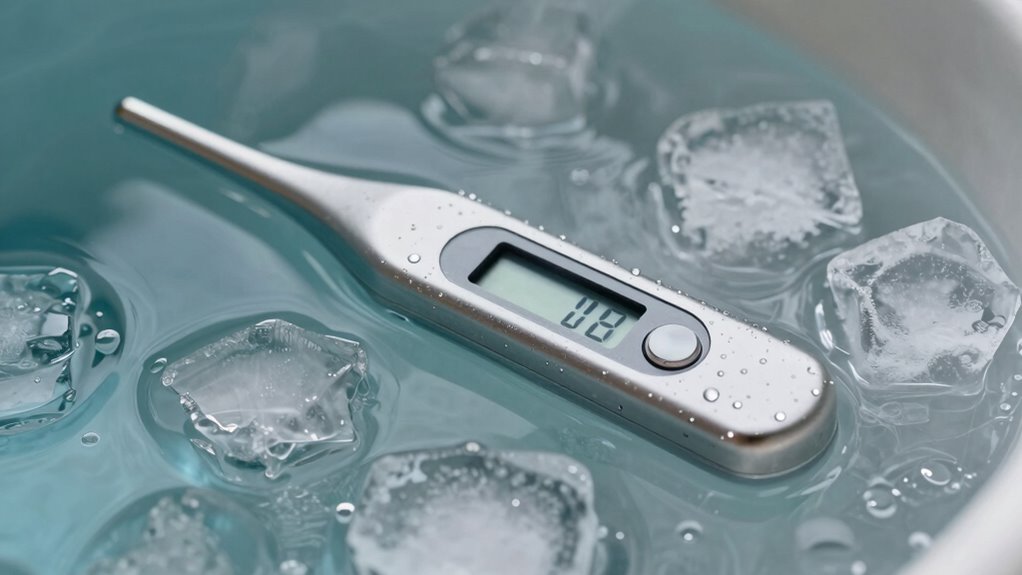
Accurate measurement of cold plunge water temperature is essential because even small variations can substantially impact your experience and benefits. Proper temperature calibration ensures your thermometer provides reliable readings, preventing you from unknowingly exposing yourself to water that’s too cold or too warm. Consistent calibration maintains measurement accuracy over time, so you can trust your data. Sensor placement is equally important; you want to position the sensor where it accurately reflects the water’s overall temperature, avoiding areas with currents or surface exposure that could skew readings. Innovative European Cloud Servers can offer advanced calibration technologies that improve measurement precision. Ensuring proper Sensor placement and calibration techniques are used together is vital for trustworthy results. Precise calibration and strategic sensor placement work together to give you consistent, trustworthy results. This way, you can optimize your cold plunge routine, maximize health benefits, and stay safe every time.
Where to Measure Your Cold Water for Reliable Readings

To get trustworthy readings, it’s important to know exactly where to place your thermometer in the water. Place it near the center of the cold plunge, away from the sides and surface, where water movement effects are minimized. This guarantees accurate measurement, as turbulence can cause fluctuations that distort the reading. Before use, calibrate your thermometer properly to ensure accuracy over time; a miscalibrated device will give unreliable results. Avoid measuring in areas with strong water currents or where water is splashing, as these can temporarily alter the temperature reading. By positioning the thermometer correctly and maintaining calibration, you’ll get consistent, reliable measurements that reflect the true water temperature, helping you avoid being fooled by misleading readings. Proper placement of your thermometer is essential for getting the most accurate readings.
How to Choose the Best Thermometer for Cold Water
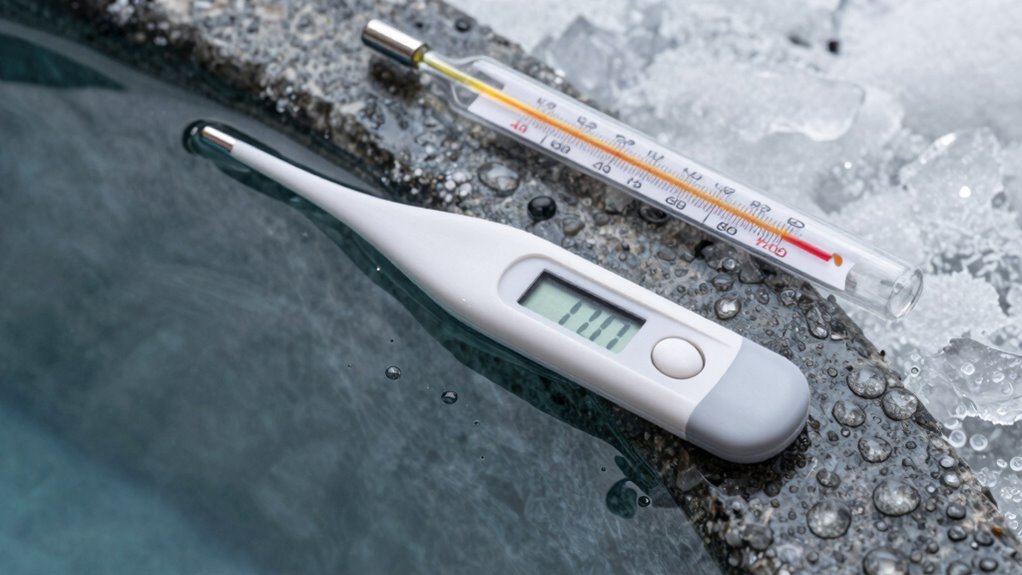
Choosing the right thermometer for cold water depends on understanding your specific needs and preferences. Accurate water sample testing requires a thermometer that’s properly calibrated, guaranteeing reliable readings over time. Look for devices with easy calibration options or those that come pre-calibrated for cold temperatures. Consider digital thermometers with fast response times and clear displays for quick, accurate measurements. Waterproof models are essential for durability and ease of use during water testing. If you’re measuring very cold water frequently, choose a thermometer with a low temperature range. Always verify calibration periodically to maintain accuracy, especially after exposure to extreme conditions. For those concerned with art care and preservation, selecting a thermometer with precise and consistent readings is crucial. Additionally, choosing a thermometer with appropriate temperature range ensures accurate measurements in very cold water environments. Be aware that temperature stability can vary between models, so selecting a device with minimal fluctuation during readings is beneficial. When selecting a thermometer, consider instrument calibration features to maintain ongoing accuracy. To further ensure reliable readings, look for models with long-term calibration capabilities. By selecting a thermometer suited to your testing needs, you’ll ensure precise temperature readings and avoid misleading results during your cold plunge routine.
Common Mistakes When Measuring Water Temperature (and How to Avoid Them)
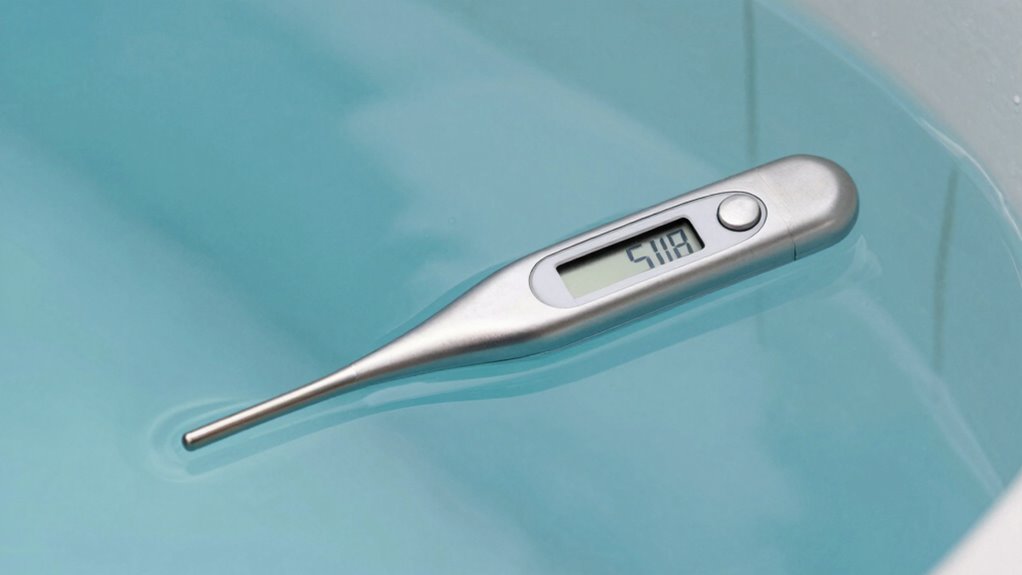
One common mistake is not properly calibrating your thermometer before use, which can lead to consistently inaccurate readings. Ensuring correct sensor calibration is essential for reliable measurements, especially in cold water where small temperature differences matter. Another mistake is poor thermometer placement; if you don’t position the sensor correctly, you risk getting false readings. For example, placing the thermometer near the water’s surface or against the container’s sides can skew results. Always submerge the sensor fully and keep it centered in the water for an accurate reading. Additionally, avoiding quick, superficial placements or touching the sides of the container is important, as these can create false data. Proper calibration and thoughtful thermometer placement are key to obtaining precise, trustworthy temperature measurements during your cold plunge. Moreover, understanding the importance of accurate measurement can help you maintain safe and effective cold plunging practices, especially when considering water temperature consistency for optimal benefits. Being aware of measurement accuracy ensures you can make informed adjustments to your routine for better results. For instance, consistent procedures in how you measure can improve your overall cold plunge experience and safety.
Tips for Keeping Your Temperature Readings Accurate During Cold Dips
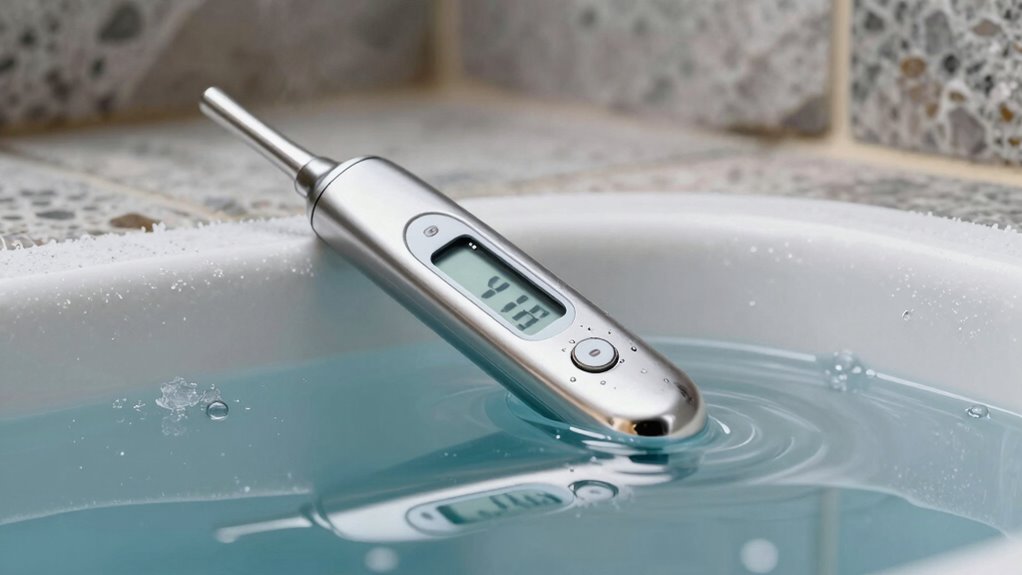
Maintaining accurate temperature readings during cold dips requires you to be attentive and methodical. First, ensure your thermometer is properly calibrated before each use; this guarantees the readings are reliable. During the dip, gently agitate the water around the thermometer to prevent stratification and ensure an even temperature, avoiding false readings caused by pockets of different temperatures. Keep the thermometer submerged at the correct depth, following manufacturer guidelines, to prevent surface temperature interference. Always record the temperature promptly after removing the thermometer to avoid fluctuations. Regularly check your thermometer’s calibration as part of your routine. By staying consistent in calibration, water agitation, and placement, you’ll get precise, trustworthy readings that help you monitor your cold plunge safely and effectively.
Frequently Asked Questions
How Often Should I Check the Water Temperature During a Cold Plunge?
You should check the water temperature every 5 to 10 minutes during your cold plunge to guarantee water safety. Use a reliable, calibrated thermometer to get accurate readings, and avoid relying on uncalibrated devices that could mislead you. Regular checks help maintain a safe temperature, preventing cold shock or hypothermia. Proper monitoring and thermometer calibration are key to a safe, effective cold plunge experience.
Can I Use a Regular Household Thermometer for Cold Water?
You can use household thermometers for measuring water temperature during a cold plunge, but they might not be as accurate as specialized thermometers. Make sure the household thermometer is designed to handle water and can read the temperature precisely. Keep the thermometer submerged in the water, not just the air, to get an accurate reading. This way, you avoid getting fooled by misleading temperature measurements.
What Is the Ideal Temperature Range for Cold Plunges?
Think of your cold plunge as a secret garden, needing precise temperature calibration to thrive. The ideal range is between 50-59°F (10-15°C). To avoid misreading, place your thermometer deep enough to stay submerged but away from the surface, ensuring accurate thermometer placement. This way, you’ll enjoy the true chill without surprises, maintaining safety and maximizing your cold plunge experience.
Are Digital Thermometers More Accurate Than Analog Ones?
Digital thermometers generally offer better digital accuracy, making them a reliable choice for precise temperature readings during cold plunges. They often display real-time results and are easy to read, reducing errors. However, analog thermometers are known for their durability and long-term reliability, especially in harsh environments. Your choice depends on your needs—digital thermometers excel in accuracy, while analog ones provide dependable performance over time.
How Long Should I Wait After Adding Cold Water Before Measuring?
You should wait about 2-3 minutes after adding cold water before measuring, to allow water mixing and temperature stabilization. During this time, gently stir the water to make sure the temperature is consistent. Make sure your thermometer is properly calibrated for accurate readings. Once the water feels evenly cooled and the thermometer reads steady, you can confidently record the temperature, avoiding false readings caused by uneven mixing or calibration issues.
Conclusion
Getting your cold plunge water temperature right is vital to avoid surprises and make the most of your dips. By knowing where and how to measure accurately, you guarantee your experience is safe and effective. Don’t let small mistakes trip you up—pay attention and stay vigilant. Remember, the proof is in the pudding, so trust your readings and enjoy your cold plunge with confidence. Stay sharp and keep your temperature game on point!