To determine how many pounds of ice you need, first decide how much water you want to cool and by how many degrees. Typically, for every gallon of water, about one to two pounds of ice can lower the temperature by a few degrees. Factors like initial water temperature, insulation, and duration affect this amount. If you keep these points in mind, you’ll get closer to the perfect ice-to-water ratio—there’s more to think about as you continue exploring.
Key Takeaways
- Estimate the water volume and desired temperature drop to determine total heat removal needed.
- Calculate the energy required to cool water, using specific heat capacity and temperature difference.
- Use ice’s heat of fusion (around 144 BTU/lb) to find how much ice is needed to absorb that heat.
- Divide total heat transfer by the heat absorption per pound of ice to get the required pounds of ice.
- Adjust calculations for environmental factors, insulation, and longer bath durations for accuracy.

𝙐𝙥𝙜𝙧𝙖𝙙𝙚 Ice Bath Water Chiller, 1/3 HP Water Chiller for Cold Plunge Tubs, with Pump, External Filter and Filter Media, Remote Control, for Home and Professional Use
【High-Efficiency Cooling】The Cold Plunge Chiller is equipped with a powerful 1/3HP refrigeration unit. It features a built-in dual...
As an affiliate, we earn on qualifying purchases.
How Do Ice Baths Cool Water?

Ice baths cool water primarily through heat transfer. When you add ice, the thermal conductivity of the ice allows heat from the water to flow into it efficiently. As the ice absorbs heat, it undergoes a phase change from solid to liquid, which requires a significant amount of energy. This process, called melting, helps draw heat away from your body and the water, lowering the overall temperature. The rate of cooling depends on the thermal conductivity of the ice and water, as well as the surface contact between them. As the ice melts, it continues to absorb heat, maintaining a steady cooling effect. This phase change makes ice particularly effective at extracting heat quickly, giving you the chilled water you need. Additionally, the specific heat capacity of ice influences how much energy is needed to change its temperature, affecting the efficiency of the cooling process. Understanding heat transfer mechanisms can help optimize the amount of ice used for effective cooling. For example, maximizing surface contact between the ice and water can enhance heat exchange efficiency. Furthermore, the size and shape of the ice also impact how quickly it melts and cools the water, as surface area plays a crucial role in heat transfer rates.

AS ColdPlunge Ice Bath Water Chiller for Cold Plunge Tubs, 1/3 HP Cold Plunge Chiller with Built-in Filter & Pump, Submersible Pump, Insulated Hoses, Ideal for Ice Bath Cold Therapy Recovery 110V
Efficient Cooling – No More Ice Runs: Our 1/3HP ice bath chiller cools up to 79 gallons of...
As an affiliate, we earn on qualifying purchases.
How Much Ice Do You Need for Your Bath?
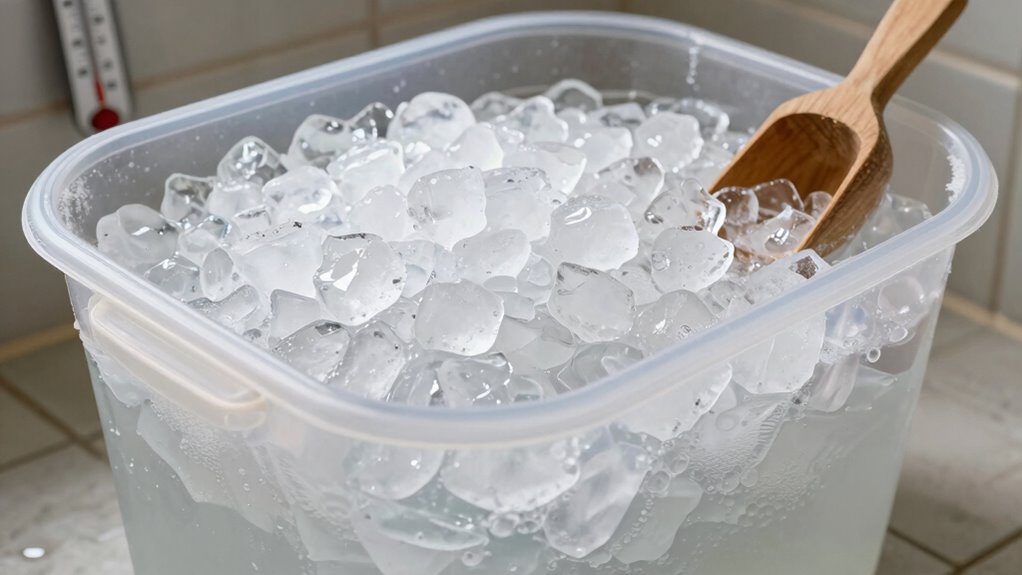
To determine how much ice you’ll need for your bath, start by considering the volume of water you plan to use and the desired temperature reduction. When you add ice, it melts, absorbing heat through temperature transfer, which cools the water. The more water you have, the more ice you’ll need to reach your target temperature. For example, if you’re starting with 50 gallons of water and want to lower the temperature by 20°F, you’ll need enough ice to absorb a significant amount of heat through melting. Keep in mind that ice melting absorbs heat without increasing the water temperature immediately, so estimating the ice quantity involves calculating the heat transfer and the specific heat of water. Additionally, using smart home automation can help monitor and maintain your desired bath temperature more precisely, ensuring your bath stays cold long enough for your desired recovery. Understanding the heat transfer process can also improve your estimation accuracy and make your ice usage more efficient. Incorporating thermal dynamics into your calculations can further optimize the amount of ice needed for efficient cooling.

EUHOMY Commercial Ice Maker Machine, 100lbs/24H Stainless Steel Under Counter ice Machine with 33lbs Ice Storage Capacity, Freestanding Ice Maker.
HIGH CAPACITY & FAST ICE MAKING – Designed for heavy-duty usage, this commercial ice maker produces up to...
As an affiliate, we earn on qualifying purchases.
What Factors Change Your Ice Needs?
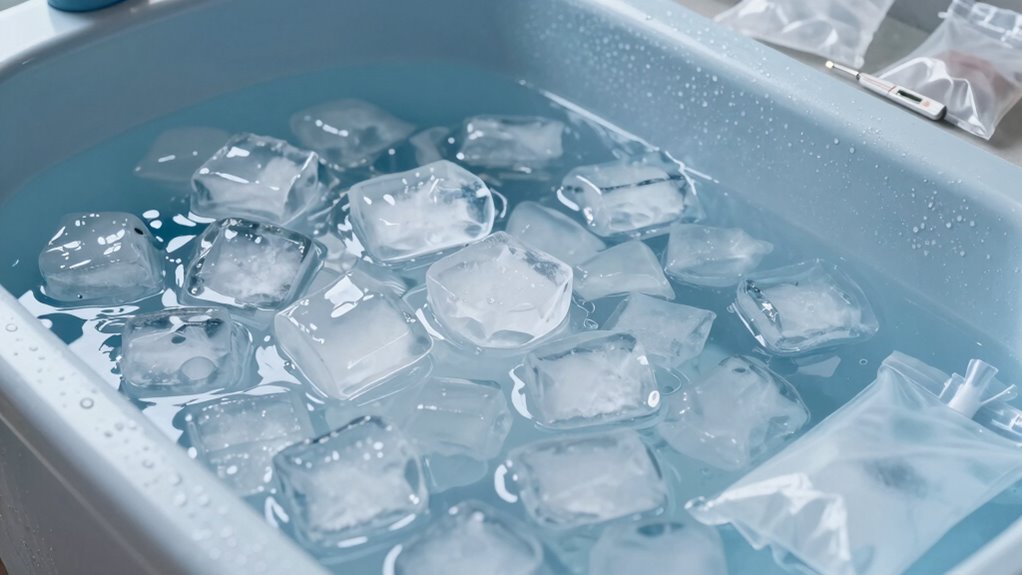
Several factors can influence how much ice you’ll need for your bath, making the process less straightforward than simply estimating based on water volume. Temperature fluctuations in your environment can cause the water to warm more quickly, increasing ice requirements. Additionally, the quality of container insulation plays a critical role; poorly insulated containers lose cold faster, demanding more ice. Consider how these factors affect your setup:
| Factor | Impact |
|---|---|
| Temperature Fluctuations | Raise water temperature, needing more ice |
| Container Insulation | Less insulation, faster heat gain |
| Bath Duration | Longer baths require more ice |
| Initial Water Temperature | Warmer water needs extra cooling |
Furthermore, understanding the thermal properties of your setup can help you better optimize your ice usage for a more effective and consistent ice bath experience. Good insulation can significantly reduce the heat transfer from the environment, which in turn can decrease the ice consumption. Recognizing how thermal conductivity influences heat transfer is essential for making informed decisions about insulation materials and techniques.

Ice Bath Water Chiller for Cold Plunge Tubs, 1.0HP Water Chiller Machine, Hydroponic Cooling System, Fish Tank Chiller with Upgraded LED Display
【High-Efficiency Cooling】The Cold Plunge Chiller is equipped with a powerful 1HP refrigeration unit. It features a built-in dual...
As an affiliate, we earn on qualifying purchases.
Tips for Measuring and Adding Ice Effectively
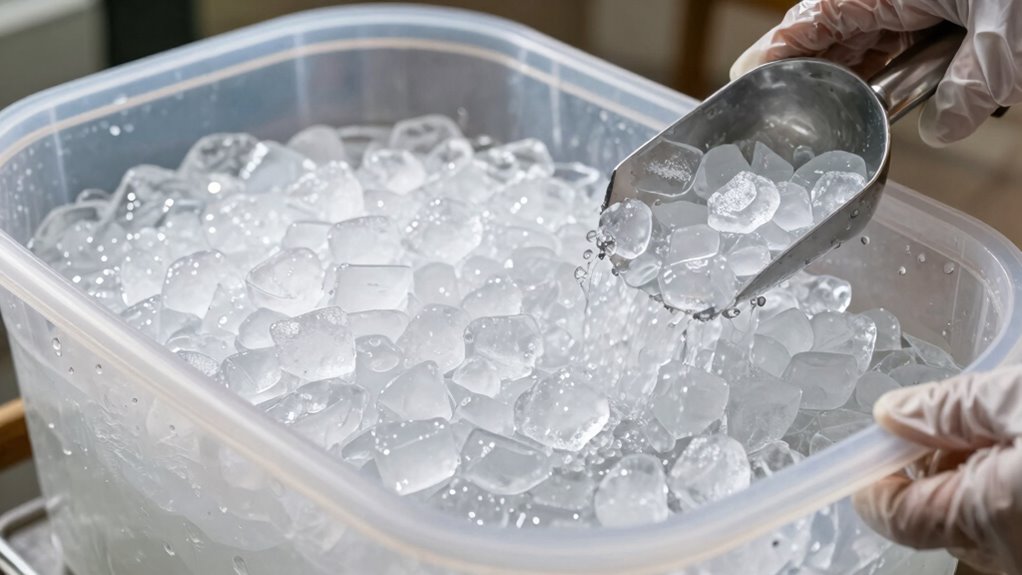
Accurately measuring and adding ice can make a significant difference in maintaining the right water temperature during your bath. To do this effectively, use reliable measuring tools like a kitchen scale or a marked container to determine the exact amount needed. Proper ice storage guarantees your ice remains cold and easy to access when it’s time to add it. Follow these tips:
- Use measuring tools to track your ice quantity precisely, avoiding over- or under-shooting.
- Store your ice in a dedicated, insulated container to keep it cold until use.
- Add ice gradually, checking the water temperature frequently to reach your desired coolness efficiently.
- Incorporating professional design concepts from architectural solutions can help you optimize your space for better ice storage and accessibility. Additionally, understanding precise measurement techniques can further enhance your control over the process. Being aware of body piercing materials and their impact on cleanliness can also help prevent contamination during your setup. Precise temperature monitoring tools are essential for maintaining consistent bath conditions and safety.
Common Mistakes When Planning Your Ice Bath
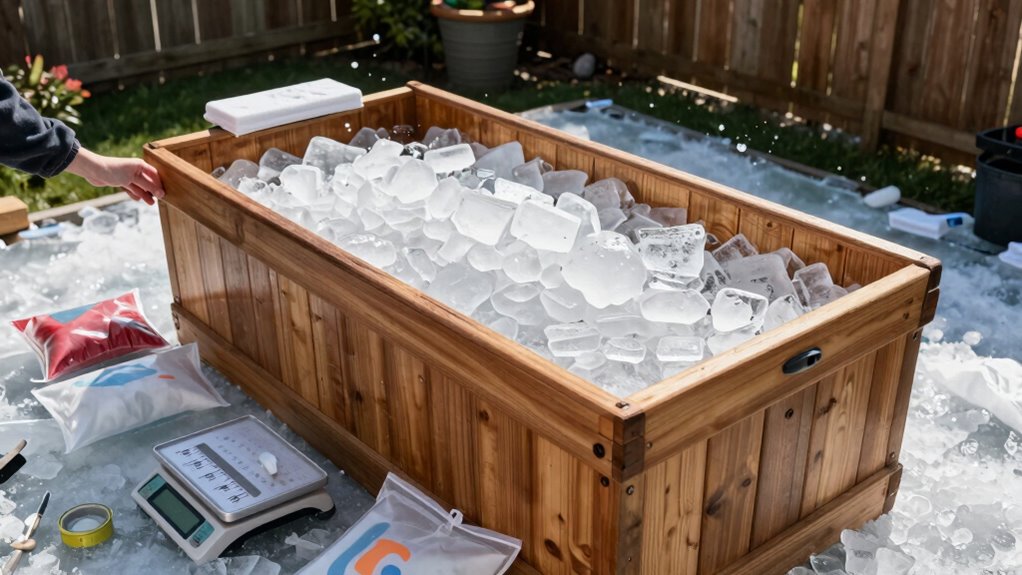
One common mistake when planning your ice bath is underestimating the amount of ice needed, which can lead to water that’s not cold enough for effective recovery. When you don’t add enough ice, the temperature regulation isn’t ideal, and the ice melting process takes longer, resulting in inconsistent coldness. This can cause your body to not reach the desired recovery benefits. To avoid this, calculate the proper ice-to-water ratio based on your bath size and target temperature. Remember, as ice melts, it absorbs heat, helping maintain a steady, cool temperature. Failing to account for melting rates can leave your bath too warm or too cold at different times. Proper planning ensures efficient cooling and maximizes the benefits of your ice bath. Additionally, understanding navigation and mapping principles can help you optimize your setup and ensure even cooling throughout the bath. Incorporating temperature regulation techniques can further enhance your ability to maintain consistent coldness during your recovery session. Being aware of backup power considerations can also help if your setup relies on electrical equipment or if you need to keep the cooling system running during outages. Planning for safety precautions is also essential to prevent accidents or overexposure to cold temperatures. Moreover, considering insulation can help retain cold temperatures longer and improve energy efficiency during your ice bath setup.
Frequently Asked Questions
How Long Should I Stay in an Ice Bath for Optimal Benefits?
You should stay in an ice bath for about 10 to 15 minutes to maximize muscle recovery and support your mental health. Staying too long can cause hypothermia, so keep it brief. This duration helps reduce inflammation and soothes your mind, boosting mental clarity and mood. Listen to your body and don’t push beyond 15 minutes. Consistent, moderate exposure will give you the best benefits without risks.
Can I Reuse Melted Ice for Future Baths?
Yes, you can reuse melted ice for future baths, but it depends on your melting efficiency and how clean the water stays. Reusable ice can be cost-effective, but guarantee it’s free of contaminants or debris. To maximize melting efficiency, keep the ice in a sealed container and avoid exposing it to warm air. Reusing melted ice works best if you monitor cleanliness and plan to replenish it regularly.
What Safety Precautions Should I Take During Cold Immersion?
During cold immersion, you should prioritize safety by monitoring your body temperature closely to prevent hypothermia. Always stay in the bath for a limited time, typically no longer than 10-15 minutes, and keep your skin protected with a warm cloth or dry clothing afterward. Make sure someone is nearby in case you need help, and avoid cold immersion if you have medical conditions. These precautions help guarantee skin protection and hypothermia prevention.
How Does Water Volume Affect Ice Requirements?
Think of water volume as the canvas for your ice bath—larger volumes demand more ice because of water displacement and the ice melting rate. The more water you have, the more ice you’ll need to reach the desired temperature. As water heats from melting ice, it takes longer and requires more ice to maintain cold temps. Adjust your ice accordingly to keep your immersion effective and safe.
Is There an Ideal Temperature Range for an Ice Bath?
The ideal temperature range for an ice bath is typically between 50°F and 59°F, which balances effective temperature control and safety. You should monitor the water temperature closely, adjusting the ice quantity as needed. Using high-quality, fresh ice guarantees consistent cooling. Staying within this range helps reduce inflammation and muscle soreness without risking hypothermia, giving you a safe and effective recovery experience.
Conclusion
Now that you know how to calculate your ice needs, you’re ready to plunge in like a pro swimmer slicing through water. Remember, the right amount of ice cools your bath efficiently and keeps you comfortable. Don’t forget to measure carefully and avoid common mistakes. With a bit of planning, your ice bath will be invigorating and effective—like a brisk swim in clear, revitalizing water. Stay cool and enjoy your recovery!