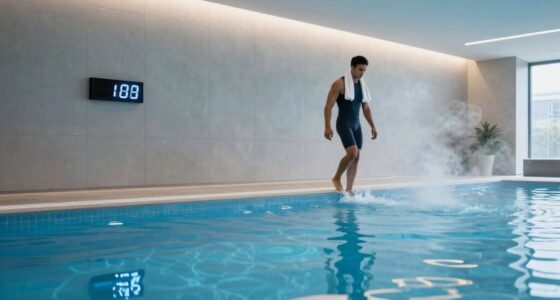
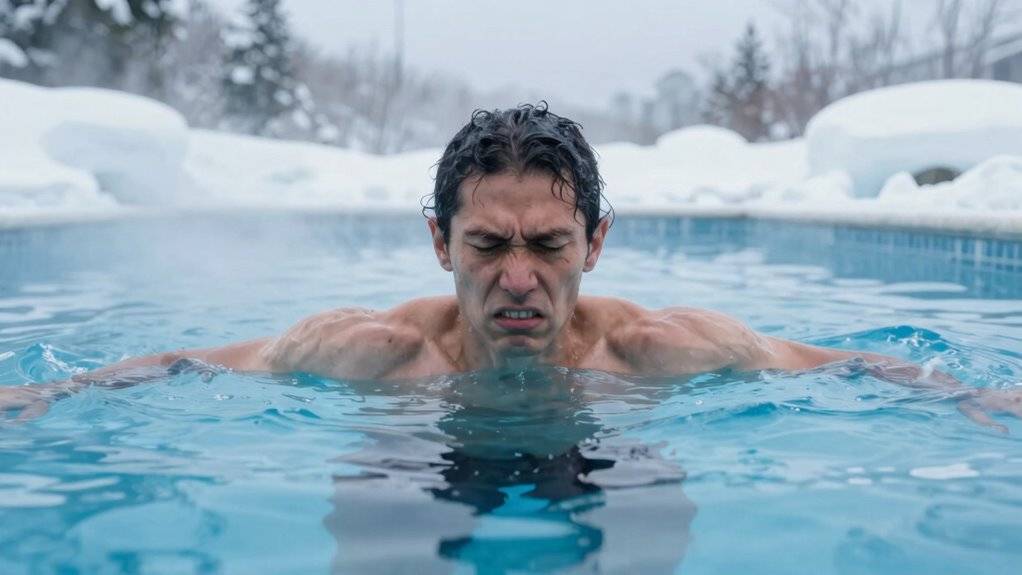

Mental toughness alone isn’t enough to handle cold water; your body’s ability to adapt physiologically and build stress resilience matters just as much. When you face cold exposure repeatedly, your nervous system learns to respond more calmly, and your circulatory system becomes more efficient, improving your tolerance over time. This adaptation, combined with stress management skills, makes the process easier and more sustainable. Keep exploring, and you’ll discover how to truly strengthen both mind and body for cold water resilience.
Key Takeaways
- Mental toughness contributes but is not the sole factor; physiological adaptation plays a crucial role in cold water resilience.
- Immediate cold shock response involves rapid breathing and muscle tightening, which diminishes with regular practice.
- Consistent cold exposure enhances circulation, core temperature regulation, and overall cold tolerance through biological adaptation.
- Physiological changes, such as improved cardiovascular function, develop over time, making cold water immersion more manageable.
- Combining mental strategies with physical adaptation leads to sustainable resilience and reduces cold-related stress responses.
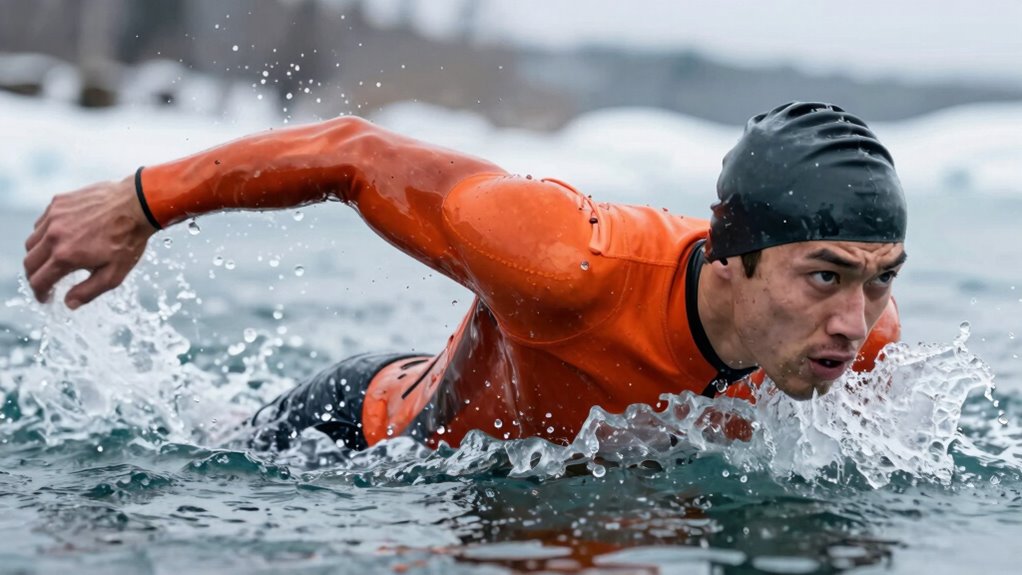
Many believe that mental toughness is the secret to enduring cold water, but the truth is more nuanced. While mental grit plays a role, it’s not the only factor at work. Instead, your body’s ability to develop stress resilience and undergo physiological adaptation is what truly makes cold exposure manageable over time. When you first step into icy water, your immediate reaction is often shock—sharp breathing, muscle tightness, and a surge of adrenaline. This response is your body’s way of protecting itself, but with repeated exposure, you begin to train your nervous system to handle the stress more effectively. Over time, your body’s stress resilience improves, meaning you don’t react as intensely to the cold, and you can stay calmer in those moments. This isn’t just about mental strength; it’s about your body learning to adapt physiologically to the stressor. Recognizing the importance of stress resilience can help you approach cold water exposure with patience and understanding. As you continue to expose yourself to cold water regularly, your body starts making changes that enhance your capacity to tolerate lower temperatures. These physiological adaptations include increased blood flow to essential organs, improved circulation, and better regulation of core body temperature. Your cardiovascular system becomes more efficient at managing the cold, reducing the shock response and enabling you to stay in the water longer. This process is similar to training any muscle—your body gets stronger and more efficient with consistent practice. By fostering these adaptations, you build resilience not just mentally but physically, which makes enduring cold water less intimidating and more sustainable. This process is supported by the body’s natural capacity for physiological adaptation, which is fundamental to long-term resilience. Developing stress management skills can further enhance your body’s ability to handle cold exposure by promoting relaxation and reducing panic responses. Additionally, understanding how biological systems respond to cold stress can empower you to optimize your training and recovery. When you understand this, you realize that cold water training is less about forcing yourself through sheer willpower and more about gradually conditioning your body to handle stress more effectively. This shift in perspective can help you stay patient and consistent, knowing that your progress is rooted in biological adaptation rather than sheer mental effort. Over time, as your stress resilience grows and your body adapts, you’ll notice that cold water becomes less intimidating and more manageable. In this way, your mental toughness is supported and reinforced by your body’s capacity to adapt, creating a sustainable approach that combines mind and physiology for lasting resilience.

Mustang Cold Water Immersion Suit with Harness
Approval: USCG – UL1197 – Immersion Suits 160.171 – USCG/MED SOLAS 2010
As an affiliate, we earn on qualifying purchases.
As an affiliate, we earn on qualifying purchases.
Frequently Asked Questions
Can Cold Water Exposure Improve Mental Health Long-Term?
Cold water exposure can boost your long-term mental health by enhancing psychological resilience and promoting stress adaptation. When you regularly immerse yourself, your body learns to handle stress better, reducing anxiety and improving mood over time. This practice encourages your mind to adapt positively to challenging situations, fostering greater emotional strength. Consistent cold water exposure may, as a result, help you build a more resilient mindset and better manage daily stressors.
What Are the Risks of Extreme Cold Water Immersion?
Diving into extreme cold water is like walking a tightrope, where risks are high if you’re unprepared. You face hypothermia risks, which can quickly turn dangerous, and cardiovascular concerns, especially for those with heart issues. Cold water immersion can strain your heart and cause shock. Always listen to your body, start slowly, and consult a healthcare professional to avoid turning a challenge into a health hazard.
How Often Should One Practice Cold Water Exposure?
You should practice cold water exposure 2-3 times a week to build your physical endurance and improve your breathing techniques. Start gradually, increasing your time in cold water as your body adapts. Consistency is key, but listen to your body and avoid overdoing it. Regular exposure helps strengthen mental toughness, boosts circulation, and enhances your ability to handle cold stress effectively.
Does Mental Toughness Vary Between Individuals?
Mental toughness definitely varies between individuals. Notably, studies show that personality resilience influences how well you adapt to stress, including cold water exposure. If you’re naturally resilient, you may find it easier to handle discomfort and bounce back quickly. Your ability to endure cold water depends on your stress adaptation skills, which are shaped by your personality traits and past experiences. So, mental toughness isn’t the same for everyone; it’s unique to each person.
Are There Age Limits for Cold Water Training?
Age restrictions exist for cold water training, especially for children and older adults, due to safety concerns. You should consult a healthcare professional before starting, regardless of age. Training frequency matters; it’s best to gradually increase exposure to avoid shock. Listen to your body, and make sure you’re not overdoing it. Proper guidance and moderation help you safely benefit from cold water practices, no matter your age.

Hevto Men Wetsuit 3/2mm Neoprene Front Zip Full Wet Suit in Cold Water for Surfing Swimming SUP Snorkeling Diving (M2-Black, LT)
Why: The Hevto full wetsuit is a must-have for anyone planning water activities in cold temperatures or for…
As an affiliate, we earn on qualifying purchases.
As an affiliate, we earn on qualifying purchases.
Conclusion
So, next time you hesitate at the edge of that icy plunge, remember: mental toughness isn’t about bravado or old-timey heroics. It’s about resilience, patience, and understanding your limits—like a seasoned knight of yore facing a dragon, not a reckless knight rushing into battle. Cold water can be a powerful teacher, but only if you approach it with respect and a clear mind. Embrace the challenge, and you’ll find strength you never knew you had.

aero bear Ice Machine for Knee After Surgery w/Compression, Cold Therapy Machine for Hip Replacement, Cryo Cuff Wrap Pack for Shoulder Recovery, Cold Cooler Water System(Gray)
2-in-1 Icing & Compression System: Experience clinical-grade recovery and reduces swelling 45% faster than standard ice packs. Our…
As an affiliate, we earn on qualifying purchases.
As an affiliate, we earn on qualifying purchases.

Splash About Thermaswim Adult Thermal Swim Top/Base Layer – Medium/Large Black
Thermal Protection for Cold Water – Brushed fleece inner lining provides warmth and comfort, keeping you cozy during…
As an affiliate, we earn on qualifying purchases.
As an affiliate, we earn on qualifying purchases.