TL;DR

Get home appliances delivered free — and shop member deals
- Fast, free delivery on millions of items
- Access to Prime Big Deal Days deals on October 6–7
- Prime Video, Amazon Music and more included
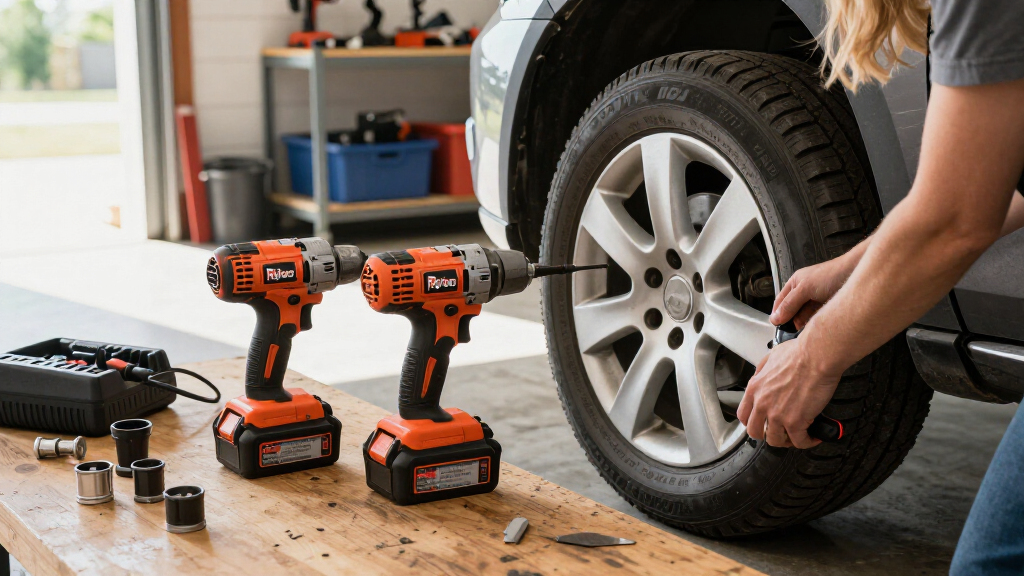
Pro Tool Reviews published a hands-on head-to-head between the Ryobi HP Brushless P262 and Ridgid 18V Brushless R86012 impact wrenches. Ridgid won two of three tests, but the narrow margins suggest Ryobi’s prosumer lineup now performs close to its Pro-focused sister brand.
A new head-to-head test from Pro Tool Reviews puts two of Home Depot’s most popular mid-torque impact wrenches — the Ryobi HP Brushless P262 and the Ridgid 18V Brushless R86012 — through three standardized performance tests, and the results show the DIY-focused Ryobi trailing its Pro-positioned rival by only the slimmest of margins. The review ultimately names the Ridgid R86012 the winner, but its testing data indicates Ryobi’s HP Brushless line is closing the gap with professional-grade tools.
Both wrenches sit at the top of their respective lineups and share much in common: brushless motors, three speed modes with Assist Mode, die-cast gearboxes, and identical bare weights of 3.69 lbs. Both are sold only as bare tools, at $179 for the Ryobi P262 and $189 for the Ridgid R86012. The key warranty difference is substantial: Ryobi carries a 3-year warranty, while Ridgid includes its Lifetime Service Agreement.
Pro Tool Reviews ran three tests. In the bolt break test — removing eight lug nuts torqued to 500 ft-lbs — the results were nearly tied: Ryobi finished in 33.27 seconds (4.16 seconds per nut) versus Ridgid’s 33.68 seconds (4.21 seconds per nut), a rare win for the Ryobi. In the lag bolt fastening test, Ridgid drove the bolt slightly deeper, leaving 0.31 inches above the surface versus Ryobi’s 0.36 inches.
The widest gap came in the inertia torque test, where the Ridgid recorded 283.4 ft-lbs against Ryobi’s 236.6 ft-lbs. According to the reviewer, the difference comes down to impact rate: Ridgid’s 3,800 IPM output is 18.75% higher than Ryobi’s 3,200 IPM, delivering more blows per unit of time. On paper, Ridgid also holds a slight torque advantage, rated at 500 ft-lbs fastening and 650 ft-lbs breakaway versus Ryobi’s 450 and 600 ft-lbs respectively.
What the Results Mean for Tool Buyers
Both brands belong to the same parent company, TTI, and have traditionally occupied separate market positions: Ridgid as the Pro-focused value option and Ryobi as the brand for DIYers and homeowners. The near-parity in testing suggests that Ryobi’s HP Brushless line is, in the reviewer’s words, “starting to blur the line between Pro and Prosumer.” For buyers already invested in either the Ryobi One+ or Ridgid 18V battery platform, the results indicate either tool would serve capably — the reviewer stated he “could go either way and be perfectly happy” and framed the choice as a matter of preference and existing battery platform.
The comparison also carries practical value beyond brand rivalry: at $179–$189 as bare tools, both wrenches undercut premium professional brands while delivering competitive mid-torque performance, according to the review.
How Pro Tool Reviews Conducted the Testing
Pro Tool Reviews describes itself as having tested “our fair share of impact wrenches over the years.” The three-test methodology was designed for consistency across tools. The bolt break test torques eight 1 1/2-inch lug nuts to 500 ft-lbs with a specialized torque wrench and times removal. The lag bolt test gives each tool 30 seconds to sink a 10 x 1/2-inch lag bolt into a laminated OSB block, measuring any remaining height. The inertia torque test uses an Inertia Torque L1000 tester to isolate torque from speed and impact rate, running three 5-second intervals with 3-second breaks and recording the highest reading — a data point the site notes differs from how manufacturers rate their own tools.
Feature differences between the two models are minor: the Ryobi uses a Tri-LED light arrangement and a 1/2-inch friction ring anvil, while the Ridgid has a foot-mounted LED and is available with either a friction ring or pin detent anvil. Working weight differs mainly because of the battery paired with each: 5.19 lbs for Ryobi with a 4.0Ah Edge battery versus 5.69 lbs for Ridgid with an 8.0Ah Max Output EXP battery.
“Ridgid’s anvil is hitting at 18.75% higher speed than Ryobi’s, and that extra 600 IPM is really putting in the extra effort for the R86012.”
— Pro Tool Reviews
Testing Limits and Unanswered Questions
Several factors limit how broadly these results can be applied. The tests measured a single example of each tool under lab-style conditions, so unit-to-unit variation and long-term durability were not evaluated. Torque figures measured on the inertia tester (236.6 and 283.4 ft-lbs) are well below both manufacturers’ claimed fastening and breakaway ratings, illustrating the difference between isolated test measurements and marketing specifications. Battery choice also differed between the two tools during testing, which the review does not isolate as a variable. Real-world performance on rusted fasteners, automotive work, or jobsite abuse remains untested in this comparison.
Where the Prosumer Race Goes From Here
The reviewer frames the Ryobi–Ridgid gap as narrowing, which invites the question of whether future Ryobi HP Brushless releases will close it entirely. Pro Tool Reviews maintains a broader series of impact wrench head-to-heads — including its Best Cordless Impact Wrench Head-to-Head Review — where additional brands and models are compared using the same methodology. Buyers weighing warranty value against raw performance can watch for updated pricing and new models in both lineups as the mid-torque segment continues to develop.
Key Questions
Which impact wrench won the head-to-head, and by how much?
The Ridgid R86012 won, taking two of three tests. However, the margins were slim: a 0.41-second difference in total bolt break time, a 0.05-inch difference in lag bolt depth, and a 46.8 ft-lbs gap in measured inertia torque.
How much do the Ryobi P262 and Ridgid R86012 cost?
According to the review, both are sold as bare tools only: the Ryobi P262 at $179 and the Ridgid R86012 at $189. Neither is available as a kit with battery and charger.
What warranty does each brand offer?
Ryobi carries a 3-year limited warranty. Ridgid includes its Lifetime Service Agreement, which the review identifies as a meaningful differentiator for professionals.
Why did Ridgid score higher on the inertia torque test?
According to the reviewer, Ridgid’s higher impact rate of 3,800 IPM versus Ryobi’s 3,200 IPM — an 18.75% difference — delivers more impacts per second, which translated into a higher measured torque output.
Which tool should I buy if I already own batteries from one brand?
The reviewer recommends choosing based on your existing battery platform, stating he “could go either way and be perfectly happy.” Ryobi owners get near-Pro performance on the One+ platform; Ridgid owners get the higher torque rating and lifetime service agreement.
Source: rss
NFL season / tailgating Picks
team gear
As an affiliate, we earn on qualifying purchases.