TL;DR

Get home appliances delivered free with Prime
- Fast, free delivery on millions of items
- Prime Video, Amazon Music and more included
- Member-only deals all year
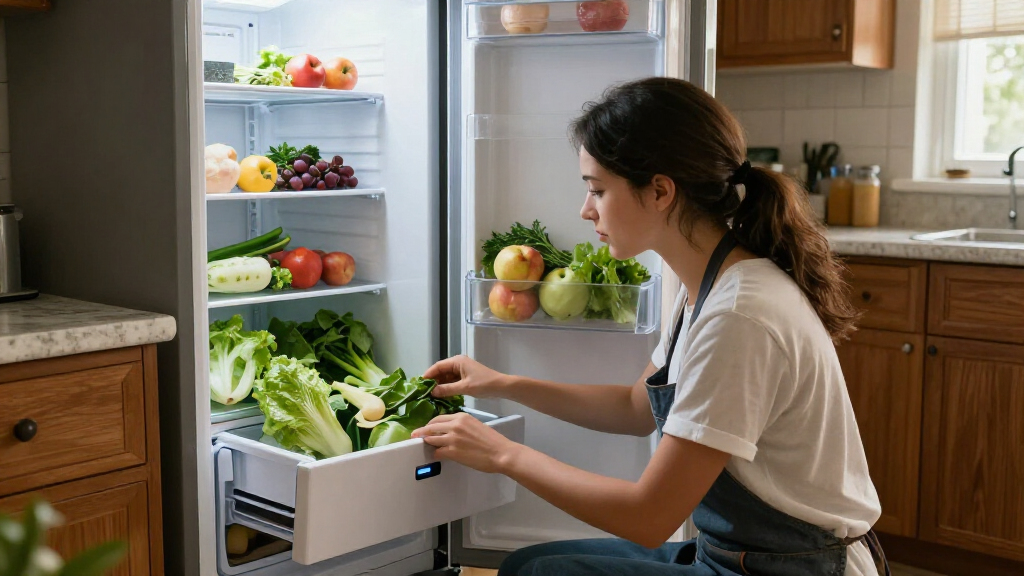
A slider on many refrigerator crisper drawers opens or closes vents to adjust humidity: open vents let moist air escape, while closed vents retain it. The Hunker report recommends lower humidity for many fruits and higher humidity for leafy greens and vegetables that wilt easily, while noting that refrigerator designs and labels vary.
A slider on many refrigerator crisper drawers adjusts the drawer’s vents, changing how much humid air stays inside and helping tailor storage conditions to different produce. In a report, Hunker says an open-vent, lower-humidity setting suits many fruits, while a closed-vent, higher-humidity setting can help leafy greens and other vegetables stay crisp.
At the low-humidity setting, the vents open and air can leave the drawer. At the high-humidity setting, the vents close and moisture is retained. Produce releases moisture while stored, so the slider changes how much of that moisture remains around it. The precise design and labeling may differ by refrigerator, and the report describes the general function rather than giving instructions for a particular model.
Hunker recommends low humidity for many fruits, including apples, pears, peaches, citrus, berries and avocados. The report says fruit releases ethylene gas as it ripens and that allowing air to escape may help reduce conditions associated with spoilage. It recommends higher humidity for spinach, lettuce, kale and herbs, as well as vegetables such as cucumbers, eggplants, peppers and carrots that can wilt or lose moisture.
Some refrigerators have two crisper drawers, which can be set separately for different kinds of produce. For a refrigerator with one adjustable drawer, the report suggests using the high-humidity setting in general and storing fruit that benefits from lower humidity elsewhere, where appropriate. Drawers without sliders may be designed to retain humidity, but the report cautions that a refrigerator’s ordinary fresh-food drawer should not be mistaken for a crisper.
Settings Can Reduce Produce Waste
The practical point is that the slider gives households a way to match airflow to the food being stored. Greens and other produce that lose moisture readily may remain firmer in a humid environment; many fruits may fare better with ventilation. Using one setting for everything can leave some produce in conditions that do not suit it, potentially contributing to wilting or faster deterioration.
This is useful guidance, not a guarantee of a particular shelf life. Freshness also depends on the produce, how ripe it is when stored, refrigerator temperature, packaging and how often the drawer is opened. The Hunker report offers broad categories rather than a model-specific storage chart, so readers should treat its recommendations as a starting point.
Products Worth Considering

Bose SoundLink Flex (2nd Gen) Portable Bluetooth Speaker

Levoit Core 600S-P Smart Air Purifier for Large Rooms

TCL QM64L 85-Inch QD-Mini LED 4K Smart Fire TV
As an affiliate, we earn on qualifying purchases.
How Crisper Vents Affect Moisture
Crisper drawers are intended to create a storage environment that differs from the rest of the refrigerator. Their vents affect air circulation and retained moisture; the slider changes whether air can move out of the drawer. A higher setting closes the vents to retain more humidity, while a lower setting opens them to let humid air escape.
The report’s fruit-and-vegetable distinction is a general rule, not a strict division. It groups many fruits under lower humidity and leafy greens and easily wilted vegetables under higher humidity. Some refrigerator drawers carry small fruit and vegetable symbols to indicate settings. Where labels are absent, the report advises using the produce types themselves as a guide and checking the appliance’s own instructions when available.
““The slider is designed to allow you to set the proper humidity level for storing fruits and vegetables in the crisper.””
— Hunker report
Drawer Designs Differ by Model
The report describes how many crisper sliders work, but it does not identify refrigerator models or establish that every drawer uses the same mechanism. A slider’s direction, labels and settings can vary, and the source does not provide model-specific guidance or controlled tests comparing produce freshness.
It also does not quantify how much longer produce might last at either setting. Its storage categories are general recommendations, not a promise that a particular fruit or vegetable will remain fresh for a set period. For a drawer without a slider, the report suggests it may retain high humidity, but that is not confirmed for every refrigerator; the appliance manual is the more specific reference.
Check Your Drawer Before Setting It
Consumers can check the markings on the drawer and consult the refrigerator’s manual to confirm what its controls do. If the drawer has separate settings, the report’s broad guidance is to use lower humidity for many fruits and higher humidity for greens and easily wilted vegetables. In a two-drawer refrigerator, separate settings can accommodate both groups.
For a single drawer, Hunker suggests high humidity as a general setting and keeping fruits that benefit from lower humidity in another suitable location. No new product announcement or follow-up test is cited; the next step for an individual household is to apply the guidance to its own appliance and monitor how its produce fares.
Key Questions
What does the crisper drawer slider control?
It generally adjusts the drawer’s vents. Opening them lets humid air escape for lower humidity; closing them retains more moisture for higher humidity. Designs vary by refrigerator.
Which setting should I use for leafy greens?
Hunker recommends the higher-humidity setting for spinach, lettuce, kale and herbs, because retained moisture may help keep leaves from drying and wilting.
Which produce belongs in a low-humidity drawer?
The report lists many fruits, including apples, pears, peaches, citrus, berries and avocados, as candidates for lower humidity. The right choice can depend on the refrigerator and the produce.
What if my crisper drawer has no slider?
It may be designed to retain humidity, according to Hunker, but that is not confirmed for every model. Check the refrigerator manual for the drawer’s intended function.
Should I use the same setting for all produce?
Not necessarily. The report advises using different humidity settings for many fruits and for greens or vegetables that wilt easily. If there is only one drawer, it suggests high humidity as a general setting and storing some fruit elsewhere.
Source: hunker.com