
TL;DR

Get home appliances delivered free with Prime
- Fast, free delivery on millions of items
- Prime Video, Amazon Music and more included
- Member-only deals all year
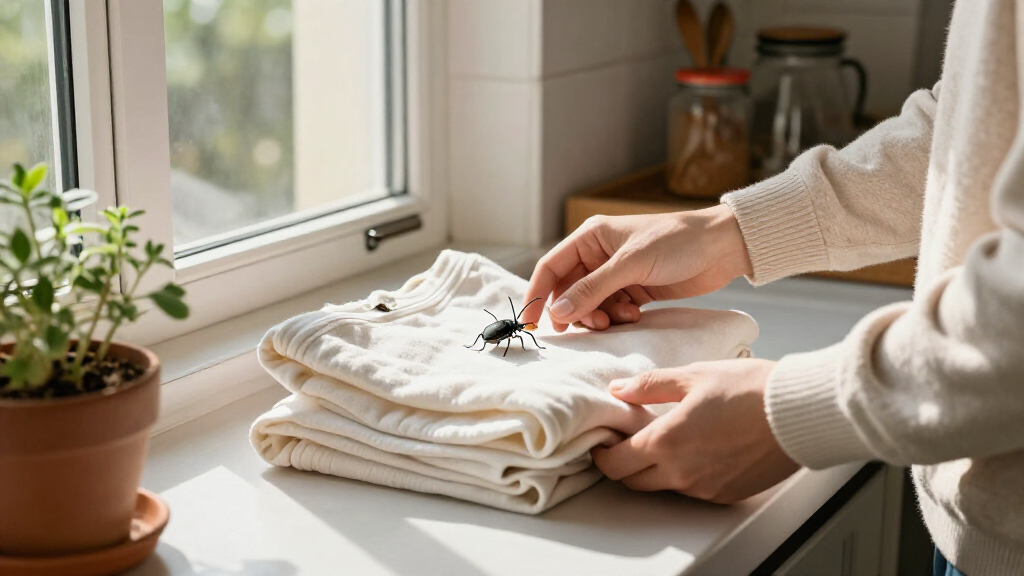
Hunker reports that a piece of nylon pantyhose secured over a vacuum tube can catch stink bugs before they enter the vacuum canister. The article also advises freezing the captured bugs or placing them in soapy water, and sealing openings to reduce future entry; it provides no independent test results or evidence of effectiveness rates.
Hunker has described a pantyhose-and-vacuum method for catching stink bugs indoors, using nylon stretched over a vacuum tube to keep the insects out of the machine. The report presents it as a household alternative to crushing bugs or using sprays, but it does not cite testing or provide evidence showing how reliably the method works.
The method calls for placing nylon pantyhose inside the vacuum tube, pulling the open end over the tube’s rim and holding it in place with a rubber band. The vacuum is then used as usual. Hunker says the pantyhose can act as a barrier that collects the bugs rather than letting them travel into the vacuum. The instructions do not specify whether the approach works with every vacuum design, so users would need to check that the material does not obstruct airflow or interfere with the appliance.
After vacuuming, the article advises against putting the captured insects directly into household garbage. It suggests sealing the pantyhose in a plastic bag and placing it in a freezer for two days, or transferring the bugs into a container of soapy water. These are the report’s recommendations; it does not describe independent testing of the disposal methods or specify conditions such as freezer temperature.
Hunker also recommends addressing entry points rather than relying only on removing bugs already indoors. Its suggestions include sealing cracks around siding, utility and fixture openings, and air-conditioning hoses, and repairing or replacing damaged screens. The article names foam sealant or silicone-latex caulk for some gaps, but does not assess particular products or provide a professional inspection of any home.
A Low-Cost Option for Indoor Bugs
The suggestion may appeal to people who want to remove a stink bug without crushing it or spraying a product indoors. The source notes that an old pair of pantyhose can be reused for the setup, making it a low-cost household workaround. It also says that squashing stink bugs can release an unpleasant odor that may linger on surfaces, which is why it recommends vacuuming instead.
The advice is not a substitute for evidence about pest-control effectiveness. Hunker does not report a controlled comparison with sprays, traps or other removal methods, nor does it quantify how many bugs the technique captures. Readers should treat the instructions as a practical tip rather than a verified guarantee. Preventing entry by repairing screens and sealing openings may also address the source of repeated indoor sightings, though the article does not measure the effect of those steps.
As an affiliate, we earn on qualifying purchases.
Seasonal Entry and Home Sealing
The Hunker report frames stink bugs as a seasonal household issue: it says they may enter buildings as outdoor weather cools and shelter in warm spaces. It further says bugs that spend the colder period indoors can become active as temperatures rise. This is the article’s explanation for why people may encounter them inside during one season and see them again later.
The report distinguishes removing insects already inside from reducing opportunities for more to enter. Vacuuming is offered for the immediate problem; sealing cracks and fixing damaged screens are presented as preventive steps. It mentions chemical sprays and neem oil as other approaches but does not provide comparative data or establish how long any option remains effective.
““Stuff nylon pantyhose inside the tube of your vacuum cleaner, pull the open end over the outside of the tube, and secure the pantyhose using a rubber band.””
— Hunker
As an affiliate, we earn on qualifying purchases.
Effectiveness Has Not Been Measured
The source is a home-advice article, not a report of a formal experiment. It gives no data on capture rates, vacuum compatibility, or whether the setup prevents odor from reaching the appliance. It also does not identify a particular stink bug species or say whether the advice applies equally to all species or household circumstances.
The report’s claims about sprays and other remedies are not accompanied by comparative evidence. It is not clear from the source how the proposed freezing or soapy-water disposal performs under different conditions, or whether local rules affect disposal. Readers who face a large or recurring infestation may need advice from a qualified pest-control professional.
sealing cracks and gaps for pest prevention
As an affiliate, we earn on qualifying purchases.
As an affiliate, we earn on qualifying purchases.
Practical Steps for Homeowners
Hunker’s recommended next steps are to use the pantyhose barrier only if it fits the vacuum safely, dispose of captured insects using one of the article’s suggested methods, and inspect screens and likely openings around the home. If sealing gaps, homeowners should choose materials suitable for the location and follow product directions. The source does not report a scheduled follow-up study or further testing of the trick.
Whether this approach works well in practice remains an open question. A useful next development would be independent testing across vacuum types and comparison with other removal methods. Until such evidence is available, the technique is best understood as a low-cost tip reported by Hunker, not a proven pest-control standard.
As an affiliate, we earn on qualifying purchases.
Key Questions
How does the pantyhose method work?
Hunker says to place nylon pantyhose inside the vacuum tube, pull the open end over the rim and secure it with a rubber band. The pantyhose is intended to catch stink bugs before they enter the vacuum.
How does the article recommend disposing of captured stink bugs?
It suggests sealing the pantyhose in a plastic bag and freezing it for two days, or putting the bugs in a container of soapy water. These are the source’s recommendations, not independently tested findings.
Does the method work with every vacuum?
The Hunker report does not test or list compatible vacuum models. Check the appliance’s instructions and do not use a setup that blocks airflow or risks damaging the vacuum.
What can help keep stink bugs from entering?
The article recommends repairing damaged screens and sealing cracks or gaps around siding, fixtures, ducts and air-conditioning hoses. It does not measure how much these steps reduce indoor sightings.
Source: rss
Halloween Picks
halloween
As an affiliate, we earn on qualifying purchases.