
When you expose yourself to cold, your body adapts by activating brown fat that burns calories to produce heat, making you better at keeping warm. Over time, this leads to lasting changes in how your body handles temperature, increasing your metabolic rate and improving heat regulation. You’ll develop a “memory” to activate these heat-producing responses faster in future cold conditions. Keep exploring, and you’ll discover how this process can boost your overall thermal resilience.
Key Takeaways
- Cold exposure activates brown fat, increasing calorie burning and heat production for improved thermal regulation.
- Repeated cold exposure enhances the body’s ability to quickly activate thermogenic tissues later.
- It induces metabolic adaptations that lead to better heat generation and dissipation over time.
- Cold exposure develops a “memory,” allowing faster and more efficient responses to future cold environments.
- These adaptations result in feeling warmer faster and maintaining thermal homeostasis more effectively later.

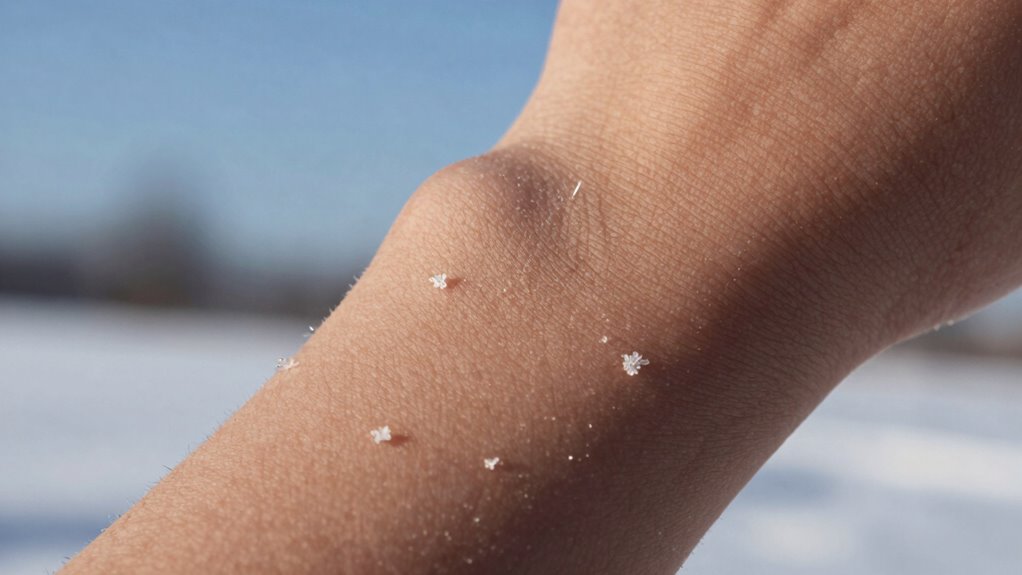
Have you ever wondered how your body adapts when exposed to cold temperatures? When you step into a chilly environment, your body quickly responds to maintain its core temperature. One of the key ways it does this is through metabolic adaptation, which involves increasing your body’s energy expenditure to generate more heat. This process isn’t just about shivering; it also involves activating special fat stores known as brown fat. Unlike white fat, which stores energy, brown fat burns calories to produce heat, helping you stay warm.
Your body adapts to cold by activating brown fat to burn calories and generate heat efficiently.
As you spend more time in the cold, your body becomes more efficient at activating brown fat. This activation signals your nervous system to stimulate these fat cells, which then start burning stored fat to produce heat. Over time, this process can change how your body handles heat later, even after you’ve left the cold environment. Your body learns to respond more quickly and effectively, so it doesn’t have to rely solely on shivering to generate warmth. Cold adaptation can lead to lasting changes in your body’s thermal regulation mechanisms.
This enhanced ability, resulting from repeated cold exposure, can lead to noticeable changes in your body’s heat regulation. For example, you might find that you start feeling warmer faster when you’re exposed to cold again, because your body has developed a kind of “memory” of how to activate brown fat more efficiently. This process is part of a broader adaptation, where your metabolic rate increases to better cope with cold conditions. Essentially, your body becomes better at conserving and generating heat through these metabolic shifts.
Furthermore, this adaptation isn’t just about feeling warmer; it also influences how your body responds to heat later. After consistent cold exposure, your body may become more adept at dissipating heat when needed, thanks to improved vascular responses and better regulation of blood flow. The activation of brown fat and increased metabolic activity can lead to a more balanced thermal response, helping you feel comfortable in a wider range of temperatures. Interestingly, research shows that exposure to cold can also promote the activation of thermogenic tissues, which play a key role in heat production.
cold exposure thermal regulation products
As an affiliate, we earn on qualifying purchases.
As an affiliate, we earn on qualifying purchases.
Frequently Asked Questions
Can Cold Exposure Improve Overall Metabolic Rate Long-Term?
Yes, cold exposure can improve your overall metabolic rate long-term. It triggers metabolic adaptation by activating your body’s thermogenic response, which burns calories to generate heat. Regular cold exposure can enhance your body’s ability to produce heat efficiently, leading to an elevated metabolic rate even when you’re not exposed to cold. Over time, this adaptation helps you burn more calories daily, supporting weight management and overall metabolic health.
How Does Cold Exposure Affect Sleep Quality?
Imagine cold exposure as a moonlit night, calming yet sometimes unsettling. It can improve your sleep quality by promoting relaxation, but it might also cause sleep disruption or dream alteration for some. You may find yourself waking more often or dreaming more vividly, especially if the cold is intense. Overall, moderate cold exposure can help you fall asleep faster, but excessive cold might interfere with restful, uninterrupted sleep.
Are There Risks to Cold Exposure for Certain Health Conditions?
Cold exposure can pose risks if you have certain health conditions. If you’re sensitive to cold, it might trigger discomfort or worsen symptoms. People with immune response issues may find cold exposure weakens their defenses or causes inflammation. Always consult your doctor before starting cold exposure routines, especially if you have cardiovascular, respiratory, or autoimmune conditions. Taking precautions helps you avoid adverse effects and safely enjoy potential benefits.
How Often Should Cold Exposure Be Practiced for Benefits?
You should practice cold exposure 2-3 times a week to promote effective cold adaptation without overdoing it. Consistent exposure helps your body adjust to lower temperatures, enhancing circulation and resilience. However, pay attention to your body’s signals, and avoid excessive frequency that might cause stress or health issues. Balancing exposure frequency is essential for gaining benefits safely and sustainably, ensuring your body adapts well over time.
Does Cold Exposure Impact Mental Health or Mood?
You might find that cold therapy unexpectedly boosts your mood, as the shock of cold exposure releases endorphins, which are natural mood enhancers. This mental health benefit often coincides with improved resilience and stress relief. Cold exposure can promote mood enhancement by reducing anxiety and depression symptoms, helping you feel more energized and centered. So, incorporating cold therapy into your routine could be a simple yet effective way to support your mental well-being.
brown fat activation supplements
As an affiliate, we earn on qualifying purchases.
As an affiliate, we earn on qualifying purchases.
Conclusion
By exposing yourself to cold, you train your body to better handle heat fluctuations, boosting resilience and adaptability. This process can markedly improve your overall thermal regulation, making you more comfortable and less prone to heat-related stress. Remember, what doesn’t kill you makes you stronger—that’s especially true for your body’s ability to adapt. Embrace cold exposure wisely, and you’ll find your body more equipped to handle whatever temperature comes your way.

Ice Machine for Knee After Surgery w/Compression, Hip Replacement Cold Therapy Machine, Cryocuff Wrap Pack for Shoulder Recovery, ACL Cold Circulation System
- 2-in-1 Icing & Compression: Reduces swelling 45% faster with dual therapy
- Smart Timer for Therapy: Customizable intervals for personalized recovery
- Portable & Long-Lasting Cooling: 15-hour cooling with leak-proof reservoir
As an affiliate, we earn on qualifying purchases.
As an affiliate, we earn on qualifying purchases.
thermal resilience training gear
As an affiliate, we earn on qualifying purchases.
As an affiliate, we earn on qualifying purchases.