
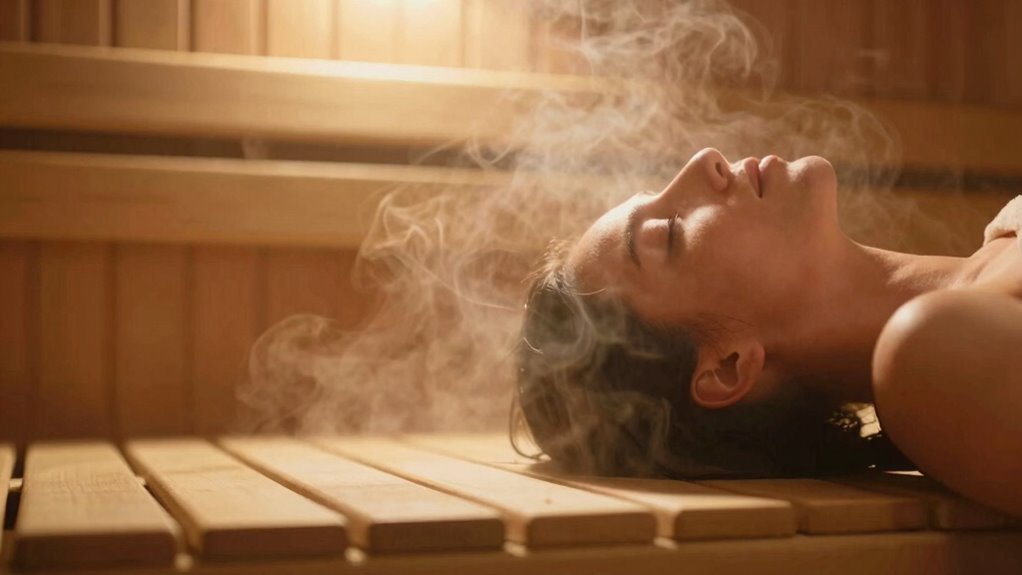

When you use a sauna, your blood vessels dilate to release heat, which can cause your blood pressure to drop and reduce blood flow to your brain. This shift makes you feel lightheaded or dizzy temporarily. Your body redirects blood from internal organs to your skin for cooling, lowering oxygen supply to your brain. If you want to understand how your circulation adjusts and how to stay safe, there’s more to uncover.

Get home appliances delivered free with Prime
- Fast, free delivery on millions of items
- Prime Video, Amazon Music and more included
- Member-only deals all year
Key Takeaways
- Sauna heat causes blood vessels to dilate, redirecting blood from the brain and internal organs to the skin for cooling.
- Vasodilation lowers blood pressure, which can reduce blood flow to the brain, leading to dizziness.
- Rapid circulatory changes during sauna use cause a temporary imbalance in blood flow and oxygen delivery.
- Blood pooling near the skin surface decreases overall cerebral blood flow, resulting in lightheadedness.
- Proper hydration and slow movement after sauna help restore normal blood flow and prevent dizziness.
As an affiliate, we earn on qualifying purchases.
Why Do I Feel Lightheaded After Sauna?

Have you ever felt dizzy or faint after leaving a sauna? That’s often linked to sauna safety and how your body responds to heat. When you’re inside, your body works hard to cool down, causing blood vessels to dilate and blood pressure to drop. This sudden change can lead to lightheadedness once you step out. Additionally, the heat affects your skin health by opening pores and increasing circulation, which can sometimes cause dehydration if you don’t hydrate properly. If you’re sensitive to heat or overdo it, these effects intensify. To stay safe, take breaks, stay hydrated, and listen to your body. Proper sauna use helps prevent feeling dizzy and protects your skin’s health. Understanding how blood flow adjusts during heat exposure can also help you better manage your sauna sessions and reduce risks. Recognizing the importance of circulatory response can aid in preventing adverse effects associated with heat exposure. Maintaining proper hydration levels can also significantly mitigate these symptoms and support overall safety during sauna use. Moreover, being aware of your individual heat tolerance can further help you enjoy the sauna safely. Incorporating essential oils such as lavender or peppermint might also promote relaxation and aid in recovery after sauna sessions.
As an affiliate, we earn on qualifying purchases.
How Sauna Heat Affects Your Blood Vessels and Circulation

When you sit in a sauna, the heat causes your blood vessels to expand, a process known as vasodilation. This increases blood flow, helping warm your muscles and skin. As your circulatory system responds, you might notice changes in how you feel, especially if your blood flow shifts quickly.
Vasodilation and Blood Flow
Sauna heat causes your blood vessels to widen through a process called vasodilation, which increases blood flow throughout your body. This blood vessel dilation allows more blood to reach your skin’s surface, promoting heat dissipation. As your circulatory adjustment kicks in, your heart works harder to pump this increased volume, supporting the dilation of vessels. This rapid change in blood flow can cause a temporary drop in blood pressure, making you feel lightheaded or dizzy. The enhanced circulation also directs blood away from other internal organs, prioritizing heat regulation. Additionally, this process can trigger a Free Floating sensation, as your nervous system responds to the sudden changes in blood pressure and circulation. Understanding how vasodilation impacts your blood flow explains why you might experience sensations of lightheadedness after a sauna session, as your body rapidly adjusts to the heat and circulatory demands. This response is an example of how blood flow regulation plays a critical role in your body’s adaptation to heat. Moreover, individual differences in vascular response can influence how pronounced these sensations are, highlighting the variability in circulatory adjustments among different people.
Circulatory System Response
As your blood vessels expand during a sauna session, your circulatory system responds by increasing blood flow to accommodate the heat. This response enhances blood vessel health and promotes circulation therapy benefits. To understand this better:
- Your heart pumps more vigorously, ensuring oxygen-rich blood reaches your skin and muscles.
- Blood flow redistributes from core organs to the skin, aiding heat dissipation.
- The increased circulation helps remove toxins and supports overall vascular flexibility.
- This process is a vascular adaptive response that helps your body handle heat stress more effectively. Additionally, this adaptive mechanism is similar to what occurs in sustainable cloud solutions, emphasizing the importance of efficient system responses in different contexts. This natural adjustment is an example of how your circulatory system self-regulates under stress to maintain overall health. Recognizing this process underscores the importance of circulatory health in overall wellness.
This adaptive response can cause a temporary drop in blood pressure, making you feel lightheaded. It’s a normal part of how your circulatory system manages heat stress and promotes blood vessel health. Understanding this process highlights why sauna sessions influence circulation therapy and overall cardiovascular wellness.
blood circulation booster supplements
As an affiliate, we earn on qualifying purchases.
As an affiliate, we earn on qualifying purchases.
What Causes Your Blood Pressure to Drop in the Sauna?

When you’re in the sauna, your blood vessels widen through vasodilation, which can cause your blood pressure to drop. At the same time, your heart rate increases to pump blood more quickly. Together, these changes can make you feel lightheaded or dizzy. Incorporating connected fitness technology can help monitor your vital signs and ensure safe sauna experiences. Understanding thermal behavior can also help you recognize how your body responds to sustained heat exposure. Being aware of hydraulic pressure changes during heat exposure can further enhance your safety. Additionally, the effects of blood flow alterations during heat exposure are important to consider for overall safety, especially as body temperature regulation plays a key role in maintaining equilibrium.
Vasodilation Effects
Vasodilation occurs when your blood vessels widen in response to the heat, allowing more blood to flow near the skin’s surface to release excess warmth. This process triggers your cooling mechanisms and sweat response, which help regulate your body temperature. As your vessels dilate, blood pressure drops because more blood is pooled in the skin’s surface area. This results in a few key effects:
- Increased blood flow to the skin facilitates heat dissipation.
- Reduced resistance in your blood vessels causes a decrease in overall blood pressure.
- The body’s attempt to cool down can lead to a temporary imbalance, making you feel lightheaded.
- Blood vessel dilation is a key factor in understanding the physiological changes during sauna use.
Understanding vasodilation helps clarify why your blood pressure drops during a sauna session, impacting how you feel afterward.
Heart Rate Increase
The widening of blood vessels during a sauna session triggers your heart to beat faster to maintain adequate blood flow. This increase in heart rate is your body’s way of compensating for the reduced resistance caused by vasodilation, ensuring essential organs still receive enough oxygen and nutrients. Good blood vessel health and cardiovascular fitness help your heart adapt more efficiently to these changes, reducing strain. As your heart works harder, it pumps more blood per minute, which can cause a temporary drop in blood pressure. This rapid heart rate and blood pressure fluctuation can lead to lightheadedness or dizziness, especially if your cardiovascular system isn’t as conditioned or if you’re dehydrated. Proper blood flow regulation is crucial for preventing discomfort and maintaining overall cardiovascular health during such activities. Additionally, hydration levels play a significant role in supporting optimal blood circulation and preventing lightheadedness. Maintaining good hydration helps support blood flow regulation, ensuring your body can adapt smoothly to the vasodilatory effects of the sauna.
As an affiliate, we earn on qualifying purchases.
Why Does Blood Flow to Your Brain Decrease When You Sauna?

As you sit in a sauna, your body responds by dilating blood vessels near the skin to help dissipate heat. This process, part of cardiovascular adaptation, redirects blood flow outward, reducing the amount reaching your brain. Here’s what happens:
- Blood vessel dilation prioritizes skin cooling, diverting blood away from internal organs.
- This redistribution leads to decreased blood flow to your brain, since your body focuses on thermoregulation.
- The decreased cerebral blood flow can cause lightheadedness or dizziness.
Your body’s goal is to maintain heat balance, but this shift in blood flow temporarily reduces oxygen and nutrients to your brain, making you feel lightheaded. This is a normal response to heat exposure and blood vessel dilation.
How Vasodilation From Heat Can Make You Feel Dizzy

When your body heats up during a sauna session, blood vessels near your skin expand to help cool you down. This process, called heat induced vasodilation, causes your blood vessels to dilate rapidly. As your blood vessels expand, blood flow shifts toward your skin’s surface, reducing blood pressure slightly. This sudden change can lead to dizziness or lightheadedness because your brain isn’t getting the same amount of oxygen-rich blood it usually receives. The dilation of blood vessels makes your blood pressure drop temporarily, which can make you feel faint or unsteady. It’s a normal response to heat, but it’s important to stay hydrated and move slowly to prevent feeling overly dizzy during or after your sauna session.
What Factors Make You More Prone to Feeling Lightheaded in the Sauna?

You’re more likely to feel lightheaded in the sauna if you’re dehydrated or haven’t drunk enough water beforehand. Low blood pressure or taking certain medications can also increase your risk. Additionally, staying in the sauna too long can lead to dizziness and other adverse effects.
Dehydration Risks Increase
Certain factors can make you more prone to feeling lightheaded after a sauna, primarily by increasing dehydration risks. When your body loses too much fluid, your mental clarity diminishes, and your skin detox process slows down. To reduce these risks, consider these factors:
- Not drinking enough water before and after your session, which hampers hydration and impairs mental focus.
- Prolonged sauna time, leading to excessive sweating and fluid loss that affects your overall balance.
- Skipping replenishment with electrolytes, which are essential for maintaining hydration and supporting skin detox.
Being mindful of these factors helps prevent dehydration, supports better mental clarity, and ensures your skin detox remains effective, keeping you safe and comfortable during your sauna experience.
Low Blood Pressure Factors
Having naturally low blood pressure makes you more susceptible to feeling lightheaded after a sauna session. When your blood pressure is already on the lower side, the heat causes blood vessels to dilate further, reducing blood flow to the brain. To help manage this, focus on effective hydration strategies before and after your sauna, which support stable blood pressure levels. Proper hydration helps maintain blood volume and prevents sudden drops that can lead to dizziness. Additionally, blood pressure management techniques like slowly acclimating to heat and avoiding rapid standing movements can reduce your risk. Recognizing your tendency toward low blood pressure allows you to take these precautions, making your sauna experience safer and more comfortable.
Prolonged Sauna Sessions
Extended time in the sauna increases the likelihood of feeling lightheaded because your body loses fluids and electrolytes through sweating, which can lead to dehydration and lowered blood pressure. Longer sessions also allow sauna toxins to accumulate, stressing your circulatory system further. To reduce risks, consider these factors:
- Hydration levels: Dehydration heightens susceptibility to lightheadedness.
- Electrolyte balance: Sweating depletes minerals essential for blood pressure regulation.
- Sauna etiquette: Overstaying ignores safe limits and ignores your body’s signals.
Being mindful of these aspects helps prevent feeling dizzy after prolonged sauna use. Remember, respecting sauna etiquette isn’t just about rules; it’s about protecting your health. Shorter, controlled sessions allow your body to detox safely without risking dehydration or blood pressure drops.
Tips for Using the Sauna Safely and Avoiding Dizziness

To enjoy the benefits of the sauna safely and prevent dizziness, it’s important to follow some simple precautions. First, prioritize hydration strategies before, during, and after your session. Drinking water helps maintain blood volume and prevents dehydration, which can contribute to lightheadedness. Be mindful of your sauna duration; limit sessions to 15-20 minutes, especially if you’re new to heat exposure. Listen to your body and exit immediately if you start feeling dizzy or unwell. Also, take breaks between sessions to cool down and rehydrate. Avoid alcohol or heavy meals beforehand, as they can increase your risk of feeling lightheaded. By managing your sauna duration and hydration, you can enjoy the experience safely and minimize the chances of dizziness.
How Hydration and Blood Volume Impact Your Sauna Experience

Staying well-hydrated and maintaining healthy blood volume are key factors in preventing lightheadedness during your sauna session. When your hydration levels are adequate, your blood stays more fluid, helping your circulatory system work efficiently. If you’re dehydrated, your blood volume decreases, making it harder for blood to reach your brain and other essential organs. To optimize your experience, consider these points:
- Drink water before, during, and after the sauna to sustain hydration levels.
- Monitor your fluid intake to prevent blood volume from dropping too low.
- Recognize that consistent hydration supports stable blood circulation, reducing dizziness and fatigue.
What Are the Signs You’re Overheating, and When Should You Exit?

Knowing the signs of overheating is vital to guarantee your safety during a sauna session. When your body overheats, blood vessel dilation increases to help cool you down, but this can strain your heart. Watch for signs like excessive sweating, dizziness, nausea, or a rapid, irregular heart rate—these indicate your body is struggling to maintain balance. If your heart rate variability decreases or you feel faint, it’s a clear sign to exit immediately. Feeling lightheaded or weak suggests your blood flow is becoming compromised. Don’t ignore these cues; prolonging exposure risks heat exhaustion or heat stroke. Listening to your body and stepping out at the first signs of overheating helps protect you while still enjoying the benefits of a sauna.
How Your Body Recovers and Restores Normal Blood Flow After Sauna

After you step out of the sauna, your body kicks into gear to restore normal blood flow and temperature. It begins with blood vessel dilation, allowing blood to circulate more efficiently. Then, your circulatory adjustment takes place, redirecting blood flow from your skin’s surface back to your core. This process involves three key steps:
- Vasoconstriction: Blood vessels constrict to reduce heat loss and stabilize your internal temperature.
- Blood flow normalization: Circulatory adjustments balance blood distribution, preventing lightheadedness.
- Blood vessel repair: Your vessels recover from dilation, maintaining healthy circulation.
These steps work together to restore your body’s normal blood flow, helping you feel steady again after the sauna’s heat.
Frequently Asked Questions
Can Medications Influence Feeling Lightheaded After Sauna Sessions?
Yes, medications can influence your feeling of lightheadedness after sauna sessions. Medication interactions and drug side effects may cause blood pressure drops or dehydration, intensifying this sensation. If you’re taking medication, always check with your healthcare provider before sauna use. Certain drugs, like diuretics or blood pressure meds, can make you more prone to lightheadedness, so be cautious and stay hydrated during and after your sauna session.
Is It Safe to Sauna if I Have Cardiovascular Health Issues?
Sauna safety for those with cardiovascular health issues is like walking a tightrope—you need to be cautious. Consult your doctor first, and listen to your body. If cleared, stay hydrated with proper hydration strategies, and limit your time in the sauna. Always monitor how you feel, and don’t push beyond your limits. Adjusting your sauna routine guarantees you enjoy its benefits safely, without risking your health.
How Does Alcohol Consumption Affect Sauna-Induced Dizziness?
Alcohol consumption can worsen sauna-induced dizziness because of alcohol interaction with your blood vessels. It causes blood vessel dilation, which can lead to lower blood pressure and increased dizziness. When you combine alcohol with the heat of a sauna, your blood flow changes more dramatically, heightening the risk of lightheadedness or fainting. It’s best to avoid drinking alcohol before or during sauna sessions to stay safe.
Does Age Impact Susceptibility to Lightheadedness in the Sauna?
Yes, age impacts your susceptibility to lightheadedness in the sauna due to age-related blood flow changes. As you get older, blood circulation can become less efficient, increasing the risk of dizziness. Elderly sauna safety becomes essential, so it’s best to limit your time, stay hydrated, and listen to your body. Always consult with a healthcare professional before using a sauna to make certain it’s safe for your age and health condition.
Are There Specific Breathing Techniques to Prevent Dizziness During Sauna Use?
To prevent dizziness during sauna use, focus on breathing exercises and relaxation techniques. Practice slow, deep breaths to increase oxygen flow and keep your body calm. Incorporate relaxation methods like visualization or progressive muscle relaxation to reduce stress. These techniques help regulate your blood pressure and maintain steady blood flow, decreasing the risk of lightheadedness. Remember to listen to your body and exit the sauna if you start feeling dizzy.
Conclusion
Feeling lightheaded after a sauna is your body’s way of telling you to slow down and listen. By understanding how heat affects your blood vessels and circulation, you can enjoy the soothing warmth without risking a dizzy spell. Stay hydrated, take breaks, and watch for signs of overheating. Think of your body as a finely tuned machine—when it’s overwhelmed, even the tiniest glitch can feel like a thunderclap. Prioritize safety and enjoy the benefits of your sauna experience!
Halloween Picks
halloween
As an affiliate, we earn on qualifying purchases.