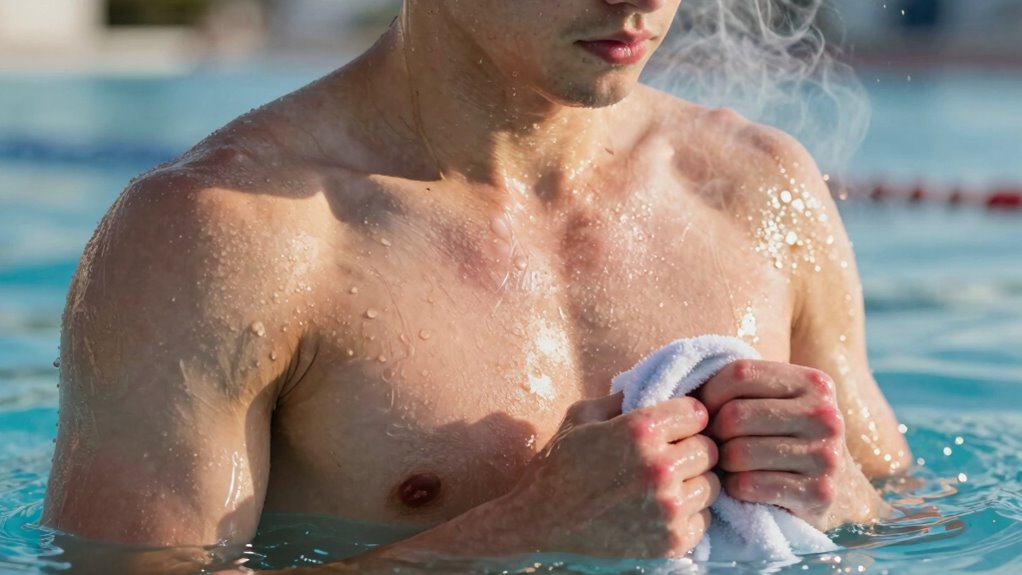

As you rewarm after a plunge, your body works hard to restore warmth and stabilize essential functions. Blood vessels dilate, increasing blood flow to your skin to help distribute heat. Muscles relax as shivering stops, while nerve signals improve muscle response and flexibility. Your body activates homeostasis to balance internal temperature, supporting organs and muscles. These responses all help you recover, and if you keep exploring, you’ll discover even more about this fascinating process.
Key Takeaways
- Blood vessels dilate, increasing blood flow to the skin to restore warmth and remove cold-induced constriction.
- Muscles relax and reduce shivering as core temperature rises, improving flexibility and comfort.
- Skin sensations shift from tingling or warmth to normal sensitivity, indicating internal temperature regulation.
- Nervous system activity and nerve signals strengthen, enhancing muscle response and overall coordination.
- The body activates homeostasis, stabilizing internal conditions and promoting recovery after cold exposure.
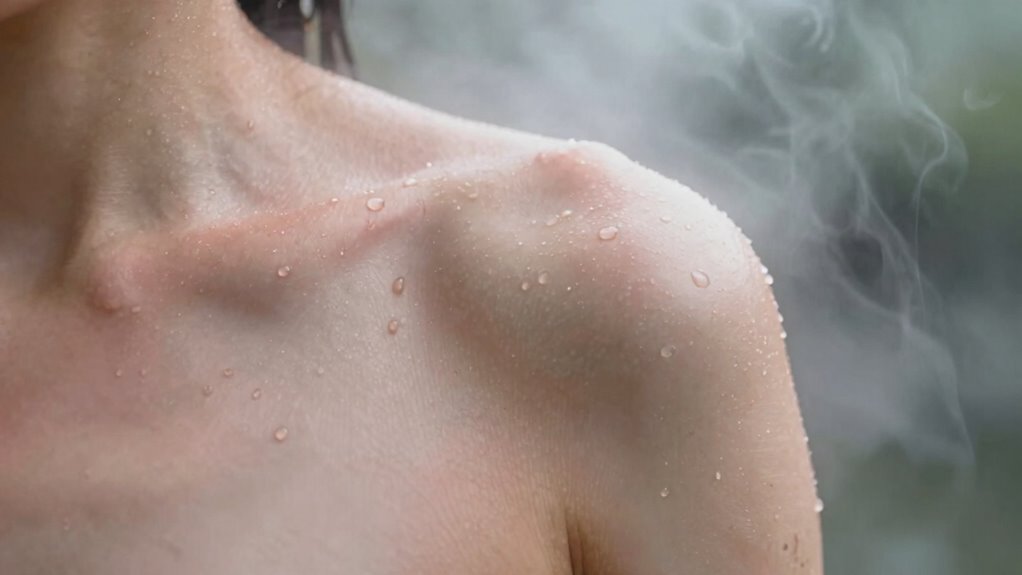
Have you ever wondered what’s happening inside your body as you start to warm up after a chilly plunge? When you step out of the cold water, your body begins an intricate process of restoring its normal temperature. One of the first things you’ll notice is a rush of blood circulation kicking into gear. Cold water constricts blood vessels near your skin’s surface, reducing blood flow to keep your core warm. Once you leave the water, your body senses the temperature change and responds by dilating those vessels again, allowing blood to rush back to your skin’s surface. This rapid shift helps distribute vital warmth and nutrients throughout your body, preventing frostbite and hypothermia. As blood circulation increases, you might feel a tingling sensation or warmth spreading across your skin, signaling that your body is actively working to restore balance.
Meanwhile, your muscles respond to the cold and subsequent warming in a very deliberate way. During the plunge, your muscles contract involuntarily—a reflex called shivering—generating heat to counteract the cold. Once you’re out of the water and begin to rewarm, your muscles gradually relax. This relaxation is crucial because it helps reduce muscle stiffness and improves flexibility. The process isn’t instant; it takes a few moments for your muscles to shift from tense and shivering to loose and warm. As your core temperature rises, nerve signals increase, encouraging your muscles to respond more efficiently to movement. You might notice your muscles feeling tight at first, especially if you were shaking, but as blood flow improves and warmth returns, they loosen up, allowing better circulation and movement. Additionally, the activation of homeostasis helps your body regulate and stabilize your internal environment during this warming process. Understanding how body regulation functions can help you optimize your recovery from cold exposure and enhance your overall wellness. Recognizing these body responses can also give you insight into how your body naturally adapts to environmental stressors. Moreover, maintaining proper circulation is essential for supporting your muscles and organs during this recovery phase.

Nekteck Portable Cold Therapy Machine Recovery Therm Cube for Pain Relief
- 3-in-1 Relief Device: Cold, heat, and contrast therapy in one unit
- Fast Cold Mode: Cools in 3 seconds with adjustable temperatures
- Cold Therapy Settings: Three temperature options for injury relief
As an affiliate, we earn on qualifying purchases.
As an affiliate, we earn on qualifying purchases.
Frequently Asked Questions
How Long Does It Take to Fully Rewarm After a Cold Plunge?
It typically takes about 15 to 30 minutes to fully rewarm after a cold plunge, but this varies due to thermoregulation variability. Your body fights cold shock by constricting blood vessels, and rewarming depends on factors like water temperature and your metabolism. To recover faster, move to a warm environment, wear dry clothes, and stay active. Everyone’s response is different, so listen to your body’s signals during rewarming.
Are There Health Risks Associated With Rewarming Too Quickly?
You risk triggering a dangerous cold shock response if you rewarm too quickly. Your body’s thermal regulation can go haywire, causing rapid blood pressure spikes or fainting. This sudden change might feel like a rollercoaster ride for your heart, increasing risks of cardiovascular issues. Slow, controlled rewarming helps prevent these hazards, allowing your body to gradually reset its temperature without overwhelming your system.
Can Rewarming Help Prevent Hypothermia?
Rewarming can help prevent hypothermia by supporting your body’s thermoregulation processes, especially after cold shock from immersion. When you rewarm gradually, your body adjusts more effectively, reducing risks like rapid blood vessel constriction or shock. Proper rewarming restores normal temperature, stabilizes your heart rate, and promotes healthy blood flow. By doing so, you lower the chance of hypothermia worsening, allowing your body to recover safely from cold exposure.
What Are the Best Methods to Rewarm Safely?
To rewarm safely, focus on gentle, controlled methods that promote thermal recovery. You should gradually warm your body with warm, dry blankets or clothing to avoid shock, especially if you’ve developed cold adaptation. Avoid rapid rewarming techniques like hot baths or direct heat, which can cause burns or cardiac stress. Instead, keep moving gently, and if possible, seek warm environments to support steady recovery and prevent hypothermia.
Does Body Temperature Regulation Vary Between Individuals?
Yes, body temperature regulation varies between individuals due to genetic differences and metabolic variations. Your genetics influence how efficiently your body responds to cold, affecting shivering and blood flow. Additionally, your metabolic rate determines how quickly your body generates heat. These factors mean some people warm up faster or tolerate colder temperatures better. Understanding this variation helps you tailor your rewarming strategies, ensuring safer and more effective recovery after cold exposure.
muscle relaxation after cold exposure
As an affiliate, we earn on qualifying purchases.
As an affiliate, we earn on qualifying purchases.
Conclusion
As you emerge from the icy depths, your body works like a skilled alchemist, transforming cold shock into warmth. Just as a phoenix rises from its ashes, your internal processes ignite, restoring circulation and warmth. Remember, every shiver and heartbeat is part of your body’s ancient dance of survival—like a hero in a myth, conquering the cold. Embrace this rebirth, knowing your body’s resilience is the true magic behind the plunge’s aftermath.

D'OXYVA Topical Applicator Device for Blood Circulation, Varicose Veins, Chronic & Nerve Pain (Purple)
- Develops Poor Circulation Anytime: Patented fast-acting topical device
- Easy Usage Steps: Simple water refill and cartridge attachment
- Portable and Painless: Carry anywhere for non-invasive treatment
As an affiliate, we earn on qualifying purchases.
As an affiliate, we earn on qualifying purchases.

Skewo Hot Stones for Massage, 6 Pcs Basalt Massage Hot, Stones Tools for Home Spa, for Muscle Relaxation in The Back, Shoulders, Neck, Legs, Other Joints
- Muscle Relaxation: Helps relax muscles with hot stones
- High-Quality Basalt: Made from durable, polished basalt stones
- Ideal Size: 6 stones, suitable for multiple body areas
As an affiliate, we earn on qualifying purchases.
As an affiliate, we earn on qualifying purchases.