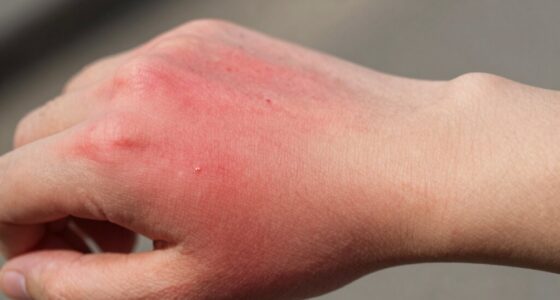
When cold water touches your skin, it feels different depending on the area because of variations in nerve sensitivity and blood flow. High receptor areas like your fingertips or lips send quick, sharp signals, making the cold feel intense or prickly. Less sensitive parts, like your back or soles, respond more slowly, often feeling dull or numb. This difference helps your body protect itself, and if you keep exploring, you’ll discover how these mechanisms shape your sensations.
Key Takeaways
- Skin areas with higher nerve density, like fingertips, perceive cold as sharp or prickly, while less sensitive areas feel dull or numb.
- Rapid nerve responses in sensitive regions produce quick, intense sensations, unlike slower responses in less sensitive areas.
- Blood flow regulation through vasoconstriction reduces nerve activity in cold, causing numbness in less sensitive regions.
- Protective mechanisms prioritize sharp sensations in sensitive areas to alert danger and dull sensations elsewhere to prevent pain.
- Variations in nerve density and blood flow distribution across body parts influence how cold sensations are experienced.
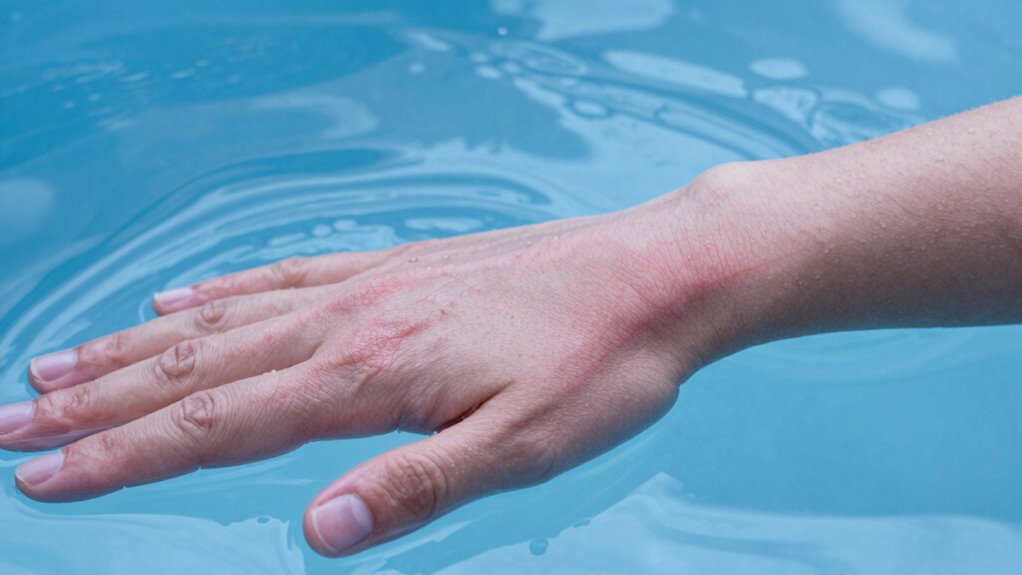
Have you ever noticed how cold water feels sharper on your hands but numbing on your feet? That’s not just your imagination. It’s a result of how different parts of your body respond to cold through variations in skin sensitivity and nerve response. Your skin isn’t uniform across your body; some areas have more nerve endings, making them more sensitive, while others are less responsive. When cold water touches these sensitive areas, your nerves send quick, sharp signals to your brain, creating that piercing sensation. Conversely, in less sensitive areas, the nerves respond more slowly or less intensely, so the cold feels dull or numbing instead of sharp.
Your skin’s sensitivity depends on the density of nerve endings. For example, your fingertips and lips are packed with receptors, designed for fine touch and temperature detection. When cold water hits these areas, the nerve response is immediate, and you feel a pronounced, almost painful sharpness. This heightened sensitivity is vital for survival, alerting you to potential danger or harm. On the other hand, areas like your back or soles of your feet have fewer nerve endings. When cold water contacts these parts, the nerve response is less intense, causing the sensation to shift from sharp to numbness. The numbness acts as a protective mechanism, reducing discomfort and preventing pain from overstimulation.
The nerve response also plays a role in how you perceive cold. When cold water contacts highly sensitive areas, the nerves fire rapidly, transmitting signals that your brain interprets as sharp or prickly. In less sensitive regions, nerve firing is slower or less frequent, leading your brain to perceive the cold as more dull or numbing. This variation in nerve response helps your body prioritize sensory information, focusing on areas that might need quick reactions or protection. Additionally, the blood flow to different body parts influences skin sensitivity. In colder conditions, blood vessels constrict more in some regions, reducing nerve activity and contributing to numbness. This process, known as vasoconstriction, is essential for maintaining body temperature and protecting vital organs. Interestingly, blood flow regulation varies across different body parts, further influencing how cold sensations are perceived. The distribution of nerve endings across your body plays a crucial role in how you experience temperature changes, emphasizing the importance of nerve density in sensory perception.
Ultimately, the way cold water feels on different parts of your body is a complex interplay of skin sensitivity, nerve response, and blood flow. Your body’s design guarantees that the sensation you experience is tailored to protect and alert you. That sharp cold on your hands is a signal from highly sensitive nerves, while the numbness on your feet is a result of fewer nerve endings and protective responses. Understanding this helps you realize why your body’s reactions to cold aren’t uniform but finely tuned to each region’s purpose and sensitivity.
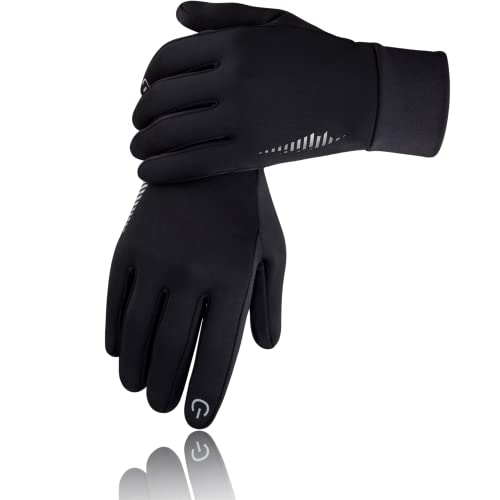
SIMARI Winter Gloves Women Men Ski Snow Gloves Liner Thermal Warm Touch Screen, Suit for Running, Cycling, Biking, Hiking, Driving, Walking, Typing, Freezer Work, Sports, Soccer, Shooting, Gaming 102
- Touch Screen Compatibility: Compatible with smartphones and tablets
- Warm and Comfortable: Made of polyester, spandex, with fleece lining
- Enhanced Grip and Safety: Silicone grip on palms and reflective patterns
As an affiliate, we earn on qualifying purchases.
As an affiliate, we earn on qualifying purchases.
Frequently Asked Questions
How Does Skin Thickness Affect Cold Water Sensation?
Skin thickness affects how cold water feels because thinner skin has more skin receptors and higher nerve density, making you more sensitive to temperature changes. Thinner areas like your lips or fingertips detect cold more intensely, while thicker skin on your palms or soles provides a muted sensation. Your nerve endings transmit these signals quickly, so areas with dense receptors respond more sharply to cold water, influencing your overall sensation.
Do Nerves Respond Differently to Cold in Various Body Areas?
Yes, nerves respond differently to cold across body areas because of variations in nerve density and temperature receptors. In regions with higher nerve density, you’ll notice increased sensitivity to cold. Conversely, areas with fewer temperature receptors, like your back or thighs, might feel less intense. These differences influence how sharply your skin perceives cold water, making some parts feel colder or more numb than others, depending on nerve distribution and receptor sensitivity.
Can Cold Water Exposure Improve Skin Sensitivity?
Sure, exposing yourself to cold water is like giving your skin a shocking wake-up call, improving sensitivity through thermal regulation and sensory adaptation. You might find your skin becomes more responsive and alert, turning cold discomfort into a strange kind of empowerment. Just remember, it’s not magic, but a way to train your nerves, boosting your body’s ability to adapt and respond to temperature changes—cold showers, anyone?
Why Do Some Body Parts Turn Red When Cold?
When body parts turn red in cold water, it’s because your blood flow increases to those areas, and your nerves respond by dilating blood vessels. This process, called vasodilation, allows more blood to reach the skin, giving it a reddish appearance. Your body does this to protect essential organs and keep your core temperature stable. So, the redness signals your body’s effort to regulate temperature through blood flow and nerve response.
Does Body Fat Influence Cold Water Perception?
You might wonder if body fat influences how cold water feels. Research suggests that fat insulation can slow heat loss, making cold water perception less intense for those with higher body fat. However, perception variability also depends on factors like blood flow and nerve sensitivity. So, while fat provides some insulation, individual differences mean your experience with cold water varies from others.

Cold Therapy Machine – Compact Edition: Compression & Cryotherapy for All Body Parts | Portable Ice Therapy System for Post-Surgery Knee Recovery | Up to 6 Hours of Continuous Cold Relief
- Deep Tissue Pain Relief: Consistent cold penetrates tissues for quick relief
- Universal Use: Suitable for knees, shoulders, elbows, wrists, and more
- Portable and Quiet: Lightweight, leakproof, with whisper-quiet pump
As an affiliate, we earn on qualifying purchases.
As an affiliate, we earn on qualifying purchases.
Conclusion
Think of your body as a beautifully crafted instrument, where each part responds like a different string. When cold water touches your skin, it’s as if the strings are being plucked at different pitches, creating a unique sensation with every spot. Embrace these differences as a symphony of your body’s sensitivity, reminding you that your skin is not just a barrier but a vibrant landscape of sensation. So, next time you feel cold water, appreciate the melody your body plays.

AFIL Food Sensitivity Test kit – 1000+ Foods, Drinks, Vitamins & Gut Health | At-Home Wellness Food Intolerance Test Kits for Adults & Kids – Non-Invasive Wellness Indicator | 1000+ Items Premium
- At-Home Hair Sample Test: Tests 1000+ foods and items
- Popular Wellness Tool: Helps identify food and gut sensitivities
- Easy 3-Step Process: Register, collect hair, mail sample
As an affiliate, we earn on qualifying purchases.
As an affiliate, we earn on qualifying purchases.

Hand+ Heat Resistant Oven Gloves (Size L/XL) 932°F / 500°C for BBQ Baking Cooking Smoker Fireplace Camping with Silicone Grip Thermo Dot Level 4 EN407 Certified
- Extreme Heat Resistance: Withstands up to 932°F (500°C)
- Durable Aramid Cotton Material: Provides long-lasting comfort and protection
- EN407 Certified Safety: Meets international heat protection standards
As an affiliate, we earn on qualifying purchases.
As an affiliate, we earn on qualifying purchases.