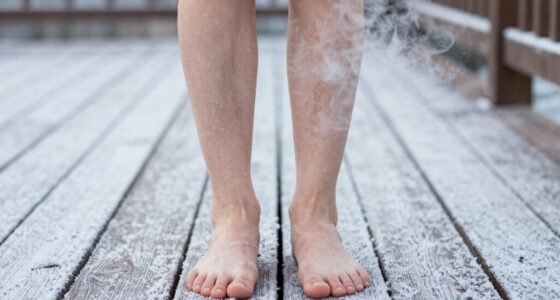

After a plunge into cold water, you might notice strange sensations during rewarming because your nervous system is still adjusting from the shock and rapid changes in blood flow. Your body constricts blood vessels to preserve heat, and then they suddenly dilate as you warm up, causing dizziness, tingling, or disorientation. These feelings are normal as your body recalibrates. If you want to understand the science behind these reactions and how to manage them, keep exploring.
Key Takeaways
- Rapid temperature changes can disrupt nervous system functions, causing disorientation and surreal sensations.
- Blood vessel dilation during rewarming affects blood flow, leading to uncoordinated movements and odd feelings.
- The body’s stress response remains heightened, making sensations feel strange or unfamiliar.
- Sudden warming methods can cause rapid vasodilation, resulting in dizziness and fainting risks.
- Gradual rewarming allows the nervous system to reset, reducing strange sensations and promoting safer recovery.

Have you ever wondered what the best way is to safely rewarm your body after a sudden plunge into cold water? When you’re immersed in freezing temperatures, your body reacts instinctively to protect itself. This is where body temperature regulation kicks in, activating mechanisms to conserve heat and prevent hypothermia. But once you’re out of the water, the process of returning to normal temperature can feel surprisingly strange, even unsettling.
This odd sensation happens because your body’s shock response has been triggered. When you plunge into cold water, your nervous system reacts swiftly, releasing stress hormones like adrenaline. These hormones cause your blood vessels to constrict, directing blood flow away from your extremities and toward your essential organs. It’s a survival tactic designed to keep your core temperature stable. However, as you begin to rewarm, your body’s response shifts. The sudden change in temperature can cause your blood vessels to dilate rapidly, leading to a feeling of dizziness, weakness, or even chills. This fluctuation can feel disorienting, especially since your body is working hard to restore equilibrium.
Rewarming causes blood vessels to dilate, leading to dizziness, weakness, and chills as your body restores balance.
You might notice that your skin feels numb or tingly, and your movements could seem uncoordinated. These sensations are normal, and they stem from your nervous system trying to recalibrate. Your body is adjusting its blood flow and temperature regulation mechanisms, which can produce a sensation that’s almost surreal. The strange feeling is compounded by the fact that your body is still in a heightened state of alert due to the initial shock response. This response can linger even as your core temperature starts to rise, making the rewarming process feel inconsistent or unsettling. Recognizing that cold shock response is a natural part of this process can help you stay calmer and more patient. It’s important to remember that body temperature regulation involves complex mechanisms that take time to stabilize after cold exposure.
Research has shown that gradual rewarming is essential for a safe recovery and to minimize discomfort. It’s also important to understand that your nervous system’s stress response may remain active for some time, prolonging feelings of disorientation. It’s crucial to rewarm gradually, allowing your body to stabilize without rushing the process. Sudden warming methods, like hot showers or direct heat, can cause rapid vasodilation, which might lead to a dangerous drop in blood pressure or fainting. Instead, you should focus on gentle warming—wrapping yourself in warm blankets, sipping warm fluids, and moving slowly. Your nervous system needs time to reset, and rushing can prolong the strange sensations or even cause additional stress on your body.
Understanding that these feelings are a natural part of your body’s complex response to cold helps you stay calm. Recognize that your body is doing its best to protect you and restore normalcy. By warming carefully and patiently, you’ll help ensure that your recovery is safe and that these odd sensations pass more quickly.

Frost King SP60 All Season Water Heater Insulation Blanket, 3” Thick x 60” x 90”, R10
Item Weight: 7.0 lb
As an affiliate, we earn on qualifying purchases.
As an affiliate, we earn on qualifying purchases.
Frequently Asked Questions
How Long Does It Take to Fully Rewarm After a Cold Plunge?
It typically takes about 10 to 20 minutes for your body to fully rewarm after a cold plunge. During this time, your thermal regulation kicks in, and your circulatory response increases blood flow to warm your core. You might notice sensations of tingling or warmth as your body adjusts. Factors like ambient temperature and your health can influence rewarming time, but generally, your body works efficiently to restore balance.
Can Rewarming Cause Any Health Issues or Discomfort?
You might experience some health issues or discomfort during rewarming, especially if your body reacts with a thermal shock or a sudden circulatory response. This rapid change can cause dizziness, headache, or even fainting. To avoid trouble, rewarm gradually and listen to your body. If you notice persistent discomfort or symptoms worsen, it’s best to seek medical advice, as your body needs time to adjust safely.
Why Does My Skin Feel Strange During Rewarming?
During rewarming, your skin feels strange because of heightened skin sensitivity and your circulatory response. As your blood vessels dilate to restore normal circulation, you might experience tingling, itching, or a prickly sensation. These sensations happen because blood flow increases unevenly, and nerve endings react to temperature changes. This is a normal part of your body’s way of adjusting, but if discomfort persists, it’s best to slow down rewarming.
Is It Better to Rewarm Gradually or Quickly After a Plunge?
It’s better to rewarm gradually after cold exposure, as rapid warming can disrupt your body’s thermal regulation and cause discomfort. Slow rewarming allows your body to adjust steadily, helping prevent shock or dizziness. When you plunge into cold water, your body activates its natural cooling response, so taking your time to warm up guarantees your thermal regulation systems work smoothly again. This careful approach makes the rewarming process safer and more comfortable.
Are There Specific Techniques to Make Rewarming More Comfortable?
Think of rewarming like easing into a warm bath—you want comfort, not shock. To make rewarming more comfortable, try breathing exercises to relax your body and mind. Gentle stretching can also help increase circulation gradually. I once felt dizzy after a cold plunge, but slow rewarming combined with deep breaths made me feel steadier. These techniques help your body adjust smoothly without overwhelming sensations.

BARE 5/3MM Women's Ultrawarmth Hooded Vest: Wear Inside or Outside Your Wetsuit – Black, 08
ADDED WARMTH FOR COLDER DIVES: Can be worn inside or outside your wetsuit and can be added to…
As an affiliate, we earn on qualifying purchases.
As an affiliate, we earn on qualifying purchases.
Conclusion
As you emerge from the icy depths, your body begins to dance back to life, like a river thawing after winter’s grip. That strange, tingling sensation isn’t just discomfort—it’s your nerves waking up from a deep slumber. Embrace the shivers as a reminder that your body is a resilient traveler, steering through the chill and warmth, weaving a story of survival and revival. Soon, you’ll feel the warm sun on your skin, a gentle whisper that everything is back in harmony.

Motorola Care 3-in-1 Non-Contact Baby Forehead Thermometer – Body, Food or Liquid Temperature, Handheld Clinical Device for Kids, Adults – No Touch, Quick & Accurate Reader-Large Display, White
🌡️ INSTANT TEMP READOUT – Typical thermometers can take forever to dish out a temperature reading. This compact…
As an affiliate, we earn on qualifying purchases.
As an affiliate, we earn on qualifying purchases.

Electric Heating pad for Back Neck Shoulder Knee Arms Legs- Electric Heat Pads with 6 Heat Settings & Auto Shut Off Heat Heating Pad for Birthday Mother Father Girl Men Women
This electric heating pad is perfect for use on your back, neck, shoulders, abdomen, legs, arms and other….
As an affiliate, we earn on qualifying purchases.
As an affiliate, we earn on qualifying purchases.