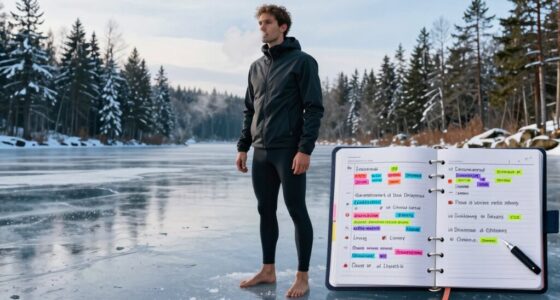

A realistic weekly cold exposure schedule involves starting with short sessions, such as 2-3 minutes of cold showers, outdoor dips, or brief cold air exposure, on the same day each week—like Sunday mornings or after workouts. Focus on consistency over intensity, gradually increasing duration as you become more comfortable. Keep it simple and manageable to stick with it long-term. If you keep up with this routine, you’ll discover how to make it a sustainable part of your week.
Listen free for 30 days with Audible
Thousands of audiobooks and originals — cancel anytime.
As an affiliate, we earn on qualifying purchases.
Key Takeaways
- Start with 2-3 minute cold exposure sessions once a week, ideally on a consistent day.
- Use accessible methods like cold showers or outdoor dips to ease into routine.
- Gradually increase duration or frequency as comfort and adaptation develop.
- Choose a specific day or time, such as Sunday mornings or post-workout, for consistency.
- Focus on mental preparation and mindfulness to sustain motivation and positive associations.
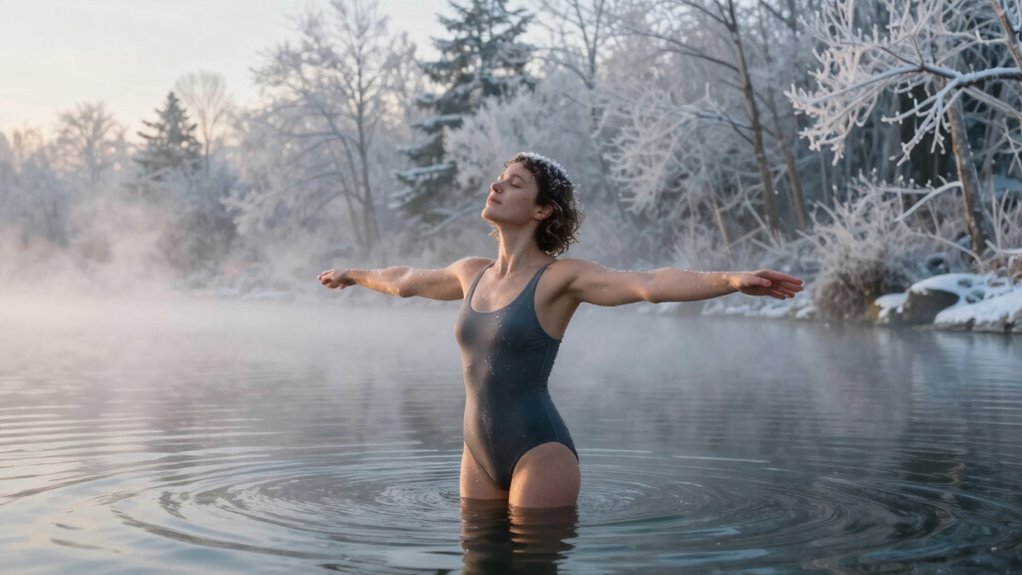
Starting a weekly cold exposure routine can boost your recovery, mental clarity, and overall resilience. When you commit to a consistent schedule, you give your body and mind the chance to adapt gradually, making the process more sustainable and less intimidating. The key is to find a routine that fits into your life without feeling overwhelming, so it’s easier to stick with it long-term.
Cold exposure triggers a series of physiological responses that can enhance your mental health benefits. When you step into cold water or expose yourself to low temperatures, your body reacts by increasing circulation, releasing endorphins, and activating your sympathetic nervous system. These responses help reduce inflammation, improve mood, and sharpen mental focus. Over time, these physiological responses become more efficient as your body adapts, leading to stronger resilience against stress and fatigue.
Cold exposure boosts circulation, releases endorphins, and enhances resilience against stress and fatigue over time.
To keep your schedule realistic, start with short sessions—perhaps 2 to 3 minutes—once a week. You don’t need to submerge yourself into ice baths every day; instead, opt for cold showers, outdoor dips, or brief exposure to cold air. Consistency matters more than duration or intensity in the beginning. As you become more comfortable, you can gradually extend your exposure or increase the frequency if it feels right. The goal is to make cold exposure a manageable part of your routine, not an overwhelming challenge.
Planning your sessions is simple. Pick a consistent day each week, maybe Sunday mornings or after your workout, to establish a routine. This consistency helps your body anticipate the exposure, which can amplify the physical and mental benefits. Make sure you prepare mentally as well—set an intention for each session to focus on resilience, clarity, or recovery. Developing a habit of gradual adaptation can make the process easier and more effective over time. Incorporating mindful preparation can further enhance the mental benefits and help you approach cold exposure with a positive mindset. Additionally, understanding the importance of physiological responses can motivate you to stick with your routine, knowing it promotes resilience and recovery. Recognizing how your body adapts gradually underscores the importance of patience and consistency in this practice. Embracing the concept of neuroplasticity can also help reinforce your mental resilience and motivation to continue this routine, as it highlights the brain’s ability to change and adapt. Over time, these mental associations can enhance the mental health benefits, helping you approach cold exposure with a positive mindset.

Cold Life Filtered Shower Head for Hard Water -Recommended by Gary Brecka
- Multi-stage Filtration: Removes chlorine, heavy metals, PFAS
- Hard Water Protection: Reduces dryness, irritation, mineral buildup
- High Pressure Flow: Maintains strong, consistent water pressure
As an affiliate, we earn on qualifying purchases.
As an affiliate, we earn on qualifying purchases.
Frequently Asked Questions
Can Cold Exposure Improve Mental Clarity?
Cold therapy can definitely improve your mental focus by boosting alertness and reducing stress. When you expose yourself to cold, your body releases adrenaline and endorphins, sharpening your mental clarity. Regular cold exposure trains your nervous system to respond better under pressure, helping you stay focused throughout the day. So, incorporating cold therapy into your routine could enhance your mental clarity and overall cognitive performance.
How Does Cold Exposure Affect Sleep Quality?
Cold exposure can positively impact your sleep quality by promoting cold adaptation, which helps regulate your body temperature more efficiently. As you regularly practice cold exposure, your body becomes better at cooling down, leading to deeper, more restorative sleep. This process also triggers sleep enhancement by increasing melatonin production, helping you fall asleep faster and enjoy more restful nights. Just make sure you gradually incorporate cold exposure for maximum benefits.
Are There Risks for People With Heart Conditions?
If you have heart conditions, cold therapy can pose risks to your heart health. Sudden cold exposure causes blood vessels to constrict, increasing blood pressure and heart strain. This can be dangerous for those with cardiovascular issues. Always consult your doctor before starting cold exposure routines, especially if you have heart problems. Monitoring your response and progressing gradually helps reduce risks and protect your heart health during cold therapy.
What Are the Best Times of Day for Cold Exposure?
You should try cold exposure, like cold showers or winter outdoor practice, in the morning or early evening. These times help you maximize cold shower benefits, such as increased alertness and circulation. Morning cold showers boost your energy for the day, while evening outdoor practice can promote relaxation. Just make certain you’re not exposed during extreme cold for too long, especially if you have health concerns, and listen to your body’s signals.
How Long Should Beginners Stay in the Cold?
As a beginner, you should start with cold exposures lasting around 1 to 3 minutes, focusing on building cold acclimation gradually. Pay attention to your comfort thresholds, stopping if you feel excessive discomfort or shivering. Over time, you can increase duration slowly. This approach helps your body adapt safely, making cold exposure more manageable and effective without overwhelming your system.
As an affiliate, we earn on qualifying purchases.
Conclusion
Embrace this manageable, mindful weekly cold schedule to boost your body and balance your mind. By blending brave, brief dips into brisk waters, you’ll build resilience and refresh your routine. Remember, consistency is key—small steps lead to significant strength. So, step into the chill with confidence, crafting a clever, caring cadence that keeps you committed, courageous, and cool. Ultimately, your effort will energize your entire existence, turning chilly challenges into charming changes.
As an affiliate, we earn on qualifying purchases.
As an affiliate, we earn on qualifying purchases.
Flea & tick season Picks
flea and tick prevention
As an affiliate, we earn on qualifying purchases.