For the best experience, start with gentle mobility exercises before cold exposure to warm up your muscles and improve flexibility. After cold exposure, doing light mobility work helps your body warm up naturally and speeds recovery. Moving in cold conditions can generate internal heat, reducing discomfort. Personalizing the timing and sequence based on how your body responds will give you better comfort and resilience over time. Keep exploring to discover more tips for ideal cold and mobility integration.
Key Takeaways
- Performing mobility work before cold exposure warms muscles, reducing discomfort and cold shock response.
- Conducting mobility exercises after cold exposure aids in muscle recovery and promotes natural warming.
- Combining gentle pre-cold mobility with post-cold movement optimizes comfort and enhances adaptation.
- Personalizing timing based on how your body responds improves overall experience and benefits.
- Sequencing mobility before and after cold exposure creates a smoother, more comfortable transition and recovery process.
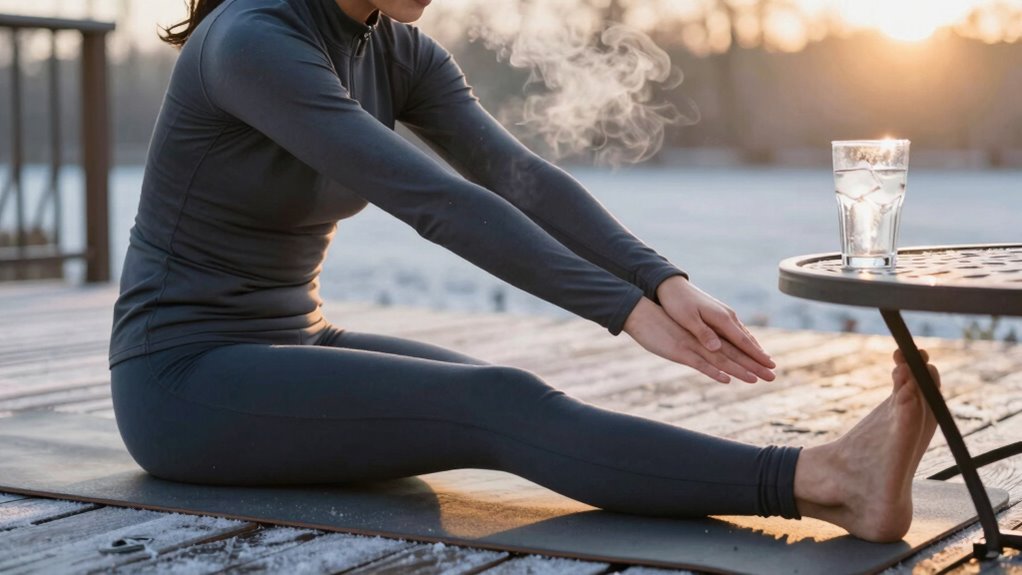
Cold exposure and mobility work might seem like unrelated practices, but combining them can enhance your overall physical resilience. When you intentionally expose yourself to cold, you stimulate your body’s cold adaptation, which strengthens your ability to handle temperature fluctuations and improves circulation. This process isn’t just about enduring cold; it’s about training your body to respond efficiently, making recovery strategies more effective and boosting your overall performance. Integrating cold exposure with mobility work isn’t just a random pairing—it’s a strategic approach to optimize how your body adapts and recovers.
Timing plays a pivotal role in this combo. Doing mobility work before cold exposure can serve as a warm-up, loosening stiff muscles and joints, which helps your body better handle the cold. When your tissues are more pliable, your body can distribute heat more effectively, reducing the shock of the cold and encouraging faster recovery. Alternatively, performing mobility exercises after cold exposure can assist in thawing out tight muscles, promoting circulation, and accelerating recovery strategies. The key is to listen to your body and experiment with timing to discover what feels best for you.
You’ll find that incorporating mobility work into your cold exposure routine can also make the entire process more tolerable. Moving gently in cold conditions helps generate internal heat, making the experience less uncomfortable and more sustainable. This active engagement encourages your body to adapt more quickly, reinforcing your cold adaptation in a way that feels manageable rather than overwhelming. Over time, this combination can lead to improved resilience, better recovery, and less post-exposure soreness or stiffness.
Gentle movement in cold boosts heat, resilience, and recovery over time.
In practical terms, you might start your session with some light mobility exercises—like joint circles, gentle stretches, or bodyweight movements—before stepping into a cold environment or applying cold therapy. After your cold exposure, spend a few minutes doing mobility drills to help your body warm up naturally and restore range of motion. This sequencing aligns with your body’s natural recovery strategies, making each session more effective and less stressful. Consistency matters; over time, your body becomes more efficient at cold adaptation and recovery, reducing the discomfort associated with cold exposure and enhancing your mobility.
Ultimately, the timing of combining cold exposure with mobility work isn’t about strict rules but about finding what works for you. When you approach it thoughtfully, your body adapts more effectively, recovery improves, and the entire process becomes more enjoyable. By understanding how to strategically incorporate mobility into your cold exposure routines, you’re setting yourself up for better resilience and a more balanced, healthier approach to physical training. Incorporating science-backed methods into your routine can further optimize these benefits.
Frequently Asked Questions
Can Cold Exposure Improve Mobility in Chronic Injury Cases?
Yes, cold therapy can help improve mobility in chronic injury cases by reducing inflammation and easing pain. When you use cold exposure strategically, it can promote faster recovery and injury prevention. You might notice better movement and less stiffness as cold therapy helps calm irritated tissues. Incorporating cold exposure into your routine, especially after activity, supports ongoing mobility and minimizes the risk of further injury.
What Are the Risks of Combining Cold Exposure With Mobility Work?
Think of cold shock as a sudden gust of wind that can tighten muscles and restrict blood flow. When you combine cold exposure with mobility work, you risk reducing blood flow to muscles, which may hinder flexibility and recovery. This can lead to increased injury risk or delayed healing. Always listen to your body, start with gentle cold, and avoid pushing through discomfort during mobility exercises.
How Long Should I Wait Between Cold Exposure and Mobility Exercises?
You should wait at least 15-30 minutes between cold exposure and mobility exercises to optimize recovery timing and support cold adaptation. This gap allows your body to regain warmth and blood flow, reducing stiffness and injury risk. By giving yourself this buffer, you enhance your mobility work’s effectiveness while maximizing the benefits of cold exposure. Adjust based on how your body responds, and listen to any signs of fatigue or discomfort.
Is Cold Exposure More Effective Before or After Mobility Routines?
Ever wondered if cold exposure boosts or hinders your mobility? You should do cold exposure after your mobility routines. Why? Because it helps you maximize temperature timing for better mobility enhancement. When you start with mobility work, your muscles warm up, making cold therapy more effective afterward. This sequence guarantees you get the most benefit, combining flexibility gains with improved recovery, without risking stiffness or reduced performance.
Can Cold Exposure Help With Muscle Soreness and Recovery?
Cold exposure can definitely help with muscle soreness and recovery. It promotes muscle relaxation and reduces inflammation, which speeds up your recovery process. When you expose yourself to cold, you constrict blood vessels, decreasing swelling and relieving pain. Plus, it helps flush out metabolic waste. Incorporate cold exposure after workouts to enhance recovery, but listen to your body to avoid overdoing it.
Conclusion
Timing matters when it comes to cold exposure and mobility work—you’ll get the best results when you listen to your body and find what feels right. Whether doing mobility exercises before or after cold exposure, trust your instincts and don’t force it. Remember, it’s not about pushing through at all costs; it’s about finding the sweet spot that works for you. When you strike the right balance, you’ll release your full potential and keep your body happy as a clam.