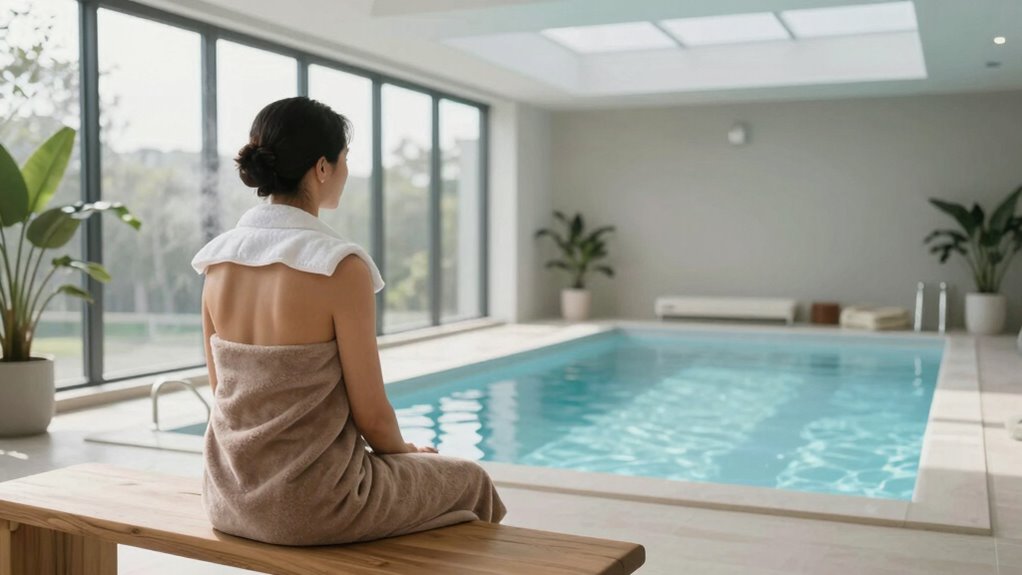

In a recovery week, contrast therapy can be a game-changer for muscle healing. You’ll alternate between hot and cold treatments, like ice baths and heat packs, to boost circulation, reduce soreness, and speed up recovery. Use it after intense workouts or when muscles feel tight. Timing is key—sometimes starting with cold and finishing with heat works best. Keep exploring for more tips on integrating contrast therapy into your recovery routine effectively.
Key Takeaways
- Incorporate contrast therapy after high-intensity days to accelerate recovery and reduce soreness.
- Use ice baths immediately post-workout, followed by heat therapy on rest or lighter activity days.
- Schedule contrast sessions strategically, not daily, to enhance circulation without overtaxing the body.
- Combine contrast therapy with proper rest, hydration, and nutrition for optimal healing.
- Adjust contrast routines based on individual recovery signals and training intensity throughout the week.
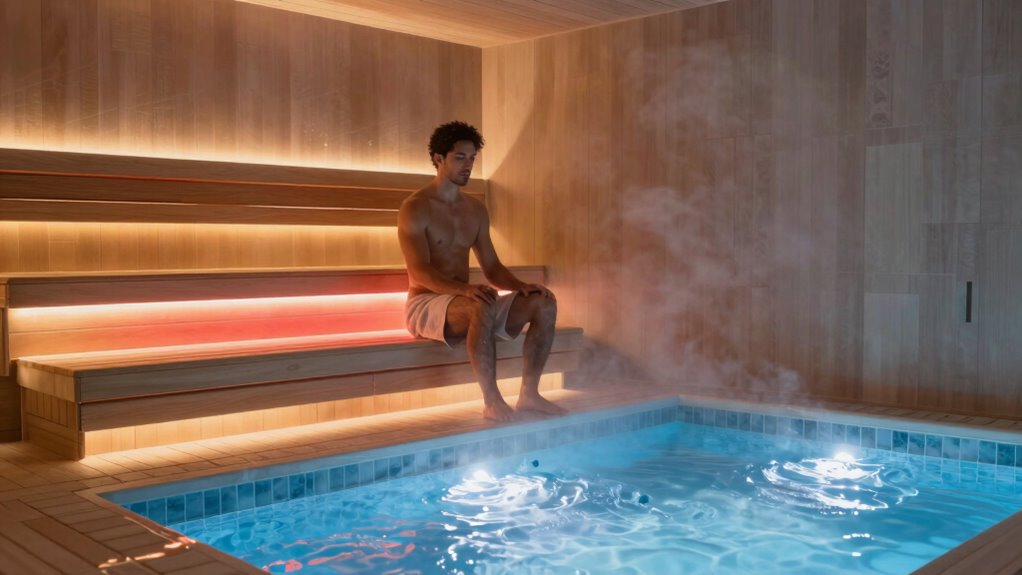
Contrast therapy, which involves alternating between hot and cold treatments, has gained popularity for its potential to enhance recovery after intense physical activity. You might incorporate ice baths and heat therapy into your weekly routine to help reduce soreness and promote faster healing. Ice baths are especially effective after demanding workouts, as they help constrict blood vessels, limit inflammation, and numb sore muscles. When you immerse yourself in cold water, you’re giving your body a chance to flush out metabolic waste and decrease swelling, which can make a noticeable difference in how quickly you bounce back.
Ice baths reduce inflammation and numb muscles to speed up recovery after intense workouts.
On the other hand, heat therapy plays a different but equally vital role. Applying heat—whether through heating pads, warm showers, or hot packs—dilates blood vessels, increases circulation, and relaxes tense muscles. This not only alleviates stiffness but also accelerates the delivery of nutrients to damaged tissues, speeding up the repair process. During a recovery week, you might strategically use heat therapy on days when soreness persists or when you want to relax tight muscles after a lighter workout or rest day.
In a typical recovery week, you’ll want to balance these treatments to maximize benefits. For example, you could start a day with an ice bath after a strenuous workout, which will help control inflammation and reduce pain. Later in the week, perhaps on a rest day or after a light activity, you might turn to heat therapy to loosen up muscles and promote blood flow. Combining these treatments creates a contrast that stimulates blood circulation more effectively than either alone, helping your body clear out waste and deliver healing nutrients more efficiently.
Timing is essential. You don’t need to do contrast therapy every day—just enough to support your recovery goals. After especially intense sessions, using ice baths followed by heat therapy can be particularly effective. You might also alternate between ice and heat within a single session, spending a few minutes in each, to get the best of both worlds. Remember, listening to your body is key: if you notice increased discomfort or irritation, scale back or adjust your approach. Incorporating temperature contrast techniques can optimize your recovery, especially when combined with proper rest, hydration, and nutrition. Additionally, understanding how blood flow responds to temperature changes can help you tailor your recovery routine for maximum benefit. Limited research suggests that vascular response to temperature modulation plays a critical role in healing.
Furthermore, incorporating timing of treatments strategically can enhance the overall effectiveness of contrast therapy, ensuring you get the maximum benefits without overstressing your body. Ice baths and heat therapy work together to reduce soreness, improve circulation, and speed up healing—helping you feel ready to tackle your next workout with renewed strength and less discomfort.

Bubplay Ice Bath Cold Plunge Tub with Cover for Indoor Outdoor for Recovery, Cold Water Therapy, Athletes & Adults -105 Gallons, Black, XL
- Full-Body Cold Plunge: Roomy for most adults up to 6'7"
- Enhanced Insulation: 6-layer insulation with durable outer fabric
- Easy to Clean: Smooth inner liner for quick wiping
As an affiliate, we earn on qualifying purchases.
As an affiliate, we earn on qualifying purchases.
Frequently Asked Questions
Can Contrast Therapy Be Combined With Other Recovery Methods?
Yes, you can combine contrast therapy with other recovery methods. For example, pairing hydrotherapy benefits like improved circulation and reduced soreness with cold therapy can enhance your recovery process. Alternating between hot and cold treatments stimulates blood flow and reduces inflammation, making it effective alongside stretching, foam rolling, or massage. Just make certain you listen to your body and don’t overdo it, combining methods safely for maximum results.
How Long Should Each Contrast Therapy Session Last?
Think of contrast therapy as a dance between hot and cold, guiding your body through temperature regulation and muscle relaxation. Each session should last about 15-20 minutes—alternating 1-3 minutes in hot and cold water, repeating 3-4 times. This balance stimulates circulation and eases tension, helping your muscles recover faster. Keep an eye on how your body responds, adjusting durations to maximize comfort and benefits.
Is Contrast Therapy Suitable for All Types of Injuries?
Contrast therapy isn’t suitable for all injury types, especially those with open wounds, infections, or severe inflammation, due to therapy limitations. It works best for muscle strains, soreness, or minor injuries, helping to improve blood flow and reduce pain. Before starting contrast therapy, you should consult a healthcare professional to confirm it’s appropriate for your specific injury, avoiding potential complications or delays in recovery.
Are There Any Risks or Side Effects Associated With Contrast Therapy?
Contrast therapy is generally safe, but you should be cautious with heat, especially if you have heat caution or cold sensitivity. You might experience skin irritation, burns, or numbness if you use heat or cold improperly. Always follow recommended durations and temperatures, and consult a healthcare professional if you have underlying health issues or if you notice adverse reactions. Being vigilant helps prevent potential side effects and ensures effective recovery.
How Frequently Should Contrast Therapy Be Incorporated Into a Recovery Week?
You should incorporate contrast therapy into your recovery week 2-3 times, allowing your body to benefit from hydrotherapy and temperature regulation. This frequency helps maximize hydrotherapy benefits like improved circulation and reduced soreness without overtaxing your system. By alternating hot and cold treatments, you promote healing and relaxation, but avoid overdoing it to prevent skin irritation or discomfort. Listen to your body’s signals for ideal results.
As an affiliate, we earn on qualifying purchases.
Conclusion
So, next time you’re feeling sore, remember that contrast therapy might just be your magic bullet—unless, of course, you prefer the thrill of ignoring recovery altogether. Embrace the hot-and-cold dance, because nothing screams “true recovery” like a little drama for your muscles. After all, who needs consistency when you can have a rollercoaster of temperature swings? Keep up the contrast, and maybe, just maybe, your muscles will thank you—eventually.
contrast therapy cold and heat packs
As an affiliate, we earn on qualifying purchases.
As an affiliate, we earn on qualifying purchases.
muscle recovery ice and heat packs
As an affiliate, we earn on qualifying purchases.
As an affiliate, we earn on qualifying purchases.