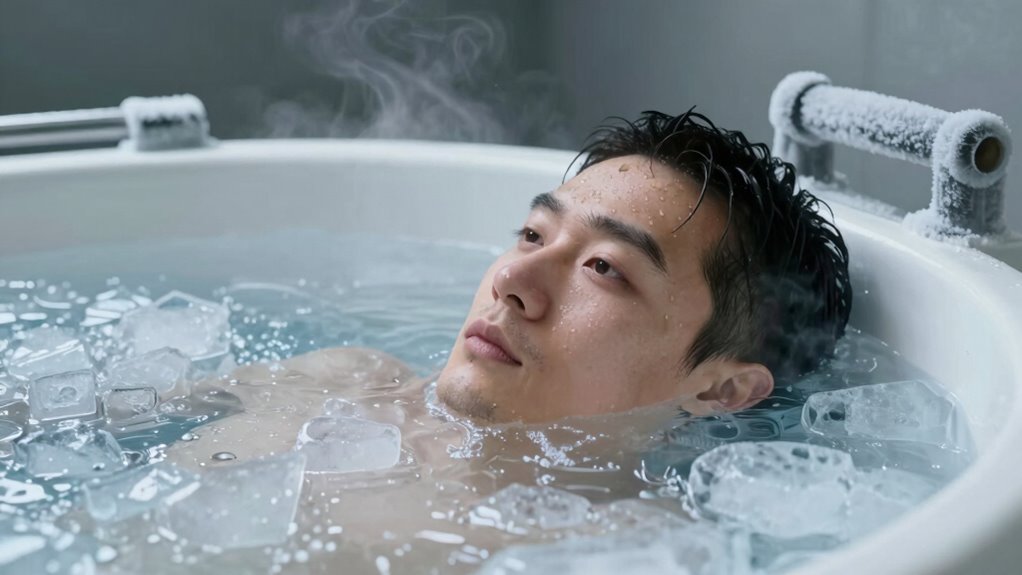

To manage heat effectively, you can use cold exposure as a pre-cooling tactic. Start with brief sessions like cold water on your hands or feet, and gradually increase the duration as your body adapts. This process boosts your metabolic rate, strengthens your thermal regulation, and helps your body conserve heat better in hot conditions. Consistent practice improves your cold tolerance, making heat management more efficient—continue exploring to learn more about optimizing your pre-cooling routine.

Get home appliances delivered free — and shop member deals
- Fast, free delivery on millions of items
- Access to Prime Big Deal Days deals on October 6–7
- Prime Video, Amazon Music and more included
Key Takeaways
- Cold exposure activates natural cooling mechanisms, improving the body’s ability to manage internal heat during physical activity.
- Start with brief sessions and gradually increase duration to safely build cold tolerance and prevent discomfort.
- Regular cold exposure boosts metabolic rate through non-shivering thermogenesis, supporting heat management.
- Repeated exposure enhances cold adaptation, helping the body better conserve heat and maintain stable internal temperature.
- Always prioritize safety by monitoring environmental conditions, avoiding prolonged cold exposure, and combining with proper hydration.

When your body overheats, exposing yourself to cold temperatures can be an effective way to regulate your internal heat. Cold exposure works by activating your body’s natural cooling mechanisms, helping you manage thermal regulation more efficiently. Over time, consistent exposure can lead to cold adaptation—a process where your body becomes better at handling cold environments, making thermal regulation easier and more effective. This adaptation enhances your ability to maintain a stable internal temperature, even during intense physical activity or in extreme heat.
Cold exposure enhances your body’s ability to regulate temperature and adapt to varying environments.
To harness these benefits, you need to approach cold exposure strategically. Start with brief sessions, such as immersing your hands or feet in cold water, and gradually increase the duration as your body adapts. This slow progression allows your nervous system to adjust, reducing discomfort and minimizing the risk of cold-related injuries. As you become more accustomed to cold, your body learns to shunt blood flow to vital organs and skin more efficiently, improving overall thermal regulation. Over time, you’ll notice that you tolerate cold environments with less shivering and discomfort, indicating your body’s enhanced ability to balance heat.
Incorporating cold exposure into your routine can also boost your metabolic rate, which further supports thermoregulation. When exposed to cold, your body burns more energy to generate heat, a process called non-shivering thermogenesis. This not only helps in immediate heat management but also promotes long-term metabolic health. As your cold adaptation deepens, your body becomes better at conserving heat when needed, which is particularly useful during outdoor activities or in cooler climates. Additionally, engaging in regular cold exposure can strengthen your body’s cold tolerance, making it easier to handle sudden temperature drops.
It’s important to listen to your body during cold exposure. While the goal is to improve thermal regulation, pushing too hard or staying in cold environments for too long can backfire, leading to hypothermia or frostbite. Always start with short, controlled sessions, and increase exposure gradually. Make sure you’re in a safe environment where you can monitor your condition, and never ignore signs of excessive cold stress. Combining cold exposure with proper hydration and nutrition can further optimize your body’s ability to adapt.
cold water immersion for recovery
As an affiliate, we earn on qualifying purchases.
As an affiliate, we earn on qualifying purchases.
Frequently Asked Questions
How Long Should I Stay in Cold Exposure Sessions?
You should aim for cold exposure sessions lasting around 10 to 15 minutes, following safe duration guidelines. It’s best to start with shorter sessions and gradually increase as your body adapts. For ideal benefits, incorporate cold exposure 3 to 5 times a week, paying attention to how your body responds. Always listen to your body’s signals and avoid overdoing it to prevent cold-related stress or injury.
Are There Any Risks of Hypothermia During Pre-Cooling?
Imagine a delicate balance on a razor’s edge—cold exposure can be risky. Yes, there’s a hypothermia risk if you stay in cold water or environment too long, especially during pre-cooling. To avoid this, limit your sessions and monitor your body closely. Stay aware of signs like intense shivering or numbness, and don’t push beyond safe durations to keep cold exposure beneficial without danger.
Can Cold Exposure Improve Athletic Performance Long-Term?
Cold exposure can improve your long-term athletic performance by promoting cold adaptation, which enhances your body’s ability to regulate temperature. Over time, it may boost your metabolic rate, increasing energy efficiency and endurance. Regular cold exposure trains your body to handle thermal stress better, leading to improved recovery and reduced fatigue. Incorporate controlled cold exposure into your routine gradually to access these benefits without risking adverse effects.
What Is the Ideal Temperature for Effective Pre-Cooling?
The ideal temperature for effective pre-cooling is around 10-15°C (50-59°F). This temperature range helps you optimize temperature regulation through cold therapy without risking hypothermia. Cold exposure at this level allows your body to cool down efficiently before activity, reducing core temperature and delaying fatigue. By maintaining this temperature, you enhance athletic performance and recovery, making your pre-cooling routine more effective and safer.
How Does Cold Exposure Affect Hydration Needs?
Cold exposure can increase your hydration needs because it slows fluid absorption and may cause sweating and fluid loss. For example, if you pre-cool before exercise, you might underestimate your hydration requirements. To stay effective, follow hydration strategies that include drinking water or electrolyte drinks before and after cold exposure, helping your body adapt and maintain ideal hydration levels during activity.
cold therapy hand and foot baths
As an affiliate, we earn on qualifying purchases.
As an affiliate, we earn on qualifying purchases.
Conclusion
Embracing cold exposure is like wielding a secret weapon against heat overload, turning your body into a finely tuned engine that’s cooled by nature’s own chill. When you harness this icy tool, you’re crafting a symphony of resilience and control, transforming potential chaos into calm. So, step into the frost’s embrace and let its icy touch sculpt your heat management mastery, ensuring you stay cool under pressure, no matter how fiery the challenge.
As an affiliate, we earn on qualifying purchases.
As an affiliate, we earn on qualifying purchases.
Fall yard work Picks
leaf blowers
As an affiliate, we earn on qualifying purchases.