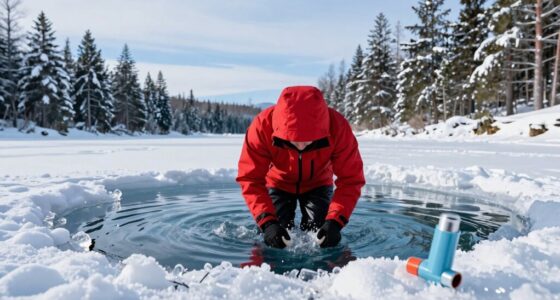
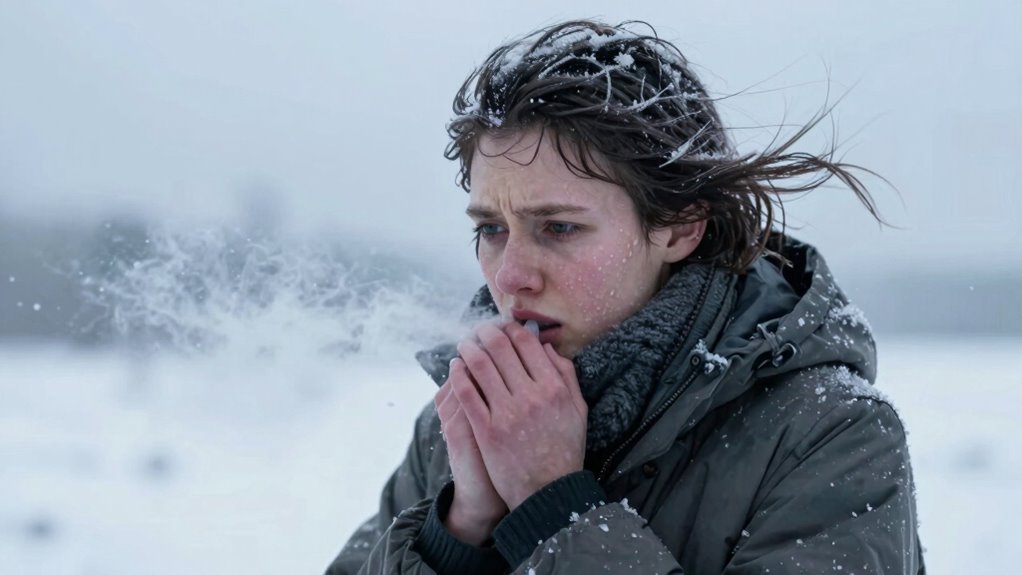

When you’re outdoors in cold conditions, wind and wet skin greatly increase your hypothermia risk by speeding up heat loss. Wind removes warm air trapped around your body, while moisture from rain, snow, or sweat conducts heat away 25 times faster than dry air. Staying dry and protected from wind is essential, but if you keep going without proper gear or awareness, your body’s ability to stay warm diminishes quickly. Learn more about how to stay safe in these conditions.
Key Takeaways
- Wind increases heat loss through convection, making it harder to maintain body warmth outdoors.
- Wet skin or clothing conducts heat away 25 times faster than dry, elevating hypothermia risk.
- Staying dry and wearing windproof layers help preserve insulation and prevent rapid cooling.
- Proper hydration supports circulation and heat retention, reducing hypothermia danger in cold, windy conditions.
- Recognizing early hypothermia signs and seeking shelter are vital for safety during outdoor cold exposure.
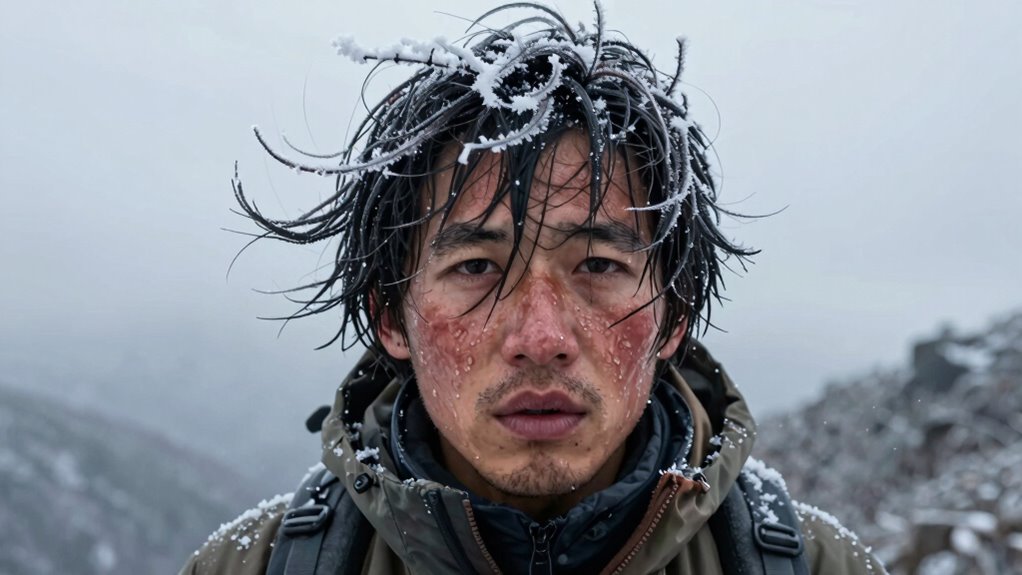
Exposing yourself to cold outdoors can be invigorating and beneficial if done safely. However, it also comes with risks, especially when wind, wet skin, and hypothermia threaten your health. One of the most effective ways to protect yourself is by paying attention to clothing insulation. Proper clothing acts as a barrier, trapping body heat and preventing rapid heat loss. Layering is key: a moisture-wicking base layer keeps sweat away from your skin, insulating layers add warmth, and an outer shell shields you from wind and moisture. Wind, in particular, can strip away heat quickly, so wearing windproof gear is essential. Wet skin greatly accelerates heat loss because water conducts heat away from your body much faster than dry air. If you get wet from rain, snow, or sweat, your body struggles to maintain its core temperature, increasing the risk of hypothermia. That’s why staying dry is so critical; it preserves your clothing insulation and keeps your body temperature stable.
Dehydration effects are often overlooked in cold weather, but they play a significant role in your overall safety. Cold environments can suppress your thirst response, yet your body still loses water through respiration, sweating, and urination. If you don’t hydrate adequately, you can become dehydrated, which impairs your body’s ability to generate heat and recover from cold exposure. Dehydration also thins your blood, making it harder for your circulatory system to deliver warmth to essential organs. Drinking warm fluids can help maintain hydration and provide additional warmth, but avoid alcohol, as it dilates blood vessels and causes you to lose heat faster. Staying well-hydrated supports your body’s natural thermoregulation and helps prevent the onset of hypothermia. Additionally, maintaining proper hydration can help improve circulation and prevent cold-related health issues.
Wind and wet conditions compound the dangers of cold exposure. Wind increases convective heat loss, making your clothing insulation less effective and accelerating the cooling process. Wet skin from rain, snow, or sweat further reduces insulation, as water conducts heat away from your body 25 times faster than air. To stay safe, you need to minimize exposure to these elements by choosing appropriate clothing and seeking shelter when possible. Be mindful of how wind and moisture affect your body’s ability to maintain warmth. Recognize early signs of hypothermia, such as shivering, confusion, or fatigue, and take immediate action to warm up. Remember, your clothing insulation, hydration, and awareness of environmental factors are all essential in safely enjoying outdoor cold exposure.
Frequently Asked Questions
How Long Does It Take to Develop Hypothermia Outdoors?
You can develop hypothermia outdoors within a few hours if your core body temperature drops markedly, especially in cold, windy, or wet conditions. When exposed to cold for prolonged periods, your body loses heat faster than it produces it, increasing frostbite risk and lowering your core temperature. To prevent this, limit exposure time, stay dry, and keep warm, recognizing that hypothermia can set in quickly without proper precautions.
Can Wind Chill Factor Cause Hypothermia Even in Mild Temperatures?
Yes, wind chill can cause hypothermia even in mild temperatures. When the wind increases, it strips away your body heat faster, making you feel colder. If you don’t wear adequate clothing insulation, your body loses heat more quickly, raising your hypothermia risk. Always dress in layers, cover exposed skin, and seek shelter from the wind to stay warm and safe in cold outdoor conditions.
What Are Early Signs of Hypothermia to Watch For?
You should watch for early signs of hypothermia like shivering symptoms, which indicate your body is trying to generate heat. You might also experience mental confusion, difficulty concentrating, or feeling exhausted. If you notice these symptoms, it’s essential to seek warmth immediately. Recognizing these early signs can help prevent the condition from worsening and reduce the risk of serious health complications.
How Does Wet Skin Accelerate Heat Loss?
Wet skin acts like a wet blanket, speeding up heat loss through moisture transfer, which makes your body’s thermal insulation less effective. When your skin is wet, heat escapes more quickly into the colder environment, draining your body’s warmth. This accelerates hypothermia risk because your body struggles to maintain its core temperature. Staying dry is essential to preserve your natural insulation and keep your body heat where it belongs—inside you.
Are Certain Clothing Materials Better for Cold, Windy Conditions?
Yes, certain clothing materials are better for cold, windy conditions. Insulation materials like wool or synthetic fibers trap heat effectively, while moisture-wicking fabrics keep sweat away from your skin, preventing dampness that accelerates heat loss. Look for layered clothing that combines these materials, so you stay warm and dry. Avoid cotton, as it retains moisture and reduces insulation, increasing your risk of hypothermia in harsh weather.
Conclusion
Remember, stepping outside in cold weather can invigorate or endanger you. The wind’s biting chill and wet skin expose your body’s vulnerabilities, but awareness and proper gear can shield you. While the landscape offers beauty and adventure, it also harbors silent risks like hypothermia. Embrace the outdoor world with respect, knowing that warmth and caution are your best allies. In the cold’s quiet, relentless grip, your preparedness becomes the greatest safeguard against its unseen dangers.