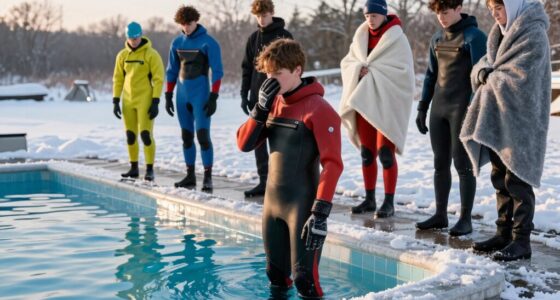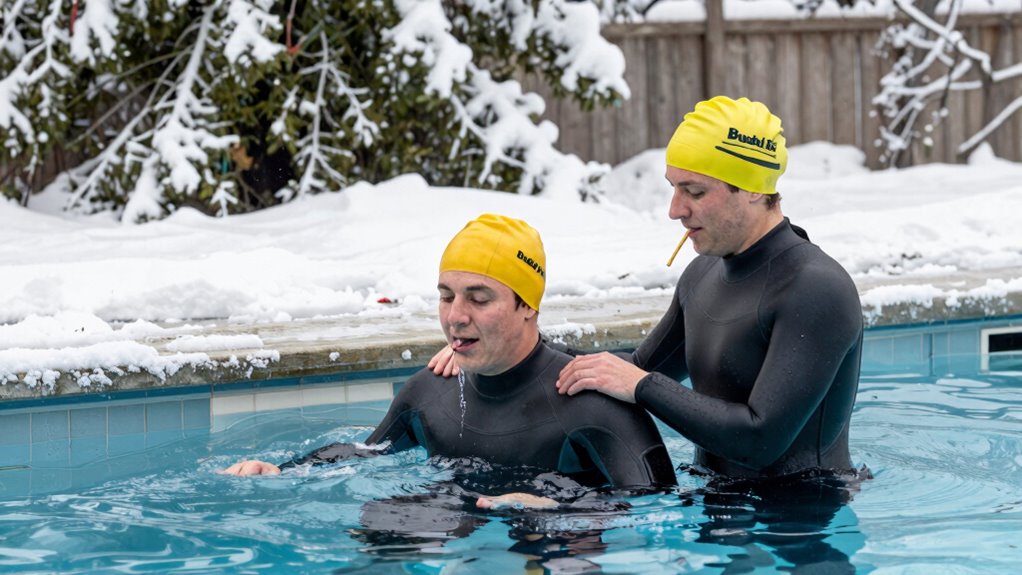

Having a buddy during a cold plunge is vital because it guarantees immediate help if you experience shock, distress, or signs of hypothermia. Your partner can monitor your condition, communicate with emergency services if needed, and assist you in warming up safely. Recognizing symptoms like shivering, confusion, or numbness helps prevent serious issues. Keeping communication clear and establishing a routine with your partner adds extra safety—continue to explore how to stay safe during cold plunges.
Key Takeaways
- Always have a partner during cold plunges to ensure immediate assistance in emergencies.
- The “Buddy Rule” helps monitor signs of hypothermia, distress, or fainting, enabling quick response.
- Communicate clearly using signals or verbal cues to alert your buddy to any issues.
- Recognize early symptoms like shivering, confusion, or numbness and stop the plunge if they occur.
- Keep safety equipment nearby and establish rescue protocols to respond effectively if needed.
What Are the Risks of Cold Water Immersion?

Have you ever wondered what dangers might come with cold water immersion? One major risk is cold shock, which occurs when you suddenly plunge into cold water. This can cause an involuntary gasp, hyperventilation, and increased heart rate, making it harder to breathe or stay calm. Water temperature plays a vital role here; the colder the water, the more intense the shock response. Rapid breathing can lead to panic or even water inhalation if you’re unprepared. Additionally, cold shock can cause blood vessels to constrict, raising blood pressure and stressing your heart. If you’re not acclimated or don’t follow safety measures, these effects can become dangerous quickly. Understanding these risks helps you prepare and avoid potential emergencies during cold water immersion.
Why Is the Buddy Rule Critical for Cold Plunge Safety?
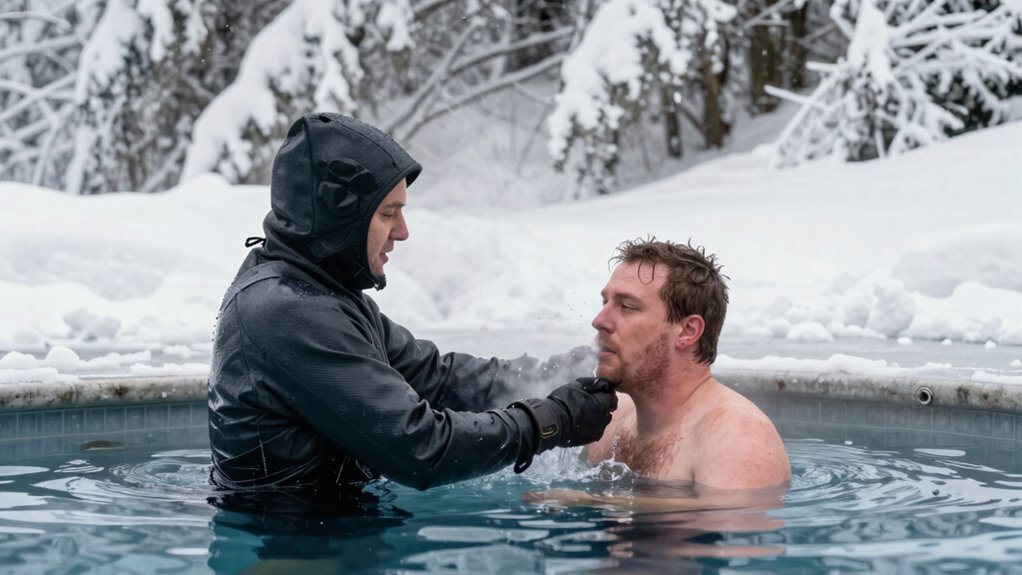
Having a partner with you during a cold plunge is indispensable because it guarantees immediate assistance if something goes wrong. A trustworthy partner ensures you’re not alone in case of fainting, disorientation, or other emergencies. Shared accountability means both of you stay alert and committed to safety protocols, reducing risks. This partnership offers critical psychological support, helping you stay calm and focused. To maximize safety, choose someone experienced or attentive, communicate your limits clearly, and establish a plan beforehand. Remember, a reliable partner can:
- Recognize signs of distress quickly
- Provide prompt aid or call for help
- Keep you accountable to safety rules
Additionally, understanding the importance of projector technology can enhance your overall safety and comfort during such activities by ensuring proper visualization and communication setups. Incorporating first aid knowledge can further prepare you to handle unexpected situations effectively during your plunge. Moreover, being aware of Free Floating practices in water safety can help you maintain better control and awareness during the plunge, reducing the risk of accidents. Developing water safety skills is essential for handling unforeseen circumstances and ensuring a safe experience. Being familiar with hamster health signs can also be beneficial if you’re practicing cold exposure with small animals nearby, ensuring their safety as well.
When Are You at Increased Risk During a Cold Plunge?

You’re at increased risk during a cold plunge if you have underlying health conditions such as heart problems, respiratory issues, or circulation disorders, because cold exposure can exacerbate these issues. Your body’s response to cold triggers rapid changes in blood flow and heart rate, which can be dangerous if your health isn’t stable. Additionally, if you’re not mentally prepared for the shock of cold exposure, you might panic or make poor decisions that increase risk. Cold plunges require focus and calmness, especially when your body is adjusting to the cold. If you’re unprepared mentally or physically, you’re more likely to make mistakes or experience adverse effects. Always assess your health and readiness before taking the plunge to ensure safety. Understanding bodily reactions is essential to recognize signs of distress early and prevent complications. Incorporating local automation features, like reminders or safety alerts, can help monitor your condition during cold immersion. Being aware of bodily responses to cold can help you respond appropriately and avoid dangerous situations. Recognizing individual risk factors can further enhance safety during cold plunges, especially for those with existing health concerns. Being informed about cold tolerance levels can help you determine whether you’re prepared to handle cold exposure safely.
What Precautions Should You Take Before Diving In?
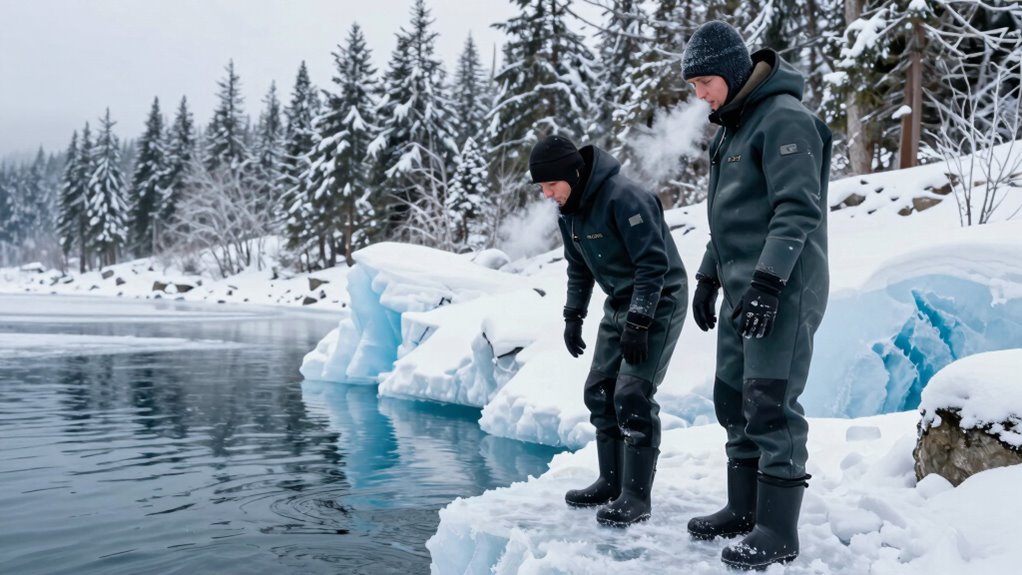
Before stepping into cold water, you should check any medical conditions that could put you at risk. Make sure to acclimate gradually to the cold temperature to prevent shock, and always have safety equipment nearby in case of emergencies. Taking these precautions helps guarantee a safer and more controlled experience. Additionally, understanding cold water safety best practices can further reduce risks during your plunge. Being aware of home safety tips related to water health and equipment maintenance can also help prevent accidents and ensure a safer environment. Remember that having the proper safety gear on hand is crucial for responding quickly if an emergency occurs. Preparing yourself with knowledge of everyday safety strategies can help you stay calm and effective in unexpected situations. Proper electrical safety awareness around water-related activities is essential for preventing potential hazards.
Check Medical Conditions
Since cold plunges can be intense, confirm your medical conditions beforehand to make sure you’re fit for the activity. Check your medical history for conditions like cardiovascular issues, respiratory problems, or circulatory disorders that cold exposure might worsen. Be aware of medication effects, as some drugs can impair your body’s ability to respond to cold stress or mask symptoms of hypothermia. Before plunging, consider these precautions:
- Consult your healthcare provider if you have any chronic health conditions or are on medication.
- Avoid cold exposure if you’ve recently experienced heart problems or respiratory issues.
- Be aware of how medications might affect your body’s cold response or decision-making during immersion.
- Recognize the importance of medical condition awareness in supporting safe cold plunge practices and preventing health emergencies.
Taking these steps helps guarantee your safety and prevents unexpected health complications.
Acclimate Gradually To Cold
To prepare your body for cold plunges, it’s important to gradually acclimate rather than jumping straight in. Cold adaptation happens through gradual exposure, allowing your body to build resilience to cold temperatures over time. Start with short, controlled immersions, gradually increasing the duration as your body adapts. This slow process helps prevent shock and reduces risks like hypothermia. Listen to your body and avoid rushing into cold water too quickly, which can overwhelm your system. Consistent, incremental exposure helps your circulatory system and nervous system adjust more effectively. Remember, patience is key—rushing can undo the benefits of cold adaptation and increase your chances of injury. Taking it slow ensures a safer, more comfortable cold plunge experience.
Have Safety Equipment Ready
Having safety equipment ready before your cold plunge is indispensable to guarantee your safety and respond quickly to any emergencies. Proper emergency equipment ensures you can act swiftly if someone needs help. Develop a solid rescue planning strategy, so everyone knows their role. Keep these items nearby:
- A waterproof timer and thermometer to monitor time and temperature
- A sturdy rope or reaching pole for rescue attempts
- A first aid kit for immediate treatment
Having these tools accessible minimizes risk and enhances preparedness. Always check your equipment before diving, ensuring everything is in working order. Remember, cold water can impair judgment and physical ability, so being ready with the right safety gear can make all the difference in an emergency. Proper rescue planning and emergency equipment are essential for safe cold plunging. Additionally, incorporating water purification systems can help ensure hydration and safety in outdoor environments. To further enhance safety, understanding family photoshoot fails can remind us of the importance of preparation and attentiveness during outdoor activities. Being aware of piercing hygiene and infection prevention can also be beneficial if you or your companions have recent piercings or body modifications that require special care during outdoor adventures.
How Can a Buddy Help During Emergencies?
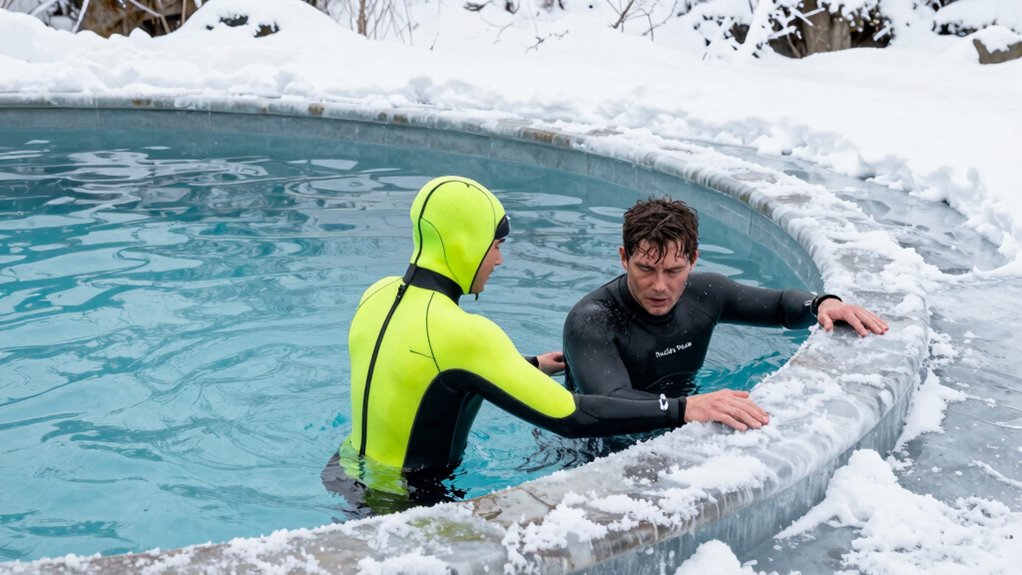
Having a buddy nearby means help is just moments away if something goes wrong. They can activate emergency assistance quickly and keep an eye on your crucial signs to spot issues early. This teamwork can make all the difference in staying safe during a cold plunge. Additionally, understanding how modern tech can aid emergency response ensures you’re better prepared for unexpected situations. Integrating emergency alert systems into your routine can further enhance safety by providing real-time updates and rapid assistance when needed. Incorporating medical alert devices can also ensure help is dispatched immediately if an emergency occurs, especially when combined with connected health technology that monitors vital signs remotely. Recognizing the importance of personal safety measures helps you develop a comprehensive safety plan for cold plunge activities.
Immediate Assistance Activation
When a cold plunge emergency occurs, quick action can make all the difference. Your immediate response should follow established emergency protocols to guarantee safety. Activate rescue techniques swiftly by calling for help, alerting others nearby, and providing clear instructions. Your buddy can:
- Assess the situation calmly and determine if professional rescue is needed
- Call emergency services without delay
- Guide others to assist or clear the area for rescue efforts
Your primary goal is to stabilize the person and prevent further harm. Knowing when and how to activate assistance is vital. Staying calm and acting decisively helps guarantee prompt help arrives, minimizing risks and potential complications during cold plunge emergencies. Proper safety procedures can significantly improve outcomes in these situations.
Monitoring Vital Signs
How can a buddy effectively monitor essential signs during a cold plunge emergency? By paying close attention to crucial sign monitoring, you can spot signs of distress early. Watch for changes in breathing, heart rate, and skin color, which indicate potential hypothermia or shock. Use your knowledge of emergency protocols to check for irregularities quickly. Keep the person calm and comfortable while continuously observing their condition. If vital signs deteriorate, be prepared to activate emergency protocols, such as calling for medical help and providing first aid. Your role is to stay alert, assess the situation accurately, and communicate clearly with emergency responders. Proper monitoring ensures you can act swiftly and effectively, increasing the chances of a safe recovery.
What Are the Signs of Hypothermia, and When Should You Get Help?
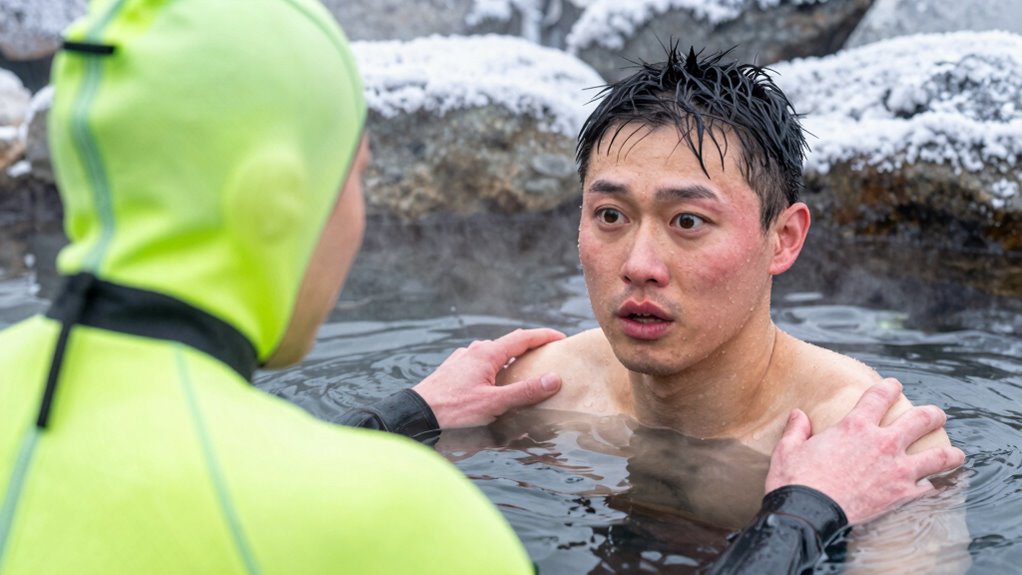
Recognizing the signs of hypothermia is essential if you’re taking a cold plunge, as early intervention can prevent serious health risks. Signs of hypothermia include shivering, confusion, and slow or slurred speech. You might also notice clumsiness, fatigue, or numbness in extremities. Recognizing symptoms early allows you to take action before the condition worsens. If you observe any of these symptoms in yourself or your partner, it’s time to get help immediately. Be alert for:
- Persistent shivering or exhaustion
- Difficulty speaking or confusion
- Drowsiness or lack of coordination
If these signs appear, stop the plunge, warm the affected person gradually, and seek medical assistance right away. Prompt response can be lifesaving in hypothermia cases.
How Can You Communicate Effectively With Your Cold Plunge Partner?
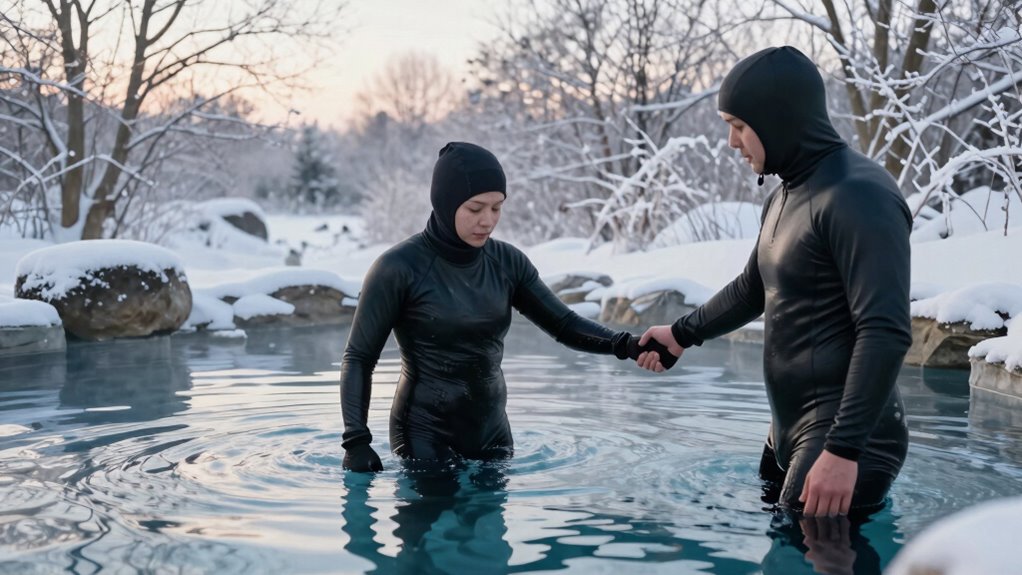
Effective communication with your cold plunge partner can make all the difference in ensuring safety and comfort. Use clear communication strategies, like verbal cues or hand signals, to express how you’re feeling or if you need help. Be proactive in sharing your experience and listening carefully to your partner’s signals. If a disagreement or misunderstanding arises, apply conflict resolution techniques, such as calmly discussing concerns and finding common ground. Avoid assumptions and stay attentive to each other’s responses. Consistent, honest communication helps prevent accidents and ensures both of you are comfortable throughout the plunge. Remember, open dialogue fosters trust and safety, making the experience more effective and enjoyable for both partners.
How to Build a Safe Cold Plunge Routine With a Friend

Building a safe cold plunge routine with a friend starts with planning and mutual understanding. Establish clear safety protocols before entering cold water, such as monitoring each other’s responses and agreeing on time limits. To guarantee safety, consider these points:
Plan and agree on safety measures with your friend before cold plunging.
- Always check water temperature and your comfort levels beforehand
- Agree on signals or cues for stopping if someone feels unwell
- Stay within each other’s sight during the plunge to respond quickly if needed
Frequently Asked Questions
Can Cold Plunges Be Safely Combined With Other Activities?
You can safely combine cold plunges with other activities if you take precautions. Always wear appropriate safety gear, like waterproof gear and a timer, to monitor your time. Avoid activities that could cause injury or impair your judgment, and make sure someone has emergency contacts in case you need help. Staying aware of your limits guarantees you enjoy the benefits without risking your safety during combined activities.
How Long Should I Stay in Cold Water for Safety?
For safety, limit your cold exposure duration to 1-3 minutes, especially if you’re new to cold plunges. Pay attention to your body’s signals and don’t push beyond your comfort zone. Follow safety guidelines to prevent hypothermia or shock. It’s wise to start with shorter sessions and gradually increase as your body adapts. Always listen to your body and consider having a buddy nearby for added safety.
What Should I Do if My Buddy Loses Consciousness?
Imagine your buddy as a fragile ship caught in a storm; you must act swiftly. If they lose consciousness, perform a buddy rescue by gently supporting their head and keeping their airway open. Call for emergency help immediately. Manage unconsciousness by carefully removing them from the water and placing them in a safe position. Stay with them, monitor their breathing, and be prepared to provide CPR if needed.
Are There Age Restrictions for Cold Water Immersion?
Age restrictions for cold water immersion typically depend on individual health and local regulations, but seniors should exercise extra caution for safety reasons. If you’re considering cold plunges, consult with a healthcare professional first, especially if you’re over 60 or have underlying health issues. Senior safety is vital because older adults may have reduced circulation or heart conditions that increase risk. Always prioritize safety and follow guidelines suited for your age.
How Do I Choose the Right Cold Plunge Location?
Think of choosing your cold plunge location as finding a safe harbor. You want a spot with stable environmental factors like clean water, a flat surface, and easy access. Avoid areas with strong currents, debris, or unpredictable weather. Pick a place where you can monitor your comfort and safety easily, ensuring the environment supports a controlled, enjoyable experience without surprises. Your safe harbor is key to a successful cold plunge.
Conclusion
Remember, diving into cold water without a buddy is like risking a trip to the moon solo—dangerous and reckless. Always follow the buddy rule and stay vigilant. When you look out for each other, you turn an extreme activity into a safe adventure that can boost your health, not endanger it. Make safety your top priority, and your cold plunge will be a revitalizing, exhilarating experience—without the risk of turning your day upside down.