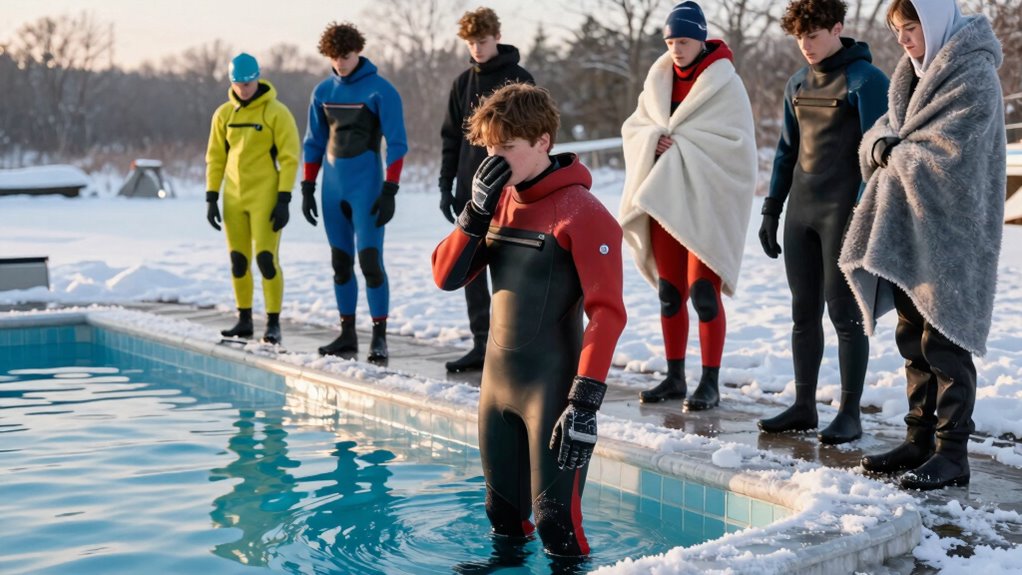

When you try cold plunges, especially as a teen, you need to take extra caution to avoid hypothermia and other health issues. Always start with shorter dips, never go alone, and listen to how your body responds. Watch for warning signs like shivering or dizziness, and exit immediately if you feel uncomfortable. Using proper gear and setting personal limits can make cold plunges safer. If you want to stay protected, keep these safety tips in mind.
Get ready for Prime Big Deal Days — try Prime free
Exclusive member deals on October 6–7, plus fast free delivery. Cancel anytime.
As an affiliate, we earn on qualifying purchases.
Key Takeaways
- Teens should monitor for warning signs like shivering, dizziness, or confusion and exit immediately if symptoms appear.
- Always cold plunge with a buddy and avoid solo immersion to ensure quick assistance if needed.
- Start with short exposures and gradually increase time to build tolerance safely.
- Use appropriate gear, such as wetsuits, to help prevent hypothermia during cold water immersion.
- Prioritize safety over peer pressure, set personal limits, and communicate boundaries clearly to prevent risky behavior.

Cold plunges can be invigorating and beneficial, but it’s essential for teens to understand the safety risks involved. One of the most serious concerns is hypothermia risks, which occur when your body temperature drops dangerously low after prolonged exposure to cold water. As a teen, you might feel excited to try cold plunges with friends, especially if peer influence encourages you to join in. While peer support can be motivating, it can also push you to ignore warning signs or rush into cold exposure without proper preparation. This combination of peer pressure and eagerness can make you underestimate the dangers, increasing your risk of hypothermia.
Understanding how hypothermia develops is critical. When you immerse yourself in cold water, your body works overtime to maintain core temperature. If you’re in the water too long or the water is excessively cold, your body can’t keep up. Symptoms like shivering, dizziness, confusion, and fatigue signal that hypothermia may be setting in. Ignoring these signs can be dangerous, especially since teens often feel invincible or may dismiss discomfort as temporary. It’s essential to listen to your body and exit the water immediately if you start feeling cold or unwell. Additionally, being aware of the body’s response to cold can help you recognize early warning signs and respond appropriately.
Listen to your body and exit the cold water immediately if you start feeling unwell.
Peer influence can make cold plunges seem like a fun challenge, but it’s important to prioritize safety over peer approval. Friends might encourage you to stay longer or go in colder water than you’re comfortable with, but you should always set your own limits. Never feel pressured to ignore your body’s signals or to participate if you’re unsure. Establishing clear boundaries and communicating openly with friends about what feels safe for you can prevent risky situations. Remember, just because others are doing it doesn’t mean it’s safe for everyone.
Before you try a cold plunge, educate yourself on proper safety measures. Start with shorter exposure times, gradually increase as you become accustomed to the cold, and never go in alone. Always have a buddy nearby who can help if you start to feel cold or unwell. Wearing appropriate gear, like a wetsuit if needed, can also help reduce hypothermia risks. Ultimately, it’s your responsibility to weigh the benefits against the dangers and to make informed decisions. Cold plunges can be enjoyable and even healthful when done correctly, but ignoring safety risks, especially hypothermia, can lead to serious consequences. Stay aware, listen to your body, and don’t let peer influence override your judgment.
As an affiliate, we earn on qualifying purchases.
Frequently Asked Questions
Are There Specific Medical Conditions That Prevent Teens From Cold Plunging?
You should be aware that some medical restrictions can prevent teens from cold plunging. If your teen has underlying health issues like heart conditions, asthma, or circulation problems, they might be at higher risk. It’s crucial to conduct thorough health screenings and consult a healthcare professional before allowing cold plunges. These precautions help ensure safety, especially for teens with medical restrictions, so they can enjoy the benefits without unnecessary risks.
How Long Should Teens Safely Stay in a Cold Plunge?
You should limit teens’ time in a cold plunge to around 1-3 minutes to prevent cold shock and adverse muscle responses. Staying longer increases risk of hypothermia and stress on their cardiovascular system. Always watch for signs of discomfort or numbness, and make certain they listen to their body. Starting with shorter durations helps them build tolerance safely, but it’s essential to prioritize safety and consult a healthcare professional if unsure.
What Are Signs of Hypothermia in Teens During Cold Plunges?
They say, “better safe than sorry,” so watch for signs of hypothermia during cold plunge risks. If your teen shivers uncontrollably, feels confused, or becomes sluggish, these are warning signs. Look for pale or blue skin, numbness, or difficulty speaking. If these symptoms appear, get them out of the cold immediately and seek medical help. Staying alert guarantees safety and prevents serious health issues during cold plunges.
Can Cold Plunges Affect a Teen’s Mental Health?
Cold plunges can influence a teen’s mental health by affecting their mood and overall well-being. Cold therapy effects may boost mood temporarily, but prolonged or intense exposure might cause stress or anxiety. If you notice mood swings or increased anxiety after cold plunges, it’s essential to observe their reactions and consult a healthcare professional. Always guarantee safety measures are in place to prevent negative mental health impacts from cold therapy.
Should Teens Wear Special Clothing or Gear During Cold Plunges?
Yes, teens should wear protective gear and appropriate clothing during cold plunges to guarantee clothing safety. Wearing thermal or wetsuits helps insulate their body, reducing the risk of hypothermia and cold shock. Always choose gear designed for cold water exposure, and avoid cotton clothing that traps moisture. Proper gear not only keeps teens safe but also makes the experience more comfortable, encouraging safe and enjoyable cold plunging.
As an affiliate, we earn on qualifying purchases.
Conclusion
Remember, while cold plunges can boost your mood and recovery, safety is key—especially for teens. Did you know that teens are 30% more likely to experience cold shock if they stay in water below 59°F for too long? Always listen to your body, start slowly, and never plunge alone. Staying cautious guarantees you enjoy the benefits safely and make cold plunges a positive part of your routine.
As an affiliate, we earn on qualifying purchases.
hypothermia warning signs monitor
As an affiliate, we earn on qualifying purchases.
As an affiliate, we earn on qualifying purchases.
NFL season / tailgating Picks
team gear
As an affiliate, we earn on qualifying purchases.