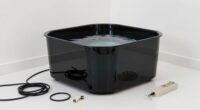
Before each cold plunge, check the water temperature with a reliable thermometer to guarantee it’s between 50-59°F (10-15°C). Inspect the water for clarity, cleanliness, and any signs of mold or debris. Confirm your safety equipment, like non-slip mats and emergency access, is in place and functioning. Make sure you’re physically ready—no open wounds or illness—and practice controlled breathing to handle the shock. Want to maximize safety and benefits? Keep going for essential tips.
Key Takeaways
- Verify water temperature, cleanliness, and proper filtration before each session.
- Ensure safety equipment, non-slip surfaces, and emergency procedures are in place.
- Assess personal health, skin condition, and readiness for cold exposure.
- Confirm ventilation and air circulation to prevent humidity issues.
- Prepare timing devices and mental focus techniques to manage immersion duration and discomfort.
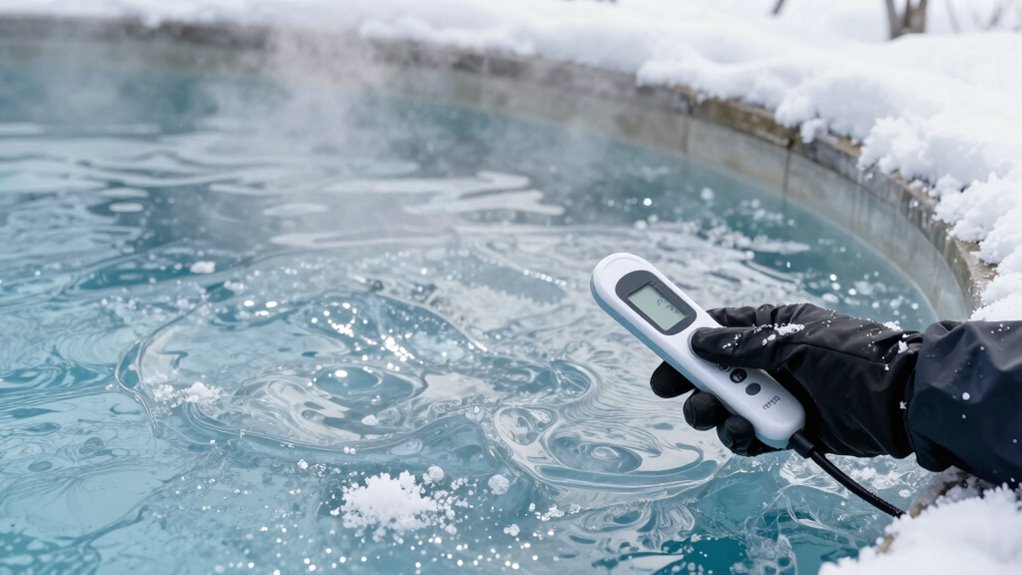
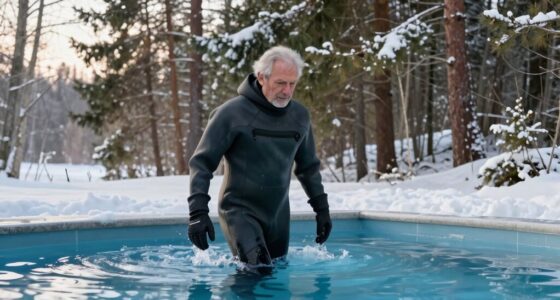
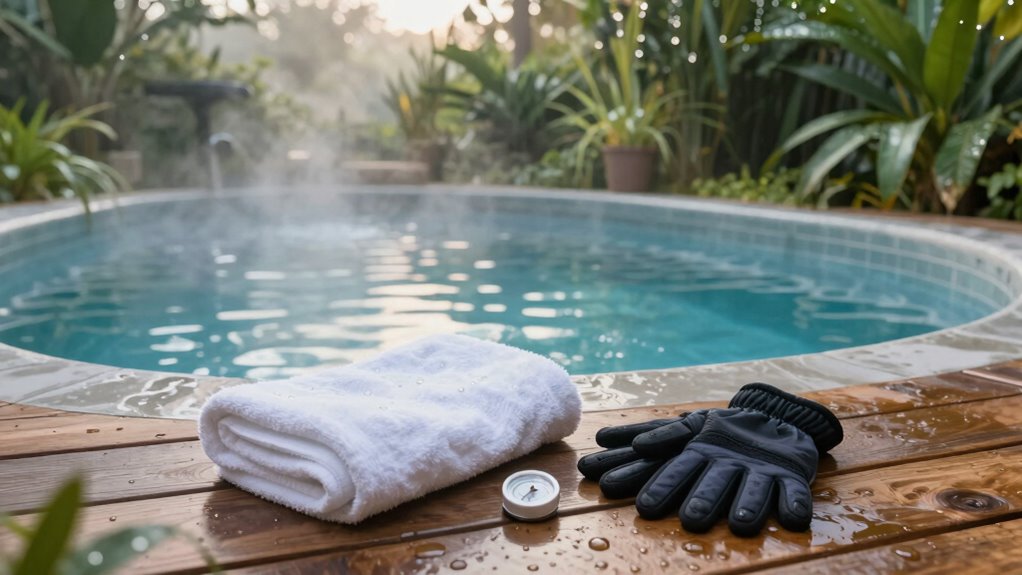
Before every cold plunge session, it’s essential to guarantee everything is safe and ready to go. You want to make sure the environment is appropriate, your equipment is functioning correctly, and you’re mentally prepared. Start by checking the temperature of the water. It should be cold but not dangerously so—around 50 to 59°F (10-15°C) is typical for most cold exposure benefits. Use a reliable thermometer to verify the temperature accurately. If it’s too cold, you risk hypothermia; if it’s not cold enough, you may not experience the benefits you’re seeking. Next, inspect the water for cleanliness and clarity. Contaminated water can cause infections or skin irritations, so ensure it’s properly filtered and sanitized. If you’re using a tub or plunge pool, check for any signs of mold, algae, or debris. Regular water quality checks can help prevent potential health issues and ensure a safe experience. Additionally, consider the air circulation in your environment to prevent humidity buildup and mold growth around your setup. Improving ventilation can further support a healthier space for cold exposure. Proper water circulation also helps maintain consistent water temperature and prevents stagnation, contributing to a safer experience. Once the environment is confirmed safe, turn your attention inward. Your breathing techniques are crucial for managing the shock of cold exposure. Practice controlled, deep breaths—inhale slowly through your nose, filling your lungs, then exhale steadily through your mouth. This helps regulate your heart rate and minimizes the initial panic response. Proper breathing not only enhances your comfort but also amplifies the cold exposure benefits, such as increased circulation and mental clarity. Before stepping in, assess your physical condition. Are you feeling well? Do you have any open wounds or skin conditions? If so, it might be best to delay your session. Remember, cold plunges are meant to stimulate your body positively, not cause harm. Additionally, understanding your body’s response to cold can help you tailor your approach for safer, more effective sessions. Check your safety setup. Make sure you have a non-slip mat or surface to prevent falls when entering or exiting the water. Keep a towel or warm clothing nearby for after your session, and have a timer ready to track how long you stay submerged—initially, limit yourself to one to three minutes. If you have any underlying health conditions, consult your doctor before proceeding. Also, inform someone about your plans, especially if you’re doing cold exposure alone. This way, help is available if needed. As you prepare to immerse yourself, remind yourself of the cold exposure benefits—improved immunity, reduced inflammation, and mental resilience. With everything checked and in place, you’re set for a safe, effective cold plunge session that maximizes benefits while minimizing risks.
digital water thermometer for plunge pools
As an affiliate, we earn on qualifying purchases.
As an affiliate, we earn on qualifying purchases.
Frequently Asked Questions
How Long Should Each Cold Plunge Last?
You should aim for a cold plunge lasting between 2 to 5 minutes. This duration maximizes hydrotherapy benefits like improved circulation and reduced inflammation without triggering excessive cold shock response. Listening to your body is key—if you start feeling numb or dizzy, it’s time to exit. Gradually increase your time as your tolerance builds, ensuring you enjoy the benefits while staying safe during each session.
What Temperature Is Ideal for Cold Plunges?
You should aim for a cold plunge temperature between 50°F and 59°F to maximize hydrotherapy benefits and safely trigger the cold shock response. Many believe colder is better, but extreme temperatures can be risky. The cold shock response enhances circulation and recovery, so sticking within this range helps you gain these benefits without overwhelming your body. Always listen to your body and consult a professional if unsure.
Should I Shower Before or After a Cold Plunge?
You should shower before a cold plunge to guarantee proper skin preparation and remove oils or dirt, allowing better contact with cold water. This also helps you mentally prepare, making the experience more comfortable. Afterward, a quick rinse can refresh your skin. Always focus on mental readiness beforehand, so you’re calm and prepared. A clean, relaxed mindset enhances the benefits and safety of your cold plunge sessions.
Can Cold Plunges Help With Muscle Recovery?
Sure, cold plunges help with muscle recovery—who would’ve guessed? They reduce inflammation and muscle soreness, giving your body a much-needed chill pill after intense workouts. By constricting blood vessels, you flush out inflammatory agents, then boost circulation when you warm back up. So, if you’re tired of feeling like a stiff board, a quick plunge might just be your secret weapon against post-exercise pain.
How Often Should I Do Cold Plunges Weekly?
You should do cold plunges about two to three times weekly, allowing your body to adapt to thermal shock while building mental resilience. Regular exposure boosts your immune response and helps manage stress. Listen to your body and avoid overdoing it, as too frequent plunges can lead to fatigue or negative effects. Consistency is key, but make sure you balance cold exposure with proper recovery for maximum benefits.
As an affiliate, we earn on qualifying purchases.
Conclusion
Just like a seasoned sailor checks the weather before setting sail, ensuring your cold plunge is safe and prepared keeps you steady and confident. Remember, every session is a new voyage—pay attention to the details, listen to your body, and respect the process. By doing so, you’ll navigate each plunge with the wisdom of an old mariner, embracing the chill with assurance and grace, ready to face whatever the next wave brings.
water quality test strips for pools
As an affiliate, we earn on qualifying purchases.
As an affiliate, we earn on qualifying purchases.
As an affiliate, we earn on qualifying purchases.