Your chiller relies on the right pump to maintain the correct flow rate, which is vital for safe, efficient, and reliable cooling. If the flow is too low or too high, it can cause system inefficiency, equipment stress, or failure. Proper pump size and ongoing flow management ensure consistent performance and prevent costly breakdowns. Keep understanding why maintaining the correct flow matters, so your system can run smoothly and efficiently at all times.
Key Takeaways
- Proper pump sizing ensures the chiller receives the correct flow rate for efficient cooling performance.
- Inadequate flow causes pressure fluctuations, system inefficiency, and potential equipment damage.
- Accurate flow measurement and regular maintenance prevent flow-related issues and extend equipment lifespan.
- The right pump capacity maintains system stability, avoids cavitation, and ensures energy-efficient operation.
- Continuous monitoring and calibration help sustain optimal flow, preventing system failures and safety hazards.
Why Correct Flow Rate Is Critical for Your Chiller’s Safety and Efficiency
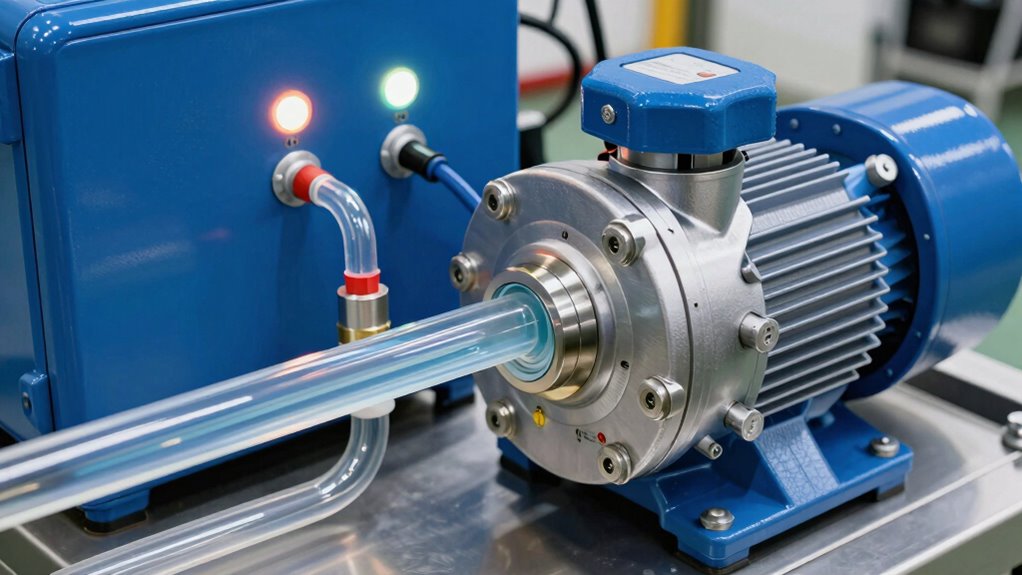
Ensuring the correct flow rate is essential because an improper flow can compromise your chiller’s safety and performance. Consistent flow guarantees your system operates smoothly, preventing sudden pressure changes or overheating. When flow is inconsistent, your pump faces unnecessary stress, which can reduce its durability over time. Maintaining the right flow rate protects your pump from premature wear and tear, extending its lifespan. It also helps keep the chiller running efficiently, avoiding energy waste and potential equipment failure. If the flow is too high or too low, it can lead to system instability, risking safety hazards. Additionally, proper flow management is vital for optimizing system performance and preventing costly repairs. Properly monitoring flow rates ensures your system remains balanced and responsive under varying operational conditions. Recognizing the importance of system calibration can further enhance your equipment’s reliability and efficiency, reducing downtime and maintenance costs. Furthermore, understanding fluid dynamics principles can help in diagnosing flow-related issues more effectively. Consequently, flow rate accuracy is critical for maintaining system reliability and efficiency, safeguarding both your equipment and overall system integrity.
How to Measure and Verify the Flow Rate in Your Chiller System
To accurately measure and verify the flow rate in your chiller system, you need to use proper instruments and follow a systematic approach. Start with flow measurement devices such as flow meters or differential pressure gauges to obtain real-time data. Confirm the system is operating under normal conditions before recording readings. Next, perform pump calibration by comparing the measured flow rate against the pump’s specifications, making adjustments if necessary. Consistent calibration helps confirm that your pump delivers the correct flow, preventing issues related to under- or over-pumping. Regularly monitor system performance to detect any deviations early and ensure optimal operation. Conducting flow rate testing with calibrated equipment ensures accuracy and reliability. Proper pump calibration is essential to maintain consistent flow and avoid system inefficiencies. Additionally, understanding the flow rate rule helps optimize energy consumption and prolong equipment lifespan. Analyzing system behavior can help identify underlying causes of flow irregularities and improve overall efficiency. Document your measurements and calibration results regularly to maintain system efficiency. Accurate flow measurement combined with proper pump calibration ensures your chiller operates smoothly, saving energy and extending equipment lifespan.
Signs Your Chiller Might Be Suffering From Flow Rate Problems
If your chiller isn’t maintaining proper temperature or pressure levels, it could be a sign of flow rate problems. You might notice inconsistent cooling performance or unexpected system shutdowns. Poor pump lubrication can cause increased wear and reduce flow efficiency, contributing to these issues. Additionally, if your flow rate calibration is off, the system may be over- or under-pumping, leading to inadequate heat transfer. Listen for unusual noises from the pump, such as squealing or grinding, which indicate lubrication problems. Keep an eye on pressure gauges; fluctuations can signal flow disruptions. Regularly checking pump lubrication and verifying flow rate calibration are key to avoiding flow rate-related troubles. Ensuring proper filter maintenance helps prevent clogs that can disrupt flow and damage components. Water flow management plays a crucial role in maintaining overall system performance. For optimal operation, understanding the flow rate rule is essential to prevent system inefficiencies, as proper pump operation is critical for consistent and reliable cooling.
How Proper Pump Selection Keeps Your Flow at the Right Level
Choosing the right pump guarantees your flow stays consistent and efficient. When you select a pump with proper capacity and flow, it prevents over or under-pressurization. Correct sizing and high efficiency keep your system running smoothly and save energy. Proper pump selection also involves understanding bank swiftifs codes, which ensures secure and accurate transactions within your system. Additionally, considering the security zone info can help optimize system safety and compliance. Moreover, understanding flow rate principles is essential for maintaining optimal performance and avoiding system issues. Familiarity with pump performance characteristics can further enhance your ability to select the most suitable pump for your application.
Pump Capacity and Flow
Selecting the right pump capacity is essential for maintaining the correct flow rate in your chiller system. Proper pump selection guarantees smooth flow dynamics, preventing issues like pressure drops or inefficient cooling. When choosing a pump, consider the system’s required flow rate and head pressure to avoid over- or under-pumping. An undersized pump can’t deliver enough flow, risking inadequate cooling, while an oversized one wastes energy. To help visualize, here’s a quick guide:
| Pump Size | Flow Rate (GPM) | Power Consumption (kW) |
|---|---|---|
| Small | 20 | 0.5 |
| Medium | 50 | 1.2 |
| Large | 100 | 2.5 |
| Extra Large | 200 | 4.8 |
| Extra Large | 300 | 7.0 |
Choosing the correct capacity optimizes flow and keeps your system efficient. Proper pump selection is also crucial for flow rate regulation, ensuring the system operates reliably and effectively. Additionally, understanding the style differences such as pomade, putty, and styling cream can help you achieve the desired look and maintain proper hair health. Furthermore, it’s important to regularly monitor system performance to catch any issues early and ensure your pump continues to operate at its optimal capacity. Regular maintenance and system diagnostics can help prevent costly failures and extend the lifespan of your components.
Correct Sizing and Efficiency
Proper pump sizing is essential for maintaining ideal flow and ensuring your chiller system operates efficiently. Accurate flow measurement helps you select the right pump, preventing under- or over-pumping that can disrupt system performance. When choosing a pump, consider your flow requirements carefully; too large a pump wastes energy, while too small can cause inadequate cooling. Proper pump selection ensures you meet the system’s flow demands without excess energy consumption, boosting efficiency. Consistent flow measurement allows you to verify the pump’s performance and make adjustments if needed. By optimizing pump size and maintaining precise flow measurement, you keep your chiller running smoothly, reduce operational costs, and extend equipment lifespan. Correct sizing and efficiency are key to reliable, energy-efficient cooling performance.
Strategies to Maintain an Optimal Flow Rate Over Time
Maintaining a superior flow rate over time requires proactive monitoring and adjustments to guarantee your chiller pumps operate efficiently. Implement regular flow control checks to identify any deviations early. Consistent pump maintenance is essential—clean filters, inspect valves, and verify pressure levels to prevent blockages or wear that reduce flow. Use flow meters to track real-time data, allowing you to spot trends and adjust settings promptly. Adjust pump speeds or valve positions as needed to maintain ideal flow, preventing under- or over-pumping. Establish a routine maintenance schedule and document performance metrics, so you can identify potential issues before they impact system efficiency. Staying vigilant with these strategies ensures your chiller operates at peak performance, conserving energy and extending equipment lifespan.
Common Causes of Flow Rate Issues and How to Fix Them
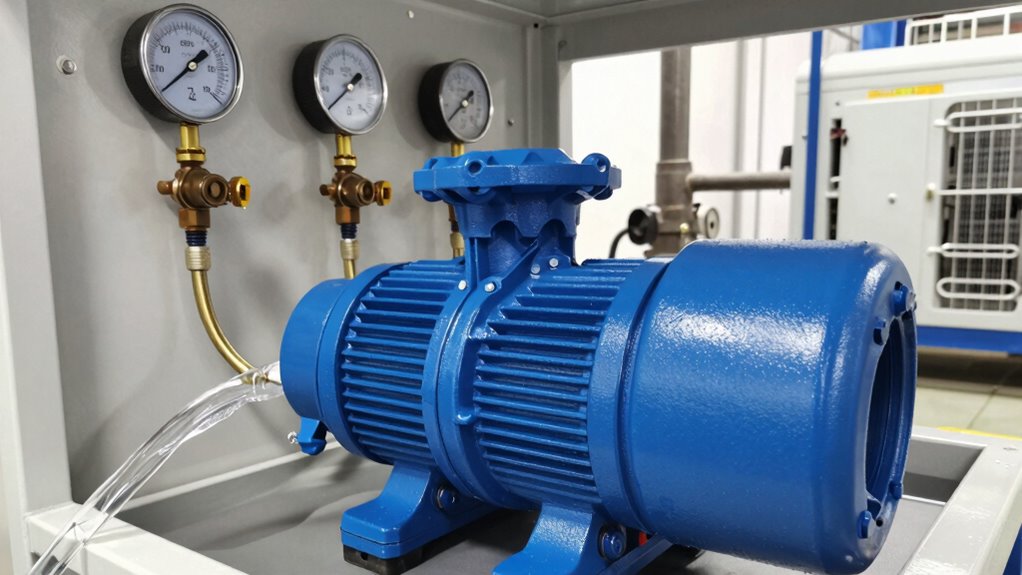
Flow rate issues often stem from common problems that disrupt the smooth operation of your chiller pumps. One cause is pump wear, which reduces efficiency and flow. Regularly inspecting and replacing worn components can restore proper flow. Another issue is system bypass, where excess bypassing around the pump decreases flow to the chiller, causing underperformance. Ensuring the bypass valve is correctly set helps maintain ideal flow. Lastly, air entrainment or leaks in the piping can create flow restrictions, hampering circulation. To fix these problems:
Common flow issues include pump wear, improper bypass settings, and piping leaks.
- Check for signs of pump wear and replace worn parts promptly.
- Adjust or close the system bypass valve to prevent unnecessary flow bypass.
- Inspect piping for leaks or air pockets and eliminate them. Addressing these causes keeps your flow rate steady and your chiller operating efficiently.
Troubleshooting Flow Rate Problems Before They Cause Damage
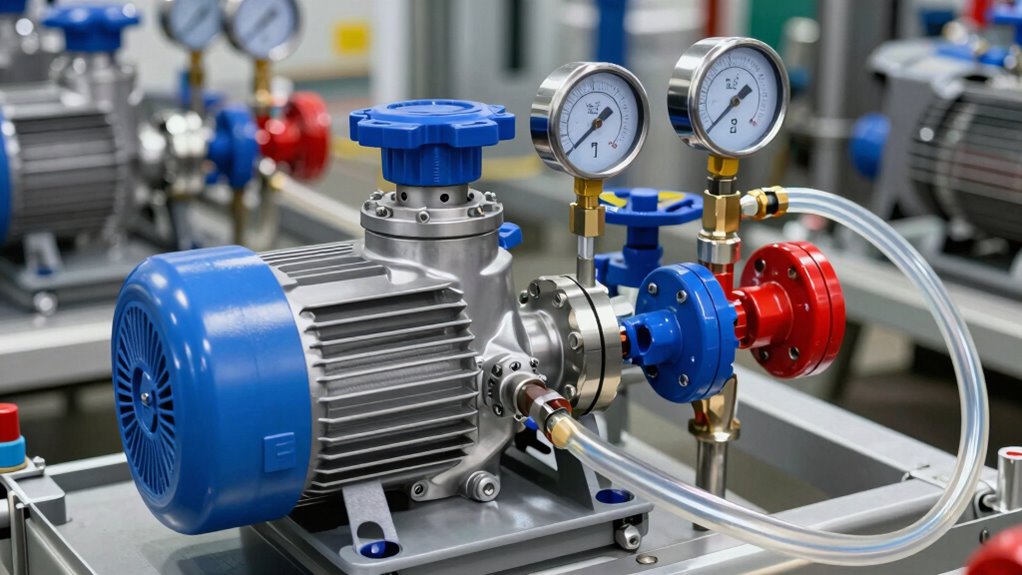
Since flow rate problems can quickly lead to equipment damage and reduced efficiency, it’s critical to identify issues early before they escalate. Start by checking flow sensors, which provide real-time data on the system’s flow. If readings are inconsistent or outside the expected range, it indicates a problem. Also, monitor pressure gauges at strategic points; sudden drops or spikes can signal blockages, leaks, or pump issues. Regularly inspecting these tools helps you catch problems before they cause damage. If flow sensors or pressure gauges show abnormal readings, investigate further, such as inspecting for clogged filters or faulty valves. Addressing these issues promptly prevents equipment stress and prolongs system life, ensuring your chiller runs smoothly and efficiently.
Choosing the Best Pump for Reliable and Efficient Chiller Operation

Choosing the right pump is fundamental to guaranteeing your chiller system operates reliably and efficiently. You need to contemplate pump types, flow measurement, and your system’s specific demands. First, select the appropriate pump type—whether centrifugal, axial, or reciprocating—based on flow rate and pressure needs. Second, ensure accurate flow measurement to maintain optimal flow rates, preventing issues like cavitation or inadequate cooling. Third, match the pump’s capacity to your chiller’s requirements, avoiding undersized or oversized options that waste energy or cause operational strain. Proper pump selection involves evaluating flow characteristics, compatibility with your control system, and ease of maintenance. Making informed decisions here guarantees reliable performance and longevity for your chiller system.
Frequently Asked Questions
What Are the Common Mistakes in Calculating the Correct Flow Rate?
You often make mistakes in calculating the correct flow rate by neglecting accurate flow measurement and oversimplifying pump sizing. You might rely on rough estimates instead of precise data, leading to undersized or oversized pumps. This causes inefficiencies and potential system failures. Always guarantee you measure flow accurately and select pumps based on detailed calculations, considering system demands, to maintain ideal performance and avoid costly errors.
How Does Flow Rate Impact Chiller Lifespan and Maintenance Costs?
Your flow rate directly impacts your chiller’s lifespan and maintenance costs by affecting cooling efficiency and energy consumption. If the flow rate is too low, your chiller struggles to dissipate heat, leading to increased wear and potential damage, which shortens its life. Conversely, too high a flow rate wastes energy and raises operational costs. Maintaining ideal flow ensures your chiller runs smoothly, saving you money and extending its service life.
Can Variable Speed Pumps Improve Flow Rate Consistency?
Yes, variable speed pumps can improve flow rate consistency, enhancing pump efficiency and system optimization. By adjusting their speed to match system demands, you prevent over- or under-pumping, which reduces energy waste and maintains steady flow. This precise control minimizes stress on your chiller, prolongs equipment lifespan, and lowers maintenance costs. So, investing in variable speed pumps helps optimize your system’s performance while saving energy and reducing operational expenses.
What Are the Environmental Factors Influencing Flow Rate Stability?
Climate variations can cause fluctuations in temperature and humidity, impacting flow rate stability. For example, a plant in a region with high rainfall might experience inconsistent water supply, affecting pump performance. Water quality also plays a role; sediment or mineral buildup can clog pipes and reduce flow. You need to oversee these environmental factors closely, adjusting your systems to maintain consistent flow rates and ensure your chiller operates efficiently.
How Often Should Flow Rate Be Re-Evaluated During System Operation?
You should re-evaluate your flow rate regularly during system operation, ideally through ongoing system monitoring. This helps identify any deviations early, ensuring your chiller runs efficiently. Incorporate these assessments into your maintenance scheduling to prevent issues like reduced performance or equipment damage. Frequent checks, especially after maintenance or environmental changes, keep your system optimized and reliable, minimizing downtime and maximizing energy efficiency.
Conclusion
So, next time your chiller starts acting up, remember: it’s not magic, it’s your pump’s fault. Without the right flow rate, your system’s just a fancy paperweight. Don’t be that person who ignores the signs or guesses their way through repairs. Keep the flow right, and your chiller will thank you with reliable, efficient performance—because, let’s face it, nobody wants a cooling system that’s on strike. Stay vigilant and keep that pump in check!