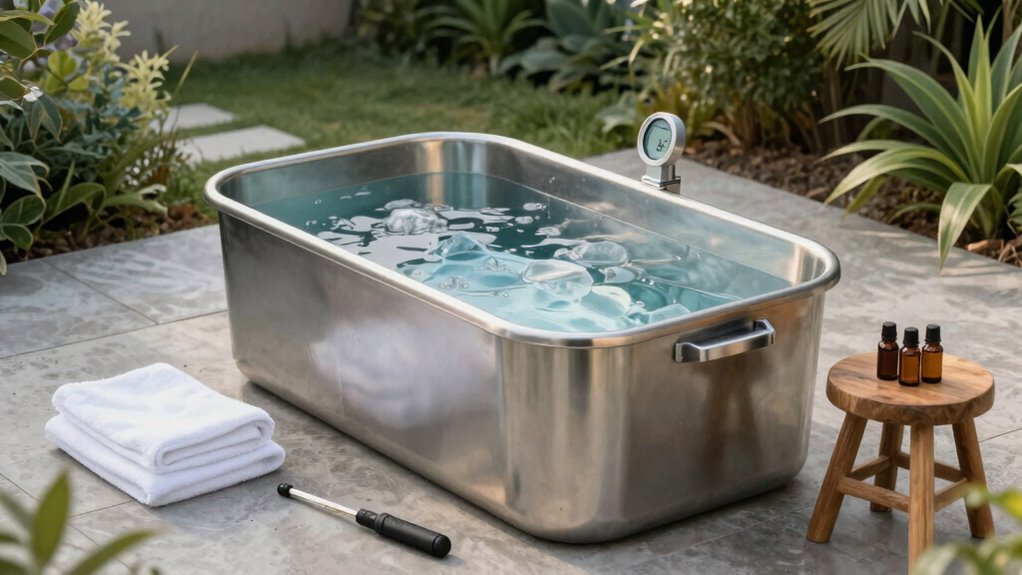

When setting up your cold plunge, guarantee you keep water temperature between 50°F and 59°F and use a reliable thermometer for accuracy. Check that your materials are safe, free of sharp edges, and the surrounding area is slip-resistant. Prioritize water quality by regular testing and proper treatment, and make sure all electrical components are waterproofed and grounded. Don’t forget safety gear, limit plunge durations at first, and stay hydrated. For a seamless experience and peace of mind, explore these tips further.

Get home appliances delivered free with Prime
- Fast, free delivery on millions of items
- Prime Video, Amazon Music and more included
- Member-only deals all year
Key Takeaways
- Ensure water temperature is precisely regulated between 50°F and 59°F with reliable thermometers and proper insulation.
- Verify all materials are durable, free of sharp edges, and the area has slip-resistant surfaces for safety.
- Use waterproof, grounded wiring for pumps and heaters, and turn off power during filling and draining to prevent electrical hazards.
- Regularly monitor and maintain water quality to prevent bacterial growth and ensure hygiene.
- Keep safety gear nearby, limit initial plunge times, and never plunge alone for emergency preparedness.
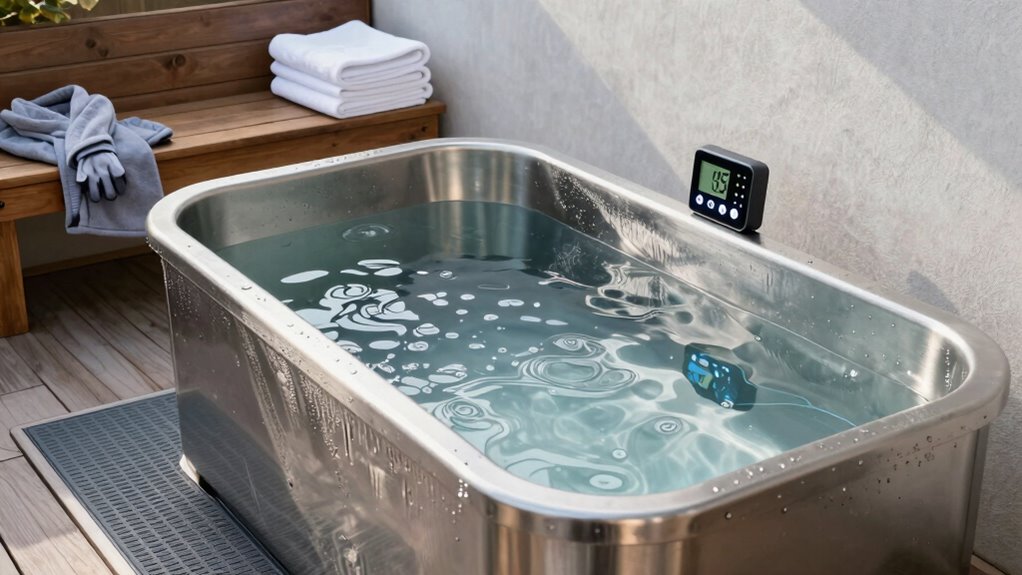
Setting up your cold plunge can feel overwhelming, but with a clear checklist, the process becomes straightforward. The first step is guaranteeing proper temperature regulation. You want to maintain a consistent cold temperature that suits your needs, usually between 50°F and 59°F (10°C – 15°C). To do this effectively, you’ll need a reliable thermometer that can monitor water temperature precisely. This helps prevent the water from getting too cold or too warm, which could diminish benefits or pose risks. Investing in a good insulation system around your plunge will also help maintain stable temperatures, reducing the workload on your cooling or heating equipment. Remember, fluctuating temperatures can be uncomfortable or unsafe, so regular checks are essential.
Next, prioritize safety precautions to protect yourself during your cold plunge routine. Before filling your tub, verify that the materials are durable and free of sharp edges or weak spots that could cause injury. Make sure the area around the plunge is slip-resistant, especially when water spills or ice forms on the surface. Keep safety gear nearby—like a thermometer, gloves, and perhaps a waterproof timer—to monitor your session. Establish clear guidelines for how long you should stay in the water, typically starting with shorter durations like one to three minutes, then gradually increasing as your body adapts. Never plunge alone; having someone nearby can be indispensable in case of an emergency, such as dizziness or hypothermia symptoms. Monitoring water quality is also crucial to prevent bacterial growth and ensure a safe experience. Additionally, understanding water treatment methods can help you maintain hygiene and water clarity effectively. Properly managing water quality is essential for a safe and hygienic cold plunge experience, especially over prolonged use. Regularly checking the water chemistry can further help maintain an optimal environment for your plunge.
Another essential safety measure involves electrical connections. Ensure all wiring for your cooling system is grounded and waterproofed to prevent electrical shocks. If you’re using a pump or heater, double-check that these devices are compatible with water use and adhere to safety standards. It’s also wise to keep the power off when you’re filling or draining the plunge to avoid accidents. Additionally, keep an eye on your health. People with cardiovascular issues or certain medical conditions should consult a doctor before starting cold plunges. Recognize the signs of hypothermia or discomfort, and don’t push beyond your limits. Hydrate well before and after your session, and avoid alcohol or drugs that impair judgment. Maintaining awareness of biodiversity and environmental safety can also help ensure your setup minimizes ecological impact.
As an affiliate, we earn on qualifying purchases.
Frequently Asked Questions
How Often Should I Clean My Cold Plunge Tub?
You should clean your cold plunge tub at least once a week to maintain proper water quality. Regular maintenance routines help prevent bacteria buildup, algae, and unpleasant odors. Drain and scrub the tub, rinse thoroughly, and check the filters. If you notice cloudy water or unusual smells, clean it more often. Consistent cleaning guarantees a safe, hygienic experience and extends the life of your cold plunge tub.
What’s the Ideal Water Temperature for Cold Plunges?
The ideal water temperature for cold plunges is typically between 50-59°F (10-15°C). You should focus on maintaining consistent temperature regulation, which involves monitoring water conductivity to guarantee clean, safe water. Proper conductivity levels help you identify water quality issues early. Keeping the water in this range maximizes the benefits of cold therapy while preventing discomfort or hypothermia, ensuring a safe and effective plunge every time.
How Long Should I Stay in the Cold Plunge?
You should stay in the cold plunge for about 1 to 3 minutes, trusting your body’s signals. As you immerse yourself, use breathing techniques and mental preparation to stay calm, helping you endure longer comfortably. Listen to your body’s subtle cues, and don’t push beyond your limits. With practice, you’ll find the sweet spot that boosts recovery and resilience without overextending yourself.
Can I Use DIY Methods to Build My Own Setup?
Yes, you can use DIY installation and homemade accessories to build your cold plunge setup. Just make certain your design is safe, durable, and maintains proper insulation. You might repurpose a large tub or build a custom frame with waterproof materials. Be cautious with electrical components and temperature controls. With some research and careful planning, DIY methods can create an effective and budget-friendly cold plunge experience tailored to your space and needs.
What Safety Precautions Are Necessary for Cold Plunging?
Imagine slipping into icy water for the first time and feeling overwhelmed—that’s why safety is vital. Always wear safety gear like a waterproof thermometer and gloves, and never plunge alone. Know emergency procedures, such as how to safely exit and warm up quickly. Start slow, monitor your body’s response, and have a buddy nearby. Prioritize safety to enjoy cold plunging benefits without risking health or injury.
As an affiliate, we earn on qualifying purchases.
Conclusion
Now that you’ve got your cold plunge setup checklist, you’re ready to embrace the chill. While the icy waters might seem intimidating at first, think of the warm glow of post-plunge satisfaction waiting on the other side. It’s a stark contrast—cold and invigorating versus warm and comforting—yet both bring a unique sense of renewal. So jump in prepared, and discover how this simple setup transforms your wellness routine into a revitalizing ritual you’ll wish you started sooner.
waterproof electrical wiring for spa
As an affiliate, we earn on qualifying purchases.
As an affiliate, we earn on qualifying purchases.
As an affiliate, we earn on qualifying purchases.
Cold & flu season Picks
humidifiers
As an affiliate, we earn on qualifying purchases.