
To prevent slips effectively, focus on maintaining slip-resistant surfaces by adding textured coatings and keeping floors clean and dry. Use mats at entrances and wet areas to absorb water and debris, and place clear signs to warn about slippery spots. Wearing footwear with good traction also boosts safety. Combining these strategies creates a safer environment. Keep these concepts in mind to minimize fall risks—discover how each step works together for maximum protection.
Key Takeaways
- Regularly inspect and maintain slip-resistant surfaces, coatings, and textured overlays to ensure ongoing safety.
- Use targeted signage and absorbent mats near wet or high-traffic areas to prevent slips.
- Implement dry zones with designated flooring or barriers to separate wet and dry walking areas.
- Encourage footwear with deep treads and slip-resistant soles for better grip on slippery surfaces.
- Combine surface treatments, proper footwear, and dry zones for a comprehensive slip prevention strategy.
Have you ever slipped on a wet floor or lost your footing on a slick surface? If so, you’re not alone. Slips happen more often than you’d think, often due to a combination of factors like surface conditions and your footwear choices. One of the most effective ways to prevent these accidents is by paying close attention to the surfaces you walk on. Floor coatings play a crucial role here. Industrial and commercial spaces often use slip-resistant floor coatings that add texture and grip, greatly reducing the chances of slipping. These coatings are specially formulated to maintain their slip resistance even when wet, making them an essential safety feature in high-traffic or moisture-prone areas. Similarly, applying anti-slip paints or textured overlays can turn a slick surface into a much safer walking zone.
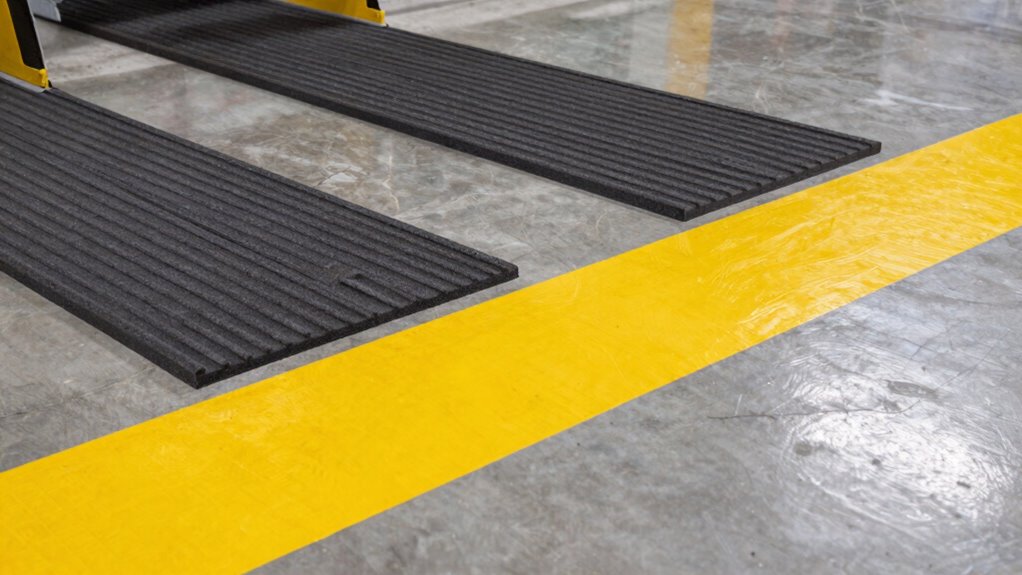
Slip-resistant floor coatings and textured overlays enhance safety on wet or slick surfaces.
Your footwear choices also make a big difference. Wearing shoes with appropriate tread patterns designed for slip resistance can help you maintain better footing on various surfaces. Avoid smooth-soled shoes on wet or oily floors. Instead, opt for footwear with rubber soles and deep treads that channel water away and grip the surface more effectively. If you work in an environment prone to spills or moisture, consider slip-resistant shoes as a standard part of your safety gear. Proper footwear not only helps prevent slips but also reduces fatigue and discomfort during long shifts, making it an investment in safety and comfort.
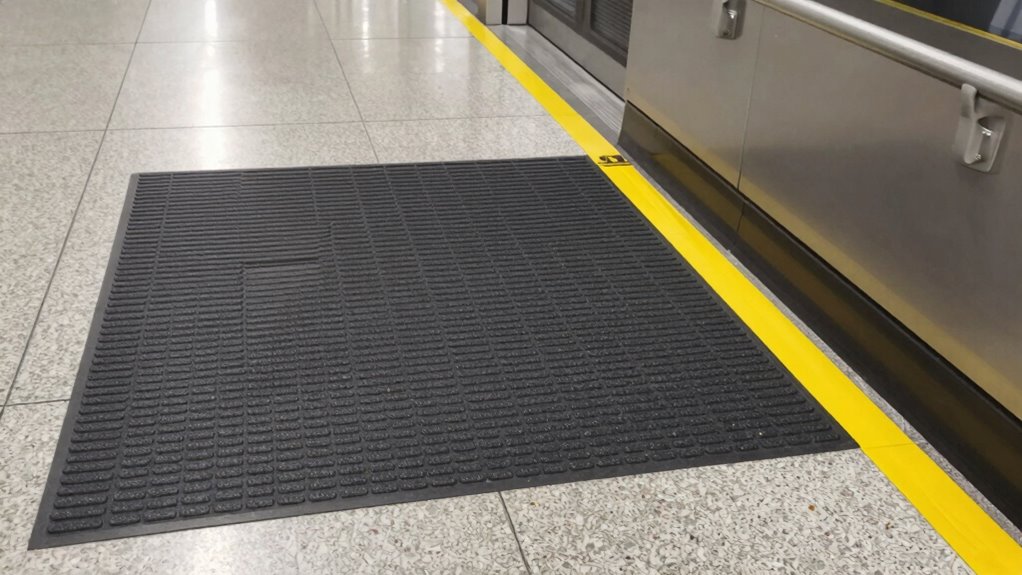
Alongside surface treatments and footwear, creating designated dry zones can make a big difference. Clear signage indicating wet or slippery areas helps alert everyone to proceed with caution. Placing absorbent mats or textured floor mats in high-use zones traps water and debris, preventing them from spreading across walkways. These mats act as a first line of defense, especially near entrances or food service areas. Regularly inspecting and maintaining these mats ensures they stay effective, so you should replace or clean them often. Incorporating proper surface maintenance can further enhance slip resistance and safety.
Combining these strategies—using suitable floor coatings, choosing the right footwear, and establishing dry zones—creates a thorough approach that addresses slip hazards from multiple angles. Ultimately, slip prevention is about awareness and proactive measures. Your choice of footwear, the condition of the surfaces you walk on, and the environment’s setup all work together to keep you safe. Implementing proper floor coatings, selecting footwear with good traction, and designating dry zones aren’t just simple steps; they’re essential investments in safety that can save you from injury and liability. Remember, slip accidents happen in a split second, but with the right precautions, you can greatly reduce your risk and walk confidently wherever you go.
Frequently Asked Questions
How Often Should Slip Prevention Mats Be Replaced?
You should replace your slip prevention mats when their lifespan ends or they show signs of wear, typically every 6 to 12 months. Regularly inspect for cracks, tears, or curling edges, and follow a consistent replacement schedule to guarantee safety. By doing so, you maintain their effectiveness, prevent accidents, and extend their overall lifespan. Remember, timely replacement is key to keeping your surfaces safe and slip-free.
Which Surface Treatments Are Most Effective for Slip Resistance?
Think of slip resistance like a shield, and your surface treatments as its armor. You’ll find that anti-slip coatings and textured surfaces are most effective, transforming slick floors into secure ground. These treatments add grip and texture, like ripples in a pond, creating friction where it’s needed most. Regularly apply anti-slip coatings and choose textured surfaces to keep your environment safe and prevent slips before they happen.
Are There Specific Regulations for Slip Prevention in Workplaces?
Yes, there are specific slip regulations you must adhere to for workplace compliance. These regulations, often set by OSHA or local authorities, aim to reduce slip and fall hazards. You need to regularly assess your workplace, ensure proper surface treatments, and provide slip-resistant mats where necessary. Staying current with slip regulations helps you create a safer environment, avoiding penalties and protecting your employees from potential injuries.
How Can I Identify High-Risk Areas for Slips and Falls?
Think of your workplace as a map where danger zones glow like neon signs. To spot high-risk areas for slips and falls, check floor texture—smooth, glossy, or uneven surfaces are red flags. Pay attention to zones where moisture, spills, or debris accumulate. Confirm footwear compatibility with surfaces, especially in wet zones. Regular inspections help identify these hazards, so you can implement targeted safety measures before someone gets hurt.
What Maintenance Routines Optimize Slip Prevention Measures?
You should establish regular maintenance routines that focus on floor cleaning to keep surfaces dry and free of debris, reducing slip hazards. Always use hazard signage to alert others when floors are wet or cleaned. Consistently inspect and repair any damaged mats or surfaces, and ensure your cleaning methods don’t leave residues that could cause slips. These proactive steps create safer environments and minimize fall risks effectively.
Conclusion
Remember, safety starts with awareness and the right tools. Using slip-resistant mats, maintaining dry surfaces, and clearly marking hazard zones can make all the difference. Think of it like steering a ship—if you keep the deck dry and well-marked, you avoid capsizing. By applying these simple concepts, you create a safer environment for everyone. Stay vigilant, stay prepared, and always prioritize slip prevention—because a proactive approach keeps accidents at bay.