TL;DR

Get home appliances delivered free with Prime
- Fast, free delivery on millions of items
- Prime Video, Amazon Music and more included
- Member-only deals all year
A smart space heater is a portable electric heater with connected controls, usually through Wi-Fi and an app. Scheduling and remote shutoff can reduce wasted runtime, but heating capacity, electricity cost, and safety still depend on the heater, your room, your circuit, and how you use it.
A 1,500-watt heater can warm your chilly home office, but it can also use most of the capacity of a typical North American household circuit. Adding Wi-Fi makes it easier to control; it doesn’t change either fact.
A smart space heater is a portable electric heater with connected controls, usually through Wi-Fi and a phone app. Depending on the model, you can set a temperature, create a schedule, or switch it off remotely. Those features can help when you heat one room at a time, but they don’t guarantee lower bills or safe use.
This guide explains what the smart features actually do, how heater types differ, what to check before buying, and how to avoid common safety and cost surprises. Think of the app as a convenient thermostat and timer, not a magic source of heat or a substitute for following the manual.
A smart heater’s app can help manage schedules and runtime, but the heater still uses electricity to make heat.
A 1,500-watt plug-in heater can draw most of the capacity of a typical North American household circuit.
Ceramic, oil-filled, and infrared heaters differ in how they deliver warmth, not in a promise of lower electricity use.
Check safety certification on the product, follow the manual’s clearance rules, and avoid unapproved extension cords or power strips.
Verify which controls work without Wi-Fi and which smart-home platforms the exact model supports.
What a Smart Space Heater Can—and Can’t—Do
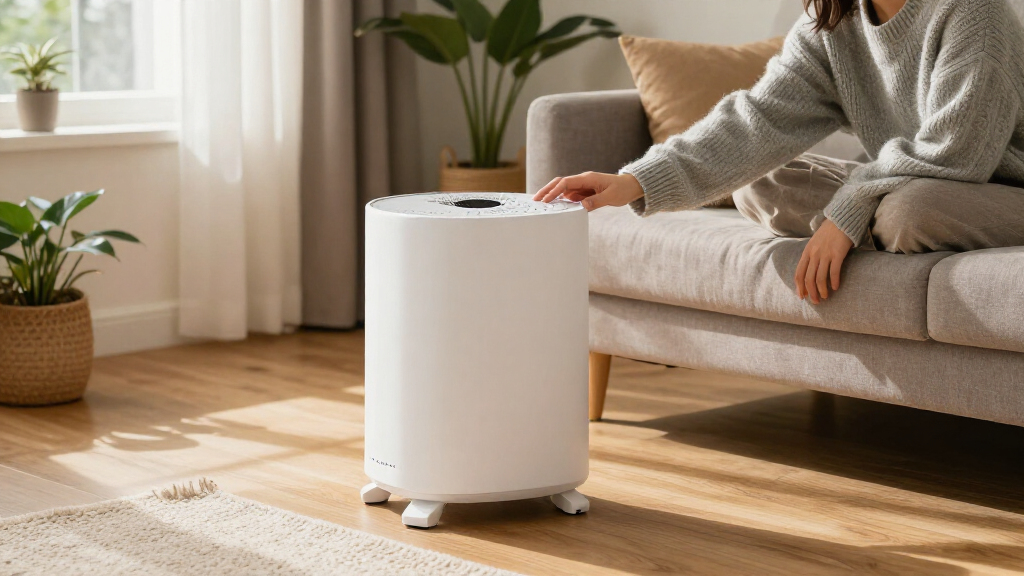
A smart space heater is an electric heater you can control through a networked app, and often through voice commands or schedules. You might set it to warm your office before your first meeting, then switch it off from your phone when you leave for lunch.
That convenience matters because small heaters often end up running longer than you intended. A schedule, thermostat, or remote shutoff can help you limit that runtime. Features vary by product: one model may offer only app-based on/off control, while another adds temperature targets, timers, energy-use history, or smart-home integrations.
But smart describes the controls, not the heating method. A Wi-Fi fan heater still warms air with an electric element, and an app cannot make a small heater warm a large, drafty living room as effectively as a properly sized heating system.
For example, if you work in a closed, reasonably insulated bedroom, a heater may make that one room more comfortable while the rest of the home stays cooler. If you place the same heater near a cold, open-plan living area with high ceilings, the warm air can dissipate before the far side feels comfortable. Room conditions set the limits: insulation, ceiling height, drafts, room layout, and outdoor temperature all affect the result.
Products Worth Considering

PHILIPS Hue Smart LED Candle Light Bulb, B39, E12, 2-Pack

Philips Hue Essential Starter Kit with Bridge and 4 E26 Smart Bulbs

TCL 65-Inch QM6K QLED Mini-LED 4K HDR Smart Google TV, 144Hz
As an affiliate, we earn on qualifying purchases.
See Whether Smart Controls Could Lower Your Heating Costs
Smart controls can lower a heater’s cost only if they reduce unnecessary runtime. They don’t make electric resistance heating intrinsically more efficient: the heater still uses electricity whenever it produces heat.
To estimate the electricity used, multiply the heater’s kilowatt rating by the number of hours it runs. A 1.5-kilowatt heater running for four hours uses 6 kilowatt-hours. Multiply that by your local electricity rate to estimate the energy cost; the app’s usage report, if accurate and available, may help you understand when it ran.
Imagine you leave your office heater on for an hour after logging off. A schedule that switches it off at the end of your workday could cut that wasted time. The same feature won’t save much if you already switch the heater off yourself or if the room needs the same heating for the same number of hours. Control can change the pattern of use, not the amount of heat needed to keep a cold room warm.
It also depends on what your heater replaces. Warming one occupied room may feel sensible when the household heating system runs less as a result. If you use the portable heater while keeping the whole-home system at its usual setting, you may add electricity use instead of replacing it. Compare your bill and usage over similar periods, and account for weather differences before deciding whether the heater saves money.
Compare Heater Types by Warmth, Noise, and Response
Smart space heaters use different methods to deliver warmth, so choose by how you use the room rather than by app features alone. A fan-forced heater, including many ceramic models, moves warm air quickly; an oil-filled radiator warms more slowly and tends to run quietly once it is going.
| Heater type | How it feels | Good fit |
|---|---|---|
| Fan-forced or ceramic | Quick warmth carried by moving air; fan noise is common. | A cold room where you want a faster warm-up. |
| Oil-filled radiator | Quiet, gradual heat that lingers for a while after shutoff. | A bedroom or office where fan noise bothers you. |
| Infrared | Warms people and objects more directly than the surrounding air. | A spot where you sit still and want warmth aimed at you. |
For instance, a fan heater can take the edge off a cold study before you sit down, while the fan’s hum may annoy you during a quiet call. An oil-filled model is more like a slow cooker than a kettle: it takes time to warm up, but it can keep radiating warmth after the thermostat switches off.
These types are all electric resistance heaters, so they convert electricity into heat at roughly the same point-of-use rate. Their differences are speed, airflow, noise, and heat retention—not a guarantee that one will use less electricity for the same heating need.
Check the Outlet and Safety Features Before You Plug In
Before using a high-wattage heater, check its safety certification, manual, placement, and electrical requirements. Tip-over shutoff and overheat protection can reduce some risks, but they don’t prevent every fire or electrical problem.
Look for a recognized testing mark for the country where you live, such as UL or ETL in the United States, and verify it on the heater itself. An online listing alone is not enough. Keep the heater clear of curtains, bedding, paper, and furniture, and follow the clearance distances in the manual. Don’t run a heater if its cord or plug looks damaged.
A common plug-in heater in North America draws up to about 1,500 watts, which can use most of a household circuit’s capacity. Avoid putting it on an extension cord or power strip unless the manufacturer specifically says that setup is safe. Also avoid sharing the circuit with other high-power appliances without checking the electrical requirements. If you’re unsure whether a circuit can handle the load, ask a licensed electrician.
For example, if a space heater and a toaster share a circuit, using both at once could overload it. Smart shutoff features won’t correct that wiring or load issue. Use the heater only as its manufacturer permits, and don’t leave it unattended or running while you sleep unless the manual and local safety guidance explicitly allow that use. Remote control is not a safety guarantee.
A heater can switch off on command and still be unsafe if it sits beside a blanket or draws too much current from its circuit.
Choose Connected Features That Still Work in Real Life
A useful smart heater should have controls you can understand and use reliably. Before you buy, check which functions work in the app, whether physical controls remain available, and what happens when your Wi-Fi or the manufacturer’s service goes down.
Connected features might include a thermostat, schedule, remote start and stop, energy-use reports, or voice control. Don’t assume every heater works with Alexa, Google Home, Apple Home, or Matter. Compatibility varies by model, and even when a product supports a platform, it may expose only some functions.
Picture a cold evening when your router restarts and the app stops responding. If the heater’s local thermostat and shutoff still work, you can manage it from the device. If basic operation depends on the app, that outage could leave you without a convenient way to adjust it. Check for physical controls and ask whether schedules run locally or rely on the cloud.
Privacy matters, too. Read the app’s description and privacy information to see what data it collects. Check whether the manufacturer continues to support its connected products, since app and cloud features can change with software updates or end of service. A heater with fewer connected features may suit you better if you value simple controls, dependable local operation, or less account setup.
Use These Five Checks Before You Bring One Home
Start with the room and the outlet, then compare connected features. That order keeps the app from distracting you from the practical questions: will the heater meet the room’s needs, and can you use it as directed?
- Pick the room. Note its size, drafts, insulation, and whether the door stays closed. A small office with the door shut is a different job from an open living room.
- Choose the heat style. Decide whether quick fan-driven warmth, quiet gradual heat, or direct warmth suits how you sit and move in the room.
- Check the label and manual. Confirm the wattage, recognized safety mark, required clearance, and permitted use.
- Check the circuit. Consider other appliances on the same circuit, and don’t use an extension cord or power strip unless the manufacturer approves it.
- Test the controls. Confirm app, voice, schedule, and local controls you care about; check what still works without Wi-Fi.
Say you want warmth at your desk from 8:30 to 5, and you tend to forget the heater after work. A built-in schedule and a clear local thermostat may matter more than a long list of smart-home integrations.
Manufacturer room-coverage claims are estimates, not promises. Two rooms with the same floor area can feel very different if one has leaky windows and a high ceiling. Match the heater to your actual room, then decide whether connected controls solve a problem you have.
Frequently Asked Questions
Do smart space heaters save money?
They can reduce wasted runtime with schedules, thermostats, or remote shutoff. Savings depend on your electricity rate, how long the heater runs, and whether it replaces other heating rather than adding to it.
Can I leave a smart space heater on while I’m away or asleep?
Follow the manufacturer’s manual and local safety guidance. Remote shutoff does not make unsafe placement safe, and you should not leave a portable heater unattended unless its instructions explicitly permit that use.
Can I plug a space heater into a smart plug?
Only if both the heater manufacturer and smart plug specifications allow the heater’s electrical load and intended use. Many high-wattage heaters draw close to the limit of common smart plugs, so a heater with built-in connected controls is often the simpler choice.
Are oil-filled heaters more efficient than ceramic heaters?
Both are electric resistance heaters and convert electricity into heat at roughly the same point-of-use rate. Oil-filled models warm more gradually and quietly, while ceramic fan heaters can move warm air sooner.
Will a smart heater work if my Wi-Fi goes down?
It depends on the model. Check whether the thermostat, timer, and shutoff controls work on the heater itself; app and remote functions may stop when the network or cloud service is unavailable.
How large a room can one smart space heater warm?
There is no room-size figure that fits every home. Insulation, drafts, ceiling height, layout, and outdoor temperature all affect comfort, so treat coverage claims as estimates rather than guarantees.
Conclusion
Choose a smart space heater for the room you need to warm, the heat style you prefer, and the controls you’ll actually use. A schedule can stop an office heater from running after you leave, but it can’t make the heater draw less power while producing heat or make unsafe placement acceptable.
Check the manual, respect the circuit, and let convenience follow those basics. The best feature may be a quiet room that’s warm when you need it—and a heater that switches off when the day is done.