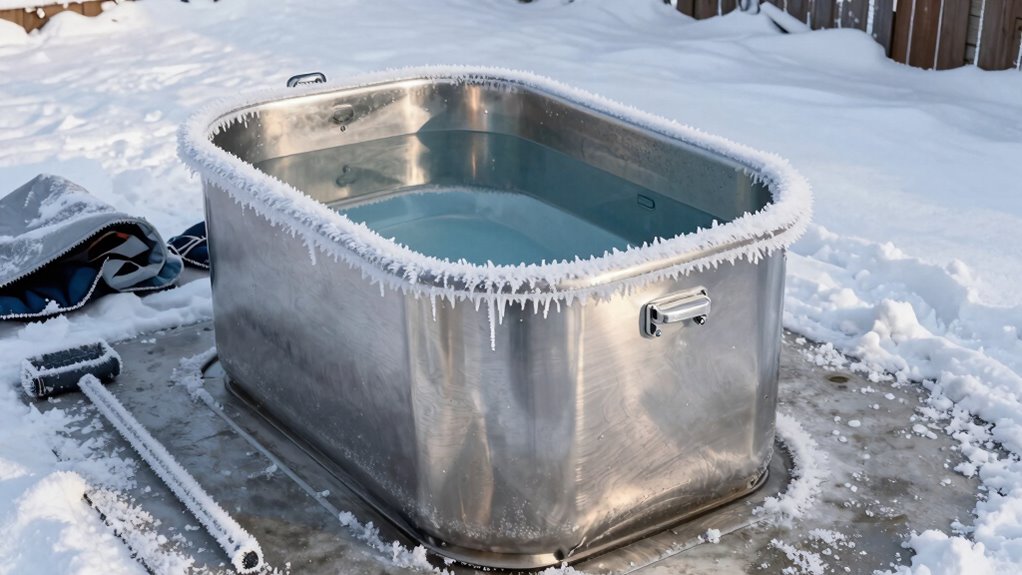

To prevent freeze damage to your cold plunge, you need to thoroughly winterize it by draining water from the tank and pipes, then adding the appropriate amount of antifreeze to prevent freezing. Protect the unit with a snug cover and insulation, and inspect mechanical parts for wear. Avoid rushing the process or skipping steps, as ice expansion can crack tanks and damage components. Keep your system safe this winter by following essential tips, and you’ll learn more to keep it in top shape.
Key Takeaways
- Drain all water from plumbing lines and components to prevent freezing and pipe cracking.
- Use proper insulation and thermal covers to shield the unit from snow, ice, and temperature fluctuations.
- Mix and apply the correct concentration of antifreeze compatible with your plunge system to prevent freezing.
- Inspect and clean mechanical parts, drain fittings, and drainage systems to avoid ice buildup and damage.
- Store the unit indoors or under cover after thorough cleaning and drying to protect against winter weather.

Cold Plunge Cover, Insulated Ice Bath Cover, 32.5''D x 9''H, Round
- 【Sunlight-Reflective Insulation】Our ice bath tub cover adopts UV-reflective…
- 【Fit 29.5"-31.5" DIA Tub】Our cold plunge cover is…
- 【Easy to Install】The ice bath cover come with…
As an affiliate, we earn on qualifying purchases.
As an affiliate, we earn on qualifying purchases.
Why Winterizing Your Cold Plunge Prevents Freeze Damage
If you don’t winterize your cold plunge, freezing temperatures can cause serious damage. Water expanding as it freezes can crack the tank and damage internal components, leading to costly repairs. Proper winterization involves draining the water and applying appropriate chemical treatments to prevent algae growth and bacterial buildup during the off-season. These treatments also help maintain the aesthetic upkeep of your cold plunge, keeping it clean and looking new when you reopen it. Failing to winterize can result in mineral buildup and corrosion, which compromise the unit’s longevity. Additionally, innovative cooling technology can help regulate temperature fluctuations and protect your equipment during colder months. Incorporating advanced insulation into the design can further reduce the risk of freeze damage by maintaining stable temperatures around your unit. Using proper winterization techniques ensures that all vulnerable components are protected from the harsh weather conditions. Implementing temperature monitoring systems can provide real-time alerts to prevent unexpected freezing issues. To further safeguard your investment, consider periodic maintenance checks to identify potential vulnerabilities before winter sets in. By taking time to prepare your cold plunge for winter, you protect your investment, ensure it operates smoothly next season, and save yourself from unnecessary repairs caused by freeze damage.

Bio Ouster Cold Plunge Necessity Kit – 3in1 Cold Plunge Water Treatment 32oz + Water Stabilizer 16oz – Ice Bath & Cold Plunge Accessories, Made in USA (Kit)
- All-in-One Water Treatment: Includes 3-in-1 treatment and stabilizer
- Cleans and Clarifies Water: Eliminates buildup, cloudiness, and odor
- No Draining Needed: Maintains water quality without draining
As an affiliate, we earn on qualifying purchases.
As an affiliate, we earn on qualifying purchases.
Perform a Pre-Winter Check to Ensure Your Cold Plunge Is Ready
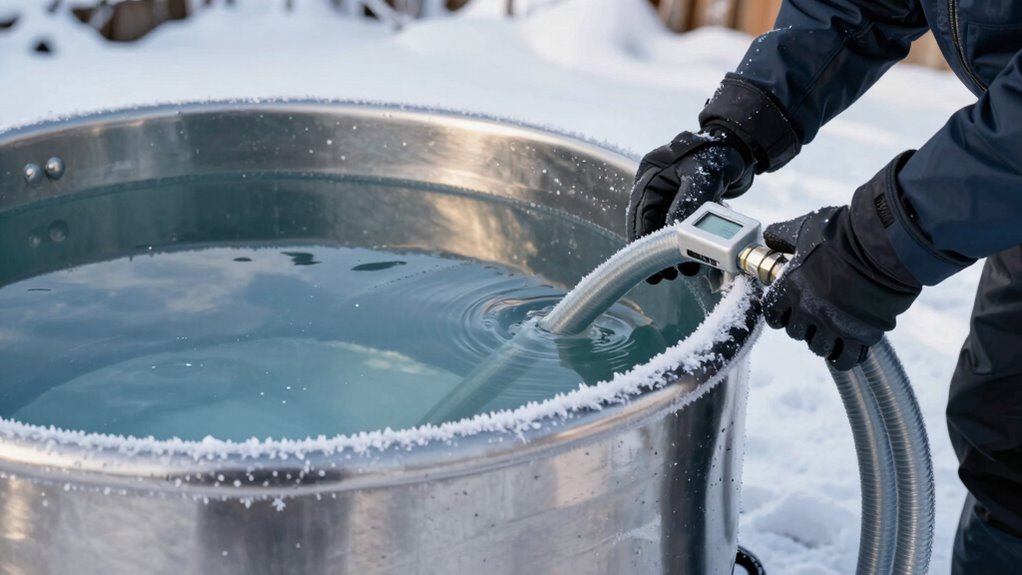
Before winter arrives, you need to make certain your cold plunge is prepared. Check the water levels, inspect mechanical parts for wear, and review the drainage system to prevent issues. Taking these steps now helps avoid costly repairs and ensures your cold plunge stays in top shape all winter. Additionally, consider reviewing free floating features to ensure your setup maintains stability during the colder months. Regular maintenance and seasonal adjustments can further protect your investment and extend the lifespan of your equipment. Incorporating smart monitoring systems can also help you keep an eye on water quality and system performance remotely, providing peace of mind during the off-season. Proper ventilation considerations are also essential to prevent moisture buildup and protect your equipment from freeze damage. Ensuring proper insulation techniques can further guard against cold-related issues and keep your system functioning optimally throughout winter.
Check Water Levels
Ensuring the water levels are correct is a crucial step in winterizing your cold plunge. Proper water levels prevent damage from freezing pipes and maintain the chemical balance needed for safe use. Before closing it for winter, check that the water isn’t too low or too high. Low water levels can expose components to damage, while high levels risk spilling or overflowing when temperatures drop. Adjust the water to the recommended levels, and test the chemical balance to prevent corrosion or algae growth. Regularly maintaining water levels helps keep your cold plunge in top shape, even during the off-season. Modern kitchen technology can include smart sensors that monitor water levels remotely, providing added convenience and peace of mind. Additionally, understanding water chemistry is essential for proper maintenance and longevity of your equipment. To further protect your investment, consider freeze prevention measures such as insulating pipes and installing heating elements where necessary. Incorporating water level monitoring devices can help ensure consistent water levels and prevent costly damage. For optimal protection, familiarize yourself with winterizing procedures specific to your equipment model. – Verify water levels are at the manufacturer’s recommended mark – Top off water if levels are low – Drain excess water if levels are too high – Test pH and sanitizer levels for chemical balance – Inspect for leaks or cracks around water lines
Inspect Mechanical Components
After checking and adjusting the water levels, it’s time to inspect the mechanical components of your cold plunge. Perform a thorough mechanical inspection to identify any signs of wear or damage. Focus on the pump, heater, filtration system, and control panel. Look for leaks, corrosion, or loose connections that could worsen in freezing temperatures. Ensure all components are clean and functioning properly, as clogged filters or faulty parts can strain the system. Regular component maintenance now helps prevent breakdowns and costly repairs later. Tighten fittings, replace worn seals, and address any irregularities. Additionally, inspecting electrical connections and protective enclosures can help prevent freeze-related damage. Checking system efficiency and ensuring all parts are in optimal condition can further safeguard your equipment. Paying attention to winterization procedures can also extend the lifespan of your system and improve reliability throughout the winter. Taking these steps ensures your cold plunge’s mechanical systems are in excellent condition, reducing the risk of freeze damage and keeping your equipment reliable throughout the winter.
Review Drainage System
Is your drainage system prepared to handle winter conditions? Proper drainage maintenance guarantees water flow stays unobstructed, preventing ice buildup and potential freeze damage. Before winter, inspect all drain lines and fittings for leaks or cracks. Clear any debris or obstructions that could block water flow. Check that drains are functioning correctly and ensure they aren’t clogged. Confirm that the drainage system is designed to handle excess water, especially during heavy rain or snowmelt. Make sure all connections are secure, and consider adding insulation around vulnerable pipes. Regular maintenance now can save you from costly repairs later. Additionally, reviewing drainage system design features can provide insights into durable solutions that withstand winter weather. By reviewing your drainage system thoroughly, you’ll ensure your cold plunge is ready to withstand winter’s challenges and keep water flowing smoothly.

Frost King SP60 All Season Water Heater Insulation Blanket, 3” Thick x 60” x 90”, R10
- Item Weight: 7.0 lb
- Country of Origin: United States
- Brand: Frost King
As an affiliate, we earn on qualifying purchases.
As an affiliate, we earn on qualifying purchases.
How to Drain and Store Your Cold Plunge Safely for Winter
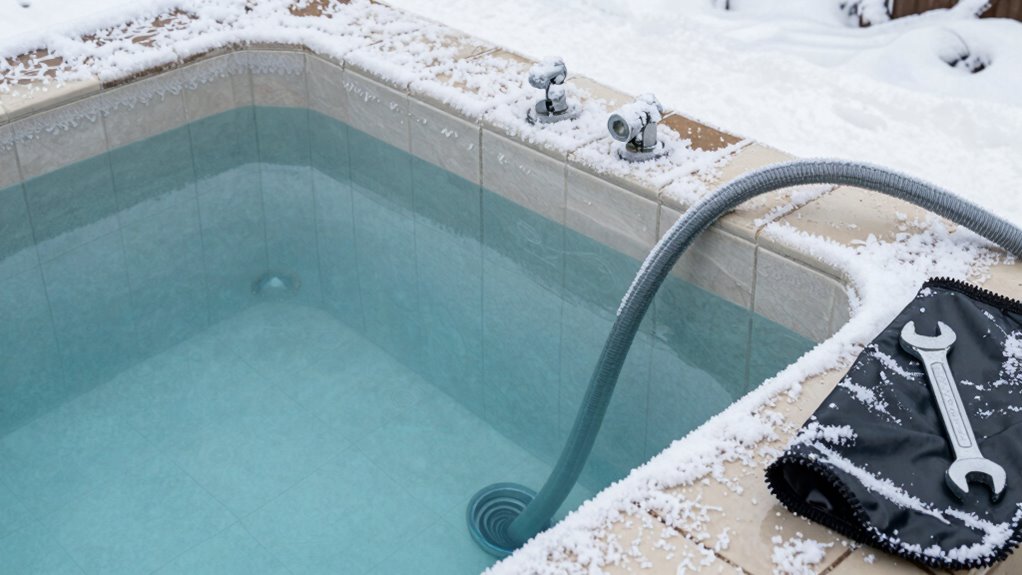
As winter approaches, it is vital to drain and store your cold plunge properly to prevent damage from freezing temperatures. Start by turning off the power and opening the drainage system to remove the water completely. Before storing, perform water testing to confirm no residual contaminants remain. Use appropriate chemical treatments to sanitize the unit and prevent algae or bacterial growth during storage. Once the water is drained, wipe down all surfaces and dry thoroughly to prevent mold or mildew. If your unit is portable, store it indoors or in a protected area. Cover it with a breathable cover to keep dust and debris out. Proper drainage, chemical treatments, and water testing are essential steps to guarantee your cold plunge stays in top condition through winter.

XY-WQ Wireless Pool Thermometer with Indoor Monitor, 500-ft Range, IPX8
- Indoor Water Temperature Monitoring: Check water temp from inside your home
- Long Wireless Range: Up to 500 ft open area range
- IPX8 Waterproof Sensor: Floating sensor is fully waterproof
As an affiliate, we earn on qualifying purchases.
As an affiliate, we earn on qualifying purchases.
Protect Your Cold Plunge With the Right Cover and Insulation
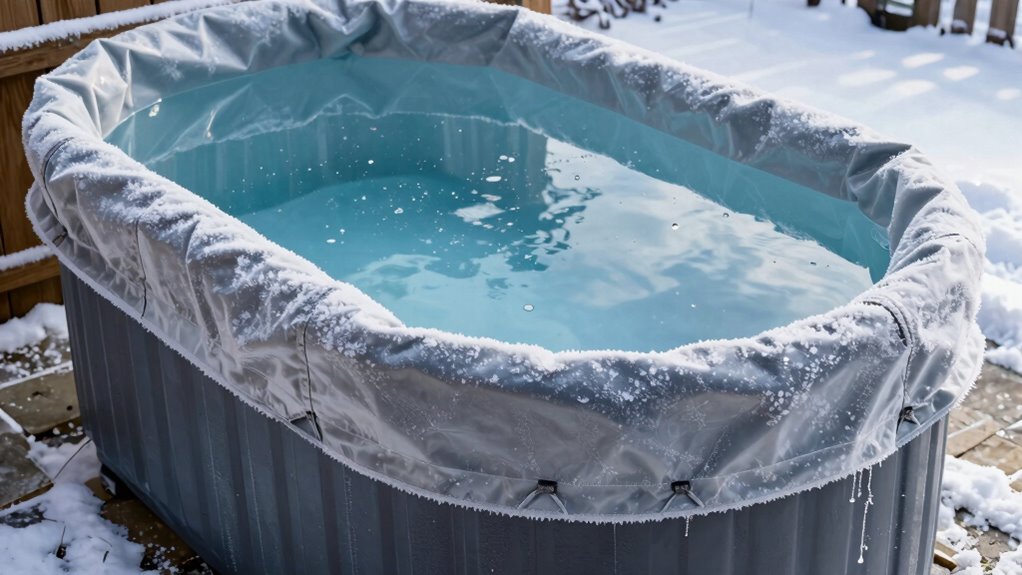
Protecting your cold plunge during winter begins with choosing the right cover and insulation. A sturdy cover provides essential safeguarding, shielding your unit from snow, ice, and debris. Insulation techniques help maintain consistent water temperature and prevent freezing. Opt for a thermal cover designed specifically for cold environments to maximize effectiveness. Add insulation around the sides and base using foam boards or insulating blankets to further reduce heat loss. Ensure the cover fits tightly to prevent drafts and moisture intrusion. Proper cover safeguarding and insulation techniques work together to defend your cold plunge from winter damage. These simple steps can save you time and money by avoiding costly repairs caused by freeze damage. Regular inspections of your inverter generator can help ensure it functions properly when needed. Additionally, monitoring the water temperature inside the plunge can help you adjust your insulation measures proactively. Being aware of weather conditions can help you prepare for sudden cold snaps. Stay proactive, and your cold plunge will be ready for use when the weather warms.
How to Add Antifreeze Safely to Prevent Freezing
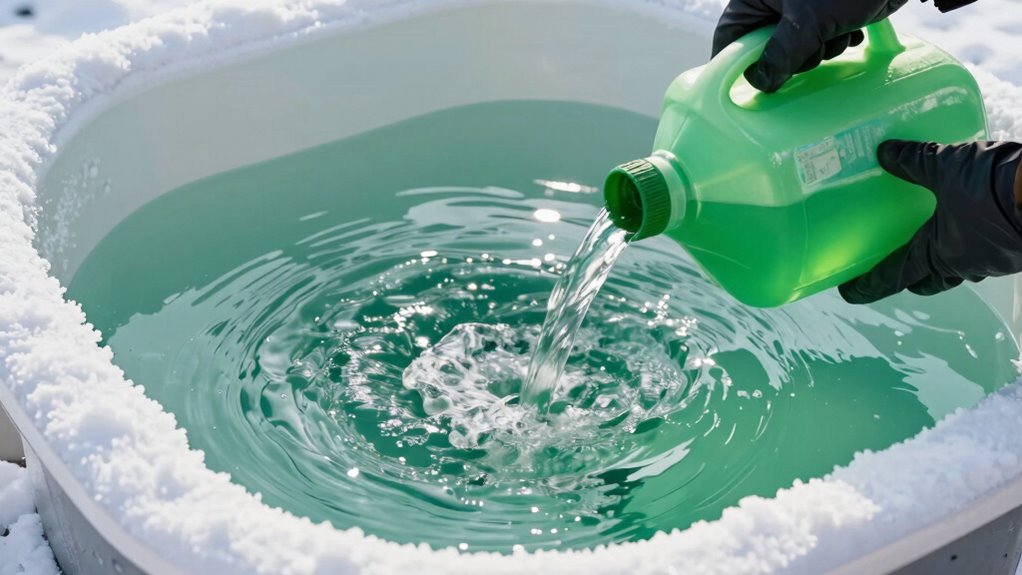
Choosing the right antifreeze is vital to protect your cold plunge from freezing. You must apply it safely to avoid damage or health hazards. Let’s review how to select proper antifreeze and use it correctly.
Proper Antifreeze Selection
Selecting the right antifreeze is crucial to prevent your cold plunge from freezing during winter. You need to choose an antifreeze with the correct concentration to guarantee effective freezing point protection. Make sure to check antifreeze compatibility with your plunge’s materials to avoid corrosion or damage. Proper selection assures your system stays protected without adverse reactions.
Consider these tips:
- Verify the antifreeze’s recommended concentration for cold temperatures
- Use a product compatible with your plunge’s materials
- Avoid mixing different types of antifreeze unless specified
- Follow manufacturer guidelines for dilution ratios
- Opt for high-quality antifreeze with corrosion inhibitors
Choosing the right antifreeze helps maintain system integrity and prevents costly freeze damage during winter.
Safe Application Techniques
Once you’ve picked the right antifreeze, it’s important to add it safely to your cold plunge to prevent freezing without causing damage. Start by carefully mixing the antifreeze with water according to the manufacturer’s instructions, ensuring a proper chemical treatment. Always wear protective gloves and goggles to avoid skin or eye contact. When pouring the mixture, do so slowly to prevent splashing. Prioritize electrical safety by turning off the power supply before opening any panels or working near electrical components. Avoid spills onto electrical parts, and clean any drips immediately. Properly ventilate the area to prevent inhaling fumes, especially if using chemical antifreeze. Following these safe application techniques helps protect your equipment and ensures a secure, effective winterization process.
Winterize Plumbing Lines and Pumps to Avoid Damage
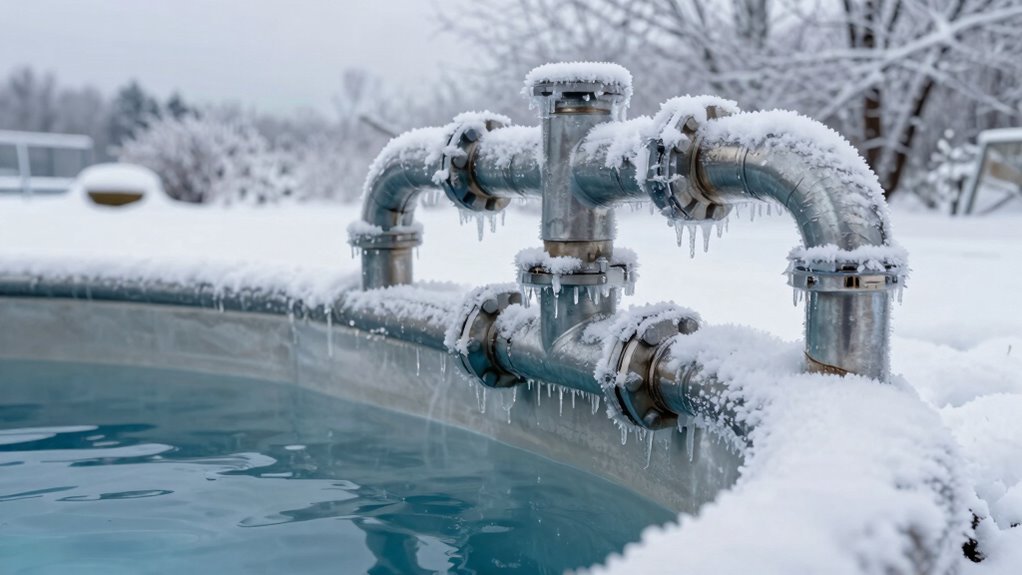
To prevent costly damage during winter, it is essential to properly winterize your plumbing lines and pumps. Start by draining all water from the plumbing to prevent freezing. Use plumbing insulation around pipes and pump areas to provide extra protection. Perform pump maintenance by cleaning filters and lubricating moving parts to guarantee smooth operation come spring. Consider installing drain valves to make draining easier and more complete. Additionally, insulate exposed pump components and lines thoroughly. These steps help avoid burst pipes and damaged equipment caused by ice expansion. Regularly check for leaks or cracks before the cold sets in. Proper winterization not only protects your investment but also saves you time and money on repairs in the long run.
Common Mistakes to Avoid When Winterizing Your Cold Plunge
Neglecting common mistakes during winterization can lead to costly repairs and prolonged downtime. One mistake is skipping seasonal cleaning, which can cause dirt and debris to freeze and damage components. Another is disregarding customer maintenance routines; failing to inform users about proper winter care can lead to overlooked issues. Be sure to inspect all parts carefully and remove any buildup.
| Mistake | Consequence |
|---|---|
| Skipping seasonal cleaning | Freezing debris causes damage |
| Ignoring customer maintenance | Increased risk of unnoticed issues |
| Rushing the process | Overlooking critical steps |
Avoid these errors to ensure your cold plunge stays protected through winter, saving you time and money. Proper winterizing, combined with attentive maintenance, keeps your equipment in top shape.
Tips to Keep Your Cold Plunge in Top Shape for Future Winters
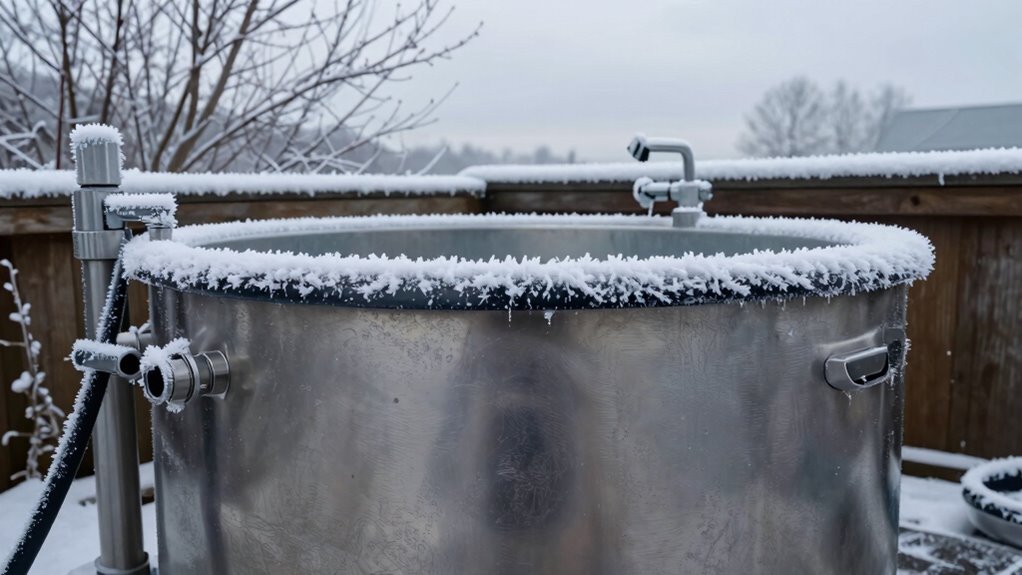
Maintaining your cold plunge regularly is key to ensuring it performs well through many winters. Proper upkeep enhances winter safety and keeps energy efficiency high. To keep your unit in top shape, consider these tips:
- Insulate pipes and the unit to prevent heat loss
- Use a high-quality cover during off-season months
- Schedule routine inspections for leaks and wear
- Keep the water clean to avoid algae and damage
- Adjust your thermostat to optimize energy use during colder months
How to Refill and Restart Your Cold Plunge in Spring
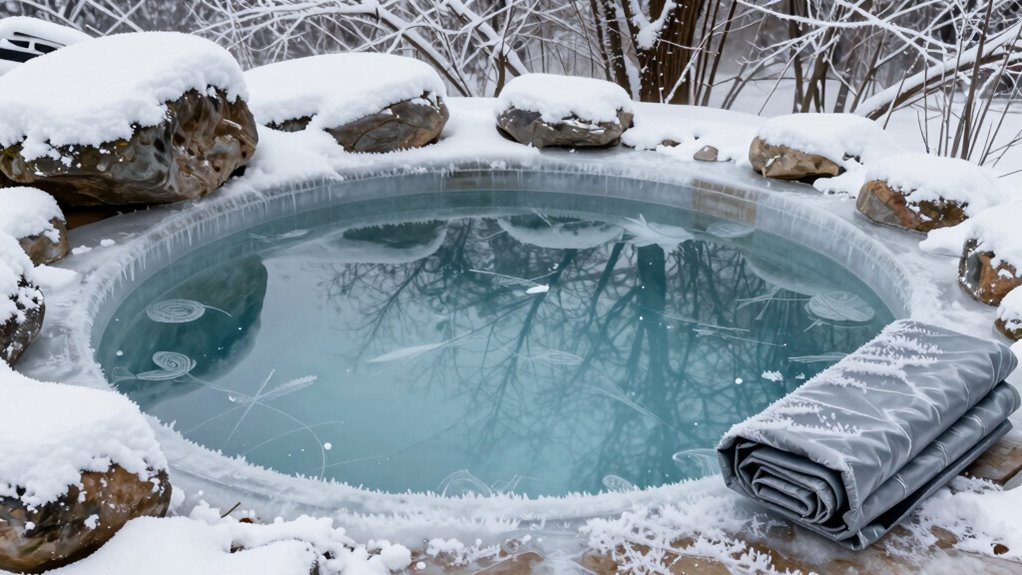
As winter ends and warmer weather approaches, it’s time to refill and restart your cold plunge so you can enjoy its benefits again. Begin by draining any remaining old water and thoroughly cleaning the basin. Refill it with fresh water, guaranteeing proper water circulation from the pump to distribute the water evenly. Once filled, check the chemical balance—adjust pH levels and add appropriate sanitizers to prevent bacteria growth. Proper chemical balancing is essential for safe, clean water and peak performance. Turn on the circulation system to guarantee everything runs smoothly. Test the temperature and make adjustments as needed. Regularly monitor water quality and circulation during use, and maintain proper chemical levels to keep your cold plunge in top shape for the season ahead.
Frequently Asked Questions
Can I Winterize My Cold Plunge Without Professional Help?
Yes, you can DIY winterize your cold plunge, but it requires careful seasonal maintenance. You’ll need to drain the water completely, remove and clean filters, and blow out any remaining water from pipes to prevent freeze damage. Make sure to disconnect power sources safely. Follow detailed instructions, and if you’re unsure, consult a professional. Proper winterization helps avoid costly repairs and keeps your plunge in top condition for next season.
How Long Does the Winterizing Process Typically Take?
Winterizing your cold plunge is like setting up a snow globe—quick and precise. It usually takes about 1 to 3 hours, depending on your preparation checklist and experience. Timing considerations include draining the water, cleaning, and sealing all parts properly. If you follow your steps carefully, you’ll avoid freeze damage and guarantee your plunge stays in top shape for next season. Proper planning makes the process smooth and efficient.
What Are the Signs of Freeze Damage After Winter?
After winter, you’ll notice freeze damage if you see cracked or burst pipes, especially around pipe insulation or cover installation areas. Look for leaks, unusual noises, or pooling water near your cold plunge. If the cover was improperly installed or insulation was compromised, damage is more likely. Check these signs carefully to address issues early and prevent costly repairs, ensuring your cold plunge stays functional through the seasons.
Is It Necessary to Winterize if I Live in a Mild Climate?
If you live in a mild climate, winterizing your cold plunge is still a smart move for winter protection. Even in milder temperatures, unexpected cold snaps can cause freeze damage. By taking simple precautions like draining water and covering the unit, you guarantee your cold plunge stays in top shape. It’s a small effort that helps prevent costly repairs and extends the life of your equipment.
Can I Leave Chemicals in the Cold Plunge During Winter?
You shouldn’t leave chemicals in your cold plunge during winter. Chemical precautions are essential to prevent damage or hazards. It’s best to drain and clean the tub thoroughly, then store chemicals safely in winter chemical storage. Leaving chemicals inside can cause corrosion or create unsafe conditions when temperatures drop. Proper winter chemical storage guarantees your chemicals stay effective and your cold plunge remains in good shape for when you use it again.
Conclusion
By winterizing your cold plunge, you’re shielding it from the harsh embrace of the cold, much like wrapping a precious gift to keep it safe. With proper care and preparation, you’ll guarantee your plunge remains pristine and ready for those invigorating dips when warmer days return. Don’t let winter’s icy grip freeze your efforts—protect it now, and your investment will thank you with years of invigorating dips ahead.