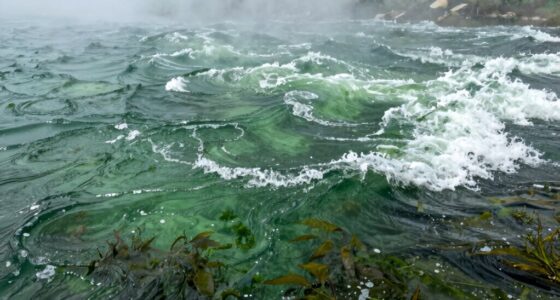
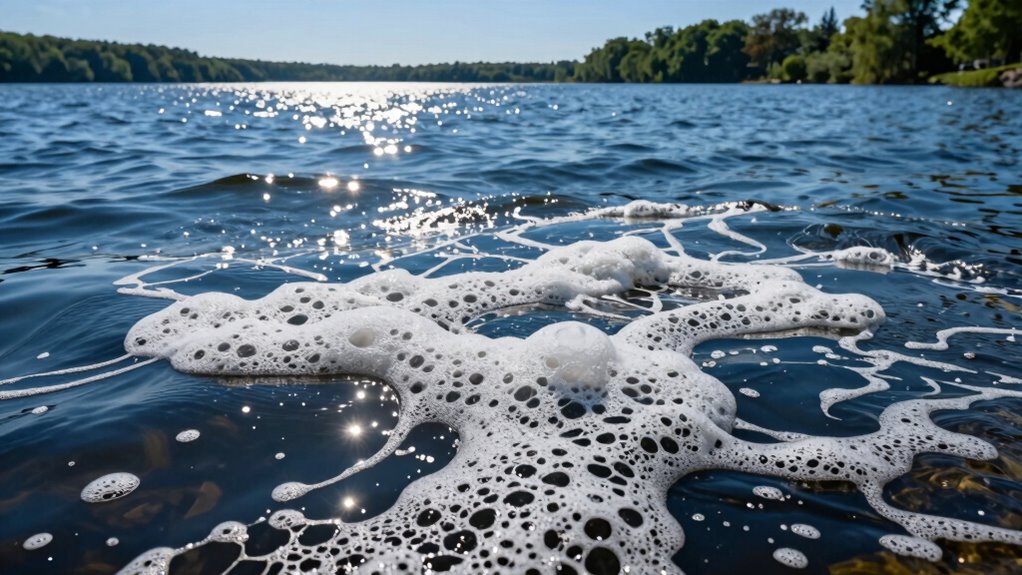

Foam on water can be natural, caused by organic material breaking down, or a sign of pollution from chemicals or waste. To figure out which it is, look at the foam’s color, texture, and location, and check for signs of contamination like oily sheen or persistent appearance. If you’re concerned, report it to local authorities and monitor the area. For helpful tips on identifying and managing water foam, explore further details below.
Key Takeaways
- Natural foam often appears with organic decomposition; pollution foam indicates chemical or waste contamination.
- Bright white, persistent foam near pollution sources suggests environmental hazards requiring investigation.
- Chemical pollutants in foam can harm aquatic ecosystems and human health; early detection is crucial.
- Avoid overusing detergents and implement water treatment to prevent foam buildup and pollution.
- Report suspicious foam to local environmental authorities with details for proper assessment and action.
Is Water Foam Natural or Pollution? What You Should Know
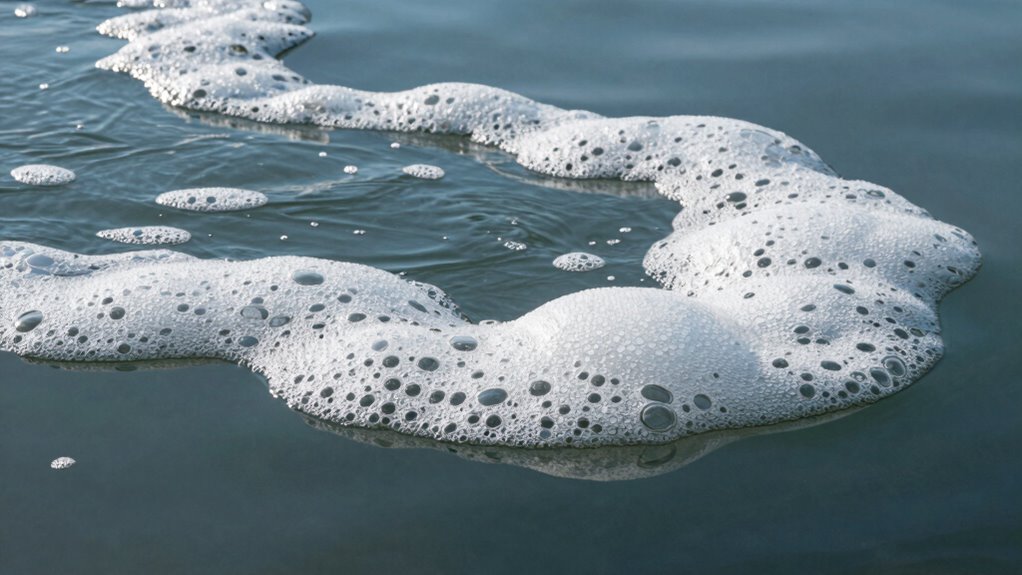
Water foam can sometimes appear naturally, especially in areas where organic matter decomposes or during certain weather conditions. These natural phenomena often create foam that’s harmless and part of the environment’s cycle. However, foam can also be a warning sign of pollution indicators, signaling possible contamination from chemicals or waste runoff. It’s important to observe the context and characteristics of the foam—such as its color, consistency, and location—to determine if it’s a natural occurrence or linked to pollution. Environmental indicators like foam with unusual colors or textures can help identify pollution sources. Recognizing these differences helps you understand whether the foam is a normal part of the ecosystem or a sign of environmental trouble. Additionally, understanding natural foam formation processes can aid in distinguishing harmless foam from pollution-related issues.
How to Recognize Water Foam That Signals Pollution
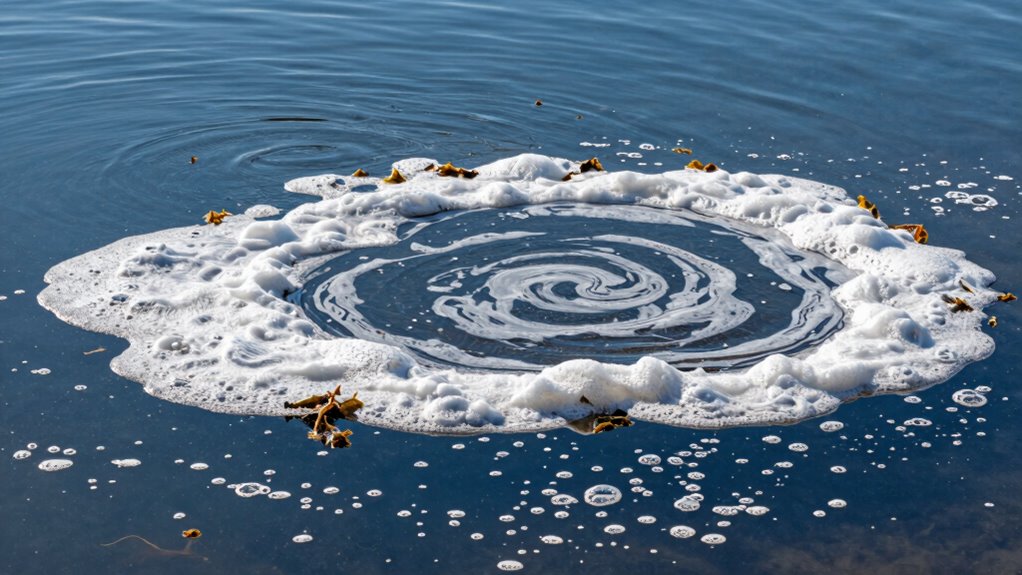
When foam on water raises concerns about pollution, paying close attention to its appearance and surrounding conditions can help you identify potential problems. Look at how the foam forms—excessive, persistent foam often indicates contamination from detergents or industrial waste. The foam color is also a key indicator; bright white foam may be natural, but if it appears yellow, gray, or has an oily sheen, it’s likely polluted. Unusual foam formation that doesn’t dissipate quickly or appears in areas with known pollution sources is a warning sign. By observing these signs carefully, you can better assess whether the foam results from natural processes or signals harmful pollution, prompting further investigation or reporting if necessary. Recognizing environmental indicators can also help you understand the broader impact of water pollution on ecosystems and public health. Additionally, understanding the sources of water pollution can provide insight into how such contamination occurs and what preventative measures might be effective.
Environmental and Health Effects of Water Foam

Recognizing signs of pollution in water foam not only helps you identify contamination but also highlights potential health and environmental risks. Chemical pollutants often cause foam formation, and exposure to these substances can harm both aquatic life and human health. When foam contains toxic chemicals, it can enter the food chain, affecting fish, birds, and other wildlife. For people, contact with contaminated water may lead to skin irritations, respiratory issues, or more serious health problems. The ecosystem impact can be severe, disrupting habitats and reducing biodiversity. Long-term exposure to chemical pollutants in foam can degrade water quality and threaten the ecosystem health. Additionally, understanding the contrast ratio of water quality helps in assessing the severity of contamination. Monitoring water pollution indicators can aid in early detection and prevention efforts, safeguarding both environmental and human well-being. Recognizing aquatic toxicity signs in water foam can help communities respond swiftly to contamination events and protect public health. Implementing effective water testing methods is essential for accurate assessment and timely intervention.
Simple Ways to Prevent and Reduce Water Foam
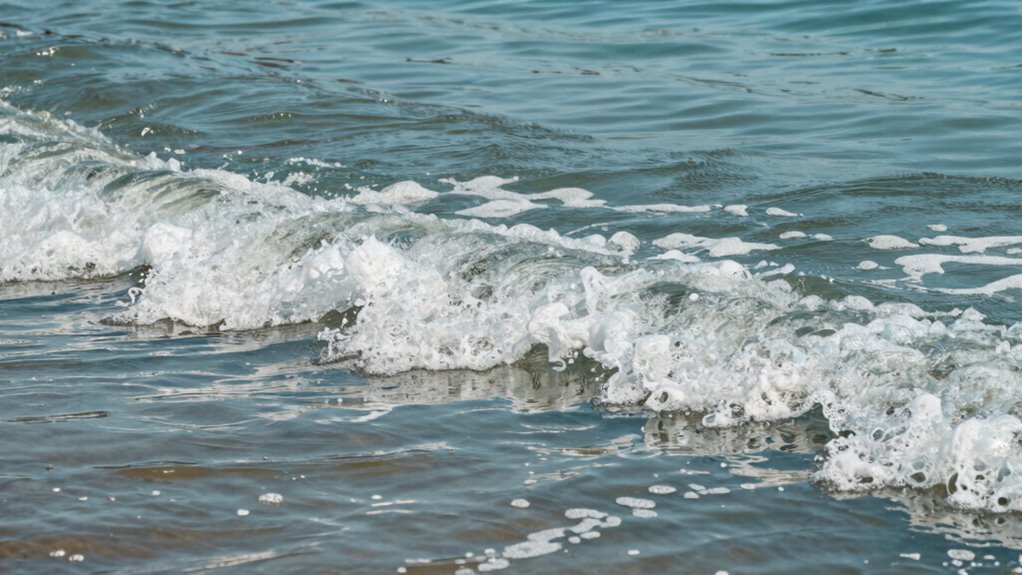
To prevent and reduce water foam, taking simple steps can make a significant difference. Using natural remedies, such as adding a small amount of vegetable oil or alum, can help break down foam naturally. These remedies work by reducing surface tension and preventing foam formation. Proper water treatment is also essential—regularly removing organic matter and pollutants minimizes foam-causing substances. Avoid overusing detergents or chemicals near water bodies, as they can contribute to foam buildup. Installing floating barriers or booms can contain foam before it spreads. Maintaining healthy runoff and drainage systems ensures fewer pollutants reach water sources. Additionally, understanding water quality management can guide more effective prevention strategies. Implementing professional water treatment methods can further enhance foam reduction efforts. Understanding how natural processes influence foam formation allows for better control and mitigation. Regular monitoring of organic matter levels can help identify sources of excess nutrients that can promote foam formation. Recognizing pollutant sources is vital for targeting efforts to reduce foam effectively. By applying these straightforward methods, you can effectively prevent and reduce foam, protecting water quality and aquatic life.
When and How to Report Water Foam Concerns
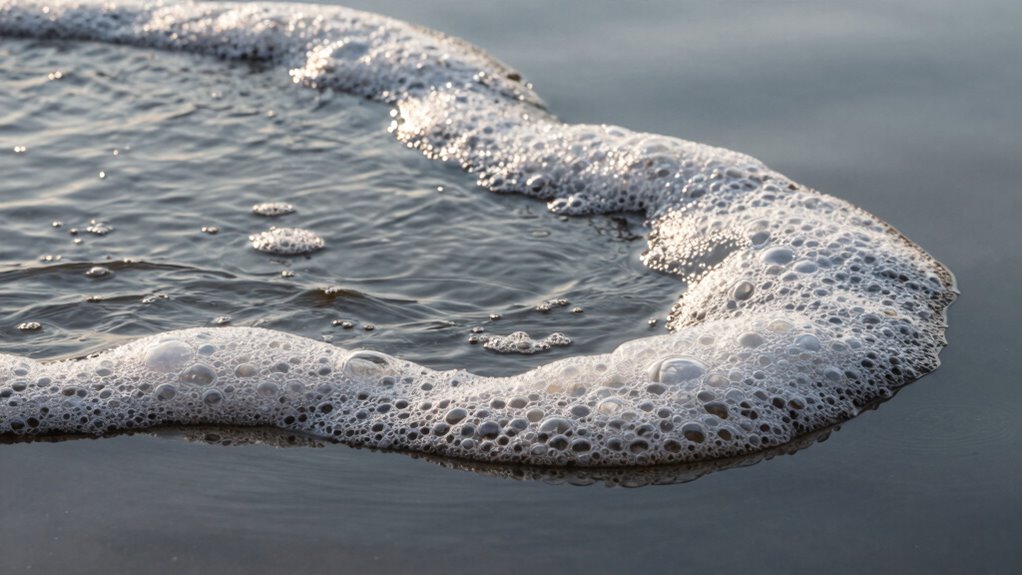
If you notice persistent or unusual foam on nearby water bodies despite taking preventative steps, it’s important to act promptly. Reporting concerns quickly helps authorities assess the situation and implement monitoring methods to identify potential pollution sources. Start by documenting the foam’s location, appearance, and duration. Follow established reporting procedures, such as contacting local environmental agencies or water management authorities. Use the table below to understand key reporting steps:
| Step | Action | Responsible Party |
|---|---|---|
| Observation | Record foam details and take photos | You |
| Notification | Contact local environmental agencies | You or community groups |
| Monitoring | Assist with monitoring methods if needed | Authorities |
| Follow-up | Report updates or repeated occurrences | You or officials |
Quick action ensures a timely response to water foam concerns. Additionally, understanding water chemistry can help identify the causes of foam and determine whether it’s a natural or pollution-related issue. Recognizing foam formation processes can also aid in distinguishing between harmless natural foam and problematic pollution-related foam. Furthermore, being aware of body pollution sources can guide prevention efforts and help in addressing ongoing foam issues. Regularly consulting environmental guidelines can also provide helpful insights for managing and responding to water quality concerns.
Frequently Asked Questions
Can Water Foam Indicate Specific Types of Pollutants?
Yes, foam on the water can indicate specific pollutants through chemical indicators and biological markers. When you see foam, it might signal the presence of detergents, surfactants, or certain chemicals from industrial runoff. Biological markers, like algae, can also cause foam as they decompose. Observing foam patterns helps you identify potential pollution sources, so you can take appropriate action or report concerns for further investigation.
Does Water Foam Always Mean Pollution Is Present?
Like a sudden soap bubble in a stream, foam doesn’t always signal pollution. Natural foam can form from organic matter decomposing, acting as a chemical indicator of healthy processes. However, persistent or unusual foam might hint at pollutants or chemical runoff. You should observe the foam’s appearance and duration, and consider testing the water if it seems abnormal. Not all foam is harmful, but awareness helps protect your water environment.
Are There Seasonal Patterns in Water Foam Formation?
Yes, water foam often shows seasonal fluctuations, influenced by weather. During warmer months, increased sunlight and higher temperatures can boost algae growth, leading to more foam. Heavy rains may wash organic matter into water bodies, causing foam formation. Conversely, cooler seasons tend to see less foam due to reduced biological activity. Weather influences, like wind and rainfall, play a key role in these seasonal patterns, so stay alert year-round.
How Long Does Foam Typically Persist on Water Surfaces?
Imagine foam on water as fleeting clouds in a clear sky; it usually lasts from a few minutes to several hours. Water quality and foam formation influence its persistence—if pollutants or detergents are present, it may linger longer. You can expect natural foam to dissipate relatively quickly, but if it persists beyond a day, it signals potential water quality issues requiring your attention and possibly testing.
Can Natural Events Cause Water Foam Without Pollution?
Yes, natural causes and seasonal patterns can create foam on water without pollution. During certain times of the year, natural processes like algae blooms, decaying organic matter, or increased wave action can produce foam. These events are part of normal ecological cycles and don’t necessarily indicate pollution. Keep observing the foam’s characteristics and consider seasonal changes, but generally, natural causes are common when no pollutants are present.
Conclusion
Remember, water foam is like a whisper from nature—sometimes warning you of pollution, other times harmless. Stay vigilant and trust your instincts; if something feels off, don’t hesitate to act. By recognizing the signs and taking simple steps, you become a protector of your water sources. After all, safeguarding our water is like tending to a fragile bloom—delicate, essential, and worth your attention. Your awareness makes all the difference.