
If your KitchenAid Artisan Series 5 Quart Tilt Head Stand Mixer is making a grinding noise, it could be due to several common issues like worn bearings, debris, or misalignment. Addressing these problems promptly can prevent further damage and restore your mixer’s performance.
Follow this step-by-step guide to diagnose and fix the grinding noise safely and effectively, ensuring your mixer continues to serve you well for years to come.
Key Takeaways
| Identify the noise source | Grinding usually indicates a mechanical issue like worn bearings or debris. |
| Safety first | Always unplug the mixer before performing maintenance or repairs. |
| Check for debris or obstructions | Clean the mixing head, bowl, and attachments regularly. |
| Inspect internal parts | Look for worn-out bearings or gears that may need replacement. |
| Consult professional repair if needed | If unsure, contact authorized service for complex issues. |

KitchenAid Artisan, 5-Qt Tilt Head Stand Mixer, KSM150PS, Milkshake
- Durable Metal Construction: Built to last with 59 touchpoints
- 5-Quart Stainless Steel Bowl: Handles small or large batches, dishwasher safe
- Tilt-Head Design: Easy ingredient addition and bowl access
As an affiliate, we earn on qualifying purchases.
Unplug and Prepare
- Ensure the mixer is unplugged from the power outlet to prevent electrical shock.
- Remove all attachments and the mixing bowl.
- Place the mixer on a stable, flat surface for inspection.

KitchenAid KSMMGA Food Grinder Attachment for All KitchenAid Stand Mixers
- Compatible with KitchenAid Mixers: Connects to all KitchenAid stand mixers
- Versatile grinding plates: Includes fine, medium, and coarse plates
- Sausage stuffer tubes: Comes with two sausage stuffer tubes
As an affiliate, we earn on qualifying purchases.
Clean the Mixer Components
Carefully wipe down the head, gears, and surrounding areas to remove dust, flour, or debris that might cause mechanical friction. Use a soft brush or cloth. Avoid using water directly on internal parts.
Inspect Internal Parts
- Remove the tilt-head lock screw and gently lift the head to access internal gears and bearings.
- Look for signs of wear, such as chipped gears, worn bearings, or accumulated debris.
- If you notice damaged parts, consider replacing them or consult a professional.
Lubricate and Replace Worn Parts
If applicable, apply food-grade lubricant to gears and bearings as per the manufacturer’s instructions. If parts are worn or broken, replace them using genuine replacement parts.
Reassemble and Test
- Reinstall any removed components securely.
- Plug in the mixer and run it on a low speed to check for grinding noise.
- If noise persists, repeat inspections or seek professional repair.
The Products in This Guide
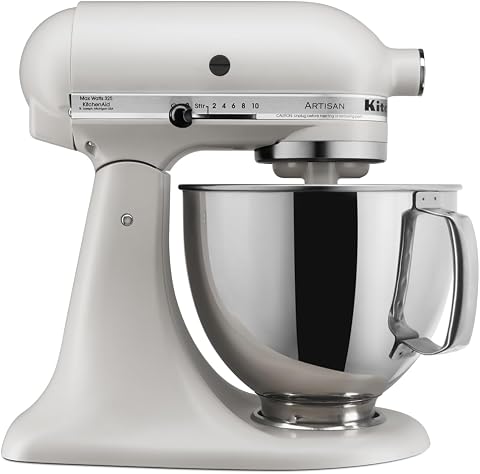
KitchenAid Artisan Series 5 Quart Tilt Head Stand Mixer
- ✔ Weight: 26 lbs
- ✔ Dimensions: 14 x 8 x 14 inches
- ✔ Warranty: 1 year

KitchenAid Stand Mixer Attachment
- ✔ Weight: 5 lbs
- ✔ Dimensions: 8 x 6 x 12 inches
- ✔ Warranty: N/A
KitchenAid Artisan Series 5 Quart Tilt Head Stand Mixer
The KitchenAid Artisan Series 5 Quart Tilt Head Stand Mixer is built with durable metal construction, offering reliable mixing performance. Its tilt-head design provides easy access for cleaning and adding ingredients, making it a favorite among home bakers.
Pros:
- Sturdy metal build
- Multiple color options
- Powerful 10-speed motor
- Large 5-quart bowl
Cons:
- Can be heavy to move
- Limited to kitchen use
- May require regular maintenance
Best for: Baking, mixing large batches, versatile kitchen tasks
Not ideal for: For those seeking a lightweight or compact mixer
Bottom line: A durable, versatile stand mixer suitable for serious home bakers.
KitchenAid Stand Mixer Attachment
The KitchenAid Stand Mixer Attachment Food Grinder adds versatility, allowing you to grind meat, vegetables, and more with ease. Connecting to the mixer’s power hub, it offers consistent results and simplifies food prep.
Pros:
- Multiple grinding plates
- Easy to attach
- Large food tray
- Stainless steel construction
Cons:
- Requires separate purchase
- Cleaning can be time-consuming
- Needs pre-chilling for best results
Best for: Grinding meats, vegetables, and creating fresh ingredients
Not ideal for: For users who do not frequently grind food
Bottom line: A practical addition for making fresh, ground ingredients at home.
Frequently Asked Questions
Why is my KitchenAid mixer making a grinding noise?
Grinding noise can be caused by worn-out gears, debris caught inside, or lack of lubrication in internal bearings. Regular cleaning and inspection can help identify the issue.
Can I fix the grinding noise myself?
Yes, if you’re comfortable with basic mechanical tasks. Unplug the mixer, clean components, inspect for worn parts, and replace if necessary. For complex repairs, seek professional help.
How often should I clean my mixer to prevent grinding noises?
Regular cleaning after every few uses, especially around the gears and moving parts, helps prevent debris buildup that can cause noise.
When should I consider professional repair?
If cleaning and basic inspection do not resolve the noise, or if internal parts are damaged or worn, professional repair is recommended to avoid further damage.
Keep Your KitchenAid Running Smoothly
By following these troubleshooting steps, you can often fix the grinding noise in your KitchenAid Artisan mixer and extend its lifespan. Regular maintenance and prompt attention to unusual sounds can keep your mixer performing at its best, helping you achieve perfect baking results every time.
Affiliate disclosure: As an Amazon Associate we earn from qualifying purchases. Prices and availability are accurate as of the time of publishing.