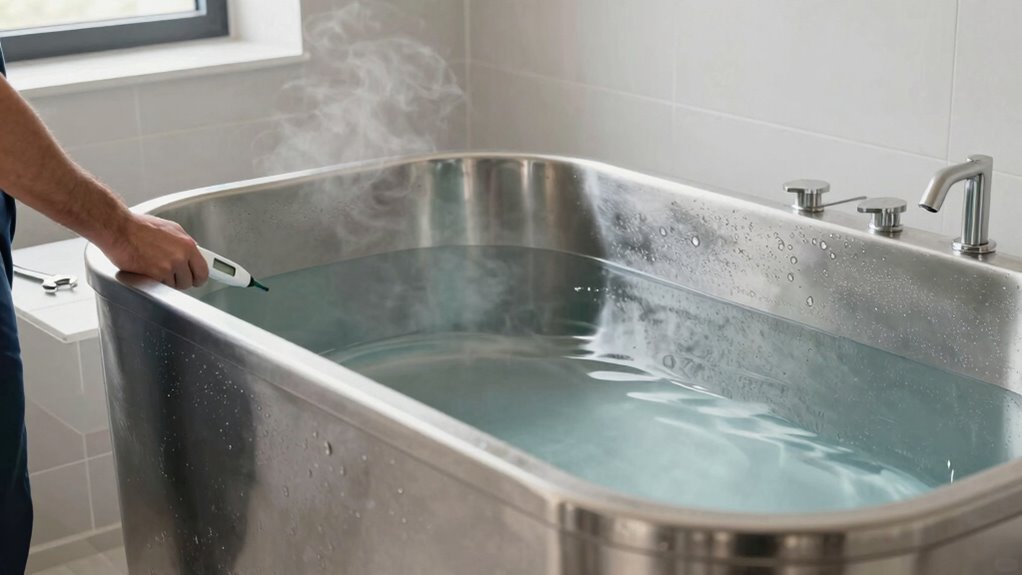

When troubleshooting your cold plunge, stay calm and follow a systematic process. Start by checking the thermostat calibration and confirming the temperature sensor is working properly. Inspect the cooling system, coils, and coolant levels. Listen for unusual noise and verify that pumps operate smoothly. Keep things simple, avoid rushing adjustments, and guarantee regular maintenance. If you keep focusing on the basics, you’ll identify issues without overreacting, and more helpful tips await to guide you through the process.
Key Takeaways
- Follow a systematic approach: check power, then inspect individual components for proper operation.
- Verify thermostat calibration and sensor functionality before making adjustments.
- Regularly clean condenser coils and water filters to maintain cooling efficiency.
- Monitor temperature fluctuations and noises to identify potential mechanical issues early.
- Avoid abrupt changes; troubleshoot methodically to prevent unnecessary stress or damage.
Setting up your cold plunge can sometimes come with unexpected issues, but most problems are easy to troubleshoot if you know where to look. When you’re dealing with temperature regulation or pool maintenance, the key is to stay calm and methodically identify the root cause. If your plunge isn’t reaching the desired coldness, first check the thermostat. Sometimes, it’s simply miscalibrated or needs a reset. Make sure the temperature sensor is properly connected and functioning. If it’s dirty or faulty, it might give inaccurate readings, so clean or replace it as needed.
Next, examine your cooling system. Whether you have a chiller or refrigeration unit, ensure it’s powered on and running smoothly. Listen for unusual noises that could indicate a mechanical failure. Check that the condenser coils are clean and free of debris, as dirty coils can hinder heat exchange and reduce cooling efficiency. You should also verify that the coolant levels are sufficient; low coolant can cause temperature fluctuations. If your setup uses a circulation pump, make sure it’s operating correctly to maintain consistent water flow. Poor circulation can lead to uneven cooling or warm spots, which defeats the purpose of your cold plunge. Regularly inspecting and maintaining your cooling system ensures optimal performance and prevents unexpected breakdowns. Additionally, understanding how your system operates can help you troubleshoot more effectively when issues arise.
Pool maintenance plays a significant role in keeping your cold plunge functioning properly. Regularly test the water’s chemical levels and pH, because imbalance can cause cloudy water and affect equipment longevity. Proper sanitation prevents algae growth, which can clog filters and impair temperature regulation. Additionally, check the filter system to ensure it’s clean and functioning. A clogged filter can reduce water flow, making temperature control more difficult and leading to inconsistent cold temperatures. Proper maintenance practices are essential for optimal operation. Moreover, maintaining proper water chemistry can prevent corrosion and prolong the lifespan of your equipment.
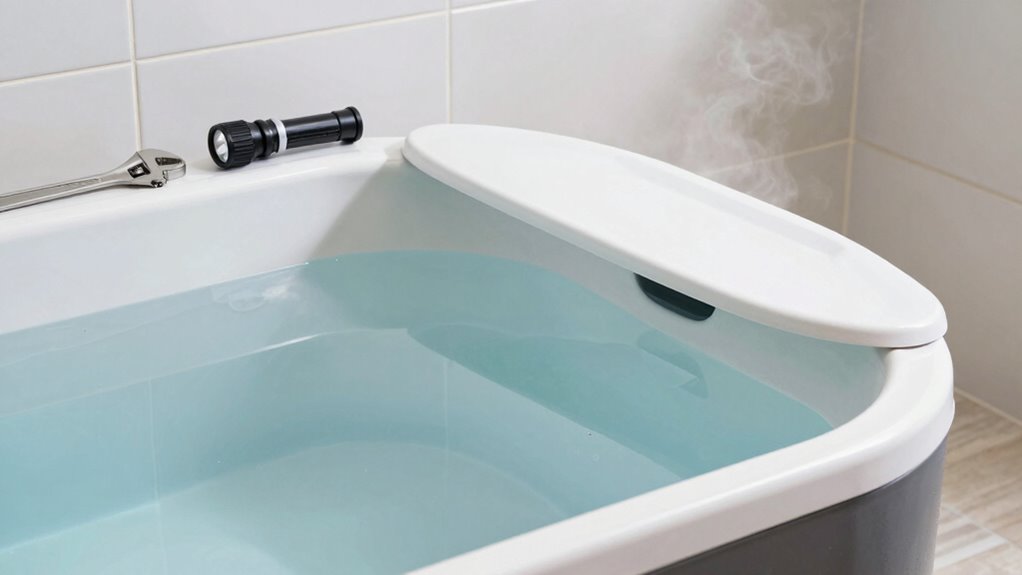
If your cold plunge isn’t cooling effectively, inspect the insulation around the unit. Poor insulation can cause heat transfer from the environment, making it harder to maintain low temperatures. Covering your plunge when not in use can also help conserve coldness and reduce the workload on your cooling system. When troubleshooting, avoid jumping to conclusions or making hasty adjustments. Instead, follow a step-by-step process: check power, inspect components, verify settings, and ensure proper maintenance. Proper system operation is crucial for consistent performance, so understanding how your equipment functions can help you pinpoint issues more efficiently. Most issues are straightforward to fix once you identify the specific problem.
Remaining patient and systematic in your approach prevents unnecessary stress. Remember, many common issues—like temperature fluctuations or equipment noise—are simple fixes once you understand how your system operates. With some basic troubleshooting, you can keep your cold plunge running smoothly, enjoy your refreshing dips, and avoid costly repairs or replacements.
cold plunge water temperature sensor
As an affiliate, we earn on qualifying purchases.
As an affiliate, we earn on qualifying purchases.
Frequently Asked Questions
Can I Use a Regular Ice Bath for Cold Plunging?
Yes, you can use a regular ice bath for cold plunging, but it’s not ideal for consistent use. Alternative cooling methods, like specialized cold plunge setups, often provide better temperature control and safety. Make certain you have the right cold plunge accessories, such as a thermometer and drain valves, to monitor and maintain water quality. This guarantees a safer, more effective cold plunge experience without overreacting to minor issues.
How Often Should I Clean My Cold Plunge?
You should clean your cold plunge at least once a week to keep it safe and inviting. Regularly check water filtration and mineral balance, as these impact cleanliness and comfort. If you notice cloudiness, odors, or residue, it’s time for a thorough clean. Skipping this step risks bacteria buildup and equipment issues. Stay vigilant—consistent cleaning preserves the plunge’s quality and your health, preventing surprises that could derail your recovery routine.
Is It Safe to Stay in the Cold Plunge for Extended Periods?
Staying in a cold plunge for extended periods isn’t typically safe because of cold shock risks, which can cause rapid breathing or even fainting. While hydrotherapy benefits include reduced inflammation and improved circulation, limit your sessions to about 10-15 minutes. Always listen to your body, gradually increase your exposure, and consult a healthcare professional if you have health concerns. Safety is key to enjoying cold plunge benefits without harm.
What Should I Do if the Water Isn’t Cold Enough?
Think of your cold plunge as a symphony where temperature calibration keeps everything in harmony. If the water isn’t cold enough, start by checking the thermostat and adjust it if needed. Next, inspect insulation maintenance; poor insulation can warm the water unexpectedly. Ensuring these elements are in top shape will help maintain the desired cold temperature. Don’t forget, a little routine tuning keeps your plunge performing at its best!
Can I DIY Repair a Leaking Cold Plunge?
Yes, you can DIY repair a leaking cold plunge. Start by identifying plumbing issues causing the leak, like loose fittings or damaged hoses. Use sealant repairs designed for water tanks to fix small cracks or leaks in the basin or plumbing connections. Turn off the power and water supply, dry the area thoroughly, then apply the sealant evenly. Allow it to cure fully before refilling and testing for leaks.
cold plunge cooling system maintenance kit
As an affiliate, we earn on qualifying purchases.
As an affiliate, we earn on qualifying purchases.
Conclusion
Sometimes, the tiniest glitch can turn into a bigger issue—like how the unexpected chill in your cold plunge might just be a coincidence, or a sign to check your thermostat. When troubleshooting, stay calm and methodical; chances are, a simple fix is hiding in plain sight. After all, it’s funny how a minor hiccup can lead you to discover a new shortcut or insight, making your cold plunge experience smoother and even more invigorating.
As an affiliate, we earn on qualifying purchases.
As an affiliate, we earn on qualifying purchases.