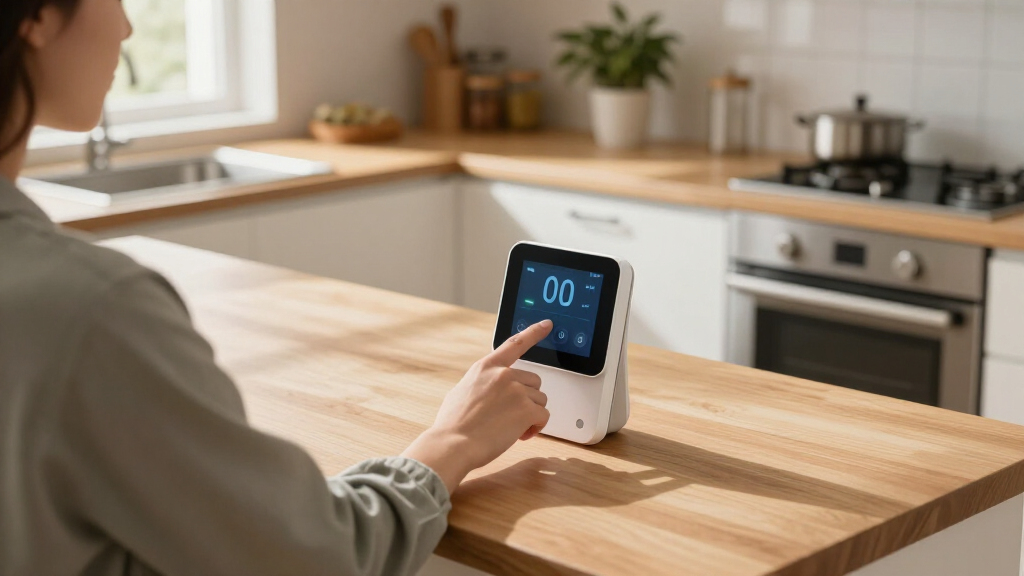

Smart home energy monitors clamp onto your electrical panel and show exactly where every kilowatt-hour goes, and the right one depends on whether you want whole-home tracking, per-circuit detail, solar net metering, or full local control with no cloud dependency. My top pick is the Emporia Vue 3 with solar monitoring, which balances real-time accuracy, circuit-level sensing, and the most polished app in this lineup. The Refoss 16-circuit monitor is the standout alternative for Home Assistant users who refuse to rely on a manufacturer’s cloud, while the Meross monitor is the easiest budget entry point for renters and first-timers. The main tradeoffs in this category are between circuit-level versus whole-home monitoring, cloud convenience versus local API access, and upfront sensor count versus future expandability. Keep reading for the full breakdown of all 11 models.

Get home appliances delivered free — and shop member deals
- Fast, free delivery on millions of items
- Access to Prime Big Deal Days deals on October 6–7
- Prime Video, Amazon Music and more included
Complete the kit


Key Takeaways
- The Emporia Vue 3 family dominates three of the top spots because its app, accuracy, and solar integration outclass every generic WiFi monitor in this lineup — but you pay more and accept cloud dependency.
- Local API access via Home Assistant is the single biggest differentiator: both Refoss models offer no-cloud operation, while Emporia requires its cloud for full functionality.
- Circuit sensor count matters more than headline amperage ratings. A 16-sensor monitor pinpoints exactly which appliance drains your bill, while a 2-CT setup only tells you total consumption.
- Several generic dual-channel monitors (the 2×80A and 2×120A models) are near-duplicates with different branding — specs look similar but app quality and long-term firmware support vary wildly.
- The Siemens Inhab is the only professionally oriented option here, with superior build quality and circuit-level hardware, but its price and installer-focused ecosystem make it overkill for most homeowners.
| Emporia Vue 3 Home Energy Monitor – Real-Time Electricity Usage and Solar Monitoring |  | Best Overall | Certification: UL Listed | Supported Systems: Single phase, single-split phase, 2-wire, 3-wire, 3-phase, 4-wire Wye | Sensors: 16 clamp-on sensors included | VIEW LATEST PRICE | See Our Full Breakdown |
| Emporia Vue 3 Home Energy Monitor – Real-Time Electricity Usage and Power Consumption Meter |  | Best Value Pick | Certification: UL Listed | Supported Systems: Single phase, single-split phase, 2-wire, 3-wire, 3-phase, 4-wire Wye | Sensor Compatibility: Up to 16 branch sensors (sold separately) | VIEW LATEST PRICE | See Our Full Breakdown |
| Refoss Smart Home Energy Monitor with Open API, Home Assistant, No Cloud |  | Best for Smart Home Power Users | Model: EM16P | Current Sensors: 2 main circuits (2–200A), 16 branch circuits (1–60A) | Connectivity: Built-in Web UI, Open API, MQTT | VIEW LATEST PRICE | See Our Full Breakdown |
| Smart Home Energy Monitor 2×80A, Dual-Channel WiFi Electricity Usage Tracker with App Control |  | Best for Major Appliance Monitoring | Channels: 2 x 80A sensing channels | Power Source: Corded electric | Minimum Operating Voltage: 110 volts | VIEW LATEST PRICE | See Our Full Breakdown |
| WiFi Home Energy Monitor with 2 x 120A CTs and Power Tracking |  | Best for Solar and Battery Homes | Current Transformers: 2 x 120A CTs | Phase: Single-phase 3-wire | WiFi Frequency: 2.4 GHz | VIEW LATEST PRICE | See Our Full Breakdown |
| WiFi Home Energy Monitor with 3 80A CT Clamps |  | Best for Targeted Circuit Tracking | Circuit Monitoring: 3 selected circuits in electrical panel | CT Clamps: 3 x 80A | Input Voltage: AC 100–240V | VIEW LATEST PRICE | See Our Full Breakdown |
| Refoss Smart Home Energy Monitor with 16 60A Circuit Sensors |  | Best for Privacy and Local Control | Number of Sensors: 16 | Sensor Capacity: 60A per sensor | Supported Systems: Single-phase, Split-phase, 3-phase 4-wire Wye | VIEW LATEST PRICE | See Our Full Breakdown |
| Smart Home Energy Monitor with 16 50A Circuit Sensors, Real-Time Power & Cost Tracking, Compatible with Home Assistant |  | Best for Landlords and Shared Homes | Number of Sensors: 16 | Sensor Current Rating: 50A | Supported Voltages: 120/240VAC, 415Y/240VAC (no Delta) | VIEW LATEST PRICE | See Our Full Breakdown |
| SIEMENS Inhab Smart Home Energy Monitor with Circuit Level Sensors |  | Best Premium Build and Whole-Panel Accuracy | Circuit Sensors: 16 sensors, 50A each | Main Sensors: 2 x 200A | Compatibility: USA and Canada | VIEW LATEST PRICE | See Our Full Breakdown |
| Emporia Vue 3 Home Energy Monitor |  | Best Overall Ecosystem | Certification: UL Listed | Connectivity: 2.4 GHz WiFi | Supported Systems: Single phase, single-split phase, 2-wire, 3-wire, 3-phase, 4-wire Wye | VIEW LATEST PRICE | See Our Full Breakdown |
| Meross Smart Home Energy Monitor, Real-Time Power & Cost Tracking |  | Best Local-Storage Pick for Home Assistant Fans | Certification: ETL, UL 61010 | Compatibility: US single-phase, split-phase, and 3-phase systems | Max Circuits: 2 main circuits (200A) + 16 branch circuits (60A) | VIEW LATEST PRICE | See Our Full Breakdown |
| smart home energy monitor | Connectivity | Warranty | Dimensions |
|---|---|---|---|
| Emporia Vue 3 Home Energy Moni | 2.4 GHz Wi-Fi | 1 year | — |
| Emporia Vue 3 Home Energy Moni | 2.4 GHz Wi-Fi | 1 year | — |
| Refoss Smart Home Energy Monit | Built-in Web UI, Open API, MQTT | — | 4.5 x 3.5 x 1.1 inches |
| Smart Home Energy Monitor 2×80 | WiFi with app control | — | — |
| WiFi Home Energy Monitor with | — | — | — |
| WiFi Home Energy Monitor with | WiFi 2.4GHz | — | 4.2 x 2.5 x 1.2 inches |
| Refoss Smart Home Energy Monit | Wi-Fi, Open API, MQTT, WebSocket | 2 years | 4.5 x 3.5 x 1.1 inches |
| Smart Home Energy Monitor with | WiFi 2.4GHz, MQTT (LAN only) | 1 year | 3.1 x 1.2 x 4.18 inches |
| SIEMENS Inhab Smart Home Energ | — | — | 1.1 x 5.71 x 2.76 inches |
| Emporia Vue 3 Home Energy Moni | 2.4 GHz WiFi | 1 year | — |
| Meross Smart Home Energy Monit | WiFi, Open API, Web Control | 2 years | 4.5 x 3.48 x 1.1 inches |
More Details on Our Top Picks
Emporia Vue 3 Home Energy Monitor – Real-Time Electricity Usage and Solar Monitoring
This version of the Emporia Vue 3 earns the top spot because it bundles what most competitors charge extra for: 16 clamp-on sensors in the box, full solar and net-metering support, and a polished mobile app. Compared with the sensor-less Emporia Vue 3 variant elsewhere in this roundup, it delivers circuit-level breakdown out of the box, so buyers can see exactly which appliance drives their bill rather than guessing from a whole-home figure. It also handles nearly every residential panel configuration, including 3-phase Wye setups, where options like the 2×120A single-phase monitor simply can’t compete. The tradeoff is a cloud-dependent architecture: real-time data requires a steady 2.4 GHz Wi-Fi connection, and one-second resolution data isn’t retained long-term. Buyers who want local storage should look at the Refoss EM16P instead.
Pros:- 16 clamp-on sensors included, enabling per-circuit monitoring from day one
- UL Listed with support for nearly every residential panel type, including 3-phase Wye
- Native solar and net-metering tracking with automated energy management in the app
- Polished mobile app with real-time data and cost insights
Cons:- Requires a constant 2.4 GHz Wi-Fi connection for real-time monitoring
- Minute-level data is only retained for 7 days and 1-second data isn’t stored
- 3-phase systems with earthed neutral need an additional sensor
Best for: Homeowners who want whole-home plus circuit-level monitoring, including solar households, without buying sensors separately
Not ideal for: Privacy-focused tinkerers — it depends on Emporia’s cloud and Wi-Fi rather than local control like the Refoss EM16P
- Certification:UL Listed
- Supported Systems:Single phase, single-split phase, 2-wire, 3-wire, 3-phase, 4-wire Wye
- Sensors:16 clamp-on sensors included
- Connectivity:2.4 GHz Wi-Fi
- Data Retention:Minute data 7 days; hourly data indefinite; 1-second data in app
- Warranty:1 year
Our verdict“If one monitor has to do everything for a typical household, this sensor-loaded Vue 3 is the safest and most complete pick.”
Emporia Vue 3 Home Energy Monitor – Real-Time Electricity Usage and Power Consumption Meter
Same UL-listed hardware and app experience as the flagship Vue 3, but without the sensor bundle — which is exactly why it works as the value play. Buyers who only need whole-home consumption tracking can start here and add branch sensors later, paying only for what they actually monitor. Compared with the 16-sensor Vue 3, the upfront cost drops while keeping identical solar and net-metering support. Against budget trackers like the 2×80A dual-channel monitor, it offers far better app maturity and panel compatibility, though the expandability ceiling is real: heavy appliance-level monitoring means buying sensors one by one, which adds up. Data also only flows while the app is active, and everything routes through Wi-Fi and the cloud.
Pros:- Lower entry cost with the same UL-listed platform and app as the sensor-bundled Vue 3
- Supports solar and net-metering from day one
- Expandable up to 16 branch sensors purchased as needed
- Broad panel compatibility including 3-phase systems
Cons:- All branch sensors sold separately, so circuit-level monitoring costs extra
- Data only displays when the app is active
- Dependent on 2.4 GHz Wi-Fi and cloud connectivity
Best for: Budget-conscious homeowners who want reliable whole-home tracking now and the option to expand to circuits later
Not ideal for: Buyers who immediately want detailed per-appliance data — the sensor-add-on costs will erase the savings versus the bundled version
- Certification:UL Listed
- Supported Systems:Single phase, single-split phase, 2-wire, 3-wire, 3-phase, 4-wire Wye
- Sensor Compatibility:Up to 16 branch sensors (sold separately)
- Connectivity:2.4 GHz Wi-Fi
- Data Retention:Minute data 7 days; hourly data indefinite
- Warranty:1 year
Our verdict“The cheapest way into the Vue ecosystem without giving up upgrade potential — just don’t expect circuit detail on day one.”
Refoss Smart Home Energy Monitor with Open API, Home Assistant, No Cloud
The Refoss EM16P is the roundup’s enthusiast choice, and its no-cloud, local-control design is the reason. Where the Emporia Vue 3 sends everything through Wi-Fi and a manufacturer app, this unit exposes an open API, MQTT, and a built-in web UI, so Home Assistant users can log, chart, and automate energy data on their own terms. That makes it the strongest option for solar self-consumption automation — pairing with tools like OpenClaw AI to shift loads when panels are producing. Accuracy is a claimed ±1% at full load, and local storage keeps up to five years of history, dwarfing Emporia’s 7-day minute-level retention. The catch: realizing any of this value requires technical setup. Casual buyers will find the configuration steeper than a plug-and-play app experience.
Pros:- Fully local control with open API, MQTT, and built-in web UI — no cloud required
- Up to 5 years of onboard historical data retention
- ±1% accuracy at 200A with per-circuit monitoring across 16 branch circuits
- Strong solar-focused automation via Home Assistant and OpenClaw AI
Cons:- API and automation features demand technical skill to configure
- Fixed sensor layout: only 2 main (2–200A) and 16 branch (1–60A) channels
- No mainstream consumer app experience for plug-and-play users
Best for: Home Assistant users and solar households who want local control, data privacy, and deep automation
Not ideal for: Non-technical buyers who just want an app and a number — the API and MQTT setup will be frustrating compared with the Vue 3
- Model:EM16P
- Current Sensors:2 main circuits (2–200A), 16 branch circuits (1–60A)
- Connectivity:Built-in Web UI, Open API, MQTT
- Accuracy:±1% (200A), ±2% (low current)
- Data Storage:Up to 5 years local
- Certifications:ETL, UL 61010
- Dimensions:4.5 x 3.5 x 1.1 inches
Our verdict“The clear pick for tinkerers who want their energy data to live on their own network, not someone else’s cloud.”
Smart Home Energy Monitor 2×80A, Dual-Channel WiFi Electricity Usage Tracker with App Control
Not everyone needs 16 circuits of data. This dual-channel 80A tracker is built for the simpler question: what is my AC or water heater actually costing me? Its two clamp channels attach to individual high-draw circuits, and bi-directional sensing means solar or backup-power homes can track flow in both directions. Unlike the full-panel Refoss EM16P or Vue 3, there’s no whole-home picture — but that’s the point, and the Tuya/Smart Life ecosystem makes setup approachable for buyers already running Alexa or Google Home. The 80A-per-channel ceiling rules out some whole-panel installs, and app onboarding can be fiddly, so it’s a targeted tool rather than a complete solution.
Pros:- Dual 80A channels sized for major appliances like AC units and water heaters
- Bi-directional tracking supports solar and backup power setups
- Works with the widely used Tuya/Smart Life ecosystem, Alexa, and Google Home
- Straightforward clamp-on installation
Cons:- 80A per channel is too low for whole-panel monitoring on many homes
- App setup through Tuya can be confusing for first-time users
- No circuit-level expansion beyond the two channels
Best for: Homeowners who want to track two specific high-consumption appliances, like an air conditioner and water heater, on a budget
Not ideal for: Buyers wanting whole-home or multi-circuit visibility — two channels can’t cover a full panel
- Channels:2 x 80A sensing channels
- Power Source:Corded electric
- Minimum Operating Voltage:110 volts
- Compatible Devices:Tuya devices, Amazon Alexa, Google Home
- Connectivity:WiFi with app control
- Installation:Clamp-on sensors
Our verdict“A focused, affordable way to answer ‘what’s my biggest appliance costing me’ without paying for a full-panel system.”
WiFi Home Energy Monitor with 2 x 120A CTs and Power Tracking
This monitor’s strength is bi-directional measurement at higher amperage: its two 120A CTs comfortably cover a typical split-service feed, and pluggable terminals with split-core clamps make panel installation less painful than it sounds. For solar-plus-battery households, seeing import and export flow in one app is the core feature, and this unit delivers it with configurable reporting intervals that let owners tune granularity to their needs. Compared with the 2×80A dual-channel tracker, the higher current rating makes it viable as a main-feed monitor rather than just an appliance meter — but unlike the Refoss EM16P or either Vue 3, it’s single-phase 3-wire only, so three-phase properties are out of luck. Wi-Fi dependence also means data gaps during outages, which is exactly when solar homes watch their numbers most closely.
Pros:- 120A CTs suit main-feed monitoring, not just individual appliances
- Bi-directional tracking captures solar export and battery charge/discharge flow
- Split-core CTs and pluggable terminals simplify installation
- Configurable reporting intervals for customized granularity
Cons:- Limited to single-phase 3-wire electrical systems
- Requires Wi-Fi for full functionality, with no local storage option
- No branch-circuit monitoring capability
Best for: Single-phase solar and battery-storage owners who need accurate bi-directional tracking on their main feed
Not ideal for: Three-phase homes or anyone wanting per-circuit detail — it’s whole-feed only and single-phase limited
- Current Transformers:2 x 120A CTs
- Phase:Single-phase 3-wire
- WiFi Frequency:2.4 GHz
- Energy Monitoring:Live energy use, bi-directional tracking
- Power Source:Battery powered
- Control Method:Smartphone app
Our verdict“A solid main-feed monitor for single-phase solar homes that care more about import/export accuracy than circuit-level detail.”
WiFi Home Energy Monitor with 3 80A CT Clamps
This option takes a different approach than the Refoss or the 16-sensor Home Assistant model: instead of instrumenting the whole panel, it watches three specific circuits at 80A each. That focus is its strength. If the goal is understanding a power-hungry HVAC unit, a water heater, or a garage EV charger, paying for sixteen sensors is wasted money. The temperature alert above 50°C adds a safety layer none of the other picks emphasize, and the built-in 15A relay control lets owners actually switch a load remotely rather than just observe it. Compared with the Emporia Vue 3, though, the data story is thinner — no whole-home view, no solar or net-metering support, and satisfaction ratings suggest the app experience trails the category leaders.
Pros:- Covers three individual circuits at up to 80A each, enough for major appliances
- Relay control up to 15A allows remote switching, not just monitoring
- Temperature sensor with 50°C alerts adds an overheating safety net
- Compact 13.4 oz design fits easily inside crowded panels
Cons:- Only three circuits — no whole-home picture unlike the Refoss or Siemens options
- Moderate customer satisfaction suggests app reliability and support lag behind category leaders
- Tuya/Smart Life ecosystem is less flexible than open platforms like Home Assistant
Best for: Homeowners who want to monitor and remotely control two or three specific high-draw circuits like an HVAC system, water heater, or garage charger without paying for a full 16-sensor setup
Not ideal for: Anyone wanting whole-home consumption data or solar tracking — this only covers selected circuits, so total usage stays invisible
- Circuit Monitoring:3 selected circuits in electrical panel
- CT Clamps:3 x 80A
- Input Voltage:AC 100–240V
- Connectivity:WiFi 2.4GHz
- App Compatibility:Smart Life, Tuya
- Temperature Alerts:External sensor, alerts above 50°C
- Relay Control:Up to 15A
- Dimensions:4.2 x 2.5 x 1.2 inches
Our verdict“Buy this if you want affordable, focused oversight of a few big loads with remote control — skip it if whole-home data is the goal.”
Refoss Smart Home Energy Monitor with 16 60A Circuit Sensors
Where the Emporia Vue 3 leans on its cloud app, the Refoss goes the opposite direction: local Web UI control, Open API, MQTT, and WebSocket mean data stays on the network with no subscription fees ever. For Home Assistant tinkerers and privacy-minded buyers, this makes it the stronger choice despite Emporia’s friendlier app. The five years of stored data beats Emporia’s seven days of one-minute resolution, which matters for spotting seasonal trends in usage or solar production. It handles single-phase, split-phase, and 3-phase Wye setups — though not every configuration, so buyers with unusual panels should verify first. Setup friction is the real cost here: compared with the Siemens Inhab, the Refoss demands more technical patience, and some buyers report a rocky first installation.
Pros:- Fully local control via Web UI, Open API, MQTT, and WebSocket — no cloud dependency
- Five years of data storage with zero subscription costs
- 16 high-precision sensors covering most residential panels
- Solar energy optimization and smart alerts built in
Cons:- Installation and initial setup are more technical than app-first rivals like Emporia
- Only supports specific electrical configurations — no Delta support
- Some buyers report setup challenges out of the box
Best for: Smart home enthusiasts and privacy-conscious homeowners who want deep local control, long-term data history, and solar optimization without monthly fees
Not ideal for: Non-technical buyers who want a plug-and-play app experience — the local-first design and API-focused setup involve a steeper learning curve than the Emporia Vue 3
- Number of Sensors:16
- Sensor Capacity:60A per sensor
- Supported Systems:Single-phase, Split-phase, 3-phase 4-wire Wye
- Data Storage:5 years
- Connectivity:Wi-Fi, Open API, MQTT, WebSocket
- Warranty:2 years
- Dimensions:4.5 x 3.5 x 1.1 inches
- Weight:4.27 pounds
Our verdict“The pick for buyers who want their energy data under their own roof — literally — and don’t mind earning that privacy with some setup work.”
Smart Home Energy Monitor with 16 50A Circuit Sensors, Real-Time Power & Cost Tracking, Compatible with Home Assistant
What separates this monitor from the Refoss with the same sensor count is its cost-tracking and billing focus. The customizable billing features are built for rental properties and shared apartments — landlords can allocate costs per tenant, and roommates can split bills based on actual circuit-level usage rather than guesswork. It also runs MQTT over LAN, giving Home Assistant users a private local pipeline similar to the Refoss. The tradeoffs are real: 50A sensors are lower capacity than the Refoss’s 60A units, the one-year warranty is shorter, and unlocking the automation features requires MQTT knowledge that casual users won’t have. Compared with the Emporia Vue 3, the app ecosystem is less polished, but the rental billing angle is unique in this lineup.
Pros:- Customizable billing makes cost-splitting in rentals and shared apartments practical
- Home Assistant compatible with LAN-only MQTT for private local data
- 16 sensors give circuit-level granularity for the whole panel
- Real-time power and cost tracking in the app
Cons:- 50A sensor rating is lower than the Refoss’s 60A sensors
- 2.4GHz WiFi only, no 5GHz support
- Advanced features require MQTT configuration and technical comfort
Best for: Landlords and roommates in shared housing who need to track electricity costs per tenant or per circuit and split bills accurately
Not ideal for: Casual users who just want a polished app with zero configuration — MQTT setup and technical knowledge are needed for the best features
- Number of Sensors:16
- Sensor Current Rating:50A
- Supported Voltages:120/240VAC, 415Y/240VAC (no Delta)
- Connectivity:WiFi 2.4GHz, MQTT (LAN only)
- Home Automation:Home Assistant compatible
- Warranty:1 year
- Dimensions:3.1 x 1.2 x 4.18 inches
Our verdict“The clear choice for anyone billing tenants or roommates for electricity — everyone else should weigh it against the Refoss’s stronger hardware.”
SIEMENS Inhab Smart Home Energy Monitor with Circuit Level Sensors
Siemens brings something the budget monitors can’t: direct measurement at both the circuit and main level, with two 200A main sensors alongside 16–50A circuit sensors. That dual-layer view means whole-home totals come from actual measurement rather than inference, giving it an accuracy edge over the WiFi 3-clamp model, which only samples selected circuits. Installation is designed to slot into existing panels cleanly, and the app ties into advanced energy management rather than just dashboards. The catches are notable. App functionality is limited to the USA and Canada, unlike the globally capable Refoss, and pricing transparency is poor — expect to pay a premium without clear comparisons. Buyers outside North America should look elsewhere entirely.
Pros:- Direct measurement with 2 x 200A main sensors plus 16 circuit-level sensors
- Trusted Siemens engineering and panel-fit installation design
- Tracks both consumption and generation in real time
- No estimation — energy usage is measured directly at the source
Cons:- App functionality restricted to USA and Canada only
- Premium pricing with poor price transparency at retail
- Requires panel access and likely professional installation
Best for: US and Canadian homeowners who want brand-backed, whole-panel accuracy with direct main-level measurement and professional-grade energy management
Not ideal for: Buyers outside the USA and Canada — the mobile app simply won’t function there — and budget shoppers given the premium pricing
- Circuit Sensors:16 sensors, 50A each
- Main Sensors:2 x 200A
- Compatibility:USA and Canada
- Installation:Fits existing electrical panels
- Part Number:INHEM1216
- Dimensions:1.1 x 5.71 x 2.76 inches
- Weight:4.8 pounds
Our verdict“The most confidence-inspiring hardware here for North American buyers who want measured, not estimated, whole-home data — if the premium price fits.”
Emporia Vue 3 Home Energy Monitor
The Vue 3 earns a top spot by balancing everything its rivals trade away. It’s UL Listed — a safety certification the generic WiFi monitors lack — and it covers single phase through 3-phase 4-wire Wye systems, with solar and net-metering support built in. Compared with the Refoss, Emporia’s app is far friendlier for non-technical users, though the data philosophy differs sharply: the Vue 3 keeps only seven days of one-minute data versus the Refoss’s five years of local history. Accuracy lands at ±2%, respectable for the price. Automated energy savings features do some of the thinking for you, which neither the 3-clamp WiFi monitor nor the billing-focused rental unit can match. The one-year warranty is short, and 3-phase setups with neutral need an extra sensor.
Pros:- UL Listed certification for safety and reliability
- Solar and net metering support out of the box
- Broad electrical system compatibility from single-phase to 3-phase Wye
- Automated energy savings features and remote management via app or web
Cons:- Only 7 days of 1-minute data retention unless stepped down to hourly
- 3-phase systems with neutral require an additional sensor
- Requires 2.4GHz WiFi and some technical setup for advanced features
Best for: Homeowners who want a polished, app-driven experience with solar monitoring, safety certification, and automated savings without technical tinkering
Not ideal for: Data hoarders and privacy-first users — short cloud-based data retention and no fully local mode make the Refoss the better fit
- Certification:UL Listed
- Connectivity:2.4 GHz WiFi
- Supported Systems:Single phase, single-split phase, 2-wire, 3-wire, 3-phase, 4-wire Wye
- Sensor Accuracy:±2%
- Solar Support:Yes, with net metering
- Data Retention:7 days (1-minute data), indefinite (1-hour data)
- Warranty:1 year
Our verdict“The easiest recommendation for most homes — safe, capable, and app-friendly — unless local data control is non-negotiable.”
Meross Smart Home Energy Monitor, Real-Time Power & Cost Tracking
Privacy is the standout story here. Unlike the Emporia Vue 3, which leans on a cloud account for its slickest features, this Meross monitor keeps up to five years of data stored locally, so your household energy history never leaves the house. Coverage is generous for the price: 2×200A main circuits plus 16 branch circuits at 60A, matching the sensor count of the Refoss 16-circuit model while adding broader split-phase and 3-phase compatibility. Home Assistant integration works well for automations and solar tracking, though compared with the plug-and-play feel of the Emporia ecosystem, expect a more technical setup and no built-in display — everything lives in the app or web interface. Compared with the SIEMENS Inhab, this option trades a premium brand name for local control, an open API, and a friendlier price.
Pros:- Local data storage with no cloud dependency keeps five years of energy history private
- Circuit-level monitoring across 2 main and 16 branch circuits rivals pricier systems
- Solid Home Assistant integration supports automation and solar management
- Works with US single-phase, split-phase, and 3-phase electrical systems
Cons:- Home Assistant and API integration demands technical comfort during setup
- No built-in display means you depend entirely on the app for data viewing
- US electrical systems only, so international buyers should skip it
Best for: Privacy-minded smart home tinkerers running Home Assistant who want circuit-level data without a cloud dependency
Not ideal for: Casual users wanting a screen or a zero-setup app experience — this requires panel installation and some configuration patience
- Certification:ETL, UL 61010
- Compatibility:US single-phase, split-phase, and 3-phase systems
- Max Circuits:2 main circuits (200A) + 16 branch circuits (60A)
- Data Storage:Up to 5 years, stored locally
- Connectivity:WiFi, Open API, Web Control
- Included Components:Energy monitor, current transformers, wire harness, insulation plugs, wire nuts, WiFi antenna
- Dimensions:4.5 x 3.48 x 1.1 inches
- Weight:3.19 pounds
- Warranty:2 years
Our verdict“If you run Home Assistant and want deep, private, circuit-level energy data without paying SIEMENS prices, this is the monitor to buy.”

How We Picked
I ranked these monitors against the criteria that actually change a buyer’s outcome: monitoring granularity (whole-home CTs versus 16-circuit sensing), data access (cloud-only versus local API and Home Assistant compatibility), app and software quality, measured accuracy at the 1–2% level, installation difficulty, and value per circuit monitored. A monitor that costs $50 more but adds 14 circuit sensors is a better long-term buy than a cheaper whole-home unit that leaves you guessing which appliance is the culprit.
The ranking logic favors models with a proven software ecosystem first, because hardware is only half the product — a monitor with a buggy or abandoned app becomes e-waste within two years. That is why the Emporia Vue 3 variants and both Refoss units lead the list, mid-tier generic WiFi monitors fill the value slots, and the Siemens Inhab earns a premium niche despite its higher cost. Expandability and solar support served as tiebreakers, since buyers who add EVs, heat pumps, or solar later regret monitors that cannot grow with them.
Factors to Consider When Choosing Smart Home Energy Monitors
Before choosing a monitor, it helps to understand what separates a genuinely useful device from an expensive gadget. These are the factors that shaped my ranking — and the mistakes I see buyers make most often.Whole-Home Versus Circuit-Level Monitoring
The single most consequential decision is how granular you want your data to be. A two-CT whole-home monitor tells you total consumption and is fine for verifying your utility bill or tracking solar export, but it cannot tell you whether your old fridge or your HVAC is the real energy hog. Circuit-level monitors with 16 sensors cost $60–100 more but let you assign every major load a name and a dollar figure, which is where actual savings happen — most homeowners find one or two surprises worth hundreds of dollars a year. A common mistake is buying whole-home hardware to save money, then upgrading to a circuit model six months later and paying twice. If your budget is tight, a better move is to buy a circuit-capable unit and start with only your mains monitored, adding sensors as needed.
Cloud Dependency Versus Local Control
Most budget monitors route every reading through the manufacturer’s cloud servers, which means no internet equals no data, and no company support equals a dead device. Models with local API access and Home Assistant compatibility keep everything on your network: faster updates (per-second instead of per-minute), no subscription risk, and data that stays private. The tradeoff is real — local-first options demand more technical setup and lack the polished onboarding of cloud ecosystems like Emporia’s. If you already run Home Assistant or a smart home hub, strongly favor local control; if you just want a phone app that works out of the box, a well-supported cloud product is the pragmatic choice. Check whether the manufacturer publishes an open API before buying, because that is your insurance policy if the company disappears.
CT Clamp Ratings and Panel Compatibility
CT (current transformer) clamps come in 50A, 60A, 80A, and 120A ratings, and the rating must exceed the breaker it wraps around. Your two mains usually need 200A-rated or dual clamps, while individual circuits rarely exceed 50A — which is why 16×50A sensor bundles cover most homes fine. A frequent buyer error is assuming a higher amperage rating means better quality; it does not, it just means a larger measurable range, often at slightly reduced sensitivity on small loads. Physical fit matters too: crowded panels or compact apartment breaker boxes may not accommodate thick clamp cables, and some units require 240V power tapped inside the panel, which legally calls for an electrician in most jurisdictions. Budget $100–250 for professional installation if you are not comfortable working inside a live panel.
Solar and Net Metering Support
Not every monitor can handle bidirectional flow, and buyers with solar routinely discover this after installation. A solar-capable monitor uses a second set of clamps on the solar feed to separately track production, consumption, and export, and calculates true net metering rather than just guessing. Generic monitors that only measure consumption will show misleading numbers on solar homes, sometimes implying you are drawing power when you are actually exporting it. If solar panels, a battery, or an EV charger with vehicle-to-home capability are on your roadmap — even a few years out — choosing a solar-ready model now costs little extra and avoids a full replacement later. Emporia currently handles solar integration most cleanly among the picks here, while Home Assistant setups can compute net flow manually with the right sensor configuration.
App Quality, Firmware Support, and the Two-Year Test
The hardware is simple; the software is where monitors succeed or fail. Before buying, check the app store reviews from the last six months — not the all-time rating — because firmware abandonment is rampant in this category. Small brands frequently rebrand the same white-label monitor under three or four names (a pattern visible even in this roundup’s generic WiFi entries), and when one brand disappears, app servers go down for everyone. Established companies like Emporia, Meross, and Siemens have larger user bases that pressure them into maintaining their software. My rule: if you cannot find evidence of a firmware update or responsive support within the past year, treat the device as disposable and price your expectations accordingly.
Realistic Savings and Payback Math
A monitor does not save money by itself — the insights do. Studies and user reports suggest households that act on circuit-level data typically cut 5–10% off their bill by finding phantom loads, malfunctioning appliances, or badly scheduled heating, which puts a $150 monitor’s payback at roughly a year for an average $150/month bill. Be skeptical of marketing claims about automatic savings; only a few ecosystems integrate with smart thermostats and plugs to actually automate load shifting. The buyers who get the most value check their dashboard for the first month, make two or three changes, and then let alerts handle the rest. If you would never open the app after week two, buy the cheapest acceptable monitor, because premium data you ignore has zero return.
Frequently Asked Questions
Do I need an electrician to install a smart home energy monitor?
For most whole-home monitors, yes — the CT clamps attach to the mains inside your electrical panel, and any wiring error there is genuinely dangerous, not just inconvenient. Clamping sensors around insulated main wires is technically non-contact, but opening the panel cover and powering the monitor itself usually requires connecting to a breaker, which is regulated work in many areas. If you only want to monitor individual appliance circuits and your panel has an accessible subpanel or plug-in circuits, some homeowners do self-install in 30–45 minutes with the breaker off. Budget $100–250 for an electrician if you have any doubt; it is a small fraction of the total system cost and protects both you and your home insurance. Solar-capable installations add complexity because production clamps go on the inverter feed, which almost always warrants a professional.
Is 16-circuit monitoring worth the extra cost over a whole-home monitor?
For most homeowners, yes, because the entire financial payoff of these devices comes from knowing which loads cost you money, not just the total. A whole-home monitor shows a graph of your usage; a circuit-level monitor shows that your garage freezer is drawing $18 a month or that your HVAC short-cycles all afternoon. That specificity is what turns a dashboard into an action list. The exception is renters, apartment dwellers with few circuits, or anyone who only wants to verify their utility bill — for them, a two-CT unit does the job at half the price. One practical note: 16 sensors rarely cover every breaker in a modern home, so plan to prioritize kitchen, HVAC, water heater, laundry, and any always-on mystery circuits rather than trying to monitor everything.
What happens to my monitor if the manufacturer shuts down its cloud?
This is the biggest long-term risk in the category, and it has already killed several budget brands. A cloud-only monitor with dead servers typically degrades to a paperweight, or at best a Bluetooth readout with no history or alerts. Your protections are open APIs and local control: monitors that integrate with Home Assistant or expose a REST/MQTT API continue working fully offline even if the vendor vanishes, which is why the Refoss no-cloud models rank highly despite less polished apps. Established brands like Emporia and Meross carry lower shutdown risk due to their user base size, but the risk is never zero. If continuity matters to you, verify local API support before purchasing, and avoid any monitor whose app has not been updated in over a year.
Can one monitor track my solar panels and my home usage at the same time?
Only if the model explicitly supports bidirectional or multi-channel measurement — standard consumption monitors will misreport solar homes because exported power looks identical to imported power at the mains. Solar-ready units add a second clamp set on the solar feed and calculate production, consumption, self-consumption, and export separately in the app, which is exactly what you need for verifying net metering credits. Among the picks here, the solar variant of the Emporia Vue 3 handles this most cleanly, and Home Assistant setups with the Refoss units can replicate the math with custom sensors. If you have a battery storage system, check compatibility specifically, since battery charge and discharge add a third flow that not all apps model correctly. Homes planning solar within a few years should buy solar-capable hardware now to avoid replacing the monitor later.
How accurate are these monitors compared to my utility meter?
Quality monitors typically land within 1–2% of your utility meter over a monthly billing cycle, which is accurate enough for every practical decision you would make. Short-term readings vary more — second-by-second data will not match a revenue-grade meter exactly, and cheap CT clamps can drift on very small loads below about 10 watts, which is why phantom-load estimates differ between brands. Accuracy also depends on correct installation: a clamp that is slightly ajar, mounted on the wrong conductor, or configured with the wrong phase will produce confidently wrong numbers. After installation, compare your monitor’s monthly total against your utility bill once; a discrepancy over 5% usually points to a setup issue rather than hardware failure. Calibration options in the app let you nudge readings to match your bill if you want tight agreement.
Conclusion
The right pick here depends less on specs and more on how you plan to use the data. For best overall, the Emporia Vue 3 with solar monitoring delivers the strongest combination of accuracy, circuit-level detail, app polish, and room to grow into solar or EV ownership. The standard Emporia Vue 3 takes best value for serious monitoring, while the Meross wins best for beginners with its dead-simple setup and low price for renters and first-time buyers. For best premium, the Siemens Inhab offers professional-grade hardware and reliability if budget is secondary. Two niche picks round out the list: the Refoss 16-circuit model is the clear choice for Home Assistant and privacy-focused users who want full local control with no cloud, and the generic dual-channel WiFi monitors serve anyone who just wants basic whole-home totals for the lowest possible cost. Match the monitor to your panel, your technical comfort, and your five-year plans — solar, EV, or battery — and you will not need to buy twice.
Evergreen bestsellers Picks
bestsellers
As an affiliate, we earn on qualifying purchases.