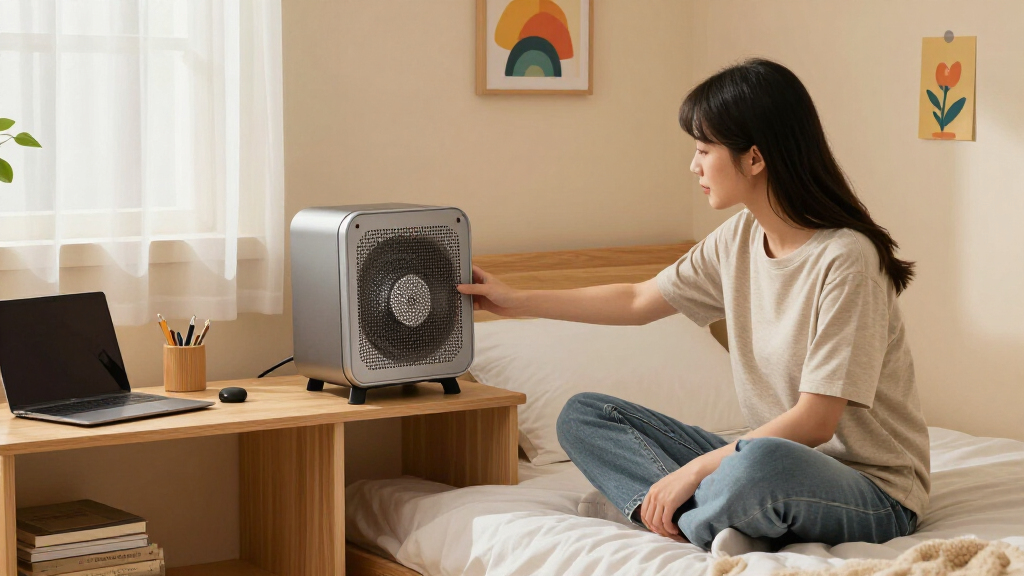

If you’re shopping for compact space heaters for dorms, the main tradeoffs come down to safety features, noise levels, and whether a heater will actually fit (and be allowed) in a cramped dorm room. The DREO Space Heaters for Indoor Use with Thermostat earns my best overall pick for combining a precise thermostat, quiet operation, and tip-over protection at a midrange price. For tight budgets, the GiveBest Portable Space Heater delivers dependable two-setting heat for under $30, while the Gaiatop Mini Space Heater is the standout desk option for warming just your immediate space without tripping breakers. Dorm buyers also face a real split between powerful 1500W models and low-wattage picks that won’t overload old building wiring. Keep reading for the full breakdown of all 12 heaters and who each one suits best.

Get home appliances delivered free with Prime
- Fast, free delivery on millions of items
- Prime Video, Amazon Music and more included
- Member-only deals all year
Complete the kit


Key Takeaways
- Thermostat quality separated the top tier: DREO models with digital thermostats held room temperature without the on-off surging that cheap dial-based heaters like the Amazon Basics unit produce.
- Low-wattage heaters (the 500W Gaiatop) matter more in dorms than anywhere else — older dorm wiring and shared circuits often can’t handle sustained 1500W draws without tripping breakers.
- Noise was the biggest hidden differentiator: heaters marketed as quiet varied enormously, and remote-plus-quiet DREO models won for light sleepers who run heat overnight.
- The budget picks (GiveBest, generic PTC ceramic models) all cut corners on the same things — no timer, no remote, basic tip-over switches — so paying $15–25 more buys real convenience, not fluff.
- Taller tower-style options (the 25-inch oscillating model and DREO adjustable-tilt heater) warm whole rooms better but sacrifice the under-desk portability that defines the compact dorm category.


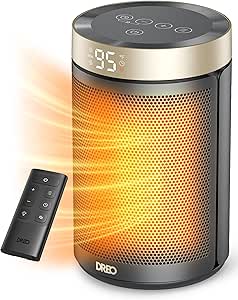


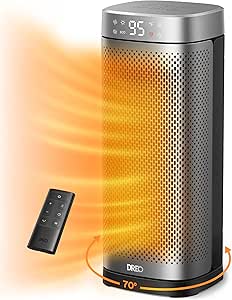


| compact space heaters for dorm | Power | Safety Features | Noise Level |
|---|---|---|---|
| Amazon Basics Ceramic Space He | 1500W | Overheat, tip-over protection | 43 dB |
| DREO Space Heaters for Indoor | 1500W | Tip-over, overheat protection, V0 flame-retardant materials | 34 dB |
| Space Heater | — | — | 40 dB |
| GiveBest Portable Space Heater | — | Overheat, tip-over protection | — |
| DREO Quiet Space Heater | 1500W | Child-lock, tip-over, overheat protection | 34 dB |
| DREO Space Heater | 1500W | Tilt detection, overheat protection | 34dB |
| 25-inch Indoor Space Heater wi | 1500W | Overheat protection, anti-tip protection | — |
| DREO 1500W Space Heater with A | 1500W | Tip-over, overheat, flame-retardant materials, safety plug | 34dB |
| DREO Space Heaters for Indoor | 1500W | Tip-over protection, overheat protection, V-0 flame-retardant materials | 34dB |
| BLACK+DECKER Personal Ceramic | 1500 Watts | Tip-over shutoff, overheat protection | — |
| Gaiatop Mini Space Heater | 500W | Tip-over protection, overheat protection | — |
| Space Heaters for Indoor Use | 1500W / 750W | — | Below 39dB |
More Details on Our Top Picks
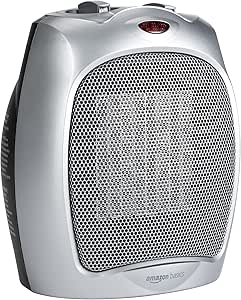
Amazon Basics Ceramic Space Heater, Portable Indoor Heating Solution, 1500W, Silver
For a dorm resident who just needs basic warmth without paying for extras, this Amazon Basics model keeps things simple: three settings (high, low, fan-only), tip-over and overheat protection, and a lightweight body that slides under a lofted bed. Compared with the DREO with thermostat and ECO mode, it lacks programmable temperature control and a timer, so you’ll be adjusting it manually — a real annoyance during late-night study sessions. Its ~161 sq ft coverage is the smallest in this lineup, but that’s genuinely fine for a dorm room, where anything bigger is wasted wattage. The tradeoff for the low price is durability and refinement: no remote, no oscillation, and a 230V requirement that doesn’t match standard North American outlets, so check your outlet compatibility before ordering.
Pros:- Fast ceramic heating in a lightweight, movable body
- Tip-over and overheat protection at a budget price
- Fan-only mode doubles as a summer desk fan
- Quiet operation at around 43 dB won’t disturb roommates
Cons:- No thermostat, timer, or oscillation — purely manual control
- 230V power requirement may not match standard dorm outlets
Best for: Students on a tight budget who want a no-frills heater for a single small dorm room
Not ideal for: Anyone needing a thermostat, timer, or oscillation — or whose outlets aren’t 230V compatible
- Power:1500W
- Voltage:230V
- Room Coverage:~161 sq ft
- Settings:High, Low, Fan-only
- Noise Level:43 dB
- Safety Features:Overheat, tip-over protection
Our verdict“A bare-basics heater for budget-limited students who value simplicity and safety over smart features.”
DREO Space Heaters for Indoor Use with Thermostat, 1500W Electric Heaters
This is the pick I’d point most dorm residents toward, because it solves the two biggest complaints about cheap heaters: uneven heat and runaway energy use. The 70° oscillation spreads warmth across the room instead of blasting one corner, and the ECO mode with thermostat keeps the heater from running flat-out all night — a meaningful difference when you’re on shared or metered electricity. Compared with the Amazon Basics model, you get a 12-hour timer and V0 flame-retardant housing for a modest price bump. At 34 dB it’s quieter than the GiveBest, making it the better choice for light sleepers. The main sacrifices are a slightly larger footprint than ultra-compact picks and a strict no-extension-cord rule, which matters in dorms where outlets are scarce.
Pros:- ECO mode and thermostat prevent wasted electricity during long study or sleep sessions
- 70° oscillation heats the whole room, not just one spot
- Whisper-quiet 34 dB operation suits shared sleeping spaces
- 12-hour timer for auto shutoff
Cons:- Cannot be used with extension cords, restricting placement options
- Larger footprint than ultra-mini heaters like the Gaiatop
Best for: Students who want set-and-forget warmth with energy savings and quiet overnight operation
Not ideal for: Anyone whose only outlet is across the room — the 6 ft cord and no-extension-cord rule limit placement
- Power:1500W
- Coverage:270 sq ft
- Oscillation:70°
- Noise Level:34 dB
- Timer:12-hour
- Cord Length:6 ft
- Safety Features:Tip-over, overheat protection, V0 flame-retardant materials
Our verdict“The best all-around dorm heater here — efficient, quiet, and safe enough to run overnight.”
Space Heater, Portable Small Heater for Indoor Use, Quiet & Compact
When desk or floor space is measured in inches, this is the heater that fits. At roughly 5 x 4.5 x 8.5 inches, it takes up about as much room as a large water bottle, with a built-in handle for carrying between desk and bed. Its lower 1000W max draw is actually an advantage in older dorms with dated wiring or strict power limits — something the 1500W DREO and Amazon Basics models can’t claim. The catch is capability: with only two modes (1000W and 700W eco), no thermostat, and coverage capped around 200 sq ft, it warms your immediate zone rather than the whole room. A 4 ft cord also means it needs to sit close to an outlet. Treat it as a personal heater, not a room heater, and the tradeoffs make sense.
Pros:- Small enough to fit on a cluttered desk or nightstand
- 1000W max draw works with strict dorm power limits
- UL-certified with auto shut-off and fire-resistant casing
- Built-in carry handle for moving between spots
Cons:- Only two heat modes with no thermostat control
- Short 4 ft cord severely limits placement
Best for: Students with tiny rooms, crowded desks, or dorms that restrict high-wattage appliances
Not ideal for: Anyone hoping to heat a full room evenly — no thermostat, no oscillation, modest output
- Heating Technology:PTC ceramic
- Coverage Area:Up to 200 sq ft
- Dimensions:5.28″ x 4.45″ x 8.5″
- Modes:High (1000W), Eco (700W)
- Noise Level:40 dB
- Cord Length:4 ft
- Certification:UL-certified
Our verdict“The right choice when space and wattage are your biggest constraints, not whole-room comfort.”
GiveBest Portable Space Heater for Indoor Use
The 2-in-1 design is what separates the GiveBest from every other heater here: the fan-only mode means one small appliance covers both January and August, which matters when dorm storage is a single closet shelf. Its 1500W/750W split lets you run gentle background heat during the day and full output at night, while the automatic thermostat cycles the element off once the room warms — something the Amazon Basics model can’t do. It’s not as refined as the DREO thermostat model: there’s no oscillation, timer, or remote, and real-world coverage tops out around 200 sq ft. But for a heater-fan hybrid at this price, those omissions are reasonable cuts rather than dealbreakers.
Pros:- Fan mode makes it useful year-round, not just in winter
- Two heat settings (1500W/750W) with automatic thermostat control
- Overheat and tip-over protection in a V0 flame-retardant shell
- Carry handle and light weight make it easy to reposition
Cons:- No oscillation, timer, or remote at any price tier
- Coverage is limited to small rooms of about 200 sq ft
Best for: Students who want one appliance for both winter heat and summer airflow without spending much
Not ideal for: Larger dorm suites or anyone who wants oscillation, a timer, or remote control
- Heating Modes:1500W / 750W / Fan
- Coverage Area:Up to 200 sq ft
- Material:V0 flame-retardant plastic
- Cord Length:6 ft
- Power Supply:2-prong plug
- Safety Features:Overheat, tip-over protection
Our verdict“A smart buy for students who’d rather own one dual-purpose appliance than a heater and a separate fan.”
DREO Quiet Space Heater, 1500W Portable Indoor Heater with Remote
This DREO earns its premium slot with the features you’ll actually notice from bed: a remote control, a precise 41–95°F adjustable thermostat, and a child-lock that stops curious hands or clumsy roommates from cranking the heat. Its 70° oscillation and PTC heating claim to throw heat noticeably farther than standard designs, putting it a step above the GiveBest in raw warmth distribution. Compared with the thermostat DREO, the advantage is convenience — remote operation and finer temperature control — though you pay more for it. The honest downsides: DREO is vague about energy consumption, so budget-conscious students can’t easily predict running costs, and like most heaters here, it’s indoor-only with no outdoor use. For a lofted bed far from the nearest outlet, though, the remote alone justifies the price.
Pros:- Remote control means no getting out of bed to adjust settings
- Precise 41–95°F thermostat range for customized comfort
- Child-lock plus tip-over and overheat protection
- 70° oscillation with heat throw beyond typical portable heaters
Cons:- Higher price than comparable 1500W models without a remote
- No published energy consumption figures for cost planning
Best for: Students willing to pay more for remote control, precise temperature settings, and tamper-proof safety
Not ideal for: Budget-limited buyers or anyone tracking exact energy costs — consumption specs aren’t published
- Power:1500W
- Temperature Range:41–95°F
- Oscillation:70°
- Noise Level:34 dB
- Safety Features:Child-lock, tip-over, overheat protection
- Certification:ETL
Our verdict“The pick for students who value couch-or-bed convenience and finer control over saving a few dollars.”
DREO Space Heater, Portable Electric Heater with Thermostat
Among the five DREO-style heaters in this roundup, this one stands out for having the deepest feature set: a remote, a 12-hour timer, a mute function, a child lock, and memory that recalls your last settings after you unplug it. Compared with the BLACK+DECKER BHDC201, which offers nothing beyond basic heat settings, this model is built for students who actually want to fine-tune their comfort — set it from bed with the remote, schedule it to shut off after you fall asleep, and forget it. The 34dB noise rating is genuinely quiet for a 1500W unit. The tradeoff is complexity: the menu system takes a evening to learn, and 1500W may cycle on and off in a tiny dorm room. For a tech-comfortable student, though, nothing else here feels this complete.
Pros:- Richest feature set in the lineup: remote, 12-hour timer, mute, child lock, memory function
- Tilt detection adds a safety layer beyond standard tip-over switches
- 34dB operation is quiet enough for sleeping and studying
- Wide 41–95°F temperature range allows precise comfort tuning
Cons:- Control scheme is the most complex here — a real learning curve for a space heater
- Full 1500W output may be overkill for a single small dorm room
- ECO and Power heat modes behave differently enough to confuse first-time users
Best for: Tech-savvy students who want remote control, scheduling, and set-and-forget automation from their heater
Not ideal for: Anyone who just wants an on switch — the multi-mode controls are overkill for a plug-in-and-go buyer
- Power:1500W
- Temperature Range:41–95°F
- Noise Level:34dB
- Modes:Power heat, ECO, Fan only
- Control:Remote control
- Timer:12-hour
- Safety Features:Tilt detection, overheat protection
- Extras:Mute mode, child lock, memory function
Our verdict“Buy this if you want the most controllable heater in the roundup and don’t mind reading a manual to get there.”
25-inch Indoor Space Heater with Thermostat, Oscillation, Timer, Remote Control
Most picks in this roundup are personal desk-or-bedside heaters, but this 25-inch tower flips the script: with 80° oscillation and tower-style airflow, it’s the one to buy when the warmth needs to reach a couch, not just a chair. Its AI mode automatically dials back output as the room approaches your target temperature, which the basic BLACK+DECKER BHDC201 simply cannot do — that unit runs flat-out until you switch it off. The beige finish also blends into decor better than the sea of black plastic elsewhere in this guide. The catch: that smart AI mode can shut heating down entirely once the setpoint is hit, so on cold snaps you may find yourself nudging the temperature upward manually. And with only two heat settings, it’s less flexible than the DREO B0C6FCKQML.
Pros:- 80° oscillation spreads heat across a whole seating area, not one spot
- AI mode trims power use automatically as the room warms
- Tower height projects heat at body level rather than ankle height
- Anti-tip and overheat protection cover the usual dorm safety worries
Cons:- AI mode can stop heating entirely at the setpoint, forcing manual adjustments during cold snaps
- Only two heat settings — less granular than DREO’s three-mode options
- Tallest footprint in this batch, so it needs floor space most dorms don’t spare
Best for: Students in suites or lounges who need heat that reaches a whole seating area, not just one desk
Not ideal for: Cramped single dorm rooms — the tall tower footprint and wide oscillation are wasted in tight quarters
- Power:1500W
- Height:25 inches
- Coverage:Large room
- Oscillation:80°
- Heat Settings:Low, High
- Control:Remote control
- Timer:Yes
- Safety Features:Overheat protection, anti-tip protection
- Material:Ceramic with metal PTC, beige finish
Our verdict“This is the pick for warming a shared hangout space evenly — skip it if your room is desk-and-bed only.”
DREO 1500W Space Heater with Adjustable Tilt, Thermostat, Remote
The defining feature here is the 0°–60° adjustable tilt, which no other heater in this batch matches. Instead of oscillating heat around the room like the 25-inch beige tower, this DREO lets you aim a steady column of warm air exactly at your desk chair or bed — arguably a smarter use of 1500W in a small room where you only occupy one spot. Its safety package is the most thorough in this group: tip-over shutoff, overheat protection, V-0 flame-retardant materials, and a safety plug, which matters in an older dorm with sketchy outlets. The tradeoff is that full convenience depends on not losing the remote — and unlike the oscillating tower, it can’t cover a room with multiple people in different corners.
Pros:- 0°–60° tilt aims heat exactly where you sit instead of wasting it on empty room
- Four-layer safety package including V-0 flame-retardant housing and safety plug
- Three heat plus three fan settings give more combinations than most rivals
- 34dB operation is quiet enough for late-night study sessions
Cons:- Losing the remote strips away much of the convenience
- No oscillation means it can’t warm a multi-person room evenly
- Aimed heat is less effective in very large or drafty spaces
Best for: Students who work or game in one fixed spot and want heat aimed precisely at them
Not ideal for: Rooms where several people need warmth at once — targeted tilt beats wide coverage here, by design
- Power:1500W
- Tilt Adjustment:0°–60°
- Temperature Range:41–95°F
- Noise Level:34dB
- Modes:3 heat settings, 3 fan settings
- Control:Remote control
- Safety Features:Tip-over, overheat, flame-retardant materials, safety plug
Our verdict“Choose this when you want to point warmth at one chair rather than warm a whole room — the tilt is genuinely unique here.”
DREO Space Heaters for Indoor Use, Fast Heating Portable Heater with Remote
This model earns its spot on two numbers: a 250 sq.ft. coverage claim — one of the only concrete coverage figures in the entire roundup — and a 24-hour auto-off, the longest safety timer here. That auto-off is the real differentiator for dorm life: if you rush to class and forget the heater, it shuts itself down instead of running all day, something the BLACK+DECKER BHDC201 (no timer at all) won’t do. Compared with the feature-heavy DREO B0C6FCKQML, this one strips away the child lock and memory functions in exchange for a simpler, sleep-focused package: quiet 34dB operation, PTC ceramic heat, and tip-over plus overheat protection with V-0 flame-retardant materials. It’s less gadget, more peace of mind — which, for a student sleeping two feet from a heater, may be the right trade.
Pros:- 24-hour auto-off is the longest unattended-safety timer in this lineup
- 250 sq.ft. stated coverage suits a typical dorm room without excess power
- PTC ceramic heating warms up fast and holds temperature steadily
- 34dB rating and tip-over/overheat protection make it viable for overnight use
Cons:- Fewer convenience features than its DREO sibling (no memory function or child lock)
- Coverage caps out at 250 sq.ft., so suites and lounges will overwhelm it
- Remote-dependent design adds one more thing to misplace in a dorm
Best for: Sleepers who run a heater overnight and want maximum auto-shutoff protection
Not ideal for: Buyers who want app-like control — no timer programming or memory beyond the basic auto-off
- Power:1500W
- Heating Technology:PTC ceramic
- Coverage Area:250 sq.ft.
- Temperature Range:41–95°F
- Noise Level:34dB
- Auto-Off:24 hours
- Control:Remote control
- Safety Features:Tip-over protection, overheat protection, V-0 flame-retardant materials
Our verdict“If overnight safety is your top worry, this is the safest-on-autopilot choice among the DREO picks.”
BLACK+DECKER Personal Ceramic Heater, 1500 Watts, BHDC201
Every other heater in this batch tries to out-smart you with remotes, timers, and AI modes; the BLACK+DECKER BHDC201 wins by refusing to. Three knobs — fan, low (750W), high (1500W) — and nothing to pair, charge, or lose. At 2.8 lbs, it’s also the lightest full-power option here, easy to shuttle between desk and bed or stash in a closet over break. The 750W low setting is genuinely useful in a dorm: it warms a small room without tripping breakers the way back-to-back 1500W units can, something the always-1500W DREO B0C6FCKQML can’t dial down as gracefully across its modes. What you give up is everything modern: no thermostat precision, no timer, no remote. It heats until you turn it off — your responsibility, not the machine’s.
Pros:- Dead-simple three-setting operation with nothing to program or lose
- 2.8 lb weight makes it the most portable full-power pick here
- 750W low setting is breaker-friendly in older dorm wiring
- Trusted brand with tip-over shutoff and overheat protection standard
Cons:- No thermostat readout, timer, or remote — the most bare-bones unit in this roundup
- Output is modest for anything beyond a single small room
- Fan-only mode moves relatively little air compared with tower models
Best for: Budget-conscious students who want a cheap, featherweight heater with zero learning curve
Not ideal for: Anyone who runs a heater overnight or unattended — with no timer or auto-shutoff scheduling, it relies entirely on you remembering
- Power:1500 Watts
- Settings:Fan only, Low (750W), High (1500W)
- Weight:2.8 lbs
- Heating Type:Ceramic
- Safety Features:Tip-over shutoff, overheat protection
- Controls:Manual dials
- Use:Indoor, small spaces
Our verdict“The no-frills choice for a small room and a small budget — just don’t expect it to think for you.”
Gaiatop Mini Space Heater, 500W Fast Heating Portable Desk Electric Heater
Most dorm heaters compete on raw wattage, but the Gaiatop Mini takes the opposite approach: it heats you, not the room. At just 500W with a PTC ceramic element, this little unit is meant to sit on a desk or nightstand and warm your immediate bubble — which happens to be exactly what you need during late-night study sessions. Compared with the Amazon Basics Ceramic Space Heater at 1500W, it sacrifices whole-room coverage for a smaller footprint and lower energy draw, a smart trade if your dorm bills electricity separately or your outlet capacity is limited. The V0 fireproof housing and tip-over shutoff make it one of the safer tiny options. The real drawback is inflexibility: there is no adjustable temperature setting, so you get one heat level, take it or leave it.
Pros:- Extremely small footprint that fits on any desk or shelf
- 500W draw is gentle on circuits and electricity costs
- Tip-over and overheat protection with V0 fireproof housing
- Quiet enough to run during Zoom classes or sleep
Cons:- Single heat level with no adjustable thermostat
- 500W output limits warming to a personal zone, not a room
Best for: Desk-dwelling students who want direct personal warmth at their workspace without tripping breaker limits or hogging outlet space
Not ideal for: Anyone hoping to warm an entire dorm room — 500W simply cannot raise the temperature beyond a small personal zone
- Power:500W
- Heating Element:PTC ceramic
- Safety Features:Tip-over protection, overheat protection
- Material:V0 class fireproof housing
- Best Placement:Desk, nightstand, or countertop
- Heat Settings:Single fixed level
Our verdict“Buy this if you want to warm your personal space rather than your whole room; skip it if you need to heat an entire dorm.”
Space Heaters for Indoor Use, 1500W/750W Portable PTC Ceramic Heater
This heater is the lineup’s comfort maximalist. Beyond the standard 750W/1500W dual heat settings, it layers on a built-in humidifier and ambient LED lighting — unusual extras that directly address dorm-life pain points like dry winter air and harsh overhead fluorescents. Where the DREO Quiet Space Heater with Remote matches it on remote operation and noise, this model goes further with a 12-hour timer and 70° oscillation, spreading warmth across a 200 sq ft room instead of beaming it in one direction. The tall, narrow 15-inch tower shape also slides beside a bed or closet more easily than boxier units like the GiveBest Portable. Tradeoffs exist: the plastic housing feels less durable than metal-bodied rivals, and its quiet mode still emits enough hum to bother light sleepers. More features also mean more to break over four years of dorm life.
Pros:- Built-in humidifier counters dry dorm air in winter
- 12-hour timer and 70° oscillation for set-and-forget comfort
- 750W/1500W settings let you balance warmth and energy use
- Remote control plus 2.3 lb weight makes it easy to reposition
Cons:- Plastic housing feels less durable than metal alternatives
- Quiet mode still produces audible noise for sensitive sleepers
Best for: Students who want an all-in-one ambiance machine — heat, humidity, and soft lighting — for a single dorm room
Not ideal for: Light sleepers planning to run it overnight on quiet mode, or anyone who prefers a rugged, no-frills metal heater
- Power:1500W / 750W
- Heating Element:PTC ceramic
- Coverage Area:Up to 200 sq ft
- Oscillation:70° wide angle
- Timer:12 hours
- Noise Level:Below 39dB
- Weight:2.3 lbs
- Dimensions:15″L x 4.5″W x 4.5″H
Our verdict“This pick makes the most sense for students who want heat plus atmosphere perks in one slim tower, not for those who prioritize build quality or total silence.”
How We Picked
I evaluated these 12 heaters against the constraints that actually define dorm life: footprint and portability, safety certifications (tip-over shut-off and overheat protection are non-negotiable in shared housing), noise at both low and high settings, and wattage flexibility for buildings with fragile electrical systems. Because most dorm rooms are 12×15 feet or smaller, I weighted fast warm-up of small spaces higher than raw heating power, and I penalized models whose bulk contradicted the compact promise.
Value calculations factored in what each price tier adds — a thermostat, remote, timer, or oscillation — and whether those additions matter in a dorm context versus a living room. Heaters ranked higher when their feature set matched dorm realities: overnight-safe operation, desk-friendly sizing, and controls you can use without getting out of bed. Models with redundant or poorly differentiated feature sets ranked lower even when individually solid, because this list is meant to help you choose, not browse.
Factors to Consider When Choosing Compact Space Heaters For Dorms
Before locking in a pick, a few dorm-specific factors can change which heater is right for you — and some of them matter more than heating power itself.Check Your Dorm’s Heater Policy Before Buying
Many universities restrict space heaters to UL-listed models with automatic shut-off, and some ban them outright or require oil-free ceramic designs. Buying a heater you can’t plug in is the most expensive mistake in this category, so check your housing handbook first. If your school requires specific certifications, that alone may narrow the field to brands like DREO and BLACK+DECKER, which consistently carry full safety listings. It’s also worth asking whether your RA or residence life office inspects heaters during fire safety checks — unlisted models do get confiscated. This step takes five minutes and can save you a full return shipment.
Wattage and Your Building’s Wiring
Dorm buildings often run decades-old wiring with multiple rooms sharing a single circuit, which means a 1500W heater on high can trip a breaker — especially combined with a mini fridge, laptop, and string lights. If you’ve ever blown a fuse running a hair dryer, treat that as a warning. A 750W setting or a low-draw option like a 500W desk heater keeps you warm at your desk without risking an outage that annoys your whole hallway. The mistake most buyers make is assuming more watts always means better; in a 12×12 room, 750W often maintains comfort once the space is warm. Match the wattage to your building, not to the spec sheet.
Noise Levels for Shared Rooms and Light Sleepers
Fan noise that seems fine in a store becomes a real problem at 2 a.m. in a room you share with someone else. Look for heaters with documented decibel ratings rather than vague quiet claims — anything under 45 dB is roughly library-level. Heaters with remote controls earn their keep here: you can adjust settings from bed without your roommate hearing clicks or getting blasted when the fan ramps up. If you plan to run heat overnight, prioritize models with steady low settings over powerful high modes you’ll never use while sleeping. Noise is also where the cheap generic heaters most often disappoint, despite similar specs on paper.
Thermostat vs. Basic Dial Controls
A digital thermostat lets a heater cycle on and off to hold a target temperature, while basic two-setting heaters just blast until you switch them off. The difference shows up in comfort and electricity — dial-only heaters overheat small dorm rooms fast, then go cold. If your dorm bills electricity separately or you pay for a micro-fridge combo already, thermostat models pay for themselves over a semester. That said, if you only run a heater for 20 minutes after a shower, a basic model is a perfectly rational purchase. Pay for the thermostat only if you’ll use the heater continuously.
Footprint, Cord Length, and Placement Reality
Dorm floor space is scarce, and heaters need three feet of clearance from bedding, curtains, and laundry — which is exactly what piles up on a dorm floor. Measure where the heater will actually live before buying: a tower model that oscillates needs more clearance than a desk unit. Cord length is the underrated spec here; a short power cord can force placement right next to your bed, which is both a safety issue and a comfort problem. Desk-sized heaters solve the placement problem entirely by living where you already sit. The best heater for your room is one with a safe spot to sit.
When to Pay More — and When Not To
Spending $40–60 over a budget heater buys a thermostat, remote, timer, and quieter fan — features that matter if the heater runs daily for a full academic year. If you’re buying for a single cold month or a spring semester, the budget tier is genuinely fine, provided it has tip-over protection. Premium features like app control or adjustable tilt are nice-to-haves that rarely change dorm outcomes. The pattern across this lineup: midrange DREO models hit the value sweet spot, while generic same-spec heaters undercut them only by sacrificing safety details and warranty support. Buy for how often you’ll use it, not for the feature list.
Frequently Asked Questions
Are space heaters allowed in most college dorms?
Policies vary widely, but many schools permit UL-listed ceramic heaters with automatic tip-over and overheat shut-off, while banning coil-based or oil-filled models. Some universities require approval or restrict heaters to specific months. Before buying, check your residence life handbook or ask your RA, because a confiscated heater is money wasted regardless of how good it is. The models in this lineup that clear most policy hurdles are the fully certified DREO and BLACK+DECKER units. If your dorm bans heaters entirely, a heated blanket or a low-wattage desk unit sometimes falls into a separate allowed category — worth asking.
Will a 1500W heater trip the breaker in my dorm room?
It can, especially in older buildings where several rooms share one circuit. A 1500W draw on high is comparable to a hair dryer, and stacking it with a mini fridge, laptop charger, and microwave is a common cause of mid-winter outages. If your room has a history of tripped breakers, run the heater on its 750W setting or choose a low-wattage option like the 500W Gaiatop for desk-level warmth. Another tactic: run high power briefly to warm the room, then drop to low to maintain it. Knowing your building’s electrical quirks before move-in day saves a lot of hallway apologies.
Is a heater with a remote actually worth the extra cost in a dorm?
For most dorm residents, yes — the remote earns its price specifically because of lofted beds and bunk setups. Climbing down from a loft to adjust a dial heater at night is exactly the friction that makes people leave heaters running unsafely. A remote also lets you kill the heat without disturbing a sleeping roommate. If your bed is at desk level and the heater sits within arm’s reach, skip the remote and save $10–15. But for lofted-bed dorms, models like the DREO Quiet with Remote solve a real problem rather than adding gadget clutter.
Can I safely leave a space heater on overnight in a dorm room?
No heater manufacturer recommends unattended overnight operation, and many dorm policies explicitly prohibit it. If you must run heat while sleeping, the safest profile is a thermostat-equipped ceramic heater on low with tip-over protection, positioned on a hard floor away from bedding — which describes the midrange DREO models here. Heaters without thermostats are worse overnight candidates because they never cycle off. A timer function, available on the 25-inch tower model, is a good middle ground: warm the room as you fall asleep and have it shut off automatically. Still, the genuinely safe answer is warming the room before bed and switching off overnight.
What size heater do I actually need for a typical dorm room?
Most dorm rooms fall between 100 and 180 square feet, which even a 750W setting can warm in 15–20 minutes — full 1500W output is usually overkill. This is why the compact models in this roundup outperform bigger tower heaters in dorm contexts: less surface area to heat means faster results and fewer temperature swings. Oversizing also brings annoyance, since a 1500W blast cycles a small room between too hot and too cold. The exception is a corner room with old single-pane windows, where full power and a thermostat genuinely help. When in doubt, buy the smaller heater with better controls rather than the bigger one with more watts.
Conclusion
The right pick depends entirely on your dorm situation. For best overall, the DREO Space Heater with Thermostat balances safety, quiet operation, and precise temperature control — the combination that matters most for daily dorm use. The GiveBest Portable Space Heater takes best value for buyers who need basic, dependable warmth under $30. For best premium, the DREO 1500W with adjustable tilt and remote adds room-wide heating flexibility that cheaper models can’t match. Beginners and anyone worried about dorm wiring should start with the Gaiatop Mini 500W — it’s the safest low-stakes entry point and perfect for desk-level warmth. For specific needs: light sleepers get the DREO Quiet with Remote, whole-room heating goes to the 25-inch oscillating tower, and the BLACK+DECKER personal heater suits anyone wanting a trusted brand name at a moderate price. Whatever you choose, verify your dorm’s heater policy first — the best heater is one you’re allowed to plug in.
Columbus Day / Indigenous Peoples' Day Picks
long weekend sales
As an affiliate, we earn on qualifying purchases.