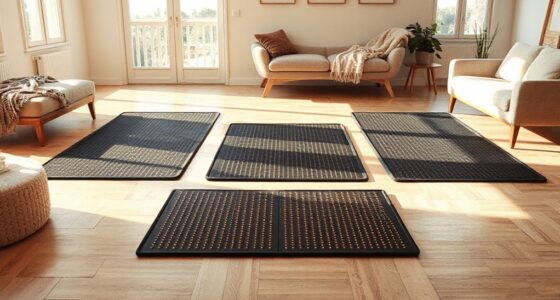
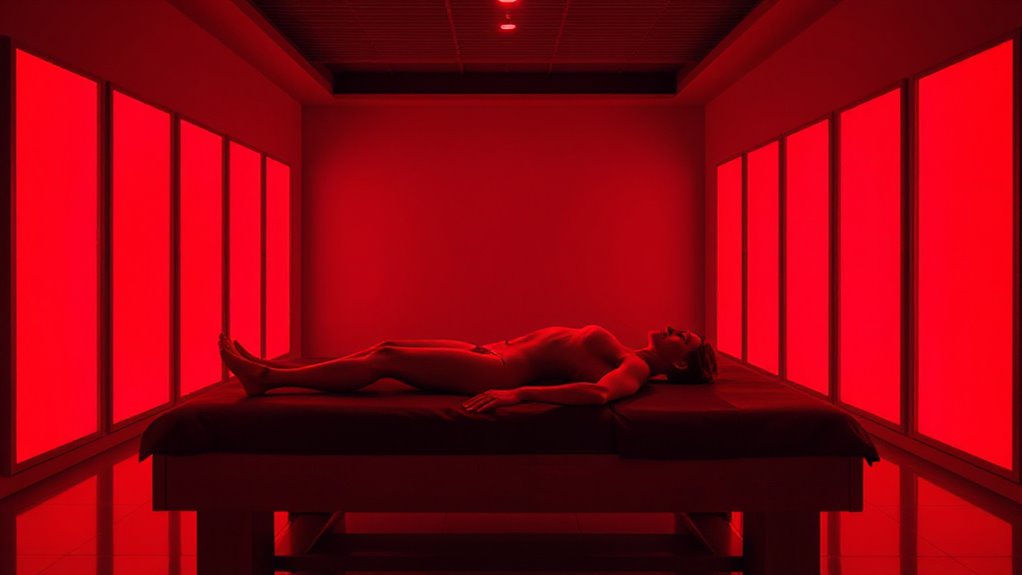

A premium full-body red light therapy panel for recovery should balance broad coverage, useful wavelength options, and a setup you will actually use. My best overall pick is the EXESAS Professional Grade Full-Body Panel, whose six wavelengths, stand, and remote make it a versatile choice; the Hooga full-body panel with 300 quad-chip LEDs stands out for brightness control and pulse mode, while the EXESAS Elite-Pro suits shoppers who want nine wavelengths and a stand. The main tradeoffs are coverage and convenience versus a simpler wavelength set, as well as flexible positioning versus the room space a full-body unit needs. Specifications alone do not establish clinical effectiveness, so I focus on practical fit, controls, and the information supplied about each model. Read on for the full breakdown and help matching a panel to your recovery routine.

Get home appliances delivered free with Prime
- Fast, free delivery on millions of items
- Prime Video, Amazon Music and more included
- Member-only deals all year
Complete the kit



Key Takeaways
- Coverage and setup separate the leading picks: the EXESAS Professional Grade includes a stand and remote, while the Hooga PRO1500 and HG1500 listings describe hanging kits for a different mounting approach.
- More wavelengths are not automatically a better fit: the EXESAS Elite-Pro lists nine wavelengths and BONTANNY lists seven, while the Hooga HG1500 and PRO1500 focus on 660nm red and 850nm near-infrared.
- Controls vary as much as the light specifications: Hooga‘s 300-quad-chip panel lists brightness control and pulse mode, whereas the EXESAS options emphasize wavelength range and, on some models, stand-and-remote convenience.
- Several products claim 300 LEDs, but their configurations differ: Hooga’s quad-chip panel, the HG1500, PRO1500, and BONTANNY should not be treated as interchangeable based on LED count alone.
- Full-body use needs a real space plan: panels with stands may simplify positioning but occupy floor space; hanging-kit models need a suitable mounting point and room to use them safely.
| EXESAS Red Infrared Light Therapy Device for Full Body, 630nm, 660nm, 810nm & 850nm, Dual-Chip Clinical Grade LED Panel (200 LEDs) |  | Best for a Narrow Home Setup | Wavelengths: 630nm, 660nm, 810nm, 850nm | Light sources: 200 dual-chip LEDs | Dimensions: 8.5 × 2.6 × 36 inches | VIEW ON AMAZON | See Our Full Breakdown |
| EXESAS Professional Grade Full-Body Red Light Therapy Panel, Red & Near-Infrared, 6 Wavelengths 630–1060nm, Dual-Chip LEDs, Stand & Remote |  | Best for Maximum Listed LED Coverage | Wavelength range: Six wavelengths, 630–1060nm | Light sources: 1008 dual-chip LEDs | Dimensions: 21 × 2.6 × 73 inches | VIEW ON AMAZON | See Our Full Breakdown |
| Hooga Red Light Therapy Panel Device – Full Body Panel, 630nm, 660nm, 810nm, 850nm Wavelengths, 300 Quad Chip LEDs, Brightness Control, Pulse Mode |  | Best for Adjustable Sessions | Wavelengths: 630nm, 660nm, 810nm, 850nm | LED configuration: 300 quad-chip LEDs | Beam angle: 60 degrees | VIEW ON AMAZON | See Our Full Breakdown |
| Hooga HG1500 Full Body Red Light Therapy Panel, 300 LEDs, 660nm Red & 850nm Near-Infrared Light, Built-in Timer, Door Hanging Kit |  | Best for a Straightforward Hanging Setup | Wavelengths: 660nm red and 850nm near-infrared | LED count: 300 | Beam angle: 60 degrees | VIEW ON AMAZON | See Our Full Breakdown |
| BONTANNY Red Light Therapy Full Body Panel, 7 Wavelengths, 480/630/660/810/830/850/1060nm, 300 LEDs, Remote Control, Timer |  | Best for Wavelength Variety | Wavelengths: 480nm, 630nm, 660nm, 810nm, 830nm, 850nm, 1060nm | LED count: 300 | Irradiance: 130mW/cm² at 6 inches | VIEW ON AMAZON | See Our Full Breakdown |
| Hooga Red Light Therapy Panel Device – PRO1500 |  | Best for Straightforward Full-Body Coverage | Wavelengths: 660nm red and 850nm near-infrared | LEDs: 300 dual-chip LEDs | Dimensions: 61.2 × 15.7 × 3.1 inches | VIEW ON AMAZON | See Our Full Breakdown |
| Red Light Therapy Panel with Electric Stand, 840 5W LEDs Elite Grade |  | Best for Motorized Positioning | Wavelengths: 630nm, 660nm, 810nm, 830nm, 850nm | LED count: 840 | LED power: 5W per LED | VIEW ON AMAZON | See Our Full Breakdown |
| Makiuri Clinical Grade Red Light Panel 300 LEDs | Red & NIR (White Neptune) |  | Best for Separate Red and Near-Infrared Modes | LED count: 300 | Wavelengths: 630nm, 660nm, 810nm, 830nm, 850nm | Modes: Red light only, near-infrared only, combined | VIEW ON AMAZON | See Our Full Breakdown |
| Exesas Elite-Pro Series 9-Wavelengths Red Light Therapy Device for Full Body with Stand & Remote |  | Best for Wavelength Range and Controls | Wavelengths: 480nm, 525nm, 630nm, 660nm, 810nm, 830nm, 850nm, 940nm, 1060nm | LED count: 360 | LED power: 5W per LED | VIEW ON AMAZON | See Our Full Breakdown |
| Mito Red Light – MitoMEGA 2.0 Red Light Panel |  | Best for Simple Red-and-NIR Sessions | LED count: 300 | Wavelengths: 660nm red and 850nm near-infrared | Dimensions: 36 × 12 × 3 inches | VIEW ON AMAZON | See Our Full Breakdown |
| BestQool Red Light Therapy Panel, 4 Wavelengths, 200 LEDs, 330W |  | Best for Expandable Coverage | Wavelengths: 4 | LED count: 200 | Power: 330W | VIEW ON AMAZON | See Our Full Breakdown |
| Red Light Therapy for Body and Face with Stand FX500 |  | Best for Adjustable Positioning | Coverage area: 15 x 14 inches at 6 inches distance | LED wavelengths: 660nm and 850nm | LED quantity: 60 | VIEW ON AMAZON | See Our Full Breakdown |
| premium full body red light therapy panel for recovery | Wavelengths | LED count | Mounting |
|---|---|---|---|
| EXESAS Red Infrared Light Ther | 630nm, 660nm, 810nm, 850nm | — | Floor mount, surface mount, or hanging kit |
| EXESAS Professional Grade Full | — | — | Floor mount, surface mount, or hanging kit |
| Hooga Red Light Therapy Panel | 630nm, 660nm, 810nm, 850nm | — | Versatile mounting options |
| Hooga HG1500 Full Body Red Lig | 660nm red and 850nm near-infrared | 300 | Wall mount or ceiling mount; door hanging kit included |
| BONTANNY Red Light Therapy Ful | 480nm, 630nm, 660nm, 810nm, 830nm, 850nm, 1060nm | 300 | — |
| Hooga Red Light Therapy Panel | 660nm red and 850nm near-infrared | — | Wall mount; hanging kit and stand included per product information |
| Red Light Therapy Panel with E | 630nm, 660nm, 810nm, 830nm, 850nm | 840 | — |
| Makiuri Clinical Grade Red Lig | 630nm, 660nm, 810nm, 830nm, 850nm | 300 | — |
| Exesas Elite-Pro Series 9-Wave | 480nm, 525nm, 630nm, 660nm, 810nm, 830nm, 850nm, 940nm, 1060nm | 360 | — |
| Mito Red Light | 660nm red and 850nm near-infrared | 300 | — |
| BestQool Red Light Therapy Pan | 4 | 200 | Wall-mountable |
| Red Light Therapy for Body and | — | — | — |
More Details on Our Top Picks
EXESAS Red Infrared Light Therapy Device for Full Body, 630nm, 660nm, 810nm & 850nm, Dual-Chip Clinical Grade LED Panel (200 LEDs)
The EXESAS 200-LED panel suits recovery routines where floor space is tight: its listed dimensions are just 8.5 inches long by 2.6 inches wide and 36 inches high, a slimmer format than the much broader EXESAS Professional Grade 1008-LED panel. Its four listed wavelengths—630nm, 660nm, 810nm and 850nm—combine red and near-infrared light, while the remote and included stand make positioning and session adjustments more convenient. That compact profile is the key tradeoff, though: it offers less listed LED coverage than the full-body alternatives, so buyers seeking a large illuminated area may prefer Hooga’s 300-LED HG1500 or the taller 1008-LED EXESAS. It also needs a corded outlet and a dedicated place to stand. I’d shortlist it for targeted recovery use in a smaller room, not for shoppers prioritizing maximum panel coverage.
Pros:- Four listed wavelengths span red and near-infrared light.
- Slim 36-inch-high format takes up less width than the large full-body panels.
- Remote control and protective glasses are included.
- Listed lifespan is 100,000 hours.
Cons:- The 200-light-source count offers less listed coverage than the 300-LED Hooga panels and 1008-LED EXESAS.
- Corded power limits where it can be used.
- Still requires a stand or mounting location and room for a full-height device.
Best for: Home users with limited floor space who want a standing panel with four red and near-infrared wavelengths for targeted recovery routines.
Not ideal for: Buyers seeking the broadest full-body coverage or a cordless panel; this model is corded and lists 200 light sources, fewer than several larger options here.
- Wavelengths:630nm, 660nm, 810nm, 850nm
- Light sources:200 dual-chip LEDs
- Dimensions:8.5 × 2.6 × 36 inches
- Power source:Corded electric
- Voltage:120 volts
- Mounting:Floor mount, surface mount, or hanging kit
- Controls:Remote control; adjustable color and intensity
- Material:Metal
- Listed lifespan:100,000 hours
Our verdict“Choose this EXESAS if a narrow footprint matters more than the larger coverage of the Hooga HG1500 or EXESAS 1008-LED panel.”
EXESAS Professional Grade Full-Body Red Light Therapy Panel, Red & Near-Infrared, 6 Wavelengths 630–1060nm, Dual-Chip LEDs, Stand & Remote
Among these five picks, the EXESAS Professional Grade panel has the largest listed LED count: 1008 sources across a 21-by-73-inch body. That makes it the clearest choice for buyers who want an expansive standing panel rather than the slimmer 200-light-source EXESAS or the 300-LED Hooga HG1500. Its six-wavelength red and near-infrared range, listed as 630–1060nm, gives buyers more wavelength variety than those four-wavelength alternatives. A remote, stand and protective glasses are included, reducing the need to source basic setup items separately. The tradeoff is its substantial footprint: at 73 inches tall and 21 inches wide, it needs a dedicated area, and corded power limits placement. The product data also lists a 100,000-hour lifespan, but does not provide a specific irradiance figure, so buyers focused on comparing measured output should seek that information before choosing.
Pros:- Largest listed LED count in this group at 1008.
- Six wavelengths span 630–1060nm.
- Stand, remote and protective glasses are included.
- Listed product lifespan is 100,000 hours.
Cons:- Its 21-by-73-inch dimensions require substantial dedicated space.
- Corded power restricts placement and portability.
- No irradiance figure is provided in the supplied specifications.
Best for: Recovery-focused buyers with dedicated floor space who want a tall panel, a high listed LED count and six red and near-infrared wavelengths.
Not ideal for: Apartment dwellers needing a compact or portable setup, or output-focused shoppers who require a stated irradiance measurement before buying.
- Wavelength range:Six wavelengths, 630–1060nm
- Light sources:1008 dual-chip LEDs
- Dimensions:21 × 2.6 × 73 inches
- Power source:Corded electric
- Voltage:120 volts
- Mounting:Floor mount, surface mount, or hanging kit
- Included accessories:Stand, remote and protective glasses
- Material:Metal
- Listed lifespan:100,000 hours
Our verdict“Pick this EXESAS over the smaller EXESAS or 300-LED Hooga HG1500 if your priority is a tall panel with the highest listed LED count here.”
Hooga Red Light Therapy Panel Device – Full Body Panel, 630nm, 660nm, 810nm, 850nm Wavelengths, 300 Quad Chip LEDs, Brightness Control, Pulse Mode
The Hooga ULTRA1500 is the pick for buyers who want more control over a recovery session, rather than simply switching a panel on and off. Its brightness adjustment and pulse mode let users tailor operation, and the touchscreen plus remote offer two ways to manage settings. The 300 quad-chip LEDs emit four wavelengths—630nm, 660nm, 810nm and 850nm—matching the range listed for the compact EXESAS while providing a higher stated LED count. Against the simpler Hooga HG1500, the ULTRA1500’s adjustable brightness and pulse mode make it better suited to people who expect to customize sessions; the HG1500’s listed features are more straightforward. Those added controls may take time to learn, and this is a large panel that needs ample setup space. I’d favor it when adjustability matters more than simplicity.
Pros:- Brightness adjustment and pulse mode allow session customization.
- Touchscreen interface and remote control provide two control options.
- Four wavelengths include red and near-infrared ranges.
- Cooling fans support operation during extended use.
Cons:- Its controls may take more time to learn than the simpler Hooga HG1500.
- Large size requires ample setup space.
- The supplied product data gives no panel dimensions or irradiance figure for direct comparison.
Best for: Experienced home users who want to adjust brightness and use pulse mode across a four-wavelength red and near-infrared panel.
Not ideal for: First-time buyers who prefer a simple timer-based panel or people without room for a large full-body setup.
- Wavelengths:630nm, 660nm, 810nm, 850nm
- LED configuration:300 quad-chip LEDs
- Beam angle:60 degrees
- Controls:Touchscreen interface and remote control
- Adjustments:Brightness control and pulse mode
- Cooling:Cooling fans
- Mounting:Versatile mounting options
- Warranty:3 years
Our verdict“Choose the Hooga ULTRA1500 over the HG1500 if you want brightness adjustment and pulse mode and are comfortable with a more involved control setup.”
Hooga HG1500 Full Body Red Light Therapy Panel, 300 LEDs, 660nm Red & 850nm Near-Infrared Light, Built-in Timer, Door Hanging Kit
The Hooga HG1500 keeps the recovery setup relatively simple: its 300 LEDs emit two wavelengths, 660nm red and 850nm near-infrared, and it has a built-in timer and included door hanging kit. That makes it a more direct choice than the Hooga ULTRA1500, which adds brightness adjustment and pulse mode for people who want to customize sessions. The HG1500’s 60-degree beam angle and full-body format are aimed at broad at-home use, while internal cooling fans and a three-year warranty add practical reassurance for regular routines. Setup is not effortless, however. At 32.6 pounds, the panel needs a secure hanging point, and its listed mounting options are wall or ceiling rather than a supplied freestanding stand. Buyers who need more wavelength variety may prefer the seven-wavelength BONTANNY panel.
Pros:- Built-in timer supports a straightforward session routine.
- Door hanging kit is included for flexible installation.
- 300 LEDs and a 60-degree beam angle are specified.
- Three-year warranty and internal cooling fans are listed.
Cons:- At 32.6 pounds, it needs a sturdy hanging or mounting point.
- Two wavelengths offer less variety than the four-wavelength Hooga ULTRA1500 or seven-wavelength BONTANNY.
- No freestanding stand is listed among the included accessories.
Best for: Home users who want a large, timer-equipped panel with a door hanging kit and do not need extensive session controls.
Not ideal for: Buyers who need a lightweight freestanding unit, more than two wavelengths, or a setup that can be moved around easily.
- Wavelengths:660nm red and 850nm near-infrared
- LED count:300
- Beam angle:60 degrees
- Weight:32.6 pounds
- Material:Iron
- Mounting:Wall mount or ceiling mount; door hanging kit included
- Controls and features:Integrated timer and internal cooling fans
- Warranty:3 years
Our verdict“Choose the HG1500 if a timer and hanging kit matter more than the extra wavelengths and session adjustments offered by the BONTANNY and Hooga ULTRA1500.”
BONTANNY Red Light Therapy Full Body Panel, 7 Wavelengths, 480/630/660/810/830/850/1060nm, 300 LEDs, Remote Control, Timer
For buyers who put wavelength range first, the BONTANNY full-body panel stands apart with seven listed wavelengths, including 480nm and 1060nm alongside red and near-infrared options. That is a broader menu than the two-wavelength Hooga HG1500 and the four-wavelength Hooga ULTRA1500, though the listed count alone does not establish how each wavelength performs for a particular recovery goal. BONTANNY also provides a concrete irradiance figure—130mW/cm² at six inches—plus a 60-degree beam angle, remote control and digital timer. Its 42.9-by-16.5-inch panel is built for broad home use, but the stand is sold separately, unlike the stand-included EXESAS models. The cord is 1.8 meters long, which can also limit placement relative to an outlet. This is the most specification-rich wavelength option here, not the simplest out-of-box setup.
Pros:- Seven listed wavelengths span 480–1060nm.
- Irradiance is specified as 130mW/cm² at 6 inches.
- Remote control and digital timer are included.
- Eye protection, hanging kit and cooling fan are listed accessories.
Cons:- Stand is sold separately, unlike the stand-included EXESAS options.
- The 1.8-meter power cord can constrain placement.
- The broad wavelength list may be unnecessary for buyers who want a simpler two- or four-wavelength panel.
Best for: Recovery-focused buyers who want a seven-wavelength panel, a stated irradiance measurement and remote timer controls.
Not ideal for: Shoppers seeking a complete freestanding setup in the box or a compact panel; the stand is separate and the panel is full-size.
- Wavelengths:480nm, 630nm, 660nm, 810nm, 830nm, 850nm, 1060nm
- LED count:300
- Irradiance:130mW/cm² at 6 inches
- Beam angle:60 degrees
- Panel dimensions:42.9 × 16.5 inches
- Power cord:1.8 meters
- Controls:Remote control and digital timer
- Included accessories:Eye protection, hanging kit and cooling fan
Our verdict“Pick BONTANNY over the Hooga HG1500 if wavelength variety and a stated irradiance figure matter more than having a stand included.”
Hooga Red Light Therapy Panel Device – PRO1500
The Hooga PRO1500 suits recovery routines that call for a tall, simple red-and-near-infrared panel rather than a broader mix of wavelengths. Its 300 dual-chip LEDs use 660nm red and 850nm near-infrared light, while the 61.2-inch height gives more body coverage than the shorter MitoMEGA 2.0. A timer, hanging kit, and included stand and mounting hardware make it easier to set up a repeatable session without adding separate positioning equipment. Compared with the five-wavelength Makiuri Clinical Grade panel, the Hooga is the more focused choice, not the more versatile one. Its tradeoffs are the substantial footprint and corded-only operation; buyers should also confirm the supplied mounting configuration suits their space. I’d shortlist it for users who want full-body reach and uncomplicated controls.
Pros:- Tall 61.2-inch panel offers more body coverage than the shorter MitoMEGA 2.0.
- 300 dual-chip LEDs pair 660nm red with 850nm near-infrared light.
- Timer, stand, and hanging hardware support flexible home setup.
- Flicker-free design with internal cooling fans and a three-year warranty.
Cons:- The large panel needs significant storage and setup space.
- Corded electric power limits placement and portability.
- Its two-wavelength approach offers less spectrum choice than Makiuri or Exesas.
Best for: Home users with space for a tall panel who want 660nm red and 850nm near-infrared coverage for regular recovery sessions.
Not ideal for: People in compact rooms, anyone needing a lightweight portable panel, or buyers who specifically want several wavelength options and separate light modes.
- Wavelengths:660nm red and 850nm near-infrared
- LEDs:300 dual-chip LEDs
- Dimensions:61.2 × 15.7 × 3.1 inches
- Beam angle:60 degrees
- Power source:Corded electric
- Mounting:Wall mount; hanging kit and stand included per product information
- Cooling and light features:Internal cooling fans; flicker-free, high-output LEDs
- Warranty:3 years
Our verdict“Choose the Hooga PRO1500 if you want a tall, two-wavelength panel for home recovery and have room to keep it set up.”
Red Light Therapy Panel with Electric Stand, 840 5W LEDs Elite Grade
The standout here is not just the five wavelengths; it’s the motorized, 360-degree stand, which can make changing panel position less of a hands-on task during recovery sessions. Its 840 LEDs span 630nm, 660nm, 810nm, 830nm, and 850nm, giving it a broader stated wavelength range than the two-wavelength Hooga PRO1500. The 67.6-inch panel is also the tallest option in this group, a useful fit for buyers who want extensive coverage. That scale comes with a real cost in room space, and the supplied description flags setup as more involved. Its listed irradiance is 200 mW/cm², but buyers should not treat that figure alone as proof of better recovery outcomes. Compared with the simpler Hooga, this model prioritizes adjustability and range over a straightforward setup.
Pros:- Five wavelengths provide more spectrum options than the Hooga PRO1500.
- Motorized stand moves through 360 degrees for adjustable positioning.
- 67.6-inch panel supports extensive body coverage.
- Listed irradiance is 200 mW/cm².
Cons:- The large panel and stand require substantial floor and storage space.
- Setup may be more complicated than simpler panel arrangements.
- The motorized stand adds complexity compared with a basic hanging or wall-mounted panel.
Best for: Recovery-focused buyers who want a tall panel with motorized positioning and multiple red and near-infrared wavelengths.
Not ideal for: Small-space users or people who prefer a minimal setup without a large motorized stand.
- Wavelengths:630nm, 660nm, 810nm, 830nm, 850nm
- LED count:840
- LED power:5W per LED
- Irradiance:200 mW/cm²
- Panel dimensions:67.6 × 16.5 inches
- Stand:Motorized, 360-degree movable
Our verdict“Pick this model if adjustable, motorized positioning and a five-wavelength array matter more to you than compact size and simple setup.”
Makiuri Clinical Grade Red Light Panel 300 LEDs | Red & NIR (White Neptune)
The Makiuri’s most useful distinction is its three selectable modes: red only, near-infrared only, or both. That gives buyers more control over how they set up a session than the basic two-wavelength Hooga PRO1500, which is described around its 660nm and 850nm output. Makiuri also lists five wavelengths—630nm, 660nm, 810nm, 830nm, and 850nm—across 300 LEDs, with cooling fans and protective goggles included. These details make it a flexible at-home option, though the available product data does not provide panel dimensions, irradiance, or a specified stand, so I would not assume it matches the coverage or positioning of the motorized 840-LED panel. The product description claims full-body coverage, but buyers should check its actual footprint and setup before choosing it for a dedicated recovery space.
Pros:- Five listed wavelengths extend beyond the two used by the Hooga PRO1500.
- Red-only, near-infrared-only, and combined modes allow session customization.
- Cooling fans are built in.
- Protective goggles are included.
Cons:- Product data does not specify dimensions or irradiance for comparing coverage and output.
- The supplied details do not identify a stand or mounting system.
- Needs a power source and dedicated setup space.
Best for: Home users who value separate red-only and near-infrared-only modes and want goggles included with a multi-wavelength panel.
Not ideal for: Buyers who need published dimensions or irradiance to plan a recovery setup, or who require a clearly specified stand and positioning system.
- LED count:300
- Wavelengths:630nm, 660nm, 810nm, 830nm, 850nm
- Modes:Red light only, near-infrared only, combined
- Cooling:Built-in cooling fans
- Included accessory:Protective goggles
Our verdict“Choose Makiuri if selectable light modes and included goggles matter more than fully documented dimensions or stand details.”
Exesas Elite-Pro Series 9-Wavelengths Red Light Therapy Device for Full Body with Stand & Remote
The Exesas Elite-Pro Series is the choice for buyers who want nine listed wavelengths and more session controls than a basic panel provides. Its range runs from 480nm through 1060nm, and the feature set adds pulse function, voice-command operation, an LCD display, a built-in timer, and a remote. Protective glasses and a stand are included, giving it a more complete setup than the Makiuri panel’s listed accessories, though Makiuri does include goggles and offers red-only and near-infrared-only modes. At 42 × 14 inches and 30 pounds, this Exesas is shorter than the Hooga PRO1500 and far less tall than the motorized 840-LED model, so buyers should check whether its stated dimensions suit their intended full-body positioning. The broad controls come with heft: moving it between rooms may be inconvenient.
Pros:- Nine wavelengths span 480nm to 1060nm, more than the five-wavelength Makiuri.
- Remote, LCD display, timer, pulse function, and voice-command operation add control options.
- Stand and protective glasses are included.
- Metal construction and 360 LEDs form a substantial, self-contained panel.
Cons:- At 30 pounds, moving the panel is less convenient than handling a smaller unit.
- Its 42-inch height is shorter than the Hooga PRO1500 and motorized 840-LED panel.
- The large, stand-mounted setup needs dedicated space.
Best for: Buyers who want a broad wavelength range, remote operation, and multiple controls in a home or clinic setup that can stay in one place.
Not ideal for: People who need a lightweight panel, frequently move their equipment, or want the tallest panel for extensive standing coverage.
- Wavelengths:480nm, 525nm, 630nm, 660nm, 810nm, 830nm, 850nm, 940nm, 1060nm
- LED count:360
- LED power:5W per LED
- Dimensions:42 × 14 × 2.6 inches
- Weight:30 lb
- Controls:Remote, LCD display, built-in timer, pulse function, voice-command operation
- Power source:Corded electric
- Included accessories:Protective glasses, user manual, stand
Our verdict“Choose the Exesas Elite-Pro if you want extensive wavelength and control options in a panel that can remain set up.”
Mito Red Light – MitoMEGA 2.0 Red Light Panel
The MitoMEGA 2.0 keeps its approach focused: 300 LEDs deliver 660nm red and 850nm near-infrared light, with red-only, near-infrared-only, and combined modes. That makes the controls more flexible than the wavelength list alone suggests, while remaining simpler than the nine-wavelength Exesas Elite-Pro. The stated 36 × 12-inch dimensions make this a smaller panel than the Hooga PRO1500, a practical difference for users who cannot dedicate as much wall or floor space. Its product data also gives a joule figure for a 10-minute session, though that number should be read as a stated specification rather than a guarantee of recovery results. The tradeoff is less height and fewer wavelengths than the largest, broad-spectrum panels. I’d choose it for a more contained setup, not for maximum panel span.
Pros:- Three modes let users choose red, near-infrared, or combined output.
- 300 LEDs provide a straightforward alternative to the nine-wavelength Exesas Elite-Pro.
- 36 × 12-inch dimensions are smaller than the Hooga PRO1500.
- Digital timer supports timed sessions.
Cons:- Two wavelengths offer less range than the five-wavelength Makiuri or nine-wavelength Exesas.
- At 36 inches tall, it has less panel height than the Hooga PRO1500.
- High-powered LEDs may produce heat during extended use.
Best for: Home users who want a compact-by-comparison panel with selectable red, near-infrared, and combined sessions for recovery routines.
Not ideal for: Buyers seeking the tallest full-body panel or a wide selection of wavelengths beyond 660nm red and 850nm near-infrared.
- LED count:300
- Wavelengths:660nm red and 850nm near-infrared
- Dimensions:36 × 12 × 3 inches
- Modes:Red only, near-infrared only, both
- Session energy specification:106,560 joules per 10-minute session
- Controls:Digital control panel and timer
Our verdict“Pick the MitoMEGA 2.0 if you want a more space-conscious panel with simple red and near-infrared mode choices rather than maximum coverage or wavelength range.”
BestQool Red Light Therapy Panel, 4 Wavelengths, 200 LEDs, 330W
Expandable design and four wavelengths make the BestQool a flexible choice for recovery routines that may grow beyond one body area. Its 200 LEDs and stated 111 mW/cm² irradiance at 3 inches suit close-range sessions, while wall mounting can keep the panel off the floor. Unlike the FX500, which comes with an adjustable stand and a stated coverage area, this model emphasizes mounting and expansion; the available data does not specify its coverage dimensions or a stand. The listed zero EMF at 6 inches and low-heat design may appeal to buyers planning regular sessions, but the panel still needs a suitable spot and power access. I’d choose it over the FX500 for a setup that may expand, and skip it if turnkey positioning matters more.
Pros:- Four wavelengths offer more wavelength variety than the FX500’s two listed wavelengths.
- Wall-mounting and expansion support can fit a growing home setup.
- Stated irradiance of 111 mW/cm² at 3 inches supports close-range sessions.
- Low-heat design and zero EMF at 6 inches are stated product features.
Cons:- Large size can make placement difficult in a compact room.
- No coverage dimensions or included stand are specified in the supplied product data.
- Its 330W power rating may call for more setup planning than a smaller, simpler panel.
Best for: Home recovery users who want a wall-mounted panel and the option to expand their setup over time.
Not ideal for: Buyers who need a ready-to-use adjustable stand or clearly stated treatment coverage dimensions before choosing.
- Wavelengths:4
- LED count:200
- Power:330W
- Irradiance:111 mW/cm² at 3 inches
- EMF:Zero at 6 inches
- Mounting:Wall-mountable
- Expansion:Supports expansion
Our verdict“Choose the BestQool if you want a four-wavelength panel with wall-mounting and expansion options, but prefer the FX500 if an adjustable stand and specified coverage area matter more.”
Red Light Therapy for Body and Face with Stand FX500
The FX500 stands out for easy positioning: its adjustable stand lets users direct light toward the face or body without relying on wall mounting. The supplied data gives a defined 15 x 14-inch coverage area at 6 inches and irradiance figures at two distances, making its working range easier to compare than the BestQool’s, whose coverage dimensions are not listed. Its 660nm and 850nm wavelengths provide a narrower selection than BestQool’s four-wavelength setup, so buyers seeking wavelength variety may prefer that model. With 60 LEDs and a 2-year warranty, the FX500 prioritizes an accessible home arrangement over a larger LED count. Despite the product’s full-body positioning, the stated coverage area is limited; treating larger areas may require repositioning, and the stand needs both floor space and power access.
Pros:- Adjustable stand allows repositioning without wall-mounting.
- Coverage is specified as 15 x 14 inches at 6 inches away.
- Irradiance is listed at both 2-inch and 6-inch distances.
- Includes eye protection goggles and a 2-year warranty.
Cons:- The 15 x 14-inch stated coverage means larger treatment areas may need repositioning.
- Two listed wavelengths offer less variety than the BestQool’s four.
- The stand requires room for setup, and the panel needs a power source.
Best for: People who want a stand-mounted panel they can reposition between face and body sessions, with stated coverage and irradiance figures.
Not ideal for: Buyers seeking broad, single-position body coverage or more wavelength options than 660nm and 850nm.
- Coverage area:15 x 14 inches at 6 inches distance
- LED wavelengths:660nm and 850nm
- LED quantity:60
- Irradiance:220 mW/cm² at 2 inches
- Irradiance:120 mW/cm² at 6 inches
- Stand:Adjustable
- Warranty:2 years
- Manufacturing facility:FDA-registered facility
Our verdict“Pick the FX500 for a repositionable stand and clearly stated treatment area, but choose the BestQool if wavelength variety and expansion options matter more.”

How We Picked
I compared the listed products on factors that affect a recovery-focused purchase: the stated wavelength range, LED configuration, body coverage intent, positioning hardware, controls, and practical setup. I also looked for useful details such as timers, brightness adjustment, pulse mode, and remote operation, since convenience can shape whether a panel fits into a regular routine. Product descriptions provide specifications, not proof that a device treats injuries or delivers a particular recovery result, so I do not rank medical outcomes.
The order favors options that combine broad full-body intent with clear, useful details about setup and operation. The EXESAS Professional Grade leads for its six wavelengths plus included stand and remote; Hooga’s quad-chip panel follows for its 300 LEDs and adjustable controls. Models with narrower wavelength listings can still be sensible picks when simplicity or a hanging kit is the priority, while products with limited supplied detail rank lower because buyers have fewer facts for comparing fit. I distinguish products by their listed features and avoid treating similar names or LED counts as proof of equal performance.
| premium full body red light therapy panel for recovery | Mounting |
|---|---|
| EXESAS Red Infrared Light Ther | Floor mount, surface mount, or hanging kit |
| EXESAS Professional Grade Full | Floor mount, surface mount, or hanging kit |
| Hooga Red Light Therapy Panel | Versatile mounting options |
| Hooga HG1500 Full Body Red Lig | Wall mount or ceiling mount; door hanging kit included |
| BONTANNY Red Light Therapy Ful | — |
| Hooga Red Light Therapy Panel | Wall mount; hanging kit and stand included per product information |
| Red Light Therapy Panel with E | — |
| Makiuri Clinical Grade Red Lig | — |
| Exesas Elite-Pro Series 9-Wave | — |
| Mito Red Light | — |
| BestQool Red Light Therapy Pan | Wall-mountable |
| Red Light Therapy for Body and | — |
Factors to Consider When Choosing Premium Full Body Red Light Therapy Panel For Recovery
Before choosing a panel, I would match its layout and controls to the way recovery sessions will fit into your space and routine. The product names can sound similar, but coverage, mounting, and operating features are not interchangeable. These broader checks can help prevent a purchase based on wavelength count alone.
Match coverage to your routine, not just the word “full-body”
“Full-body” can describe a product’s intended use without telling you how much of your body it illuminates at once. Check the panel’s physical dimensions, recommended distance, and any coverage diagram supplied by the manufacturer before deciding whether it suits your routine. A single panel may require repositioning to cover different areas, which takes time and can make sessions less convenient. Think through where you would stand or sit and whether the panel can be positioned at the relevant height. Avoid assuming that a large LED count means full-body coverage; LED count does not state the illuminated area. If the listing leaves dimensions or coverage unclear, ask the seller before buying.
Choose wavelength information you can interpret
The lineup ranges from focused red and near-infrared combinations, such as the Hooga HG1500 and PRO1500 listings, to broader sets such as the EXESAS Elite-Pro and BONTANNY. A longer wavelength list can offer more options on paper, but it does not by itself show that the panel provides stronger or more appropriate recovery support. Look for clear wavelength specifications and ask whether modes let you select wavelengths individually or only use them together. Compare the manufacturer’s guidance on intended use rather than counting wavelengths as a quality score. If you prefer fewer controls and a straightforward setup, a focused red-and-NIR panel may be easier to operate. If flexibility matters, verify how the extra wavelengths are controlled.
Treat irradiance and dose claims as questions to verify
LED wattage, LED count, and phrases such as “clinical grade” do not tell you the light intensity reaching your body at a particular distance. When a manufacturer provides irradiance figures, check the measurement distance, measurement method, and whether the figure applies to the full panel or a small area. Those details matter because intensity changes with positioning, and a number without test conditions is difficult to compare. Do not assume that a higher wattage label means a better recovery result or a shorter session. Follow the manufacturer’s safety and session instructions, and consult a qualified clinician if you have a medical condition, take photosensitizing medication, or are using light therapy for an injury. Keep expectations grounded: product specifications are not clinical proof.
Plan the mounting method and available space
The products in this roundup offer different setup paths: some list a stand, while the Hooga HG1500 and PRO1500 specify a hanging kit. A stand can make positioning easier to adjust, but it needs floor space and a stable place to rest. A hanging kit may keep the floor clear, though it depends on a suitable mounting point and may be less convenient to reposition. Measure the intended area, including clearance for the panel and your body, before ordering. Check whether the hardware is included and whether assembly or a separate support is required. The best setup is the one you can use consistently without blocking walkways or improvising a mount.
Prioritize controls that remove friction
Brightness control, a timer, remote operation, and pulse mode can make sessions easier to manage, but only if those features match your needs. Hooga’s quad-chip panel lists brightness control and pulse mode, while several other models mention a timer or remote. Decide whether you want to change settings during a session or prefer a simple on-and-timer routine. Check whether a remote is included, whether controls are accessible from your usual position, and whether settings are easy to understand. Extra modes add little value if you will leave them unused. A simpler interface can be the better choice for beginners or households where several people may use the panel.
Compare ownership details before paying for premium features
A premium panel should make daily use easier or provide clearly useful specifications, not just a longer feature list. Before choosing, check the warranty, return terms, replacement or repair process, electrical requirements, and what the package includes. These details are not consistently clear from the product names in this roundup, so verify them on the current listing or with the manufacturer. Consider whether the cost of storing, mounting, and operating a large panel suits your household. Pay more when a stand, controls, or documented product support solve a real need for you. If those additions do not improve your setup, a simpler model may be the more sensible fit.
Frequently Asked Questions
Is a panel with more wavelengths automatically better for recovery?
No. A longer wavelength list gives you more stated options, but it does not establish greater effectiveness or better recovery outcomes. The EXESAS Elite-Pro and BONTANNY list more wavelengths than the Hooga HG1500 and PRO1500, which focus on 660nm red and 850nm near-infrared. I would compare how the modes work, what the manufacturer says about intended use, and whether the added choices matter to your routine. Treat claims about recovery benefits as separate from the number of wavelengths.
How do I know whether one panel can cover my whole body at once?
Check the panel’s dimensions and any manufacturer coverage diagram rather than relying on “full-body” in the name. Ask about the recommended distance and whether the stated coverage applies across the whole panel or only its center. If the manufacturer does not provide this information, assume you may need to reposition the panel or your body. That can affect session time and ease of use more than a difference in LED count. Measure your room and intended positioning area before ordering.
Should I choose a stand or a hanging kit?
A stand is a better match if you need adjustable positioning and have room for a freestanding panel. A hanging kit may suit a fixed setup where floor space is limited, but it requires a secure mounting point and may be harder to move. The EXESAS Professional Grade listing includes a stand, while the Hooga HG1500 and PRO1500 listings specify hanging kits. Check what hardware is actually included and whether it supports the position you need. Do not improvise a mount if the panel is heavy or the support is not rated for it.
Can I compare panels by LED count or wattage alone?
No. LED count and wattage are incomplete measures because they do not show the panel’s coverage, light intensity at your body, or how performance was measured. Several models list 300 LEDs, but their chip configurations and other features differ. If irradiance figures are supplied, look for the measurement distance and method so you can interpret them. Also compare dimensions, controls, mounting hardware, and the manufacturer’s instructions. A complete comparison is more useful than choosing the largest number on a product page.
What should I check before using a red light panel for an injury or medical condition?
Ask a qualified healthcare professional whether light therapy is appropriate for your circumstances, especially if you have a medical condition, take medication that can increase light sensitivity, or are treating an injury. Read the manufacturer’s safety instructions and follow its recommended distance and session guidance. Product listings and wavelength specifications do not prove that a panel can diagnose, treat, or prevent a health condition. Avoid increasing session length or intensity based on assumptions that more exposure means better results. Stop use and seek professional advice if you experience an unexpected reaction.
Conclusion
For most buyers, I recommend the EXESAS Professional Grade Full-Body Panel as the best overall because its six listed wavelengths come with a stand and remote. For best value in features, I would compare Hooga’s 300-quad-chip panel, particularly if brightness control and pulse mode matter to you; verify current terms and specifications before purchase. The best premium feature set is the EXESAS Elite-Pro for shoppers who specifically want nine listed wavelengths and a stand, while the best beginner fit may be the Hooga HG1500 or PRO1500 if a simpler 660nm-and-850nm setup and hanging-kit arrangement suit your space. For a buyer with specific positioning needs, the EXESAS Professional Grade’s stand is the clearest listed fit; choose a Hooga hanging-kit model if a fixed mount works better. I would make the final choice based on coverage details, setup, and verified support—not wavelength count alone—and discuss medical concerns with a qualified clinician.