Maintaining the right pH level in your hot tub is key to keeping the water comfortable and safe. If the pH is too low or too high, water can feel harsh, cause skin or eye irritation, and damage your equipment. The ideal pH range is between 7.2 and 7.8. Regular testing and adjustments are essential to prevent issues like cloudiness, odors, and irritation. Keep going to discover how to keep your hot tub water perfectly balanced.
Key Takeaways
- pH levels outside 7.2-7.8 cause skin irritation, cloudy water, and reduce sanitizer effectiveness.
- Overlooking regular pH testing leads to imbalanced water, making it uncomfortable and unsafe.
- Using too much pH increaser or decreaser can cause abrupt pH swings, resulting in discomfort.
- Failing to re-test after chemical adjustments can result in overcorrection and water imbalance.
- Maintaining proper alkalinity buffers stabilizes pH, preventing fluctuations that cause water discomfort.

Aquaboon SoftGuard 48,000 Grain Home Water Softener Systems - Whole House Water Softener Systems for Clean, Soft Water, Protects Pipes & Appliances, Easy Installation & Maintenance
Includes Free Bag of Salt: The Aquaboon SoftGuard home water softener system comes with a free bag of...
As an affiliate, we earn on qualifying purchases.
Why Maintaining Proper pH Is Critical for Your Hot Tub’s Comfort
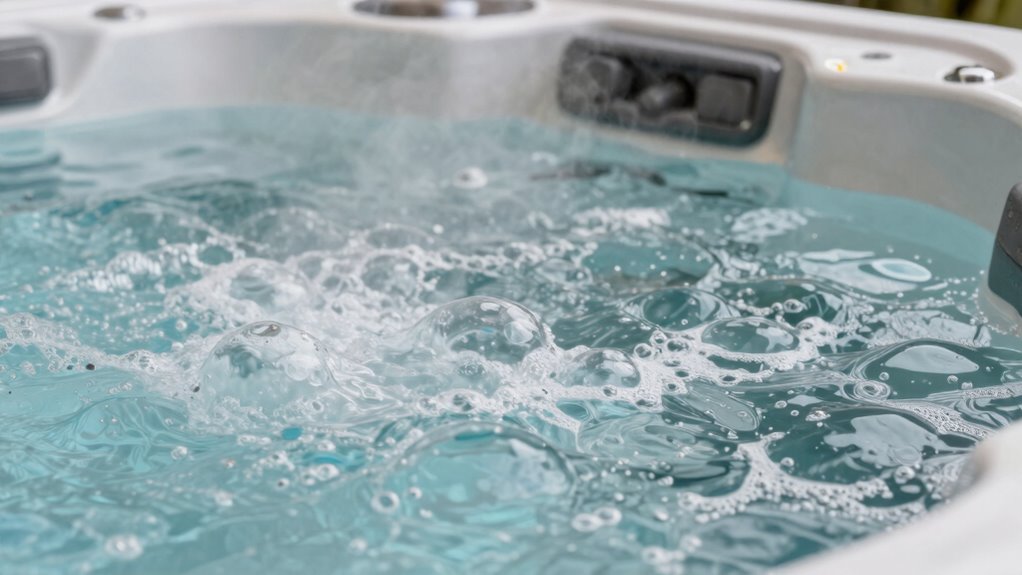
Maintaining the proper pH level in your hot tub is essential for ensuring a comfortable and enjoyable experience. When water pH fluctuates, it affects water acidity, which can cause discomfort and damage. If the pH drops too low, the water becomes acidic, leading to skin irritation and corrosion of your hot tub’s equipment. Conversely, high pH makes the water alkaline, resulting in cloudy water and scaling. Regular testing helps you catch pH fluctuations early, so you can adjust accordingly. Keeping the pH balanced minimizes irritation and prolongs your hot tub’s lifespan. Proper pH levels also improve the effectiveness of sanitizers, ensuring your water stays clean and safe. Additionally, balanced pH helps prevent the formation of harmful bacteria and algae. Maintaining stable pH levels is also vital for safety and comfort, making your hot tub experience more enjoyable and worry-free. Proper pH management is supported by understanding water chemistry fundamentals, which helps you make informed adjustments. For example, understanding how filter maintenance impacts water quality can help you optimize your hot tub’s performance. Ultimately, stable pH creates a more pleasant, relaxing soak every time you use your hot tub. Monitoring pH levels is a crucial step in preventing costly repairs and ensuring optimal water quality.

Aquasana SimplySoft® 60,000 Grain Water Softener - Whole House Hard Water Reduction - Base Tank & Cabinet System WH-SF60-BASE
Aquasana SimplySoft 60,000 Grain Water Softener Base Tank & Cabinet System is ideal for larger homes of 5+...
As an affiliate, we earn on qualifying purchases.
What Is the Ideal pH Range for Hot Tub Water?
You should keep your hot tub’s pH between 7.2 and 7.8 for ideal water quality. When the pH is off, it can cause skin irritation or damage your equipment. Regular testing and adjustments are key to maintaining this best range. Proper pH balance also helps optimize the effectiveness of sanitizers and prolongs the life of your hot tub’s surfaces water chemistry basics. Maintaining a stable pH level is essential to prevent air quality issues that can arise from imbalanced water chemistry, ultimately ensuring a safer and more comfortable hot tub experience. Additionally, understanding the importance of proper pH levels can help prevent costly repairs and improve overall water clarity. Being aware of toilet flushing mechanisms and their efficiency can also contribute to better water management and cost savings in your overall household water use. Furthermore, monitoring chemical balance regularly ensures consistent water quality and reduces the likelihood of pH fluctuations.
Optimal pH Range
The ideal pH range for hot tub water is typically between 7.2 and 7.6. Staying within this range helps maintain proper acid-base balance, preventing pH fluctuation that can cause discomfort and equipment issues. When your water’s pH drifts outside this zone, it can lead to skin irritation, cloudy water, and corrosion of hot tub components. Keeping the pH steady ensures the sanitizer works effectively and reduces the need for frequent chemical adjustments. Regular testing is key to monitoring your water’s pH level. If it drops below 7.2, the water becomes too acidic, and if it rises above 7.6, it becomes too basic. Maintaining this ideal range helps keep your hot tub comfortable and safe for enjoyable soaks. Additionally, water chemistry balance is crucial for prolonging the lifespan of your hot tub equipment and ensuring a more enjoyable experience.
Effects of Imbalance
When pH levels fall outside the ideal range of 7.2 to 7.6, water chemistry becomes unbalanced, leading to a variety of problems. Imbalanced pH disrupts chemical reactions necessary for proper sanitation, reducing disinfectant effectiveness and increasing bacteria growth. It can also cause mineral deposits and corrosion, damaging your hot tub’s components. Additionally, low or high pH impacts water clarity, making it appear cloudy or dull. This cloudiness results from improper chemical reactions that prevent particles from settling or filtering out effectively. Over time, an unbalanced pH can lead to unpleasant odors and skin irritation, making your hot tub experience uncomfortable. Maintaining the correct pH ensures safe, clear water and excellent performance, preventing these issues and keeping your hot tub inviting and functional. Regular testing and adjusting pH levels prevent water imbalance to keep your hot tub in optimal condition. Proper pH balance also supports the effectiveness of sanitizers, ensuring your hot tub remains hygienic and safe for use. Additionally, understanding the contrast ratio of your hot tub’s water clarity can help you identify when chemical adjustments are needed to improve visual quality. Being aware of water chemistry basics helps you troubleshoot issues more effectively and maintain a comfortable hot tub environment. Using test strips regularly can help you monitor pH levels more accurately and make timely adjustments.
Monitoring Tips
Maintaining proper pH levels is key to guaranteeing your hot tub water stays balanced and safe. To achieve this, regularly monitor your water’s pH using test strips or a digital tester. The ideal pH range for hot tub water is between 7.2 and 7.6, which promotes chemical stability and minimizes pH fluctuation. Consistent testing helps you catch changes early, preventing issues like skin irritation or equipment damage. Keep records of your test results to track trends over time. If the pH drifts outside the recommended range, adjust it promptly with pH increasers or decreasers. Regular monitoring ensures your hot tub remains comfortable, safe, and chemically balanced, reducing the risk of water discomfort and maintaining a pleasant soaking experience. Monitoring helps you detect and address imbalances before they become problematic. Additionally, understanding the pH concept is essential for maintaining water quality and preventing corrosion or scaling. Proper water chemistry management not only enhances user comfort but also extends the lifespan of your hot tub components. Being familiar with testing methods can improve your ability to maintain optimal water conditions effectively. Moreover, utilizing testing equipment correctly can lead to more accurate readings and better water management.

AO Smith Whole House Salt Free Descaler System - Works with City & Well Water Filters - 6yr, 600,000 Gl - Water Softener Alternative for Home - AO-WH-DSCLR
Salt-Free Scale Prevention – The A. O. Smith Descaler reduces scale build up in pipes and plumbing using...
As an affiliate, we earn on qualifying purchases.
How to Test Your Hot Tub’s pH Levels Accurately
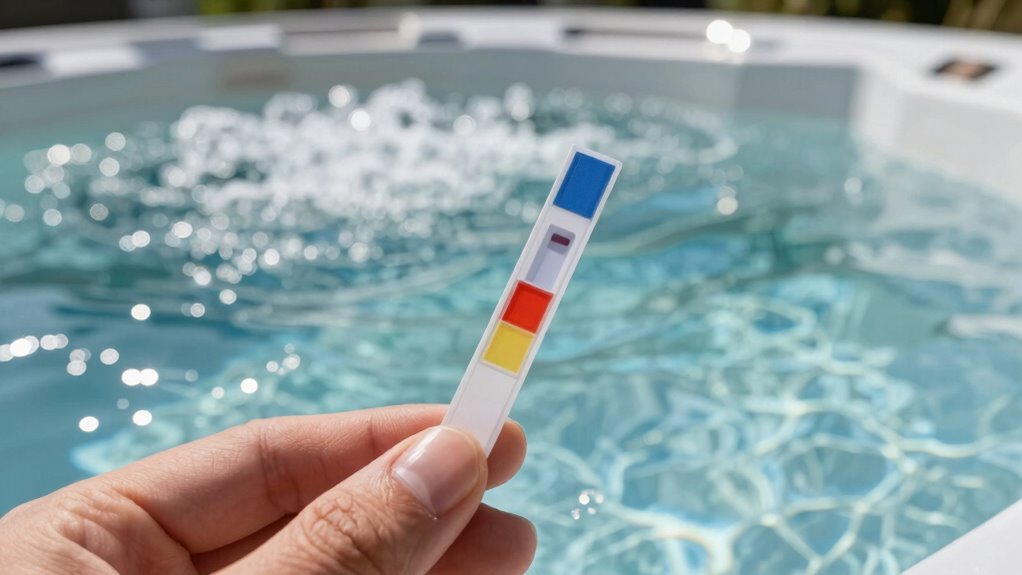
To guarantee your hot tub water stays balanced, you need to test its pH levels accurately. Proper water testing is essential for effective chemical balancing and maintaining a comfortable soak. Use test strips or a liquid test kit, following the instructions carefully for reliable results. Dip the test strip into the water or add a few drops of reagent, then compare the color change to the provided chart. Record your pH level and adjust accordingly. Keep a consistent testing schedule—at least once a week—to prevent pH drift. Regular testing helps you maintain proper water chemistry, which is crucial for safe hot tub use and ensures a pleasant hot tub experience. Here’s a quick reference:
| Test Method | Accuracy Level |
|---|---|
| Test Strips | Good for quick checks |
| Liquid Test Kits | More precise |

Aquasana SimplySoft® 40,000 Grain Water Softener - Whole House Hard Water Reduction - Base Tank & Cabinet System WH-SF40-BASE
Aquasana SimplySoft 40,000 Grain Water Softener Base Tank & Cabinet System is ideal for homes with up to...
As an affiliate, we earn on qualifying purchases.
What Causes pH Imbalance in Hot Tub Water?
Several factors can cause pH levels in your hot tub water to become unbalanced. pH fluctuation often results from frequent use, introducing body oils, lotions, and sweat that alter water chemistry. Additionally, mineral buildup from hard water supplies can raise pH levels over time, leading to alkalinity issues. Organic debris, such as leaves or dirt, can also contribute to pH swings by releasing acids or bases into the water. When these elements combine, they disrupt the delicate balance needed for comfortable soaking. As a result, your hot tub may develop cloudy water, scaling, or irritation. Regular testing and maintenance help identify and address these causes, preventing pH imbalance and ensuring your hot tub water remains safe and pleasant.
How to Adjust pH Levels in Your Hot Tub Step-by-Step
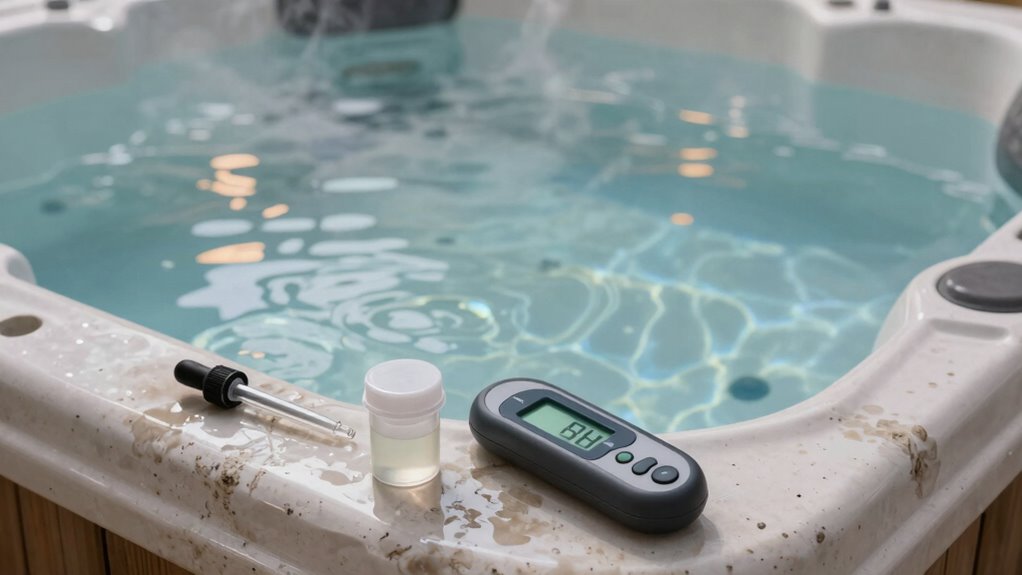
To adjust your hot tub’s pH levels, start by testing the water with a reliable test kit. Based on the results, add the appropriate chemicals to raise or lower the pH. Afterward, re-test the water and make any necessary adjustments to keep the balance just right.
Test Water pH
Ever wonder if your hot tub’s pH level is just right? The first step is water testing. Use a reliable test strip or a liquid test kit to check your water’s pH. Follow the instructions carefully, dip the strip into the water, and compare the color change to the chart. This simple test gives you an accurate reading of your current pH level. If the pH isn’t within the ideal range of 7.2–7.8, you’ll need to make a pH adjustment. Regular testing helps you stay ahead of problems and keeps your water comfortable and safe. Always test before adding any chemicals, so you know exactly what’s needed to bring your hot tub water back into balance.
Add Correct Chemicals
When your test shows that your hot tub’s pH is outside the ideal range of 7.2–7.8, it’s time to add the appropriate chemicals to bring it back into balance. Proper chemical balancing ensures comfortable water and prevents damage to your equipment. If your pH is too low, you’ll need to add a pH increaser, like sodium carbonate, to raise it. If it’s too high, a pH reducer, such as sodium bisulfate, will bring it down. Always follow the manufacturer’s instructions for dosage. Remember, pH regulation isn’t a one-time fix; it requires ongoing adjustment to maintain ideal levels. Consistent chemical balancing keeps your hot tub water comfortable, safe, and properly sanitized for every soak.
Re-Test & Adjust
Before you re-test your hot tub’s water, make certain you’ve given the chemicals enough time to circulate and react—usually about 30 minutes after adding any pH adjusters. Water temperature plays a key role in this process, as warmer water speeds up chemical reactions, allowing pH levels to stabilize faster. Use a reliable test strip or meter to check your pH again. If it’s still off, carefully add more pH adjusters in small increments, then wait another 30 minutes. Remember, rushing this step can lead to inaccurate readings or overcorrection. Consistent re-testing and gradual adjustments ensure your water stays balanced, making your hot tub more comfortable and safe for soaking. Proper timing and patience are essential for effective pH management.
How Do Alkalinity and Sanitizers Affect Your Hot Tub’s pH?
Alkalinity and sanitizers play essential roles in maintaining your hot tub’s pH balance. Alkalinity acts as a buffer, preventing sudden pH swings that could make the water uncomfortable or damage your hot tub. When alkalinity is too low, your pH can fluctuate rapidly, leading to acidity issues. Conversely, high alkalinity makes it harder to adjust pH and can cause cloudy water. Sanitizers, like chlorine or bromine, also influence pH levels. They help keep the water clean but can affect pH over time. For example, some sanitizers can raise pH, making the water more alkaline. Keeping the alkalinity balance within the proper range guarantees your sanitizer remains effective and your hot tub water stays comfortable and properly balanced.
Signs Your Hot Tub pH Is Too High or Too Low
If your hot tub water looks cloudy or murky, it’s a sign your pH might be off. You might also notice skin and eye irritation or an unpleasant odor, which can indicate imbalance. Recognizing these signs helps you take quick action to restore proper water chemistry.
Cloudy or Murky Water
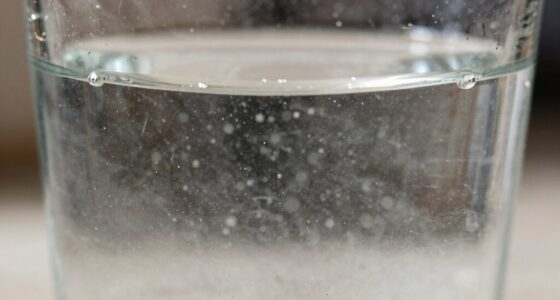
Have you noticed your hot tub water turning cloudy or murky? This usually signals an issue with water clarity, often caused by improper chemical balancing. When pH levels are too high or too low, it can lead to instability in the water, causing particles to clump together and cloud the water. Poor water clarity makes your hot tub less inviting and can hide underlying problems. To fix this, check your water’s pH and alkalinity levels, then adjust them accordingly. Maintaining proper chemical balance helps prevent particles from floating freely and keeps your water clear. Regular testing and adjustments are key to avoiding murky water and ensuring a comfortable, inviting hot tub experience.
Skin and Eye Irritation
When your hot tub water isn’t properly balanced, you might notice skin and eye irritation after soaking. If your pH levels are too high or too low, you could experience skin irritation or eye discomfort. High pH can cause dry, itchy skin and redness, while low pH might lead to stinging eyes and irritation. Here’s a quick guide:
| pH Level | Symptoms | Action Needed |
|---|---|---|
| Too High (>7.6) | Dry skin, redness, eye irritation | Lower pH with pH decreaser |
| Too Low (<7.2) | Itchy skin, eye stinging | Raise pH with pH increaser |
| Balanced (7.2-7.6) | Comfortable skin and eyes | Maintain proper pH |
| Critical Alert | Severe irritation, discomfort | Test water and adjust immediately |
Unpleasant Water Odor
Unpleasant water odors in your hot tub can be a clear sign that your water chemistry is out of balance, often indicating that the pH levels are either too high or too low. When pH isn’t properly maintained, it can cause a chemical imbalance that leads to foul smells. A high pH can produce a musty, sour odor, while a low pH might cause a sharp, chlorine-like smell. These odors are not only unpleasant but also signal that your water isn’t properly sanitized, increasing the risk of bacteria growth. Regularly testing your water and adjusting the pH accordingly helps prevent these odors. Keeping pH balanced ensures your hot tub water remains fresh, comfortable, and safe for relaxation.
Troubleshoot Common pH Problems and Water Issues
Troubleshooting pH problems and water issues in your hot tub requires careful attention to detail and prompt action. When pH levels are off, it can disrupt chemical reactions, leading to cloudy water, skin irritation, or equipment damage. Low pH often causes water to become acidic, while high pH results in alkaline water. To fix these problems, test your water’s pH and water alkalinity regularly. If alkalinity is too high, it can make pH stabilization difficult, causing fluctuations. Adding pH adjusters, like pH minus or pH increasers, helps restore balance. Always follow manufacturer instructions and retest after treatment. Adjusting water chemistry promptly prevents long-term issues, keeps your water comfortable, and protects your hot tub’s equipment from corrosion or scale buildup.
Tips for Maintaining Balanced pH Over Time
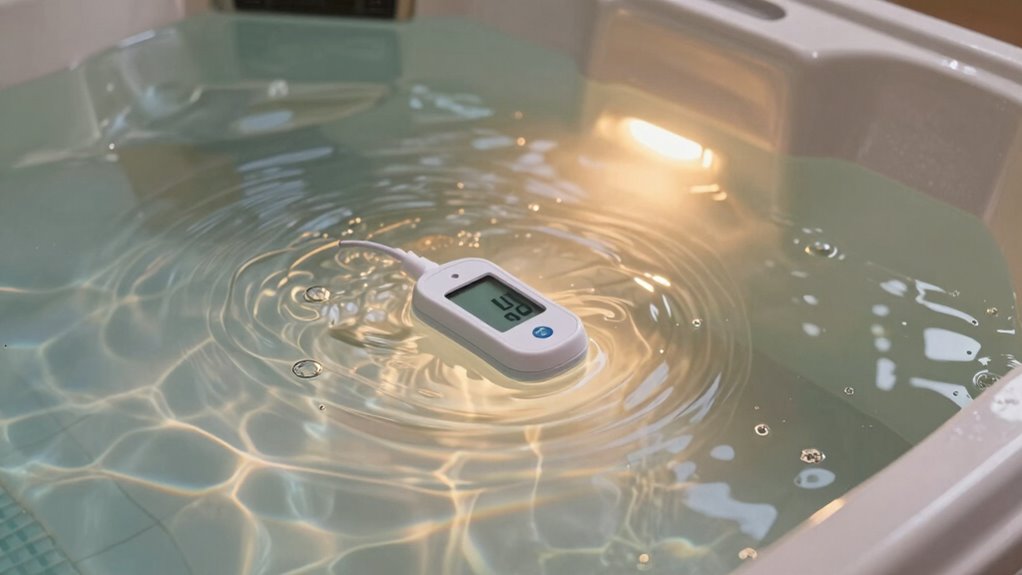
Maintaining balanced pH levels in your hot tub requires consistent monitoring and timely adjustments. Regular water testing is essential to detect pH fluctuations early before they affect water quality or comfort. Use reliable test strips or a digital tester to check pH and alkalinity at least twice a week. When testing shows your pH is too low or high, perform chemical balancing by adding pH increasers or decreasers as needed. Always follow product instructions carefully to avoid overcorrection. Keeping your water’s pH within the ideal range of 7.2 to 7.8 helps prevent scale buildup and corrosion. By staying vigilant with water testing and making prompt adjustments, you ensure your hot tub water remains comfortable, safe, and properly balanced over time.
Final Tips for Clear, Comfortable, and Safe Hot Tub Water

To keep your hot tub water clear, comfortable, and safe, regular maintenance and proactive care are essential. Consistently perform water testing to monitor pH, alkalinity, and sanitizer levels. Based on test results, make precise chemical adjustments to maintain ideal balance. This prevents water discomfort and potential health issues.
Here’s a quick reference:
| Water Testing Frequency | Chemical Adjustment Needed | Resulting Benefit |
|---|---|---|
| Weekly | Add sanitizer or pH adjusters | Keeps water sanitized and balanced |
| After heavy use | Test and adjust immediately | Prevents cloudiness and irritation |
| Monthly | Check alkalinity levels | Maintains overall water stability |
| When water looks cloudy | Re-test and adjust | Restores clarity |
| Regular care | Maintain consistent routine | Ensures safe, inviting hot tub water |
Frequently Asked Questions
How Often Should I Test My Hot Tub’s pH Levels?
You should test your hot tub’s pH levels at least twice a week to guarantee ideal water comfort and safety. Consistent pH monitoring helps prevent issues like skin irritation and equipment damage. If you use the hot tub more often, increase testing frequency to weekly or even more frequently. Regular testing allows you to make quick adjustments, keeping the water balanced and enjoyable every time you soak.
Can Natural Elements Affect My Hot Tub’s pH Balance?
Yes, natural elements like mineral impact and organic substances can affect your hot tub’s pH balance. Minerals from water sources or organic substances like leaves and oils can cause pH fluctuations, making the water uncomfortable and harder to maintain. Regular testing and balancing your pH helps counteract these effects. Keep an eye on these natural influences, and adjust your chemicals accordingly to keep your hot tub water comfortable and properly balanced.
What Are the Best pH Adjusters to Use for Hot Tubs?
For pH balancing in your hot tub, use pH increasers like sodium carbonate or pH decreasers such as pH minus (usually muriatic acid or sodium bisulfate). These chemical adjustments help maintain a comfortable water environment. Always follow the manufacturer’s instructions closely, add chemicals gradually, and test your water frequently to guarantee proper pH levels. Proper chemical adjustments keep your hot tub inviting and prevent issues like skin irritation or equipment damage.
How Does Temperature Influence pH Readings?
Temperature fluctuations can impact your pH readings, making them less accurate. As water heats up or cools down, the pH level may appear higher or lower than it truly is. To guarantee accurate measurements, you should regularly perform pH calibration in the same temperature conditions as your hot tub. This way, you avoid misjudging your chemistry and keep the water comfortable and safe for use.
Are There Eco-Friendly Methods to Maintain pH Balance?
Sure, maintaining pH balance eco-friendly style is a breeze. You can use biodegradable chemicals that gently adjust your water’s pH without harming the environment. Pair that with solar-powered testers to monitor levels effortlessly—who knew sustainability could be so simple? While it’s ironic that green methods often seem more complicated, these tools make it easier to keep your hot tub comfortable without sacrificing eco-consciousness.
Conclusion
Keeping your hot tub’s pH balanced is key to a comfortable, safe soak. Imagine a friend who ignored pH issues and ended up with itchy skin and cloudy water — don’t let that be you. Regular testing and adjustments mean you’ll enjoy crystal-clear water and a relaxing experience every time. Stay on top of pH levels, and your hot tub will be your perfect escape, not a source of frustration.