
Your daily activities like sweating, applying lotions, and doing laundry release chemicals and pollutants into water sources. Sweat adds minerals and bacteria, while lotions contain chemicals that often resist treatment. Laundry detergents contribute phosphates and surfactants, leading to nutrient pollution and algal blooms. These pollutants can harm aquatic life and contaminate drinking water. If you keep exploring, you’ll discover more about how your routines impact water quality and what you can do to help protect it.
Key Takeaways
- Sweat introduces minerals, bacteria, and pollutants into wastewater, contributing to water contamination.
- Lotions and body care products release chemicals that resist breakdown and accumulate in water sources.
- Detergents contain phosphates and surfactants that cause nutrient pollution and harmful algal blooms.
- These substances can persist through water treatment, harming aquatic ecosystems and reducing water quality.
- Daily activities increase pollutant loads, leading to degraded water sources and health risks for humans and wildlife.
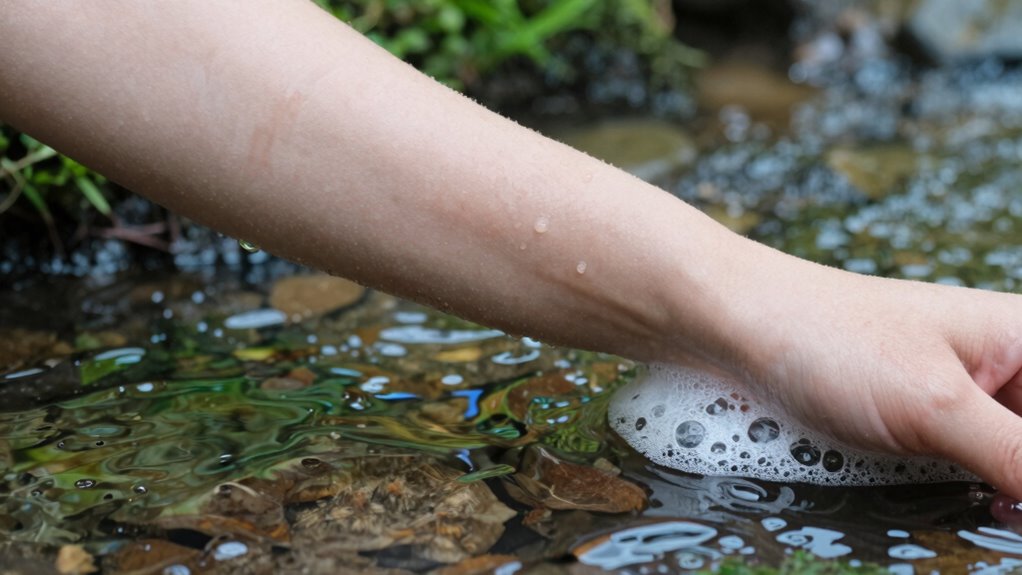
Have you ever wondered how the water you use daily affects the products you rely on? It might seem like a simple question, but the truth is, our everyday routines can considerably impact water quality in ways you might not realize. When you wash off sweat, apply lotions, or do laundry with detergents, these activities contribute to the contamination of local water sources. Pesticide runoff from agricultural areas, along with pharmaceutical contamination from human waste, often finds its way into rivers, lakes, and groundwater. These pollutants don’t just stay out of sight—they affect the entire water cycle and the safety of the water you drink and use.
Daily habits like washing and applying products can harm water quality through pollution and runoff.
Sweat, although natural, contains traces of minerals, bacteria, and sometimes environmental pollutants that can enter wastewater systems when you shower or wash. If the water treatment plants aren’t equipped to fully remove these contaminants, they can accumulate in local water bodies. This is especially concerning when combined with pesticide runoff, which is often carried into waterways during rainstorms. Pesticides used in farming can seep into groundwater or wash into streams, introducing chemicals that can be toxic to aquatic life and potentially to humans. When these chemicals persist in water, they can interfere with the ecosystems and, ultimately, the quality of water that ends up in your home.
Lotions and body care products are another source of water pollution. Many contain chemicals like parabens, phthalates, and artificial fragrances that don’t fully break down during wastewater treatment. When you rinse off these products, they enter the sewage system, and if treatment facilities can’t filter out all these substances, they end up in water sources. This pharmaceutical contamination isn’t limited to lotions; it also includes medicinal residues from human waste, which can include antibiotics and hormones. These substances can disrupt aquatic ecosystems, promote resistant bacteria, and even affect the safety of drinking water supplies.
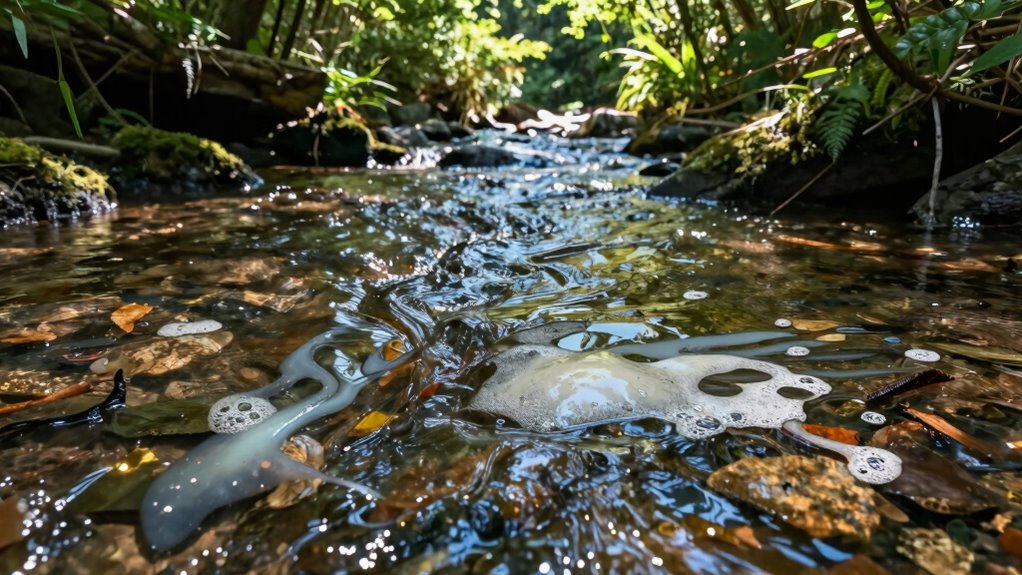
Similarly, detergents used in laundry often contain phosphates, surfactants, and other chemicals that can linger in water. These substances can cause nutrient pollution, leading to algal blooms that deplete oxygen in water bodies and harm marine life. When wastewater treatment plants aren’t fully effective, these chemicals persist and compound the effects of pesticide runoff and pharmaceutical residues. Together, they create a cocktail of pollutants that compromise water quality, making it more challenging to ensure clean, safe water for everyone.
In short, your daily habits—washing off sweat, applying lotions, doing laundry—each contribute to a broader issue. They add to pesticide runoff and pharmaceutical contamination, which threaten water quality and the health of aquatic environments. Being aware of this connection can encourage you to choose products wisely and support efforts to improve water treatment methods, helping to safeguard the water you rely on every day. Recognizing the impact of water pollution from household activities empowers consumers to make more environmentally responsible choices and advocate for cleaner water standards.
Frequently Asked Questions
How Do Sweat and Lotions Specifically Alter Water’s Chemical Composition?
Sweat and lotions alter water’s chemical composition by introducing skin chemistry components and oil residues. When you sweat, your skin releases salts, acids, and other compounds that dissolve into water, affecting its pH and mineral balance. Lotions add oils, surfactants, and chemicals that increase organic matter, leading to water contamination. These substances can disrupt aquatic ecosystems and make water treatment more challenging, impacting overall water quality.
Can Detergents Impact Aquatic Ecosystems Beyond Water Quality?
Detergents are like silent invaders, disrupting aquatic ecosystems beyond water quality. When you wash clothes, some chemicals escape into waterways, contributing to industrial runoff. These substances can cause marine toxicity, harming fish and coral reefs. Your detergent use impacts more than just your laundry; it can threaten biodiversity and alter aquatic habitats, emphasizing the importance of eco-friendly choices to protect our water systems.
Are There Biodegradable Products That Minimize Water Pollution?
Yes, you can choose biodegradable products that minimize water pollution. Look for eco-friendly formulations crafted with natural ingredients that break down easily in water, reducing harm to aquatic life. Also, select products with biodegradable packaging to prevent plastic waste from polluting waterways. By making these conscious choices, you’ll help protect water quality and support sustainable practices, ensuring cleaner water for ecosystems and communities alike.
How Does Water Treatment Remove Contaminants From Sweat and Lotions?
Water treatment removes contaminants from sweat and lotions through pollutant filtration and chemical breakdown processes. You’ll see filters trap solid particles, like dirt and oils, while chemical treatments break down chemicals in lotions and sweat into harmless byproducts. This combination effectively reduces pollutants, ensuring water is cleaner and safer. By understanding these methods, you can appreciate how water treatment facilities protect water quality from everyday contaminants.
What Policies Regulate the Discharge of Personal Care Products Into Water Sources?
Did you know that over 80 countries have regulation policies and discharge standards to control personal care product pollution? These policies set limits on chemicals in lotions, sweat, and detergents, preventing harmful substances from contaminating water sources. They often require treatment facilities to monitor and reduce discharges, ensuring water quality stays safe. By adhering to these standards, you help protect ecosystems and public health from the negative impacts of personal care products.
Conclusion
Everyday products like lotions, sweat, and detergents can unknowingly harm your water quality. Imagine a community where constant runoff from homes causes algae blooms, making water unsafe to drink. By being mindful of the products you use and properly disposing of them, you can help protect your local water sources. Small changes, like choosing eco-friendly lotions or using biodegradable detergents, make a big difference in preserving clean water for everyone.