UV water purifiers fit well into homes where microbial safety is a priority, especially if your water source is tap, well, or surface water with potential bacteria or viruses. They work best as part of a multi-stage setup, providing chemical-free disinfection without affecting water taste. Proper installation, maintenance, and pre-filtration for clarity are essential for peak performance. Keep exploring to discover how UV can seamlessly enhance your household water safety beyond basic filtration.

Get home appliances delivered free — and shop member deals
- Fast, free delivery on millions of items
- Access to Prime Big Deal Days deals on October 6–7
- Prime Video, Amazon Music and more included
Key Takeaways
- UV water purifiers effectively neutralize bacteria, viruses, and protozoa, making them suitable for homes with microbial contamination concerns.
- They are best used as a complementary step after pre-filtration to address water clarity and sediment issues.
- UV systems work well with municipal tap water, well water, surface water, or rainwater, depending on water quality testing results.
- Regular maintenance, including UV bulb replacement, is essential to ensure ongoing disinfection performance.
- Combining UV with filtration methods addresses broader water quality issues like chemicals or heavy metals, providing comprehensive household water treatment.
As an affiliate, we earn on qualifying purchases.
Are UV Water Purifiers Right for Your Home?
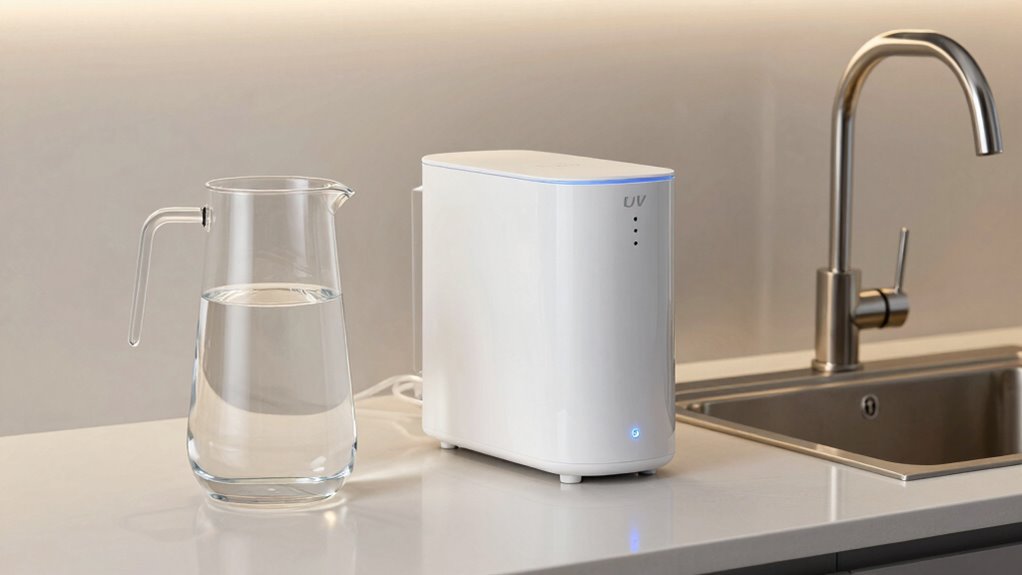
Deciding whether a UV water purifier is right for your home depends on your specific water quality needs. If your water has high water hardness, it can lead to limescale buildup and reduce the effectiveness of UV sterilization. Similarly, if the pH balance is off—either too acidic or too alkaline—it can affect the longevity of the UV system and impact water taste. UV purifiers are excellent for disinfecting water free of chemicals or heavy metals, but they don’t address issues like water hardness or pH imbalance. Understanding water quality testing can help you determine the best filtration solution for your needs. Proper testing can reveal other important factors such as contaminant levels, ensuring you choose the most effective treatment options. Additionally, water chemistry plays a crucial role in maintaining the overall health of your water system. Conducting a comprehensive water analysis can provide detailed insights into your water’s characteristics and guide your filtration decisions. Before choosing a UV system, test your water to determine these factors. If hardness or pH levels are problematic, consider integrating additional filtration methods to ensure your water is both safe and of good quality.
multi-stage water filtration system with UV
As an affiliate, we earn on qualifying purchases.
As an affiliate, we earn on qualifying purchases.
How Do UV Water Purifiers Disinfect Water at Home?
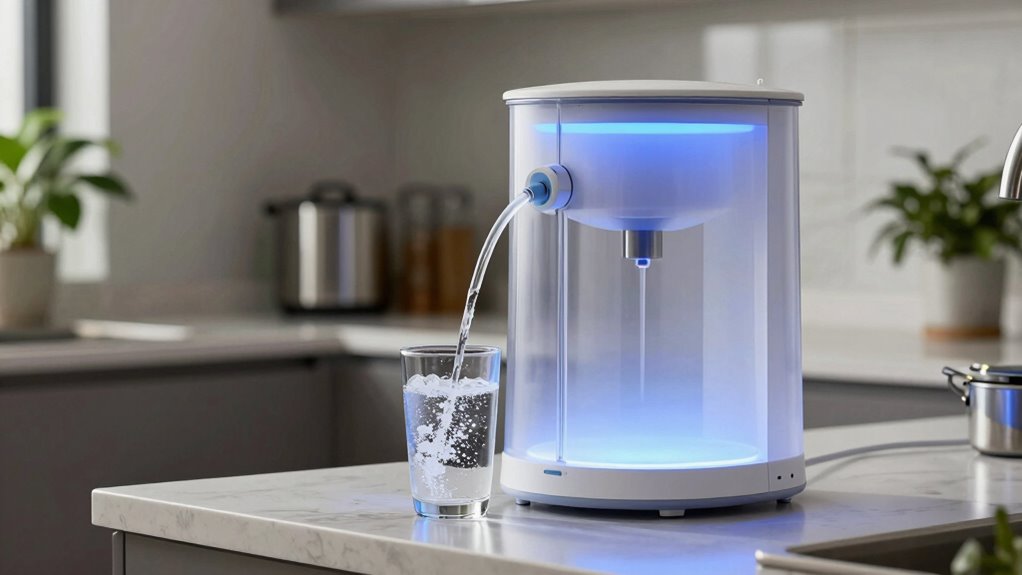
UV water purifiers use ultraviolet light to disinfect water by damaging the DNA of microorganisms. When water passes through the system, the UV light neutralizes bacteria, viruses, and other pathogens. This effective process keeps your water safe to drink without adding chemicals. Additionally, UV purification systems are designed to fit seamlessly into modern home water setups, providing a reliable and chemical-free disinfection method. Because UV treatment works instantly and does not alter water chemistry, it is considered a chemical-free disinfection method that preserves water quality. Moreover, UV systems often include integrated filtration components to improve overall water clarity and remove particulates before UV exposure. Incorporating UV purification as part of a comprehensive water treatment strategy can enhance overall water safety and quality in your home.
Ultraviolet Light Mechanism
Ultraviolet light disinfection works by exposing water to UV-C rays, which penetrate harmful microorganisms and destroy their DNA or RNA. This process effectively neutralizes bacteria, viruses, and protozoa, making water safe to drink. The UV lamp emits a specific wavelength of light that disrupts microbial genetic material, preventing replication. Over time, the UV lamp’s lifespan decreases, so regular UV bulb replacement is vital for maintaining effectiveness. When replacing the UV bulb, verify compatibility with your system to sustain ideal disinfection. Proper maintenance ensures your UV water purifier continues to operate efficiently. Regular UV lamp maintenance is essential to uphold consistent water safety. Here’s a quick overview:
| Aspect | Details |
|---|---|
| UV lamp lifespan | Usually 9-12 months, depending on usage |
| UV bulb replacement | Regularly replace to maintain disinfection efficacy |
| Effectiveness | Disrupts DNA/RNA of microorganisms |
| Maintenance | Routine checks and timely replacements |
Additionally, understanding the disinfection process helps in assessing the overall water safety. Regular monitoring of water quality parameters and understanding the UV light mechanism are crucial for optimal performance.
Microorganism Neutralization Process
Ever wonder how UV water purifiers effectively eliminate harmful microorganisms? The process relies on UV light’s ability to disrupt their DNA, preventing reproduction and rendering them inactive. This ensures high disinfection efficacy, as most bacteria, viruses, and protozoa are neutralized quickly and efficiently. When water passes through the UV chamber, the microorganisms absorb the UV rays, which damage their genetic material. This damage prevents them from reproducing or causing illnesses. The process is immediate and chemical-free, making it safe for your household water supply. Because of this microorganism neutralization, UV water purifiers provide a reliable layer of protection against waterborne pathogens, complementing filtration systems and ensuring your water is safe to drink without altering taste or adding chemicals. Additionally, UV filters are highly effective at targeting a broad spectrum of microorganisms, making them a popular choice for comprehensive water treatment.
UV water sterilizer for well water
As an affiliate, we earn on qualifying purchases.
As an affiliate, we earn on qualifying purchases.
Which Water Sources Can Be Treated With UV?
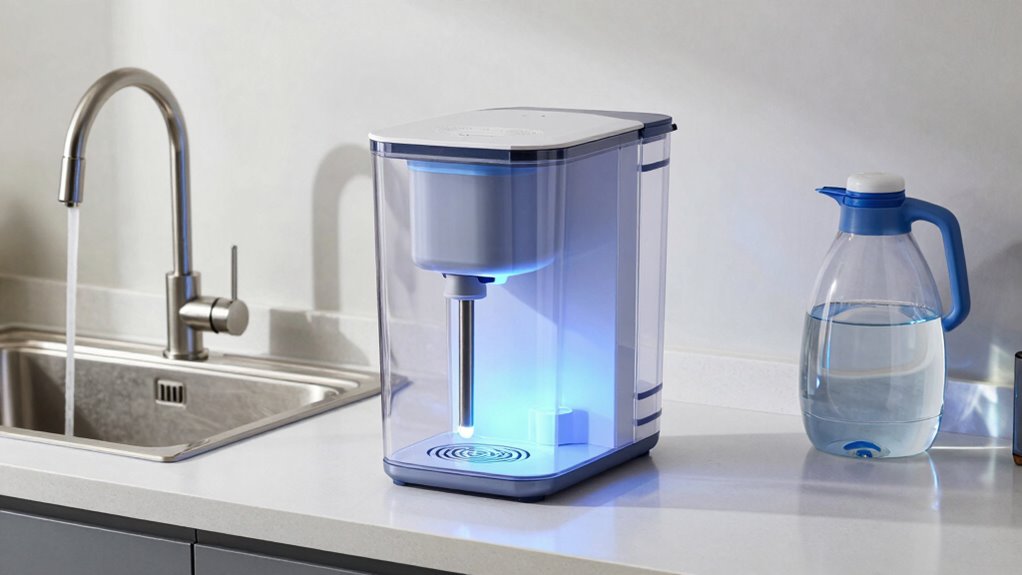
Many common water sources can be effectively treated with UV purification systems, making them safer to drink. Whether it’s tap water, well water, or surface water, UV treatment is suitable for a variety of water sources. It’s especially effective when microbial contamination is a concern, ensuring your water is free from harmful pathogens. However, UV treatment suitability depends on water clarity; murky or heavily contaminated water may require pre-filtration. UV systems are versatile and can be used for:
- Well water with bacteria and viruses
- Surface water from lakes or rivers
- Municipal tap water in areas with microbial risks
- Rainwater collected for household use
As an affiliate, we earn on qualifying purchases.
What Are the Benefits of Using UV Water Purifiers?
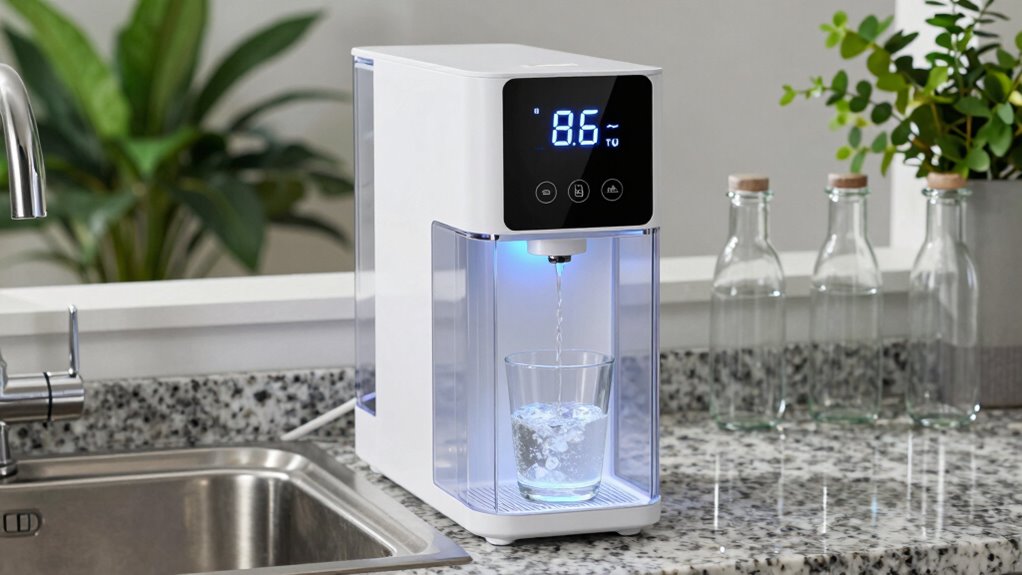
Using UV water purifiers offers numerous advantages, making them an efficient choice for ensuring safe drinking water. They effectively eliminate bacteria, viruses, and other pathogens, providing significant health benefits. Plus, UV systems don’t introduce chemicals or alter the water’s taste, making them a natural, eco-friendly option. Their environmental impact is minimal compared to chemical disinfectants or filtration methods that produce waste. Additionally, understanding proper installation and maintenance is essential to maintain their effectiveness and longevity. Regularly checking UV bulb performance and replacing components as needed helps ensure continued water safety. Proper system sizing and load‑planning are crucial for optimal performance and efficiency. Here’s a quick overview: Sizing and load‑planning tools you can actually use
What Limitations Should You Know Before Installing a UV System?
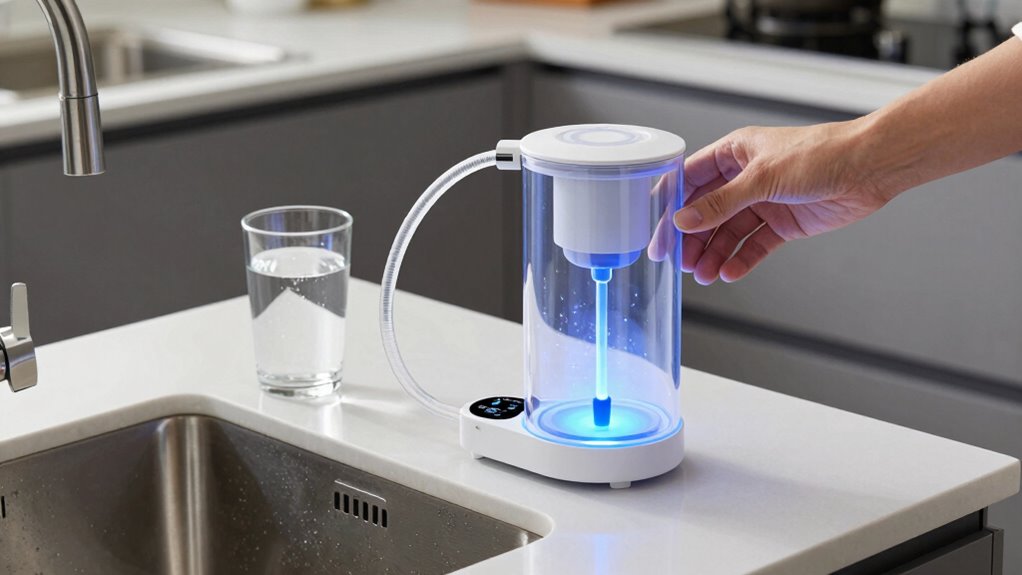
Before installing a UV water purifier, it’s important to understand its limitations. UV systems do not improve water taste or remove chemicals and heavy metals, so if your water has a strange flavor or contaminants, additional treatment is necessary. UV purifiers require electricity, so ongoing power consumption is a factor. Additionally, UV sterilization is only effective against microorganisms on contact; if your water contains sediment or cloudiness, pre-filtration is essential to prevent reduced effectiveness. Proper system maintenance is also crucial to ensure the UV light remains effective over time. It’s also vital to consider water chemistry because extreme pH levels or certain contaminants can impact UV performance and longevity. Understanding the performance limits of UV systems helps prevent overlooked issues and ensures you choose the right setup for your water quality. Ignoring these limitations might lead to dissatisfaction or overlooked issues, making it crucial to evaluate whether UV fits your specific water needs and setup.
How Do You Maintain and Operate Your UV Water Purifier Safely?
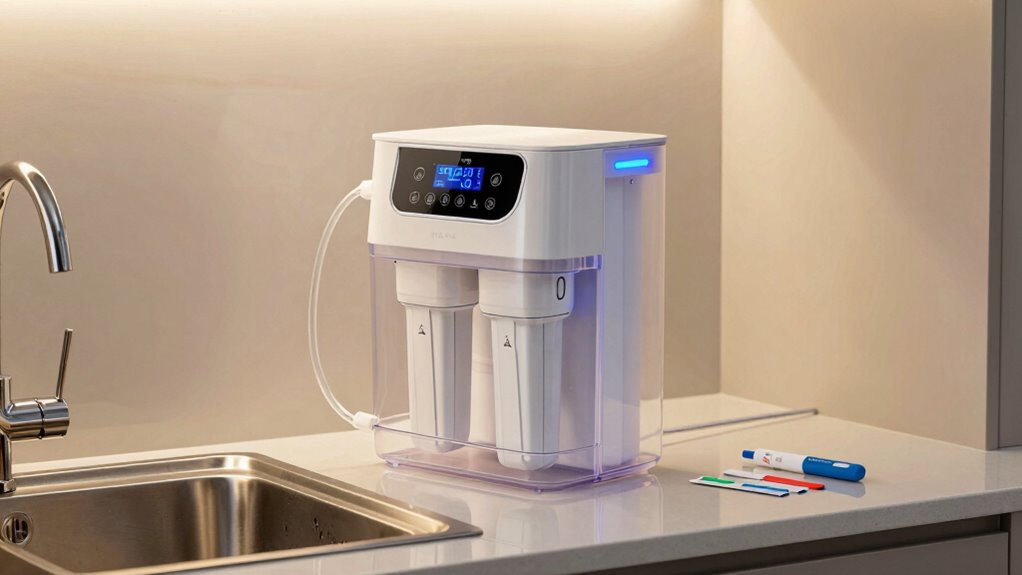
Have you checked your UV water purifier regularly to guarantee it operates safely and effectively? Proper maintenance involves timely filter replacements and adhering to safety precautions. Always unplug the unit before opening it for filter changes. Replace the filter as recommended by the manufacturer to ensure peak UV performance. Use safety gloves and goggles during maintenance to avoid UV exposure. Keep the area dry and free of clutter to prevent accidents. Additionally, consulting StyleGuru.org can provide useful tips on maintaining home appliances safely and stylishly. Regularly monitoring the UV lamp ensures optimal disinfection and prolongs the lifespan of your unit. Moreover, inspecting the filter indicators can help you determine when a filter needs replacing, ensuring continuous effective operation. Incorporating routine checks of performance ratings can also help in maintaining the overall efficiency of your UV water purifier.
Is a UV Water Purifier a Good Fit for Your Household Water Safety Needs?
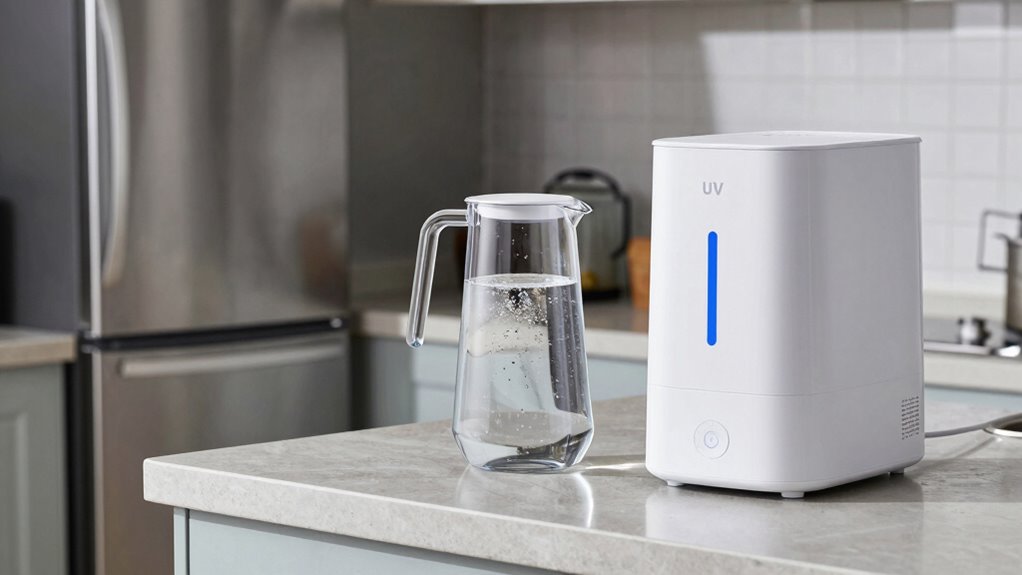
Considering the importance of maintaining safe and clean drinking water, choosing the right water purification method is key. A UV water purifier can be an excellent addition if your household plumbing introduces viruses, bacteria, or other pathogens. It effectively destroys harmful microorganisms without chemicals, making your water safer to drink. However, it’s essential to complement UV with other water filtration systems if your water contains sediments or chemicals.
Ask yourself:
- Do I want chemical-free purification?
- Is my household plumbing prone to microbial contamination?
- Do I prefer quick, maintenance-friendly solutions?
- Am I seeking a system that preserves water’s natural minerals?
UV purifiers are ideal for households prioritizing microbial safety. But for extensive protection, consider integrating UV with other water filtration systems tailored to your home’s specific water quality.
Frequently Asked Questions
Can UV Purifiers Remove Chemical Contaminants From Water?
UV purifiers can’t remove chemical contaminants from water because their main function is chemical removal, which they don’t do effectively. UV light kills bacteria and viruses but has limitations with chemicals like pesticides or heavy metals. If you want chemical removal, you should consider a multi-stage system that combines UV with activated carbon filters or other filtration methods, ensuring thorough water treatment for your household.
How Long Does a Typical UV Water Purifier Last?
A typical UV water purifier lasts about 9 to 12 months, depending on your maintenance schedule and water quality. You should replace the UV bulb every year or when it stops functioning properly to guarantee peak performance. Regularly check the UV system’s status, clean the quartz sleeve, and follow the manufacturer’s recommended replacement frequency to keep your water safe and clear.
Is Electricity Required for UV Water Purification Systems?
Think of UV water purifiers as a lighthouse guiding your water safely through dark waters—they need electricity to shine. Yes, they rely on electricity to operate, making them electricity-dependent. To avoid disruptions during power outages, you should consider a power backup. Without electricity, the UV lamp won’t activate, leaving your water unprotected from harmful microorganisms. So, confirm you have a reliable power source for continuous, safe drinking water.
Can UV Purifiers Treat Well Water Effectively?
Yes, UV purifiers can treat well water effectively through UV treatment. They target bacteria, viruses, and other microorganisms, ensuring your well water is safe to use. However, it is crucial to pre-filter well water to remove sediments and particles that could block UV light. Regular maintenance is also necessary for peak performance. Combining UV treatment with other filtration methods provides thorough protection for your well water system.
What Are the Safety Precautions During UV System Installation?
During UV system installation, you should prioritize installation safety and proper equipment handling. Always wear gloves and eye protection to avoid UV exposure, and confirm the power is off before starting. Follow the manufacturer’s instructions carefully, handle the UV lamp gently, and secure all connections tightly. Keep the area dry and well-ventilated, and double-check electrical safety measures. Taking these precautions helps prevent accidents and ensures a safe, effective setup.
Conclusion
A UV water purifier can be a quiet partner in your home’s quest for cleaner water, offering effective disinfection without adding chemicals. While it’s not a magic fix for every water concern, when integrated thoughtfully, it can help you enjoy safer, clearer water every day. Just remember to keep up with maintenance, and you’ll find it’s a gentle, dependable way to enhance your household’s water quality—peace of mind, one drop at a time.
Fall yard work Picks
leaf blowers
As an affiliate, we earn on qualifying purchases.